

TL;DR:
- Validated intolerance testing in 2026 relies on elimination diets, breath testing, and coeliac serology, not commercial IgG panels. These tests are recommended by UK health bodies because they directly link foods to symptoms and identify serious conditions. Commercial tests lack scientific backing and can cause nutritional deficiencies, delayed diagnoses, and unnecessary restrictions.
Food intolerance testing is defined as the process of identifying which foods trigger adverse digestive or inflammatory reactions in the body, distinct from immune-mediated food allergies. The role of intolerance testing in 2026 is shaped by a clear clinical consensus: validated methods such as supervised elimination diets remain the gold standard, while commercial kits continue to lack scientific backing from bodies including the NHS, NICE, BSACI, and EAACI. Only 31% of people in Britain with food intolerances have received a formal diagnosis. That gap drives many people toward unvalidated self-tests, which carry real risks. Understanding what works, and what does not, is the most useful thing you can do for your health right now.
What validated methods define intolerance testing in 2026?
The clinical gold standard for diagnosing food intolerance is a supervised elimination and reintroduction diet lasting 2–4 weeks, combined with a detailed symptom diary. No commercial kit replaces this process. The methods below are the ones UK health organisations actually recommend.
-
Elimination and reintroduction diet. You remove suspected trigger foods for 2–4 weeks under healthcare supervision, then reintroduce them one at a time. Symptoms are tracked throughout. This method directly links food to physical response, which no blood panel can replicate.
-
Hydrogen breath testing. This test measures hydrogen gas in your breath after consuming lactose or lactulose. Elevated readings indicate poor absorption, making it the standard diagnostic tool for lactose intolerance and small intestinal bacterial overgrowth (SIBO).
-
Coeliac disease serology. A blood test measuring tissue transglutaminase antibodies (tTG-IgA) screens for coeliac disease. A positive result leads to a gut biopsy for confirmation. This is a critical step because coeliac disease is an autoimmune condition, not a simple intolerance.
-
Symptom diaries. Clinicians use structured food and symptom diaries alongside dietary changes. They provide a clear record of patterns over time and support accurate diagnosis without any invasive procedure.
-
Dietitian-supervised dietary adjustment. A registered dietitian guides safe food removal and reintroduction. This prevents nutritional gaps and ensures the process is both effective and safe.
Pro Tip: Before requesting any test, keep a detailed food and symptom diary for at least two weeks. Your GP or dietitian will find it far more useful than any commercial test result.
Why are commercial food intolerance tests not recommended?
NHS and UK health bodies explicitly state that commercial food intolerance tests, including IgG antibody panels, lack scientific evidence and are not recommended. This is not a fringe opinion. It is the position of NICE, BSACI, and EAACI collectively.
The core problem is biological. IgG antibodies detected by commercial tests reflect normal immune exposure to foods you eat regularly, not intolerance or pathology. A high IgG reading for eggs simply means you eat eggs. Multiple blinded studies have not replicated any clinical benefit from IgG-guided elimination diets.
The risks of acting on these results are real:
- Nutritional deficiency. Cutting out food groups based on unreliable results can cause deficiencies in calcium, iron, B vitamins, and fibre.
- Delayed diagnosis. Unnecessary dietary restrictions from unreliable test results can delay the diagnosis of serious conditions like coeliac disease or true food allergy.
- Placebo-driven improvement. Healthcare professionals note that the placebo effect accounts for many symptom improvements after commercial intolerance testing. Feeling better after removing a food does not confirm that food was the cause.
- Financial cost. Commercial panels often cost hundreds of pounds and provide no clinically actionable information.
- Psychological harm. Believing you are intolerant to many foods can create anxiety around eating and reduce quality of life unnecessarily.
“IgG antibody tests are not recommended as a diagnostic tool for food intolerance. A positive IgG result to a food is a normal physiological response reflecting exposure to that food, not evidence of intolerance or allergy. Acting on these results risks unnecessary dietary restriction and potential harm.”
Consensus position of NHS, NICE, BSACI, and EAACI
How do intolerance testing and allergy diagnosis differ?
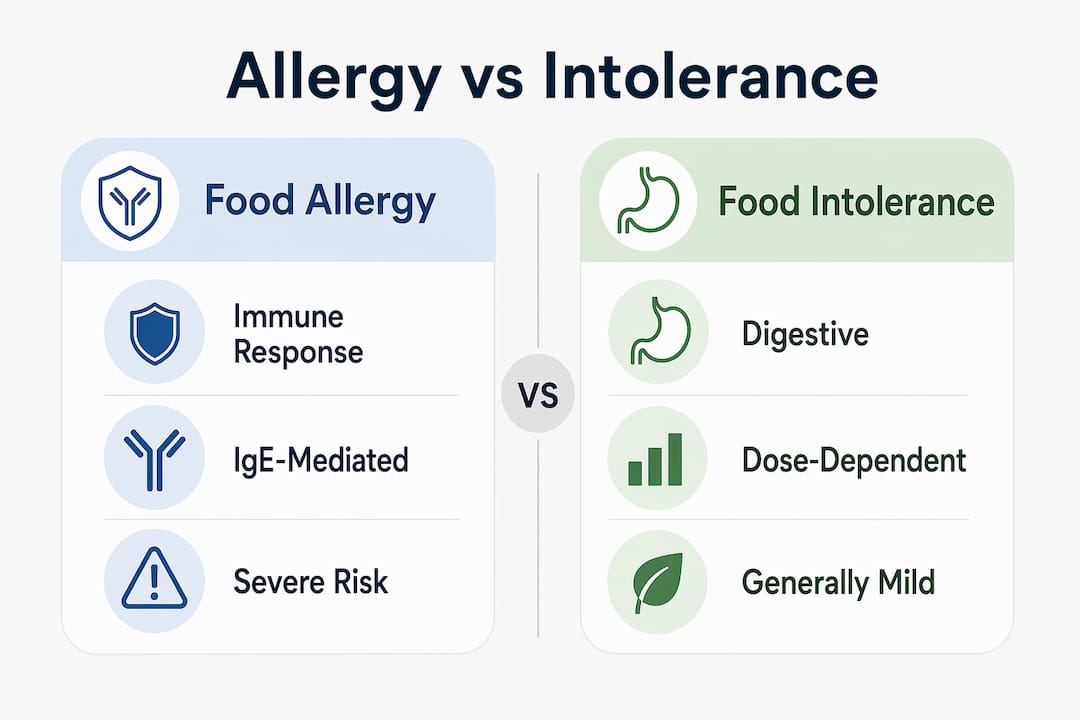
Food allergy is immune-driven and potentially severe; food intolerance is generally digestive and dose-dependent. This distinction shapes everything from the tests used to the urgency of treatment. Confusing the two is not just a semantic error. It can be dangerous.

A food allergy triggers an IgE-mediated immune response. Even a tiny amount of the trigger food can cause anaphylaxis, urticaria, or angioedema. A food intolerance, by contrast, typically causes bloating, diarrhoea, or discomfort, and symptoms are often dose-related. Eating a small amount of the trigger food may cause no reaction at all.
| Feature | Food allergy | Food intolerance |
|---|---|---|
| Immune involvement | Yes (IgE-mediated) | No immune response |
| Symptom onset | Rapid (minutes) | Delayed (hours) |
| Severity | Can be life-threatening | Rarely severe |
| Diagnostic test | IgE blood test, skin-prick test | Elimination diet, breath test |
| Management | Strict avoidance, adrenaline auto-injector | Dietary adjustment, portion control |
Referral to allergy clinics is reserved for immune-mediated allergies. Intolerances are primarily managed through dietetic supervision and primary care. Sending someone with a suspected intolerance to an allergy clinic wastes NHS resources and delays appropriate care.
Pro Tip: If you experience rapid swelling, hives, or breathing difficulty after eating, seek emergency care immediately. These are allergy symptoms, not intolerance symptoms, and require a completely different clinical pathway.
Medical professionals highlight the crucial role of distinguishing allergy from intolerance to prevent serious health risks. Getting this right at the outset determines whether you need an adrenaline auto-injector or simply a revised meal plan.
What is the future of intolerance testing beyond 2026?
The intolerance testing significance in 2026 lies not in new commercial products, but in better public understanding of validated methods. Several trends are shaping how people will manage food intolerances in the years ahead.
- Non-invasive testing methods are evolving. Non-invasive intolerance testing continues to develop, with breath testing and digital symptom tracking becoming more accessible. Validation remains the key barrier to wider clinical adoption.
- Digital symptom tracking is growing. Apps and wearable devices now help people log meals, symptoms, and patterns with greater accuracy than paper diaries. Clinicians increasingly accept digital records as part of the diagnostic process.
- Personalised dietary plans are gaining traction. Validated intolerance insights, combined with dietitian input, are being used to build genuinely personalised nutrition plans. This is where the real impact of intolerance testing on wellbeing is felt.
- Public education is the biggest gap. The widespread use of unvalidated commercial kits reflects a lack of public understanding, not a lack of interest in health. Better education on test validity will reduce harm and improve outcomes.
- Healthcare professional involvement remains non-negotiable. Clinicians emphasise that elimination diets must be supervised to prevent nutritional risks. Self-directed dietary restriction without professional guidance carries real danger.
- Preventative health is driving demand. More people are approaching intolerance testing as part of preventative health monitoring rather than reactive symptom management. This shift is positive, provided it is guided by evidence.
The future of testing for intolerances depends on closing the gap between public demand and clinical rigour. Technology will help, but professional oversight will remain the foundation of safe, effective diagnosis.
Key takeaways
Validated intolerance testing in 2026 relies on supervised elimination diets, breath testing, and coeliac serology, not commercial IgG panels, which NHS, NICE, BSACI, and EAACI all reject as scientifically unsupported.
| Point | Details |
|---|---|
| Gold standard method | A supervised 2–4 week elimination and reintroduction diet remains the most reliable diagnostic approach. |
| Commercial tests lack validity | IgG antibody panels reflect normal food exposure, not intolerance, and are not recommended by UK health bodies. |
| Allergy and intolerance differ | Allergies require IgE testing and may need emergency management; intolerances need dietary adjustment and dietitian support. |
| Professional oversight is critical | Elimination diets without supervision risk nutritional deficiency and delayed diagnosis of serious conditions. |
| Future testing is evolving | Non-invasive methods and digital tracking are growing, but clinical validation remains the standard for safe use. |
Rob’s view on where intolerance testing is actually heading
I have watched the intolerance testing space closely for years, and the pattern is consistent. People feel unwell, they search for answers, and they find a commercial test that promises clarity within days. The appeal is completely understandable. The NHS waiting times for dietitian referrals are long, and the symptoms, whether bloating, fatigue, or skin flare-ups, are real and disruptive.
What concerns me is not that people want answers. It is that the commercial testing industry has filled a genuine healthcare gap with products that do not hold up scientifically. When someone spends £150 on an IgG panel and cuts out twelve foods based on the results, they often feel better initially. The placebo effect is powerful. But they may also be masking a coeliac diagnosis or developing a calcium deficiency without knowing it.
The honest truth is that the elimination diet is unglamorous. It takes weeks, requires discipline, and needs professional support to be done safely. That is precisely why people avoid it in favour of a quick test. But the unglamorous option is the one that actually works.
What I find genuinely encouraging is the growth in digital symptom tracking and non-invasive testing research. If these methods can be validated to clinical standards, they could make the diagnostic process faster and more accessible without sacrificing accuracy. That is the future worth investing in.
My advice is straightforward. Use a commercial test if you want a starting point for a conversation with your GP, but never act on the results alone. Pair any at-home insight with professional guidance, and treat the elimination diet as the real diagnostic tool it is.
— Rob
Testing options from Ukfoodintolerance
If you are looking for a clear starting point before speaking with your GP or dietitian, Ukfoodintolerance offers at-home testing options designed to give you a useful picture of potential sensitivities.
The intolerance test range covers over 900 food and non-food items, using a simple hair sample collected at home. Results arrive within 48–72 hours as a detailed digital report, giving you something concrete to bring to your next healthcare appointment. Ukfoodintolerance is clear that its tests are designed to complement, not replace, clinical diagnosis. For those wanting to understand the methodology behind the process, the bio-resonance testing approach is explained in full on the website.
FAQ
What is intolerance testing?
Intolerance testing is the process of identifying foods or substances that trigger adverse digestive or inflammatory reactions. Clinically validated methods include supervised elimination diets, hydrogen breath tests, and coeliac serology.
Are commercial food intolerance tests reliable?
No. NHS, NICE, BSACI, and EAACI all state that commercial tests, including IgG antibody panels, lack scientific evidence and are not recommended for diagnosing food intolerance.
What is the difference between a food allergy and a food intolerance?
A food allergy triggers an IgE-mediated immune response and can be life-threatening. A food intolerance is dose-dependent and digestive, rarely severe, and managed through dietary adjustment rather than emergency treatment.
How long does an elimination diet take?
A supervised elimination and reintroduction diet typically lasts 2–4 weeks. Foods are removed and then reintroduced one at a time while symptoms are tracked with a diary.
Should I see a doctor before starting an elimination diet?
Yes. Clinicians stress that elimination diets must be supervised by a healthcare professional or registered dietitian to prevent nutritional deficiencies and ensure accurate results.










Leave a Reply
Want to join the discussion?Feel free to contribute!