

TL;DR:
- Food intolerance now affects one in four Britons, making it a mainstream health concern in the UK. Consumer-led management, innovative products, and digital testing tools are growing rapidly, but systemic regulatory vulnerabilities pose safety risks. Strengthening border controls, labelling standards, and professional expertise remains crucial alongside technological advancements.
Food intolerance is no longer a niche health concern. An overview of UK intolerance trends 2026 reveals something striking: one in four Britons now reports living with a food allergy or intolerance. That figure demands serious attention from health professionals, policy makers, and consumers alike. This guide covers the key data, regulatory shifts, product innovations, and testing developments shaping dietary sensitivity management across the UK in 2026. Whether you are conducting formal research or trying to make sense of your own symptoms, this is the picture as it stands today.

Key takeaways
| Point | Details |
|---|---|
| Rising UK prevalence | Around 24% of UK adults report a food allergy or intolerance, making this a mainstream health issue. |
| Market growth is accelerating | The global food intolerance products market is forecast to reach $21.91 billion in 2026, driven largely by free-from demand. |
| Regulatory gaps create risk | Less than 15% of environmental health professionals trust current UK border controls to stop risky food imports. |
| Technology aids but cannot replace judgement | Digital tools improve efficiency in food safety, but human expertise and proper training remain irreplaceable. |
| Testing supports self-management | At-home intolerance testing, including bio-resonance methods, gives consumers a structured starting point for dietary change. |
Overview of UK intolerance trends 2026: prevalence and consumer behaviour
Food intolerance (also called food sensitivity) refers to a non-immune adverse reaction to specific foods, distinct from a food allergy which triggers an immune response. The distinction matters for both clinical management and market analysis, yet many consumers and even some food businesses conflate the two.
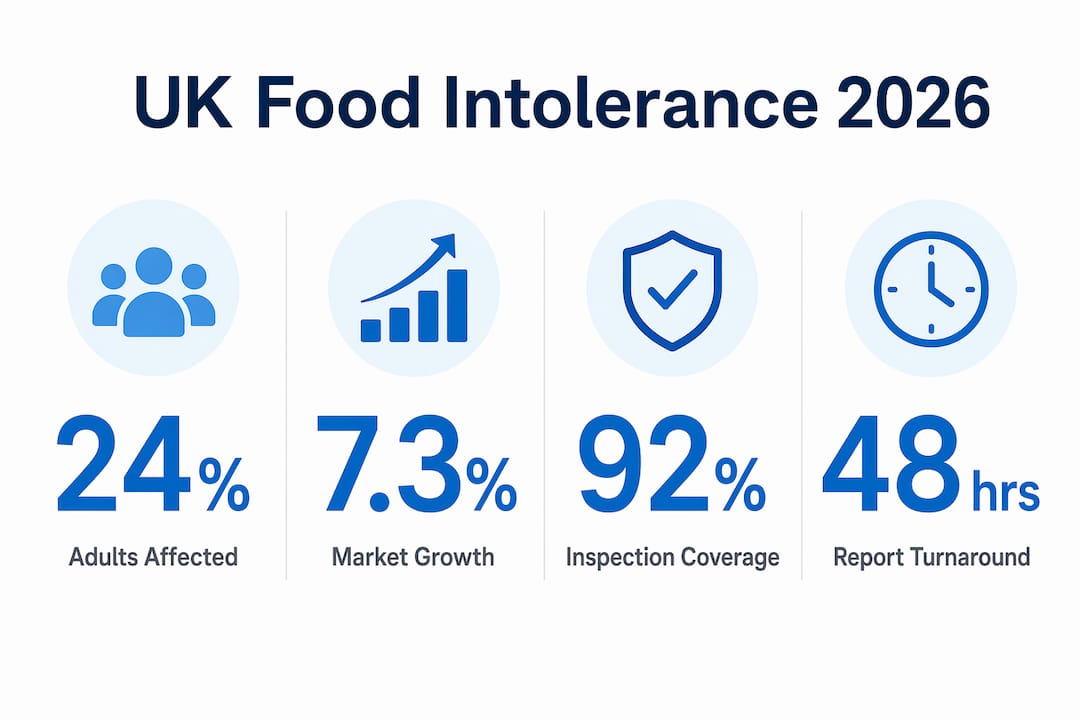
The scale of the problem in the UK is significant. 24% of UK adults report experiencing a food allergy or intolerance, a figure that places dietary sensitivity firmly in mainstream public health territory. Dairy and gluten intolerances remain the most commonly reported, followed by sensitivities to eggs, soya, and certain food additives. Lactose intolerance alone affects an estimated 5 to 10 million people in the UK, yet a large proportion go undiagnosed for years.
What is changing in 2026 is how consumers respond to these conditions. Rather than waiting for a clinical referral, growing numbers are taking matters into their own hands.
- Consumers are reading ingredient labels more carefully, prioritising products with transparent, recognisable ingredient lists.
- Gut health is now a central purchasing driver, with oat fibre and inulin chicory among the fastest-growing functional ingredients in new product launches.
- Self-directed elimination diets are increasingly common, often supported by at-home testing rather than GP referrals.
- Naturalness and ingredient transparency have become critical factors for consumers designing their own health, particularly among those aged 25 to 45.
The food allergy market is on a separate but parallel growth trajectory. Molecular allergy testing and advanced immunotherapies are improving outcomes, and the allergy market is expected to grow at a 10.7% CAGR from 2026 to 2035. This reflects increased awareness, regulatory focus, and genuine clinical innovation. For researchers, the key distinction to track is that allergy treatment is becoming medicalised and professionalised, whilst intolerance management is becoming increasingly consumer-led.
Pro Tip: When reviewing UK intolerance data, always check whether studies distinguish between allergies and intolerances. Conflating the two inflates prevalence figures and obscures the real patterns in consumer behaviour and clinical need.
Regulatory pressures and food safety challenges
The regulatory environment shaping food intolerance trends in 2026 is under significant strain. Post-Brexit border arrangements, the growth of online food sales, and resource pressures on local authority environmental health teams have created a combination of risks that industry professionals are taking seriously.
The Chartered Institute of Environmental Health’s 2026 food safety report highlights concerns that are hard to ignore. Here are the four challenges most relevant to anyone researching food intolerance management at a systemic level:
- Online marketplace risk. 92% of UK environmental health professionals view rising online food sales as a high risk for allergy and intolerance safety. Poor labelling, limited oversight, and the sheer volume of transactions make it nearly impossible to police effectively.
- Import vulnerability. Less than 15% of environmental health professionals feel confident that current UK border controls can prevent risky food imports from entering the supply chain. Staffing gaps and process weaknesses leave allergen fraud and mislabelling as live, ongoing risks.
- Cross-contamination and undeclared allergens. Supply chain complexity means that even products correctly labelled at source can become contaminated further down the chain. This is particularly relevant to gluten and nut allergens.
- Training and compliance gaps. Many food business operators are not receiving adequate ongoing training. As the CIEH frames food safety as a strategic priority rather than a compliance tick-box exercise, the gap between best practice and average practice remains wide.
“Digital marketplace growth carries real risk. Strong due diligence and professional competence remain non-negotiable for safety compliance.” — CIEH Food Safety Insights 2026
For policy makers, these findings point to a clear need for enhanced border inspection capacity and stricter standards for allergen disclosure in online food retail. For health professionals advising patients with intolerances, understanding UK allergy diagnosis standards is a practical first step toward giving well-grounded advice.
Free-from market growth and product innovation
The commercial response to rising food intolerance prevalence has been rapid. The global food intolerance products market is projected to grow from $20.41 billion in 2025 to $21.91 billion in 2026, representing a 7.3% compound annual growth rate. That is not a niche market. That is a mainstream commercial priority.
| Product category | Key 2026 trend | Target consumer |
|---|---|---|
| Gluten-free foods | Expanded into ready meals and foodservice | Both coeliac and lifestyle consumers |
| Lactose-free dairy | Mainstream supermarket penetration | Those with lactose intolerance |
| Plant-based alternatives | Allergen-free formulation focus | Allergy, ethical, and health-driven shoppers |
| Functional gut health foods | Prebiotic and fibre enrichment | Self-managing health consumers |
The shift from niche to mainstream is the defining story of the free-from sector in 2026. Supermarkets across the UK have significantly expanded their dedicated free-from ranges, and major food manufacturers are now reformulating core products rather than simply launching parallel free-from lines.
What is particularly interesting is the convergence of intolerance-driven purchasing with broader wellness trends. Consumers buying gluten-free or lactose-free products often cite gut health and general wellbeing as their motivation, not a diagnosed condition. Functional ingredient systems that combine multiple health benefits, such as a prebiotic-enriched, gluten-free bread, represent the next wave of product development. You can read more about the role of prebiotics in gut health and why this matters for intolerance sufferers specifically.
Pro Tip: For market researchers, tracking functional ingredient launches rather than just free-from category sales gives a more accurate picture of where innovation is genuinely happening in the intolerance space.
Digital testing and self-management tools
Explaining UK intolerance trends 2026 would be incomplete without examining how technology is changing individual health management. The rise of at-home testing, digital health apps, and AI-assisted dietary tools has placed more information in consumers’ hands than ever before. This brings genuine benefits, but also real risks.
The current testing landscape includes several distinct approaches:
- Elimination and reintroduction protocols. Still considered the gold standard in clinical practice, but time-consuming and difficult to manage without professional support.
- Bio-resonance testing. A non-invasive method using hair samples to assess energetic responses to specific foods and environmental substances. Used by Ukfoodintolerance and favoured by consumers seeking a quick, accessible starting point. The research basis for bio-resonance continues to develop, and results are best used to guide elimination diets rather than as standalone clinical diagnoses.
- Molecular diagnostic testing. More sophisticated clinical tools, increasingly used in allergy rather than intolerance contexts. Linked to the rapid growth in the food allergy treatment market.
- AI-powered dietary apps. Growing rapidly in adoption, particularly among younger adults. Useful for logging symptoms and spotting patterns, but not a substitute for structured testing or professional advice.
The critical caution in 2026 is around over-reliance on digital tools. AI can improve productivity in food safety and health management, but cannot replace professional training and human judgement. Some food business operators have already misused automation, leading to falsified traceability records. For individual consumers, the equivalent risk is treating an app result as a definitive diagnosis and making extreme dietary changes without proper guidance.
The smart approach combines technology with education. Integrating advanced diagnostic methods with knowledge consistently produces better dietary management outcomes than relying on any single tool in isolation. If you are considering home intolerance testing, understanding what each test type can and cannot tell you is the most important first step.
My perspective on where all this is heading
I have spent a considerable amount of time working through the data on UK intolerance trends, and one thing strikes me as consistently underappreciated: the gap between technological convenience and actual safety.
We are at a point where a consumer can order an at-home test, receive a digital report within 48 hours, and build a personalised elimination diet without ever speaking to a health professional. That is genuinely empowering. I am not dismissing it. But I have also seen what happens when people treat any single result, whether from an app, a bio-resonance kit, or an online calculator, as the final word on their health.
What concerns me most in the analysis of intolerance in UK 2026 is the regulatory side. The figures around border control confidence are damning. When fewer than one in seven environmental health professionals trust the current import system to catch risky food, that is a systemic failure, not an edge case. And when 92% of those same professionals see online food sales as a high-risk environment for allergen safety, we have a problem that no amount of consumer-facing technology can fix on its own.
My view is this: technology is a tool, not a policy. Consumers deserve better labelling, stronger import controls, and clearer regulatory standards. Testing and digital tools should sit alongside those protections, not substitute for them. For health professionals and policy makers, the priority in 2026 should be closing the compliance gap, not celebrating the convenience of innovation.
— Rob
Find out where you stand with Ukfoodintolerance
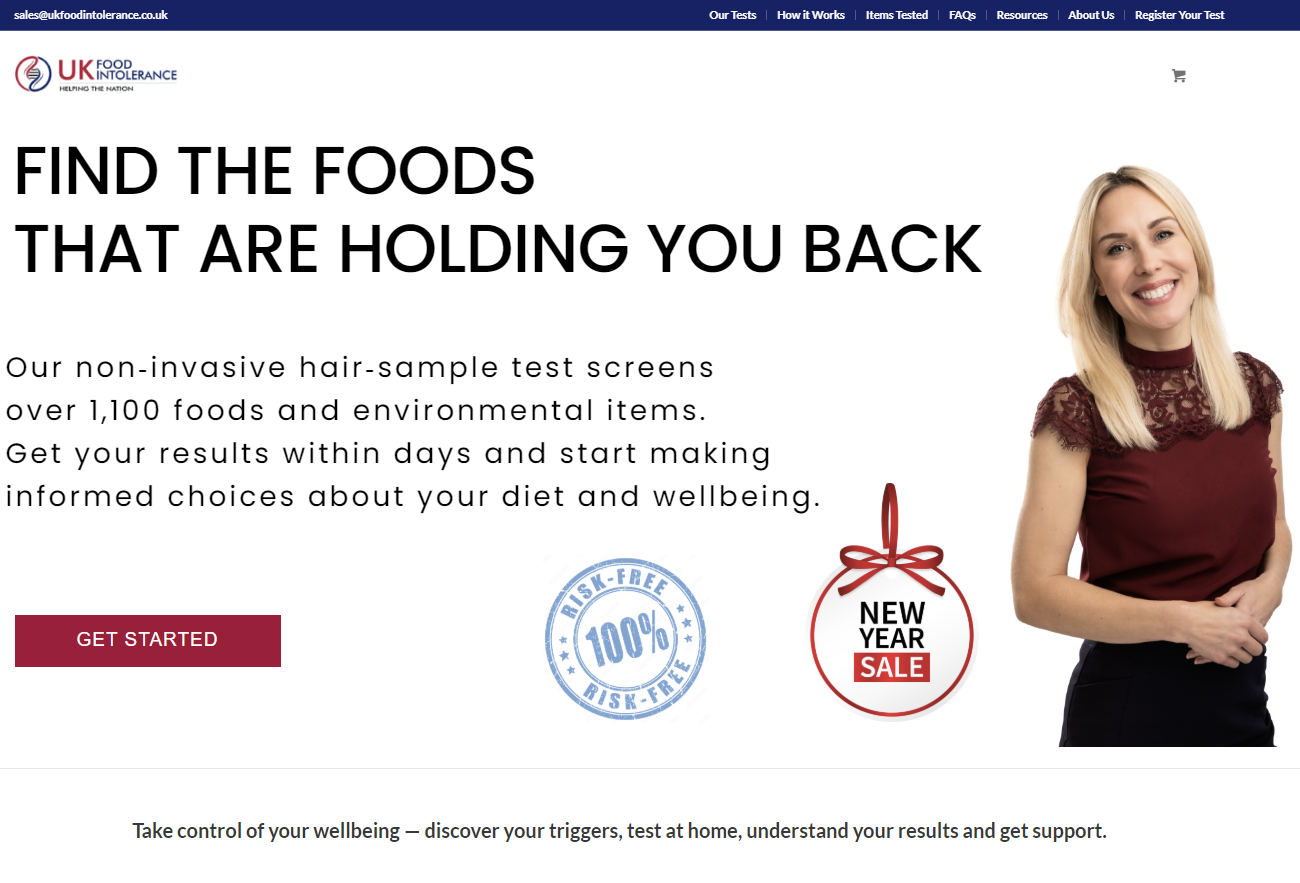
If you are researching food intolerance trends in a professional capacity or managing your own dietary sensitivities, getting clarity on specific triggers is the most practical step you can take. Ukfoodintolerance offers at-home testing that covers over 900 food and non-food items, using hair sample analysis processed at a UK-based laboratory. Results arrive within 48 to 72 hours as a detailed digital report. You can explore the full range of intolerance testing options to find the right fit, or browse the complete test catalogue for specific product details. For those interested in how testing supports personalised diet planning, the dietary matchmaking guide offers a clear, practical overview.
FAQ
How common are food intolerances in the UK in 2026?
Around 24% of UK adults report a food allergy or intolerance, according to Ipsos research. Dairy and gluten are the most commonly reported intolerances.
What is driving growth in UK free-from products?
The global food intolerance products market is growing at a 7.3% CAGR, driven by mainstream supermarket expansion, lifestyle purchasing, and rising gut health awareness. It is forecast to reach $21.91 billion in 2026.
Are at-home intolerance tests reliable?
At-home tests, including bio-resonance and hair sample methods, offer a practical starting point for identifying potential dietary triggers. They work best when used to guide elimination diets alongside professional advice, rather than as standalone clinical diagnoses.
What are the biggest food safety risks for intolerance sufferers in 2026?
Online food marketplaces and import vulnerabilities are the two highest-risk areas. Over 92% of UK environmental health professionals flag online sales as a significant concern, and fewer than 15% are confident in current border controls.
How can health professionals use intolerance testing data?
Professionals can use intolerance test results, particularly from comprehensive at-home kits covering 500 to 1,100 items, to support patient-led elimination diets, identify patterns in unexplained symptoms, and complement formal diagnostic pathways.









Leave a Reply
Want to join the discussion?Feel free to contribute!