

TL;DR:
- There is no reputable UK medical term or guideline for preventative intolerance screening.
- Commercial home tests for food intolerance, especially IgG blood tests, are unreliable and unvalidated.
- The safest approach involves consulting a healthcare professional and using evidence-based elimination diets.
You may have searched for ‘preventative intolerance screening’ hoping to find a simple, reliable way to spot food triggers before they cause problems. It sounds logical. Test early, act early, feel better. But no established medical term called ‘preventative intolerance screening’ exists in reputable UK health sources. That does not mean your symptoms are not real, or that testing has no place in your health journey. It means you deserve clear, honest information before spending money or cutting out foods unnecessarily. This guide sets the record straight.
Table of Contents
- What is preventative intolerance screening and does it actually exist?
- How commercial intolerance screening kits work
- Medical evidence: What do UK experts say?
- Safe and evidence-based approaches to food intolerance
- A fresh perspective: Why prevention should mean evidence, not anxiety
- Explore your next step with trusted guidance
- Frequently asked questions
Key Takeaways
| Point | Details |
|---|---|
| No official screening | There’s no recognised preventative intolerance screening in UK medical guidelines. |
| Home kits lack evidence | Commercial intolerance kits are not supported by robust scientific data and may mislead consumers. |
| Medical advice matters | For genuine concerns, NHS-supervised methods like elimination diets remain safest and most effective. |
| Beware restrictions | Relying on unsupported testing may lead to unnecessary food avoidance and nutritional imbalance. |
What is preventative intolerance screening and does it actually exist?
Now that we have outlined the confusion around the term, let us clarify what it genuinely means in a UK context.
The phrase ‘preventative intolerance screening’ sounds clinical and reassuring. In practice, it is a marketing term, not a medical one. No recognised medical concept by this name exists in NHS guidelines, NICE pathways, or peer-reviewed literature. Understanding what screening really means in a health context helps you ask better questions.
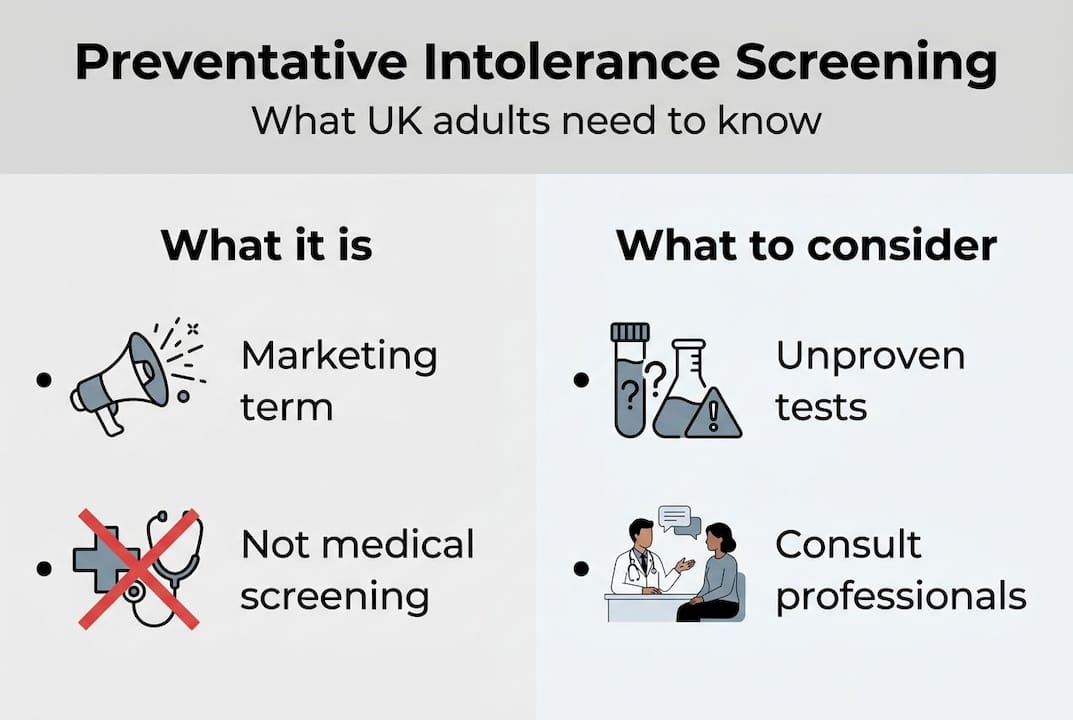
Screening, in medicine, refers to testing people without symptoms to detect a condition early. Think cervical smear tests or bowel cancer checks. Food intolerance does not work this way. Symptoms are the starting point, not something to predict.
It is also important to understand the difference between a food allergy and a food intolerance. These are not the same thing.
- Food allergy: An immune response involving IgE antibodies. Can be severe or life-threatening. Diagnosed via skin prick tests or specific IgE blood tests under medical supervision.
- Food intolerance: A non-IgE-mediated reaction. Usually digestive, slower to appear, and less severe. Harder to pin down.
- Sensitivity: A looser term often used commercially. Not a clinical diagnosis.
Commercial test providers use the word ‘preventative’ because it appeals to health-conscious consumers who want to act before symptoms worsen. That is understandable. But it can create a false sense of certainty.
“The language around food intolerance testing is often more confident than the science behind it. Knowing the difference between a marketing claim and a medical fact protects your health and your wallet.”
For practical intolerance testing guidance, specialist allergy clinics offer a clearer picture of what tests can and cannot tell you. The key takeaway: if you have symptoms, that is your starting point. If you do not, a home kit is unlikely to offer meaningful prevention.
How commercial intolerance screening kits work
With the term defined, it is important to look at what these commercially available screening kits actually offer.
Food intolerance screening typically refers to two main types of commercial at-home tests: IgG antibody blood tests and bioresonance hair tests. Both are widely available online and in high street health shops across the UK.
IgG blood tests involve a finger-prick blood sample sent to a laboratory. The lab measures your IgG antibody response to various foods. A high reading is presented as a potential intolerance. Bioresonance hair tests (the method we use at UK Food Intolerance) analyse a small hair sample for energetic frequencies associated with food and environmental items. Both are non-invasive and straightforward to complete at home.
Here is a quick comparison of what you typically get:
| Test type | Sample needed | Items tested | Result time | Approximate cost |
|---|---|---|---|---|
| IgG blood test | Finger-prick blood | 120 to 250 foods | 5 to 10 days | £75 to £150 |
| Bioresonance hair test | Small hair sample | 500 to 1,100 items | 48 to 72 hours | £35 to £99 |
| NHS elimination pathway | None (dietary diary) | Supervised process | Weeks | Free via GP |
The basic process for a home kit usually follows these steps:
- Order your chosen kit online and receive it by post.
- Collect your sample (hair strands or a finger-prick blood drop).
- Send the sample back to the laboratory using the prepaid envelope.
- Receive your digital results report, usually within 48 to 72 hours for hair tests.
- Use the report to guide a structured elimination approach.
You can see test types available in the UK to compare what suits your needs and budget.
Pro Tip: A results report showing many ‘reactors’ does not automatically mean you are intolerant to all of them. Use results as a starting point for an elimination diet, not as a definitive diagnosis. Always work through one food group at a time.
For further reading on IgG testing information, the American Academy of Allergy, Asthma and Immunology offers a balanced overview of what IgG results can and cannot confirm.
Medical evidence: What do UK experts say?
Understanding what the kits provide leads naturally to the question: how reliable are these approaches, and what do experts advise?
The honest answer is that the medical establishment is cautious. The NHS, Allergy UK, and the British Society for Allergy and Clinical Immunology (BSACI) do not recommend commercial IgG or bioresonance tests for diagnosing food intolerances. Their concern is not that your symptoms are imaginary. It is that these tests have not been validated to the standard required for clinical use.
IgG tests are unreliable and can lead to unnecessary dietary restrictions and nutritional deficiencies. Cutting out multiple food groups without proper guidance risks calcium, iron, and fibre shortfalls, particularly in children and older adults.
Key concerns raised by UK experts include:
- IgG antibodies are a normal immune response to food, not a marker of intolerance.
- Test sensitivity claims of 30 to 80% are not backed by independent clinical trials.
- True food intolerances affect around 1 to 5% of adults, far lower than the proportion flagged by commercial tests.
- Positive results can cause anxiety and lead to restrictive eating patterns without benefit.
Important: A positive result on a commercial kit is not a diagnosis. It is a signal worth discussing with a healthcare professional.
For a broader look at evidence and risks around intolerance testing in the UK, or to understand UK guidance on non-invasive tests, it helps to read what the clinical community actually recommends before acting on results.
The Which? test analysis found that several commercially sold kits produced inconsistent results when the same sample was tested twice. That is worth knowing before you eliminate an entire food group.
Safe and evidence-based approaches to food intolerance
Given these risks, here is how you can safely take action if you believe you have a food intolerance.
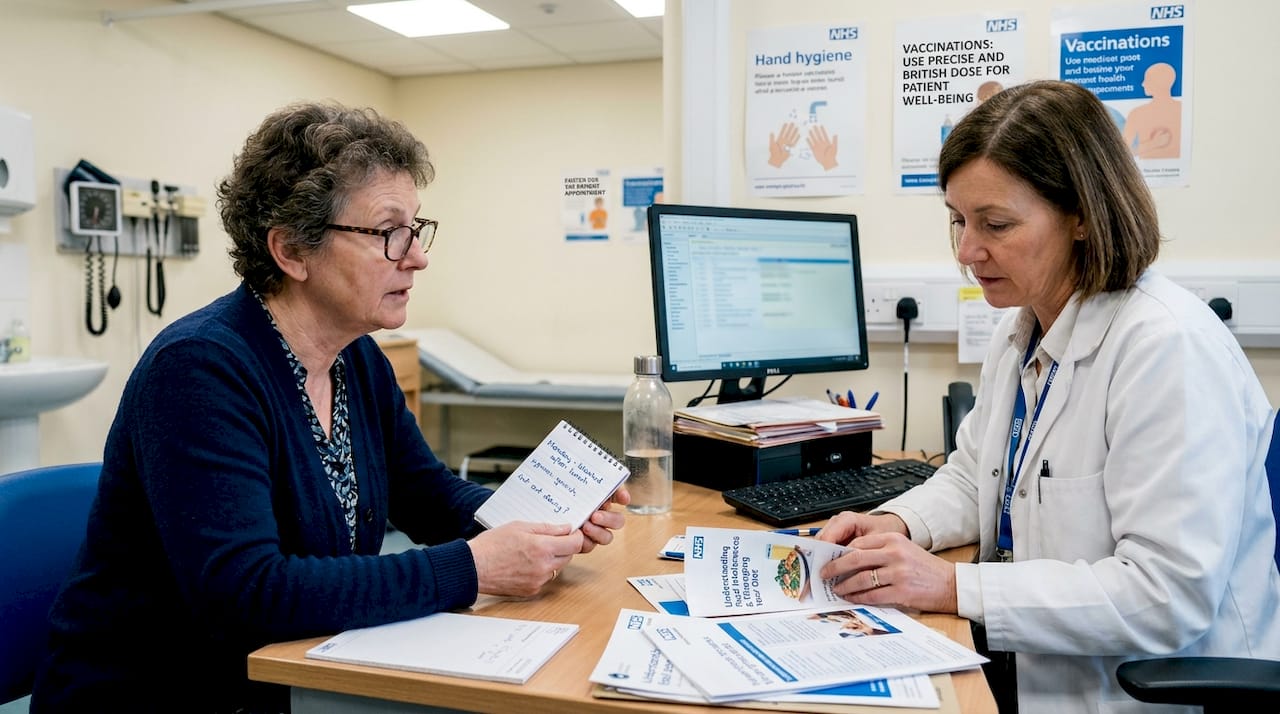
The good news is that safe, effective options do exist. They just require a little more patience than posting a hair sample and waiting 48 hours. Validated methods include clinical history, elimination diets under dietitian supervision, breath tests for conditions like lactose intolerance, and IgE testing for true allergies.
Here is a practical step-by-step approach:
- Start with your GP. Describe your symptoms clearly, including when they appear and which foods you suspect. Your GP can rule out other conditions and refer you appropriately.
- Keep a food and symptom diary. Track what you eat and how you feel for two to four weeks. Patterns often become visible without any test at all.
- Request a dietitian referral. A registered dietitian can guide you through a structured elimination diet safely, ensuring you do not miss key nutrients.
- Consider a breath test. For suspected lactose or fructose intolerance, a hydrogen breath test is a validated, non-invasive option available through some NHS and private clinics.
- Use home test results as a guide, not a verdict. If you have already taken a home kit, share the results with your GP or dietitian rather than acting on them alone.
For a step-by-step NHS guide to intolerance testing for digestive health, or to explore rapid diagnostic methods that are gaining traction in the UK, we have resources to support you at every stage.
For trusted clinical guidance, Allergy UK guidance outlines how to reduce risk and seek appropriate support.
Pro Tip: Avoid eliminating more than one food group at a time without professional support. Removing gluten, dairy, and eggs simultaneously makes it almost impossible to identify which food was actually causing your symptoms.
A fresh perspective: Why prevention should mean evidence, not anxiety
Stepping back, let us reconsider what prevention should actually look like for your health.
We understand the appeal of ‘preventative’ testing. Feeling unwell without a clear explanation is frustrating. When a kit promises answers in 48 hours, it is tempting. But genuine prevention is not about generating a long list of suspect foods. It is about understanding your body with reliable information.
The marketing around these kits is clever. Words like ‘preventative’, ‘comprehensive’, and ‘personalised’ create confidence. But confidence built on an unvalidated test can lead you further from the answers you need, not closer.
That said, when testing is useful is a real and important question. Used thoughtfully, alongside professional guidance and a structured elimination approach, home tests can be a helpful starting point for people who are struggling to get traction through the NHS. They are not a replacement for clinical assessment. They are a tool.
Real prevention means working with your body, not against it. It means seeking personalised, supervised care. It means not cutting out foods based on a single data point. That is the kind of prevention that genuinely supports long-term wellbeing.
Explore your next step with trusted guidance
If you are ready to make informed decisions about food intolerances, here are your next steps.
At UK Food Intolerance, we believe you deserve clear information before making any decisions about your diet or health. Whether you are curious about what is available or ready to take action, exploring your UK intolerance test options is a good place to start.
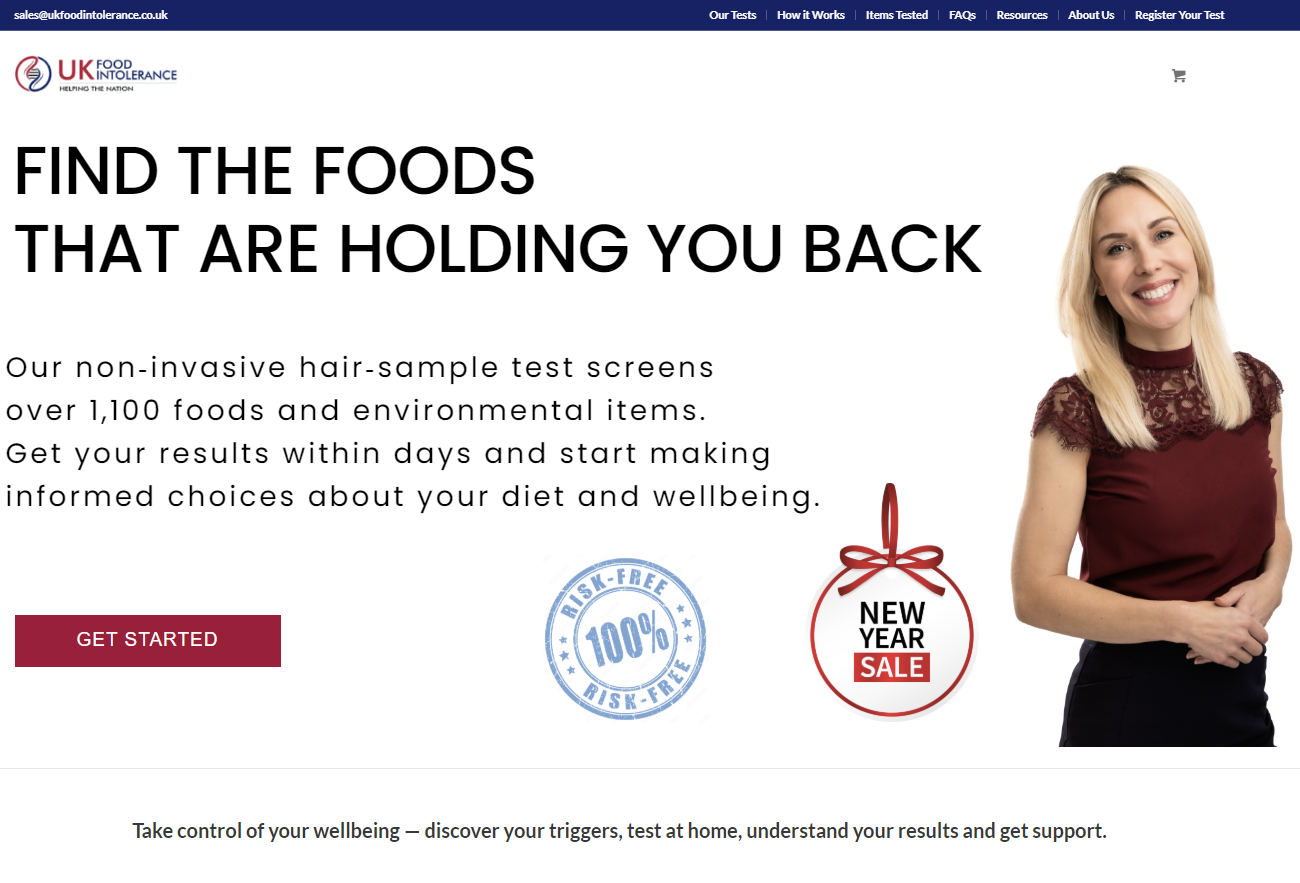
Our resources are built around education first. We want you to understand what a test can and cannot tell you, so that any results you receive are genuinely useful. You can explore our test range to compare methods, item counts, and turnaround times. Our hair-based bioresonance tests are non-invasive, fast, and designed to give you a practical starting point for an elimination approach, not a final diagnosis. We are here to support your journey, not to replace your GP.
Frequently asked questions
Is preventative intolerance screening a real medical test?
No, ‘preventative intolerance screening’ is not recognised in UK medical guidelines and has no established scientific basis as a clinical concept.
Do home intolerance tests actually work?
Most experts agree that commercial home tests, particularly IgG-based kits, are unreliable for diagnosing intolerances and may lead to unhelpful or unnecessary dietary changes.
What is the safest way to check for food intolerances?
The safest method is to consult your GP and follow an evidence-based process such as an elimination diet supervised by a registered dietitian.
Could these tests cause harm?
Relying solely on home kits can lead to unnecessary dietary restrictions and a real risk of nutritional deficiencies, particularly if multiple food groups are removed without guidance.
What percentage of people in the UK have a true food intolerance?
True food intolerances affect around 1 to 5% of adults, which is considerably lower than the proportion of people flagged as reactive by commercial tests.










Leave a Reply
Want to join the discussion?Feel free to contribute!