
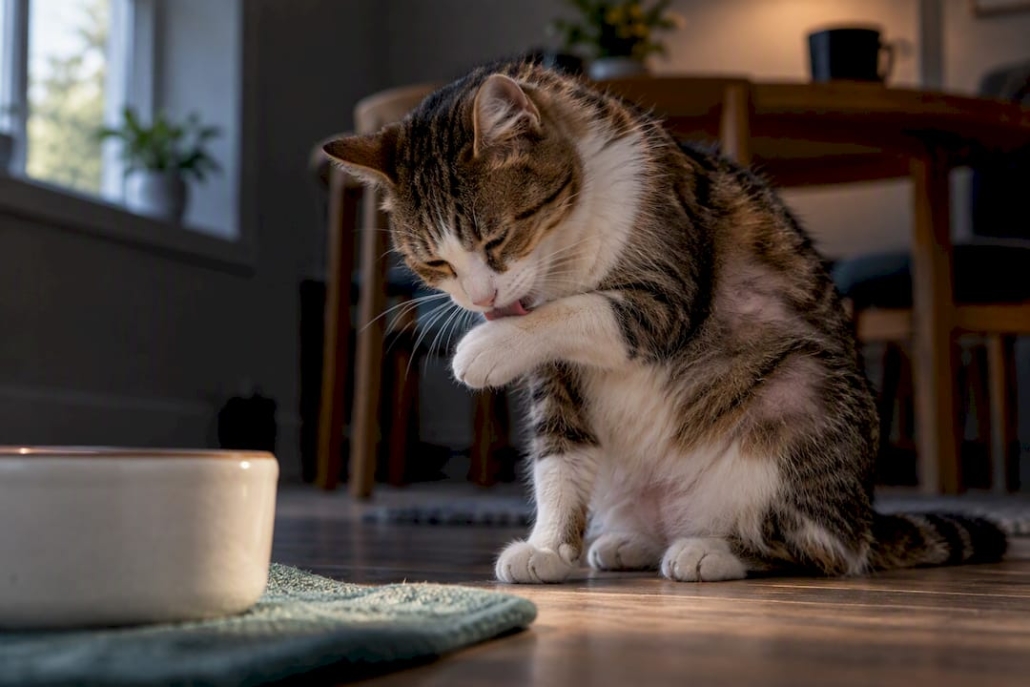
If your cat shows persistent head or neck itching, or repeated vomiting after meals, food intolerance or allergy is a likely cause. Skin itching around the head, neck and ears, along with obsessive grooming, usually points to a food allergy. Vomiting or diarrhoea soon after eating more often signals food intolerance or a digestive issue. Either way, start logging what your cat eats and when symptoms appear, then speak to your vet.
TL;DR:
- Gastrointestinal symptoms like vomiting after eating can appear within hours in cats with food intolerance, while allergic reactions typically develop after months or years.
- Skin problems such as itching, crusty bumps, and recurrent ear infections usually indicate a food allergy, often involving non-seasonal itching around the head and neck.
- An elimination diet requires strict compliance over 8 to 12 weeks, with symptoms often improving in one to two weeks for gut issues and six to twelve weeks for skin signs.
- Diagnostic blood, saliva, or hair tests are ineffective on their own; a veterinarian must supervise a controlled food trial to confirm a food allergy or intolerance.
- At-home pet testing panels, processed in UK labs, can help identify potential triggers but should always be discussed with a vet as part of a comprehensive diagnosis.
Table of Contents
- What are the symptoms of food intolerance and allergies in cats?
- How quickly do symptoms appear after eating?
- Food allergy or food intolerance: what’s the difference?
- How do vets diagnose a suspected food problem?
- Treating and managing a food-related reaction
- Can at-home testing help identify your cat’s triggers?
- When should you call the vet?
- What happens if food intolerance goes untreated?
- A note on patience and record-keeping
- Support your elimination diet with an at-home pet test
- Sources
- FAQ
What are the symptoms of food intolerance and allergies in cats?
Skin problems dominate the picture for feline food allergy. Vets look for non-seasonal itching, meaning it doesn’t ease off in winter the way flea or pollen allergies sometimes do. Common presentations include:
- Persistent scratching or scabbing around the head, neck and ears
- Miliary dermatitis, small crusty bumps scattered across the back and neck
- Eosinophilic plaques, raised, red, often ulcerated patches on the skin
- Self-induced hair loss from constant licking or chewing
- Recurring ear infections that don’t clear up with standard treatment
Gastrointestinal signs tell a different story and often point more towards intolerance. Watch for vomiting (note whether it happens once occasionally or several times a week), diarrhoea (loose stool with mucus can suggest large bowel involvement, while watery diarrhoea with weight loss suggests small bowel issues), reduced appetite, unexplained weight loss, and increased flatulence.
Behavioural and secondary signs matter too. A cat that grooms excessively can develop a dull, patchy coat, and broken skin from scratching often becomes infected, adding a second problem on top of the original one.
Gastrointestinal and skin signs aren’t mutually exclusive. According to the Cornell Feline Health Center, food allergy is the third most common feline allergy overall, and a smaller portion of affected cats show gastrointestinal signs alongside their skin symptoms. That overlap is exactly why a single symptom rarely gives you the full answer.
How quickly do symptoms appear after eating?
Timing tells you a lot. Intolerance tends to strike fast: digestive upset can appear within hours of a meal, sometimes after the very first exposure to a new food. Lactose intolerance in cats works this way, which is why a saucer of milk can cause diarrhoea the same afternoon, according to VCA Animal Hospitals.
Allergy is slower to build. Cats are usually eating the trigger protein for months, sometimes years, before the immune system reacts visibly.
- Once you start an elimination diet, GI signs often settle within one to two weeks
- Skin signs are slower to resolve, typically needing 6 to 12 weeks to show real improvement
- After a controlled re-challenge with the suspected trigger, symptoms can reappear anywhere from a few days to two weeks later.
Don’t judge a diet change too early. Give it the full window before deciding whether it worked.
Food allergy or food intolerance: what’s the difference?
Food allergy is an immune response. The body treats a specific protein as a threat and mounts a reaction every time it’s eaten, which is why allergic cats need lifelong avoidance of that ingredient. Food intolerance is different: it’s a digestive problem, not an immune one, usually caused by an inability to properly break down or process something in the food.
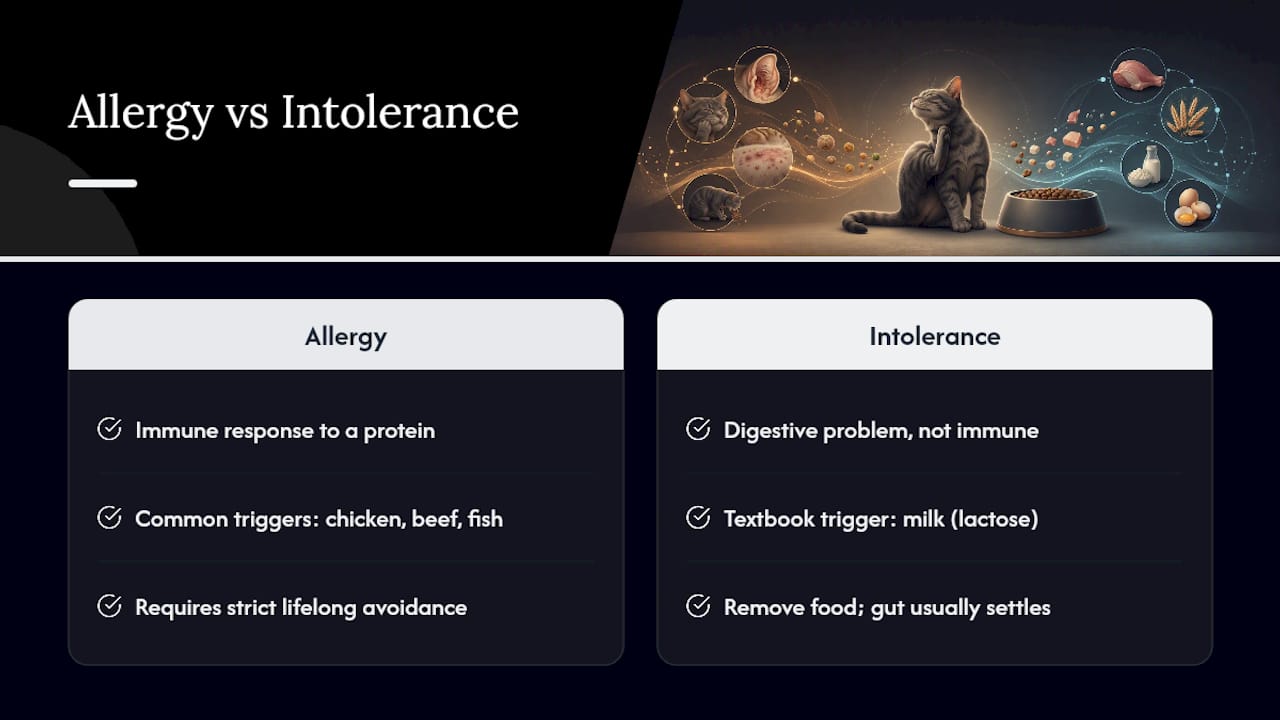
The clinical implications diverge sharply. An allergic cat needs strict, permanent avoidance of the trigger protein, because even small amounts can restart the reaction. A cat with intolerance often just needs that specific food removed and the gut given time to settle, without necessarily facing a lifetime restriction.
Milk is the textbook intolerance case; most adult cats lose the enzyme needed to digest lactose properly. Allergies, by contrast, tend to centre on animal proteins, with chicken, beef and fish among the most frequently implicated in cats. One common misconception is worth clearing up: grain is rarely the main culprit in feline food reactions, despite how often grain-free diets are marketed as the fix.
How do vets diagnose a suspected food problem?
Before touching the diet, a vet will usually rule out fleas, mites, parasites and skin infections, since these can look identical to a food reaction. Cats with persistent symptoms and no clear cause are often referred to a dermatology or internal medicine specialist.
The diagnostic gold standard is a strict elimination diet, also called a food trial. VCA Animal Hospitals outlines the process:
- Switch to a novel-protein or hydrolysed diet your cat has never eaten before
- Feed only that diet, with nothing else, for 8 to 12 weeks
- Track symptoms weekly, ideally with photos
- If signs improve, reintroduce the original food (the “challenge”)
- If symptoms return within days to two weeks, the diagnosis is confirmed
Strict compliance is what makes or breaks the trial. Treats, flavoured medication, and access to another pet’s bowl or outdoor scavenging can all reintroduce the trigger and invalidate weeks of effort, a point Today’s Veterinary Practice flags as the leading reason food trials fail.
It’s worth being clear about what doesn’t work here. Blood, saliva and hair antigen tests marketed for diagnosing food allergy are not considered reliable for confirming an immune-mediated reaction, according to VCA’s clinical guidance on elimination trials.
Pro Tip: Keep a simple diary on your phone: date, food, symptom, severity out of 10. Eight weeks of consistent notes is more useful to a vet than a vague memory of “it’s been bad lately”.
Treating and managing a food-related reaction
Once you know (or strongly suspect) a food trigger, management usually follows one of three routes. Novel-protein diets use an ingredient your cat has never eaten, giving the immune system nothing familiar to react to. Hydrolysed diets break proteins down into fragments too small for the immune system to recognise, useful when you’re not sure which protein is the problem. Strict avoidance simply means permanently cutting the confirmed trigger.
While the gut or skin recovers, vets may prescribe short courses of antibiotics for secondary skin infections, or anti-itch medication to break the scratch-and-damage cycle.
A few household habits make a genuine difference:
- Check treats and flavoured medicines for the trigger ingredient before giving them
- Block access to other pets’ food bowls and limit outdoor hunting where possible
- Switch foods gradually over 7 to 10 days to avoid stomach upset from the change itself
Pro Tip: Photograph flare-ups weekly under the same lighting. A side-by-side comparison shows improvement (or relapse) far more clearly than memory alone. An elimination diet checklist can help you structure the weeks ahead.
Can at-home testing help identify your cat’s triggers?
At-home hair sample kits for pets are available, including the Intro 300, Essential 500 and Peak 700 panels, processed at a UK laboratory with digital reports typically ready in 48 to 72 hours. These panels generate a structured list of candidate ingredients worth investigating during an elimination diet, rather than a clinical diagnosis on their own.
Veterinary consensus, again per VCA Animal Hospitals, is that serologic and hair-based tests cannot confirm immune-mediated food allergy. The sensible workflow: test, discuss the results with your vet, then use them to help design a food trial your vet can supervise. Instructions for collecting a hair sample at home are straightforward and non-invasive.
When should you call the vet?
Call promptly for severe vomiting, bloody diarrhoea, rapid weight loss, or infected skin from scratching. Bring a diet history, symptom timeline, photos and any previous food trial records to the appointment.
What happens if food intolerance goes untreated?
Left unmanaged, skin reactions rarely stay contained. Constant scratching and licking break the skin barrier, and open wounds pick up secondary bacterial or yeast infections that need their own course of treatment on top of the original problem. Chronic ear inflammation can progress to a point where it becomes painful and much harder to resolve.
On the digestive side, ongoing vomiting or diarrhoea leads to poor nutrient absorption, and weight loss follows. In an older cat, or one with an existing health condition, that weight loss can tip into a genuine welfare concern rather than a minor inconvenience.
There’s also a diagnostic cost to waiting. The longer symptoms run unchecked, the harder it becomes to separate the original trigger from complications layered on top of it, muddying the elimination trial you’ll eventually need to run. Chronic, low-grade inflammation from an untreated reaction can also make a cat generally more reactive to other allergens over time, according to the overlapping-presentation findings noted in the PMC review of feline food allergy diagnosis.
None of this is a reason to panic. It’s a reason to act while the picture is still simple: one main symptom, one likely trigger, and a straightforward path to a food trial.
A note on patience and record-keeping
Methodical owners get answers faster than anxious ones. Keep photos, keep notes, and treat your vet as a partner rather than a last resort. The elimination diet checklist is worth bookmarking before you start.
— Rob
Support your elimination diet with an at-home pet test
Ukfoodintolerance is the practical middle step between spotting symptoms and starting a formal food trial with your vet. Instead of guessing which of a dozen proteins might be behind your cat’s scratching, our pet panels (Intro 300, Essential 500 and Peak 700) give you a structured shortlist to work from, built from a hair sample you collect at home yourself.

The process typically involves ordering a kit, collecting a small hair sample following included instructions, posting it to a UK laboratory, and receiving a digital report within 48 to 72 hours. Many owners use their results to build a more targeted elimination diet, narrowing down candidate ingredients before the formal food trial begins with veterinary oversight. This is worth saying plainly: testing supports your vet’s diagnosis, it doesn’t replace it. Browse the full pet testing range to find the panel that fits your budget and start narrowing down your cat’s triggers this week.
Sources
Primary sources: Cornell Feline Health Center, PDSA, PMC review.
- Food allergies | Cornell Feline Health Center
- Food allergy in the cat: a diagnosis by elimination — PMC
FAQ
What are the five cat foods to avoid?
There’s no fixed universal list, since triggers vary cat to cat, but the most frequently implicated ingredients are chicken, beef, fish, dairy and, less commonly, egg. Grain is rarely the primary culprit in feline food reactions, despite how it’s often marketed.
What should I feed a cat with a food sensitivity?
Vets typically recommend a novel-protein diet (one your cat has never eaten) or a hydrolysed diet where proteins are broken into fragments too small to trigger a reaction. The right choice depends on your cat’s specific history, so it’s best confirmed with your vet during a supervised food trial.
How long does it take for a cat to show signs of food allergy?
Food intolerance can cause symptoms within hours of a meal, while true food allergy typically develops after months or years of eating the same protein. Once an elimination diet starts, gastrointestinal signs often improve within one to two weeks, while skin signs can take 6 to 12 weeks to settle, per VCA Animal Hospitals.
How do I know if my cat needs sensitive stomach food?
Recurring vomiting, loose stools, flatulence or a patchy appetite after meals are the main signs your cat may need a more digestible diet. If these signs persist for more than a couple of weeks, or worsen, book a vet appointment rather than switching foods repeatedly on your own.
Can an at-home test diagnose a food allergy in my cat?
No test, including hair, blood or saliva based options, can confirm an immune-mediated food allergy on its own. Ukfoodintolerance’s pet panels are designed to generate a candidate list of ingredients worth investigating, which you then discuss with your vet and use to help structure a proper elimination diet.









Leave a Reply
Want to join the discussion?Feel free to contribute!