

You’ve likely seen adverts for comprehensive intolerance screening tests promising to identify hundreds of food sensitivities from a single hair sample or blood draw. These tests sound appealing, especially when you’re struggling with unexplained bloating, fatigue, or digestive discomfort. Yet UK medical bodies deem hair bioresonance, IgG, and alternative tests unreliable for intolerance diagnosis, leaving many people confused about what truly works. This article clarifies what comprehensive intolerance screening genuinely means, which methods have scientific backing, and how to approach testing sensibly to improve your wellbeing.
Table of Contents
- Key takeaways
- Understanding intolerance screening: what it is and what it isn’t
- Scientific evaluation of intolerance tests and their reliability
- Practical guidance for UK residents seeking intolerance screening
- Comparing commercial comprehensive intolerance screenings with evidence-based approaches
- Explore trusted intolerance testing options with UK Food Intolerance
- Frequently asked questions
Key Takeaways
| Point | Details |
|---|---|
| Unvalidated tests | Many popular intolerance tests such as IgG measurements and hair analyses lack scientific validation in the UK context. |
| Validated testing | Validated intolerance diagnostics include hydrogen breath tests, supervised elimination diets, and careful symptom monitoring. |
| Process not a test | Comprehensive intolerance screening is a diagnostic process guided by professional input rather than a single online panel. |
| GP first approach | Begin with your GP to rule out other conditions before testing. |
| No proven symptom relief | Randomised trials show commercial broad panels do not provide reliable symptom relief compared with standard evidence based assessment. |
Understanding intolerance screening: what it is and what it isn’t
Comprehensive intolerance screening should be a diagnostic approach combining detailed medical history, dietary evaluation, and validated tests to identify foods or substances triggering your symptoms. It’s not a single test you order online. The term has been widely misused in marketing, with companies offering panels testing hundreds or thousands of items simultaneously through methods that sound scientific but lack clinical validation.
Common unproven tests include:
- IgG antibody blood tests that measure immune responses to foods but cannot distinguish between normal exposure and clinical intolerance
- Hair sample analysis claiming to detect sensitivities through bioresonance or similar techniques with no peer-reviewed evidence
- Vega testing and electrodermal screening devices that purport to measure energy imbalances
- Kinesiology or muscle testing approaches lacking reproducible scientific results
These methods are fundamentally different from validated intolerance diagnostics. IgG tests reflect exposure or tolerance, not intolerance. Your body naturally produces IgG antibodies to foods you eat regularly, which is a normal immune response. Elevated IgG levels simply indicate you’ve consumed those foods recently, not that they’re causing your symptoms.
Validated intolerance tests involve hydrogen breath tests for conditions like lactose intolerance or small intestinal bacterial overgrowth, elimination diets supervised by registered dietitians, and careful symptom monitoring. These approaches require time and professional guidance but deliver reliable results. Understanding intolerance testing in UK healthcare helps you distinguish between marketing claims and evidence-based practice.
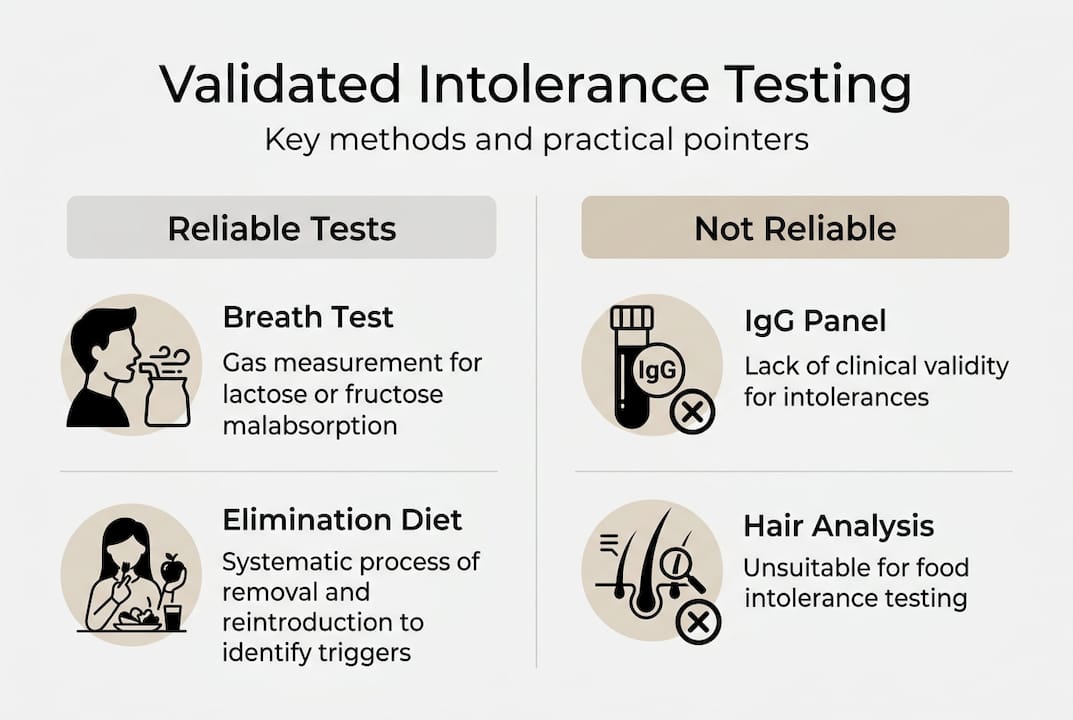
It’s crucial to understand that intolerance screening differs fundamentally from allergy diagnostics. Allergies involve IgE antibodies and can cause immediate, potentially severe reactions. Intolerances typically produce delayed symptoms like bloating, headaches, or fatigue, making them harder to identify without systematic approaches.
Scientific evaluation of intolerance tests and their reliability
The scientific community has extensively evaluated various testing methods for food sensitivities. Skin prick tests and specific IgE blood tests have strong negative predictive value for allergies, meaning a negative result reliably rules out IgE-mediated allergic reactions. However, these tests don’t diagnose food intolerance, which involves different immune mechanisms or non-immune reactions like enzyme deficiencies.
Oral food challenges remain the gold standard for confirming food allergies under medical supervision. During these challenges, you consume increasing amounts of the suspected food whilst being monitored for reactions. This method is rarely used for intolerance diagnosis because reactions are typically delayed and less severe, making real-time observation impractical.
No empirical data validates commercial comprehensive intolerance screening for symptom relief. Randomised controlled trials comparing commercial test-guided elimination diets with standard approaches consistently show no significant benefit from the commercial tests. People following elimination diets based on validated clinical assessment achieve similar or better outcomes without the expense of unproven testing.
| Test type | Primary purpose | Scientific validation | Limitations |
|---|---|---|---|
| Skin prick test | IgE allergy diagnosis | Strong evidence | Cannot diagnose intolerance; only immediate allergies |
| Specific IgE blood test | IgE allergy confirmation | Well validated | Does not identify non-IgE reactions or intolerances |
| IgG antibody test | None validated | No evidence for intolerance | Measures normal exposure, not clinical reactivity |
| Hydrogen breath test | Lactose/fructose malabsorption | Validated for specific sugars | Limited to carbohydrate intolerances |
| Elimination diet | Identify trigger foods | Gold standard for intolerance | Requires professional guidance and time commitment |
| Hair analysis | None validated | No scientific support | Results not reproducible or clinically meaningful |
Pro Tip: Be cautious of any test claiming to identify hundreds of intolerances simultaneously. The human immune system doesn’t work in ways that allow such broad screening through a single sample. Genuine intolerance identification requires systematic investigation of your individual symptoms and dietary patterns.
Understanding industry standards in UK intolerance testing helps you evaluate whether a testing service follows evidence-based protocols or relies on unvalidated methods.
Practical guidance for UK residents seeking intolerance screening
If you’re experiencing unexplained symptoms you suspect relate to food, start with your GP. They’ll assess whether your symptoms could indicate conditions requiring medical treatment, such as coeliac disease, inflammatory bowel disease, or irritable bowel syndrome. Many symptoms attributed to food intolerance actually stem from treatable medical conditions.
Follow these evidence-based steps:
- Schedule a GP consultation to discuss your symptoms and medical history in detail
- Complete any recommended medical tests to rule out conditions like coeliac disease before eliminating gluten
- Request validated breath tests if lactose intolerance or small intestinal bacterial overgrowth is suspected
- Ask for referral to a registered dietitian specialising in food intolerance for supervised elimination diet guidance
- Maintain a detailed food and symptom diary for at least two weeks before your appointments
- Follow the elimination and reintroduction protocol systematically, testing one food group at a time
Start with your GP for differential diagnosis, then pursue validated breath tests for conditions like SIBO or lactose intolerance. Elimination diets guided by dietitians remain the most reliable method for identifying food triggers. Your dietitian will help you remove suspected foods systematically, then reintroduce them one at a time whilst monitoring symptoms.
Avoid testing during pregnancy or whilst breastfeeding, as hormonal changes can affect results. Don’t pursue testing immediately after following elimination diets, as temporary food avoidance can alter your immune responses and produce misleading results. Wait at least four weeks of normal eating before any antibody-based testing.
Pro Tip: Keep a detailed symptom diary noting not just what you eat, but also stress levels, sleep quality, menstrual cycle phase, and exercise patterns. Food intolerance symptoms can be influenced by these factors, and comprehensive tracking helps identify true triggers versus coincidental associations.
A step-by-step intolerance testing guide provides structured support through this process, helping you approach testing systematically rather than randomly eliminating foods based on unvalidated test results.
Comparing commercial comprehensive intolerance screenings with evidence-based approaches
Commercial comprehensive intolerance screening packages typically test 100 to 1,000 items using IgG antibody panels, hair analysis, or bioresonance methods. These tests appeal to people desperate for answers, offering quick results and extensive reports. However, the scientific community remains clear that no RCTs prove symptom relief from commercial comprehensive intolerance screening.

Evidence-based approaches begin with thorough medical history taking, considering symptom patterns, timing, severity, and potential triggers. Healthcare professionals assess whether symptoms align with known intolerance patterns before recommending targeted testing. This personalised approach costs less than comprehensive commercial panels and delivers more reliable results.
| Aspect | Commercial screening | Evidence-based approach |
|---|---|---|
| Testing method | IgG panels, hair analysis, bioresonance | Clinical history, validated breath tests, elimination diets |
| Number of items tested | 100-1,000+ substances | Focused on suspected triggers based on symptoms |
| Scientific validation | No RCT evidence for symptom relief | Strong evidence from clinical trials |
| Professional guidance | Often minimal or automated reports | Dietitian and GP supervision throughout |
| Cost | £100-£400 for initial test | £0-£200 total with NHS referrals |
| Time to results | 1-2 weeks | 4-8 weeks for complete elimination protocol |
| Outcome reliability | High false positive rate | Accurately identifies true triggers |
Common misconceptions about commercial tests include:
- Believing that testing more items provides more comprehensive results, when actually it increases false positives
- Assuming laboratory analysis guarantees accuracy, regardless of whether the test method has scientific validity
- Thinking expensive tests must be better than clinical assessment and elimination diets
- Expecting test results to provide definitive answers without requiring dietary experimentation
If you’ve already received commercial test results, interpret them cautiously. Don’t eliminate large numbers of foods based solely on test results without professional guidance. Unnecessary dietary restrictions can lead to nutritional deficiencies and disordered eating patterns. Instead, discuss results with a registered dietitian who can help you prioritise which potential triggers to investigate through systematic elimination and reintroduction.
Understanding comprehensive intolerance screening for better wellbeing means recognising that effective screening is a process, not a product. It requires professional guidance, systematic investigation, and patience to identify your individual triggers reliably.
Explore trusted intolerance testing options with UK Food Intolerance
Finding reliable answers about food sensitivities doesn’t have to be overwhelming. UK Food Intolerance offers testing services designed to help you identify potential triggers affecting your wellbeing. Their comprehensive approach tests over 1,100 items including foods and environmental factors, providing detailed insights into substances that may be impacting your digestive health or causing unexplained symptoms.

Their testing process is straightforward, requiring only a small hair sample you collect at home. Results arrive within 48 to 72 hours, giving you clear information to discuss with your healthcare provider or use as a starting point for supervised elimination diets. Whilst professional guidance remains essential for interpreting results and implementing dietary changes safely, having detailed testing data can help focus your investigation on the most likely triggers.
Explore their range of food intolerance tests to find options matching your needs and budget. Understanding why you might need a food intolerance test helps you decide whether testing could benefit your specific situation. Browse their complete selection in the intolerance tests archives to compare testing panels and choose the most appropriate option for your circumstances.
Frequently asked questions
What’s the difference between intolerance and allergy testing?
Allergy testing identifies IgE-mediated immune reactions causing immediate symptoms like hives, swelling, or anaphylaxis using validated skin prick or blood tests. Intolerance testing aims to identify delayed reactions or non-immune responses like enzyme deficiencies, but many commercial intolerance tests lack scientific validation. True intolerance identification typically requires elimination diets rather than laboratory tests.
Can IgG antibody tests diagnose food intolerance?
No, IgG tests cannot reliably diagnose food intolerance. These antibodies indicate normal exposure to foods you eat regularly, not clinical intolerance. UK medical bodies consistently advise against using IgG tests for intolerance diagnosis because elevated levels don’t correlate with symptoms. Elimination diets supervised by dietitians remain the gold standard for identifying food triggers.
When should I see my GP about unexplained symptoms?
Consult your GP if you experience persistent digestive symptoms, unexplained fatigue, skin problems, or other issues affecting your quality of life. They’ll rule out conditions requiring medical treatment before exploring food intolerance. Never eliminate major food groups without medical guidance, especially gluten before coeliac testing, as this can interfere with accurate diagnosis.
How do elimination diets work for identifying intolerances?
Elimination diets involve removing suspected trigger foods for two to four weeks whilst monitoring symptoms, then systematically reintroducing foods one at a time. You track symptom changes carefully during reintroduction to identify which foods cause reactions. This process requires dietitian supervision to ensure nutritional adequacy and proper methodology. It’s more reliable than unvalidated commercial tests for identifying true food triggers.
Is commercial comprehensive intolerance screening evidence-based?
No, commercial comprehensive screening packages lack randomised controlled trial evidence proving they improve symptoms or health outcomes. These tests often use methods like IgG antibody panels or hair analysis that have no scientific validation for intolerance diagnosis. Evidence-based approaches involve clinical history, validated breath tests for specific conditions, and supervised elimination diets rather than broad commercial screening panels.










Leave a Reply
Want to join the discussion?Feel free to contribute!