

Imagine receiving your food intolerance test results and confidently transforming your diet to eliminate persistent bloating, headaches, or fatigue. Yet many UK adults confuse IgE-mediated allergies with IgG intolerances, leading to ineffective dietary changes or missed diagnoses. Understanding how to read intolerance test reports is key to identifying triggers and managing symptoms effectively. This guide explains how these tests work, what results mean, and how to apply them safely.
Table of Contents
- Introduction To Food Intolerance Testing
- Understanding Intolerance Test Reports And Scales
- Allergy Vs Intolerance: Critical Differences For Interpretation
- Common Symptoms And Significance Of Test Results
- Common Misconceptions And Correct Interpretations
- Practical Use: Elimination Diets And Lifestyle Changes
- Using Test Reports To Guide Symptom Relief
- Seeking Professional Advice For Safe Management
- Explore UK Food Intolerance Testing Solutions
- Frequently Asked Questions
Key Takeaways
| Point | Details |
|---|---|
| Distinguish IgE allergies from IgG intolerances | Allergies cause immediate reactions; intolerances develop slowly with different symptoms |
| Interpret test results by reactivity levels | Categorize foods as high, moderate, or low reactivity to prioritize elimination |
| Use structured elimination diets | Remove high reactive foods first for 12 weeks before gradual reintroduction |
| Track symptoms consistently | Link dietary changes with health improvements through detailed symptom diaries |
| Seek professional guidance | Ensure safe nutritional management and validate symptom correlations with experts |
Introduction to Food Intolerance Testing
Food intolerance occurs when your body struggles to digest certain foods, triggering uncomfortable symptoms hours or days after consumption. Unlike IgE-mediated allergies that cause rapid, severe reactions, IgG-associated intolerances develop slowly and produce diverse symptoms ranging from digestive issues to skin problems. Research suggests up to 20% of UK adults experience some form of food intolerance, yet many remain undiagnosed for years.
Several testing options exist for identifying food intolerances. IgG antibody blood tests measure immune responses to specific foods, while bio-resonance technology offers a non-invasive alternative using hair samples to detect sensitivities. Bio-resonance tests provide remarkable convenience, analyzing reactions to 500+ items including foods, environmental factors, and additives with results delivered within 48 to 72 hours.
Common testing approaches include:
- IgG antibody blood tests measuring immune system responses
- Bio-resonance hair sample analysis detecting energy frequency changes
- Elimination diet protocols guided by preliminary test findings
- Combined approaches using multiple methods for comprehensive assessment
Understanding your test report is crucial for effective symptom management. Many UK adults struggle to interpret their results correctly, leading to unnecessary dietary restrictions or inadequate elimination strategies. Our comprehensive guide to food intolerance testing provides additional context on selecting appropriate tests, while the BDA food allergy and intolerance testing resource offers professional guidance on distinguishing between different testing methods and their clinical validity.
Understanding Intolerance Test Reports and Scales
Most UK intolerance test reports use a standardized 0 to 5 IgG reactivity scale to quantify your body’s response to specific foods. This numerical system helps you understand which foods trigger the strongest reactions and should be prioritized for elimination. Reports categorize foods into high, moderate, and low reactivity levels based on these scores, enabling personalized dietary planning.

The table below shows typical reactivity scales and recommended actions:
| Reactivity Level | Score Range | Recommended Action |
|---|---|---|
| High | 4 to 5 | Eliminate immediately for 12 weeks |
| Moderate | 2 to 3 | Reduce frequency or eliminate after high foods |
| Low | 0 to 1 | Monitor symptoms; no immediate action needed |
Prioritizing foods based on reactivity ensures you address the most problematic triggers first:
- Start with all high reactivity foods, removing them completely from your diet
- Wait at least 4 weeks before addressing moderate reactivity items
- Keep low reactivity foods in your diet unless symptoms persist
- Document each elimination phase to track symptom changes accurately
- Plan reintroduction systematically, starting with lowest reactive foods
Pro tip: Double check ambiguous results by comparing symptom severity with reactivity scores. If a moderately reactive food consistently causes significant symptoms, treat it as high priority. Phased dietary changes prevent overwhelming lifestyle disruptions while maximizing symptom relief.
Personalized interpretation matters more than blanket food avoidance. Some people tolerate moderate reactivity foods well, while others experience symptoms from low reactivity items. Review your guide to food intolerance testing alongside your results, and use the test submission form to ensure accurate sample processing. Additional insights on reading food intolerance test results help clarify interpretation nuances for complex reports.
Allergy vs Intolerance: Critical Differences for Interpretation
Understanding the biological distinction between food allergies and intolerances prevents dangerous misinterpretation of test results. IgE-mediated allergies trigger immediate, often severe reactions within minutes to two hours of food consumption, potentially causing anaphylaxis requiring emergency treatment. IgG-mediated intolerances produce delayed, varied symptoms appearing several hours or days later, rarely posing immediate danger.
Key differences between allergies and intolerances include:
- Immune mechanism: Allergies involve IgE antibodies and histamine release; intolerances involve IgG antibodies and inflammatory responses
- Symptom timing: Allergic reactions occur within minutes to 2 hours; intolerance symptoms appear 2 to 72 hours later
- Severity: Allergies can be life threatening; intolerances cause discomfort but rarely danger
- Management approach: Allergies require complete avoidance and emergency medication; intolerances allow gradual elimination and potential reintroduction
“IgE-mediated allergy symptoms typically appear within 2 hours of food consumption, while IgG-associated intolerance reactions can take up to 72 hours to manifest, making correlation challenging without systematic tracking.”
Confusing allergy test results with intolerance tests creates serious risks. Using an intolerance test to self-diagnose a potential allergy may delay urgent medical care. Conversely, treating an intolerance as an allergy leads to unnecessarily restrictive diets and anxiety around safe foods. Allergy needs urgent care with epinephrine auto-injectors and immediate food avoidance, while intolerance management involves gradual dietary adjustments monitored over weeks.
The impact of intolerance testing on diets demonstrates how proper test interpretation improves quality of life without excessive restriction. Review the BDA allergy vs intolerance explanation to understand clinical distinctions and ensure you apply results appropriately.
Common Symptoms and Significance of Test Results
Recognizing symptoms associated with food intolerances helps you correlate test findings with real-world experiences. Typical intolerance symptoms include:
- Bloating and abdominal discomfort appearing 2 to 24 hours after meals
- Persistent headaches or migraines triggered by specific food groups
- Chronic fatigue unrelated to sleep quality or physical exertion
- Skin issues like eczema, rashes, or unexplained itching
- Brain fog, difficulty concentrating, or mood changes
- Joint pain or muscle aches without other medical explanation
The delayed onset of intolerance symptoms complicates identification. Unlike allergic reactions appearing within minutes, intolerance symptoms emerge several hours or even days after food ingestion. This delay makes pinpointing trigger foods difficult without systematic tracking and testing.
Correlating symptoms with test results guides effective food elimination priority. If your test shows high reactivity to dairy and you experience daily bloating, eliminating dairy becomes your first priority. Conversely, low reactivity foods causing no symptoms can remain in your diet safely.
Keeping a detailed symptom diary dramatically improves correlation accuracy. Record every meal, snack, and symptom with precise timing. Note symptom severity on a scale of 1 to 10, and track patterns over at least two weeks before making dietary changes. This documentation validates test results and reveals hidden triggers.
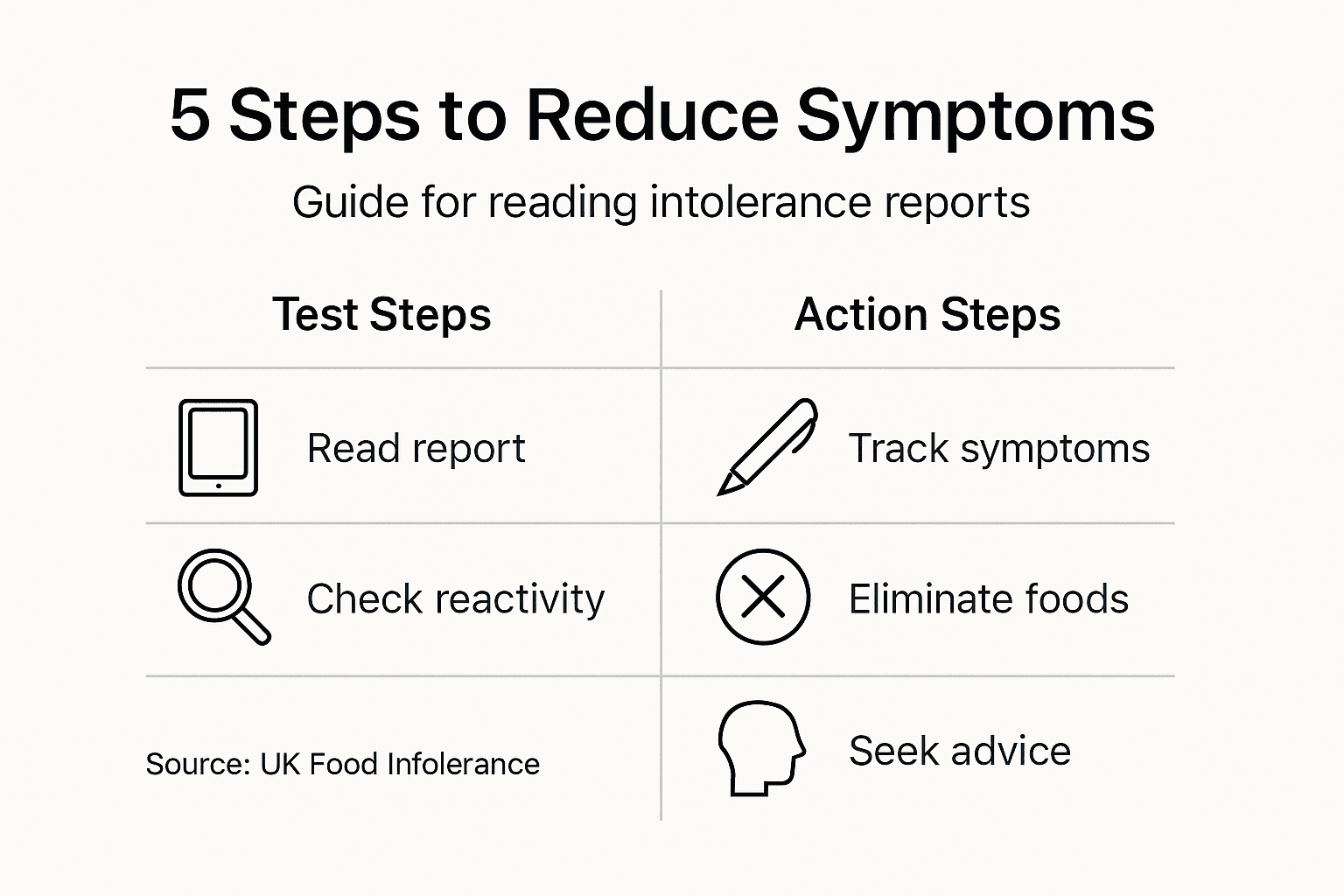
Symptom patterns inform personalized dietary planning better than test scores alone. Some people experience severe reactions to moderately reactive foods, while others tolerate high reactivity items in small amounts. Understanding your unique symptom profile alongside test results creates the most effective elimination strategy. Review common food intolerance symptoms to identify additional triggers you may have overlooked.
Common Misconceptions and Correct Interpretations
Several widespread myths about food intolerance testing lead to poor interpretation and ineffective dietary changes. Correcting these misconceptions improves confidence and outcomes:
- Myth: Allergy and intolerance tests are interchangeable and measure the same thing
- Reality: Allergy tests measure IgE antibodies for immediate reactions, while intolerance tests measure IgG antibodies for delayed responses, requiring completely different management strategies
- Myth: Food intolerance tests are unreliable and lack scientific validity
- Reality: While debate exists about IgG testing, many UK adults report significant symptom improvement following structured elimination based on test results when combined with professional guidance
- Myth: You must eliminate all reactive foods immediately and permanently
- Reality: Gradual, phased elimination prioritizing high reactivity foods first prevents nutritional deficiencies and allows your body to adapt
- Myth: Once a food shows reactivity, you can never eat it again
- Reality: After 12 weeks elimination, many people successfully reintroduce moderately reactive foods in small amounts without symptoms
“Many consumers mistakenly conflate food allergy tests with food intolerance tests, leading to misunderstanding of their results and inappropriate management strategies that may delay proper diagnosis or create unnecessary dietary restrictions.”
Beware of unvalidated alternative tests lacking scientific evidence. Hair analysis for nutritional deficiencies, kinesiology, and Vega testing have no proven clinical validity for diagnosing food intolerances. Stick with recognized methods like IgG antibody testing or bio-resonance from reputable laboratories.
Intolerance tests serve as part of broader symptom management, not standalone diagnosis. They provide valuable clues about potential triggers, but symptom correlation and professional guidance validate findings. No test replaces careful observation, systematic elimination, and reintroduction protocols. Consult NHS Cornwall food intolerance guidelines for evidence-based approaches to test interpretation and dietary management.
Practical Use: Elimination Diets and Lifestyle Changes
Applying test results safely through structured elimination diets reduces symptoms and improves wellbeing. Follow this phased approach:
- Week 1 to 2: Remove all high reactivity foods completely while maintaining a detailed food and symptom diary
- Week 3 to 6: Monitor symptom changes and adjust other lifestyle factors like stress and sleep that may influence results
- Week 7 to 12: Continue elimination phase, adding moderate reactivity foods to removal list if high reactivity changes show clear improvement
- Week 13 to 16: Begin systematic reintroduction with lowest reactive foods first, one food every 3 to 4 days
- Week 17 onwards: Gradually reintroduce moderate then high reactivity foods in small amounts, monitoring carefully for symptom return
A 12-week elimination period before reintroduction allows your immune system to calm and symptoms to resolve fully. Rushing reintroduction risks masking ongoing inflammation and producing unclear results.
Pro tip: Maintain balanced nutrition throughout elimination by replacing restricted foods with nutrient-equivalent alternatives. Remove dairy but add calcium-fortified plant milks, leafy greens, and tinned fish with bones. Avoid excessive restrictions that eliminate entire food groups without professional guidance.
Integrating elimination foods into everyday meals requires planning but becomes routine quickly. Prepare simple swaps like gluten-free oats instead of wheat cereal, or almond butter replacing peanut butter. Batch cook compliant meals on weekends to reduce daily decision fatigue.
Emphasize gradual changes to sustain long-term dietary habits and symptom relief. Dramatic overnight transformations often fail within weeks due to social pressure and convenience challenges. Small, consistent adjustments build sustainable habits that improve your health permanently. Explore using intolerance test results for health for additional practical application strategies.
Using Test Reports to Guide Symptom Relief
Systematic symptom tracking validates dietary changes and guides further adjustments. Keep a detailed symptom diary including:
- Every food and drink consumed with precise timing and portion sizes
- Symptom type, severity (1 to 10 scale), and timing relative to meals
- Sleep quality, stress levels, and physical activity that may influence symptoms
- Menstrual cycle phases for women, as hormones affect inflammation
- Medications, supplements, or environmental exposures
Pro tip: Look for clear symptom improvement patterns before reintroducing foods. If bloating reduces from severity 8 to 3 within four weeks of eliminating high reactivity foods, you’ve confirmed those triggers. Wait until symptoms stabilize at low levels for at least two weeks before starting reintroduction.
Steps to track symptoms and adjust diet effectively:
- Record symptoms immediately when they occur rather than relying on memory later
- Review diary weekly to identify emerging patterns or unexpected triggers
- Adjust elimination strategy if symptoms persist despite removing high reactivity foods
- Share diary with healthcare professionals during consultations for expert interpretation
- Celebrate improvements to maintain motivation through challenging dietary changes
Consult healthcare professionals if symptoms worsen, new symptoms appear, or you experience significant weight loss or nutritional concerns. Red flags requiring immediate medical attention include severe abdominal pain, persistent vomiting, bloody stools, or signs of anaphylaxis even if your test indicated intolerance rather than allergy.
Patience and systematic monitoring ensure accurate outcomes. Symptom improvement takes weeks or months, not days. Resist the temptation to reintroduce foods prematurely or blame elimination diets for unrelated health issues. Trust the process while remaining alert to genuine problems requiring professional support. Review the food intolerance symptom checklist to ensure comprehensive tracking.
Seeking Professional Advice for Safe Management
Dietitians and healthcare professionals play crucial roles in interpreting complex results and ensuring safe, nutritionally adequate elimination diets. Professional support provides:
- Clarification of ambiguous or contradictory test results that confuse self-interpretation
- Nutritional analysis ensuring elimination diets meet all vitamin, mineral, and macronutrient requirements
- Structured reintroduction plans with clear protocols for identifying true triggers versus coincidental symptoms
- Validation of symptom-diet correlations through objective assessment and clinical experience
- Ongoing monitoring and adjustment as your body and symptoms change over time
Self-directed extensive eliminations risk serious malnutrition, particularly when removing multiple food groups simultaneously without professional guidance. Eliminating dairy, gluten, eggs, and soy together without proper substitutions can cause calcium, iron, B vitamin, and protein deficiencies within weeks.
Collaborate with NHS dietitians or private specialists familiar with intolerance testing. Request referrals from your GP to NHS dietetic services, which provide free consultations for appropriate cases. Private dietitians specializing in food intolerances offer faster access and personalized protocols tailored to your test results.
Professionals help validate symptom-diet correlations that seem obvious but may reflect other factors. What appears to be wheat intolerance might actually be fructan sensitivity, requiring different dietary management. Expert interpretation prevents years of unnecessary restriction.
Seek help immediately for complex or persistent symptoms including unexplained weight loss, severe fatigue unimproved by elimination, symptoms suggesting other medical conditions, or difficulty maintaining adequate nutrition during elimination phases. Food intolerances sometimes mask serious underlying conditions requiring medical diagnosis and treatment beyond dietary management.
Explore UK Food Intolerance Testing Solutions
Understanding how to interpret test reports is your first step toward symptom relief and improved wellbeing. UK Food Intolerance offers comprehensive intolerance tests analyzing over 1,100 items including foods, environmental factors, and additives. Our non-invasive, at-home testing uses simple hair samples with results delivered digitally within 48 to 72 hours.

Browse intolerance test options to find the right testing level for your needs and budget. Our detailed reports include clear reactivity scales and guidance for implementing elimination diets safely. Discover matching diet plans to test results to transform your health through personalized nutrition.
Frequently Asked Questions
What is the difference between a food allergy and intolerance test?
Allergy tests measure IgE antibodies indicating immediate, potentially severe reactions requiring emergency management. Intolerance tests measure IgG antibodies associated with delayed symptoms managed through gradual dietary elimination.
How soon after testing can I start eliminating foods?
Begin eliminating high reactivity foods within one week of receiving results. Start with detailed symptom tracking for two weeks before elimination to establish your baseline symptom patterns.
Can elimination diets cause nutritional deficiencies?
Yes, removing multiple food groups without proper substitutions risks deficiencies in calcium, iron, B vitamins, and protein. Work with a dietitian to ensure nutritional adequacy throughout elimination phases.
When should I seek medical help after test results?
Consult healthcare professionals if symptoms worsen, you experience significant weight loss, new concerning symptoms appear, or you struggle to maintain balanced nutrition during elimination. Seek emergency care for severe reactions suggesting allergy rather than intolerance.
How reliable are bio-resonance tests for food intolerance?
Bio-resonance testing provides valuable insights when combined with symptom tracking and professional guidance. While scientific debate continues about all intolerance testing methods, many UK adults report significant symptom improvement following structured elimination based on bio-resonance results.










Leave a Reply
Want to join the discussion?Feel free to contribute!