
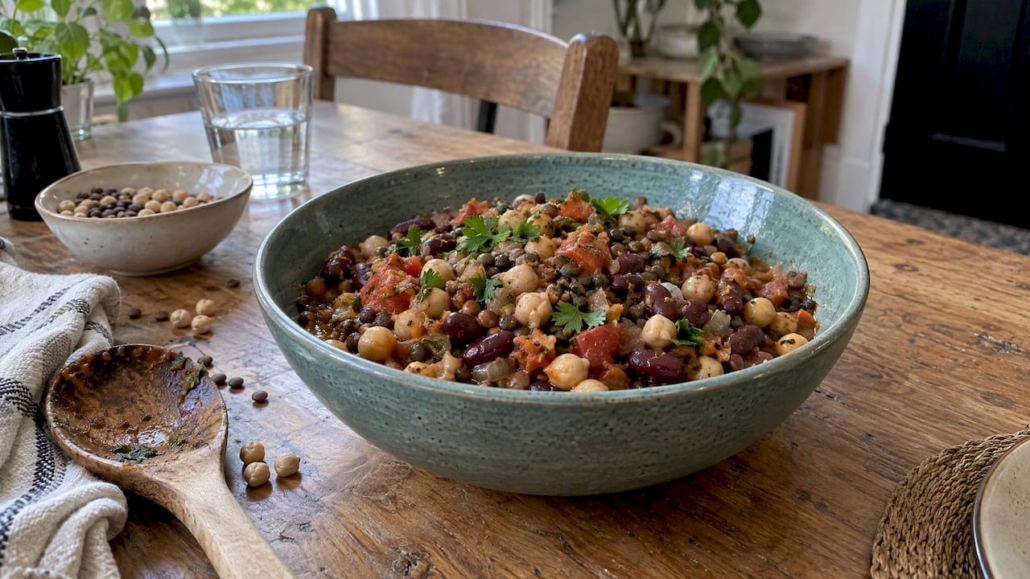
Gas after beans, lentils or chickpeas is usually your gut doing its normal job, not a sign that something is wrong. Legumes contain carbohydrates that you cannot fully digest, and the bacteria in your large bowel ferment them. Gas is the by-product. For most people, small changes to portions, preparation and pace take the edge off. If symptoms are severe, new or persistent, it is worth looking further, and we will show you how.
TL;DR
- Legumes are high in galacto-oligosaccharides (GOS), a fermentable carbohydrate. They reach your large bowel undigested, where bacteria ferment them and produce gas.
- Start with small portions, chew slowly, rinse tinned pulses and build up gradually, so your gut has time to adjust.
- Persistent bloating, pain or changes in bowel habit deserve a chat with a GP or registered dietitian. Do not cut out whole food groups on your own, especially for children.
- A food diary is the most reliable first step. A hair-based bioresonance test can be an extra screening tool, but it does not diagnose anything.
Table of Contents
- Why legumes make you gassy
- What symptoms are normal, and what are not?
- Is it a legume intolerance, IBS or just fermentation?
- How to reduce gas after eating legumes
- Which beans produce the least gas?
- When gas after legumes points to something else
- Our perspective: clarity without the guesswork
- Ready for a wider picture? Our tests
- FAQ
- Sources
Why legumes make you gassy
Beans, lentils, peas and chickpeas are brilliant foods: cheap, filling and rich in fibre and protein. They are also among the best-known gas producers. The reason is chemistry rather than anything you are doing wrong.
Legumes are high in GOS and resistant starch. Your small intestine cannot break these carbohydrates down fully, so they travel on to the large bowel intact. There, gut bacteria ferment them, and gas is released. The East Cheshire NHS Trust IBS pathway describes this as a normal process that can simply become uncomfortable in people with sensitive digestive systems or IBS.
This is why the NHS lists eating difficult-to-digest foods as a common cause of flatulence, and why it says the most common cause of bloating is a lot of gas in the gut, which can come from some vegetables, fizzy drinks or swallowed air.
Which legumes are the worst offenders?
Not every legume is equal. According to Monash University’s FODMAP food list, the legumes and pulses particularly high in GOS include red kidney beans, split peas, falafels and baked beans. The NHS flatulence page also gives green beans and bean shoots as lower-FODMAP alternatives within the bean family, as covered in our research notes for this guide.
Here is a practical way to think about it:
| Legume | How likely it is to cause gas | Worth knowing |
|---|---|---|
| Red kidney beans | High | Listed by Monash as high in GOS |
| Baked beans | High | Beans plus sauce and added sugar |
| Split peas | High | Listed by Monash as high in GOS |
| Falafel | High | Chickpea or broad bean based, listed by Monash |
| Lentils | Varies | Many people find small portions easier |
| Green beans | Lower | Often better tolerated than dried beans |
The “varies” is deliberate. Portion size matters as much as the type of legume, and individual tolerance differs a great deal.
Why baked beans feel worse than other beans
Baked beans combine fermentable carbohydrates with a sweet sauce. That means a double load for your gut bacteria. Add a big portion on toast, eaten quickly, and you have the perfect set-up for wind later in the afternoon. If baked beans are your main bother, try a smaller portion, or swap in a different legume that is lower in GOS and see whether that helps.
What symptoms are normal, and what are not?
Some gas and bloating when you first eat more legumes is common. Typical signs include:
- more wind than usual for a few hours after a meal
- a swollen or tight tummy
- mild cramping that eases when you pass wind
The NHS says that with a food intolerance you usually get symptoms a few hours after eating, such as bloating, diarrhoea, farting and tummy pain. That timing is different from an allergic reaction. The same NHS page is clear that immediate reactions such as swelling or wheezing need emergency help, so call 999 if that happens.
See a GP if you notice any of these:
- bloating that does not settle or keeps coming back
- pain that wakes you at night or gets steadily worse
- unexplained weight loss, blood in your stool or a change in bowel habit that lasts
- symptoms in a child that affect growth, appetite or energy
Those signs are not typical of simple bean gas and need proper assessment.
Is it a legume intolerance, IBS or just fermentation?
People often type “legume intolerance symptoms” when what they really have is one of three things.
- Normal fermentation. Everyone produces gas from legumes. It is more noticeable if you do not eat them often.
- Sensitivity to FODMAPs. FODMAPs are fermentable carbohydrates. GOS is one of them, and other foods such as onions and garlic contain another, fructans. Our guide to FODMAP sensitivity explains the symptoms and causes.
- Irritable bowel syndrome (IBS). If you have IBS, your gut can react strongly to fermentable carbohydrates. The British Dietetic Association suggests that if bloating and wind are your main symptoms, limiting gas-producing foods such as beans and pulses is one thing to try. You can read more about IBS and food intolerance on our site.
The word “intolerance” is often a catch-all. It does not mean an immune-mediated allergy. It more often points to difficulty digesting certain carbohydrates. That is why a careful, step-by-step approach works better than guessing.
Do onions cause gas too?
Yes, for many people. Onions and garlic are high in fructans, which are also a type of FODMAP. Monash University notes they can trigger symptoms in sensitive people even in small amounts. If you eat a bean chilli with onion and garlic, either ingredient could be the culprit, or both together. That is a good reason to look at the whole plate, not only the legume.
How to reduce gas after eating legumes
You do not have to give up legumes. Most people do better by changing how they eat them.
1. Start small and build slowly
If you have just switched to a vegetarian or vegan diet, or you are adding more pulses for health, resist the urge to go all in. Add a couple of tablespoons to a meal, then increase over several weeks. This gives your gut microbiome time to adapt, as the East Cheshire NHS Trust guidance suggests when it recommends gradually increasing fibre-rich foods.
The British Dietetic Association makes the same point for plant-based eaters with IBS: increase these foods slowly and monitor your reactions, because there is no universal safe list.
2. Soak, cook thoroughly and rinse
For dried beans, soak them, drain the water, then cook in fresh water until fully tender. For tinned beans or chickpeas, drain and rinse well before using. Rinsing washes away some of the water-soluble carbohydrates that end up in the tin liquid. Low-FODMAP resources such as this guide to beans on a FODMAP diet also stress draining and rinsing tinned beans.

3. Eat slowly and eat smaller meals
The NHS advice on flatulence is practical: eat smaller meals more often, and eat or drink slowly with your mouth closed. Swallowed air adds to the gas that fermentation creates, so a rushed lunch of baked beans can make things worse.
4. Move, and think about fibre type
Regular exercise helps your body digest food. The NHS lists it as one of its “do” tips for wind, and we explore the link in our post on whether exercise helps beat the bloat.
On fibre, a sudden jump in insoluble fibre such as bran can add to bloating. Our research notes, drawing on NICE guidance, suggest soluble fibre such as oats and linseeds is gentler. Royal Berkshire NHS Foundation Trust explains the difference between the two types.
5. Try gentle pharmacy options
Peppermint tea is on the NHS list of things that can help with wind. A pharmacist can also advise on peppermint oil or simeticone. Ask them which suits you, particularly if you take other medicines or are pregnant.
6. Watch the sugar in the sauce
Home-cooked beans let you control the sweetener. If you are following a low-FODMAP plan, sugars matter too, and it helps to know how panela fits into low FODMAP eating before you reach for it in a bean stew.
A simple two-week bean routine
- Week one: eat two to three tablespoons of rinsed beans or lentils with one meal a day.
- Note your symptoms, the time and everything else on the plate in a food diary.
- Week two: if you are comfortable, double the portion. If not, stay where you are for another week.
- Change one thing at a time. If you also add onions, garlic and a fizzy drink, you will not know what caused what.
Which beans produce the least gas?
There is no guaranteed answer, because your gut is individual. But based on the Monash information above, lower-GOS options such as green beans, and smaller portions of well-rinsed tinned lentils, are more likely to sit well than red kidney beans, baked beans or split peas. Trial one at a time, in small amounts. If a particular legume repeatedly gives you trouble, you can simply eat it less often or in smaller portions.
When gas after legumes points to something else
Because gas is such a common symptom, it can hide other conditions. Two points matter most.
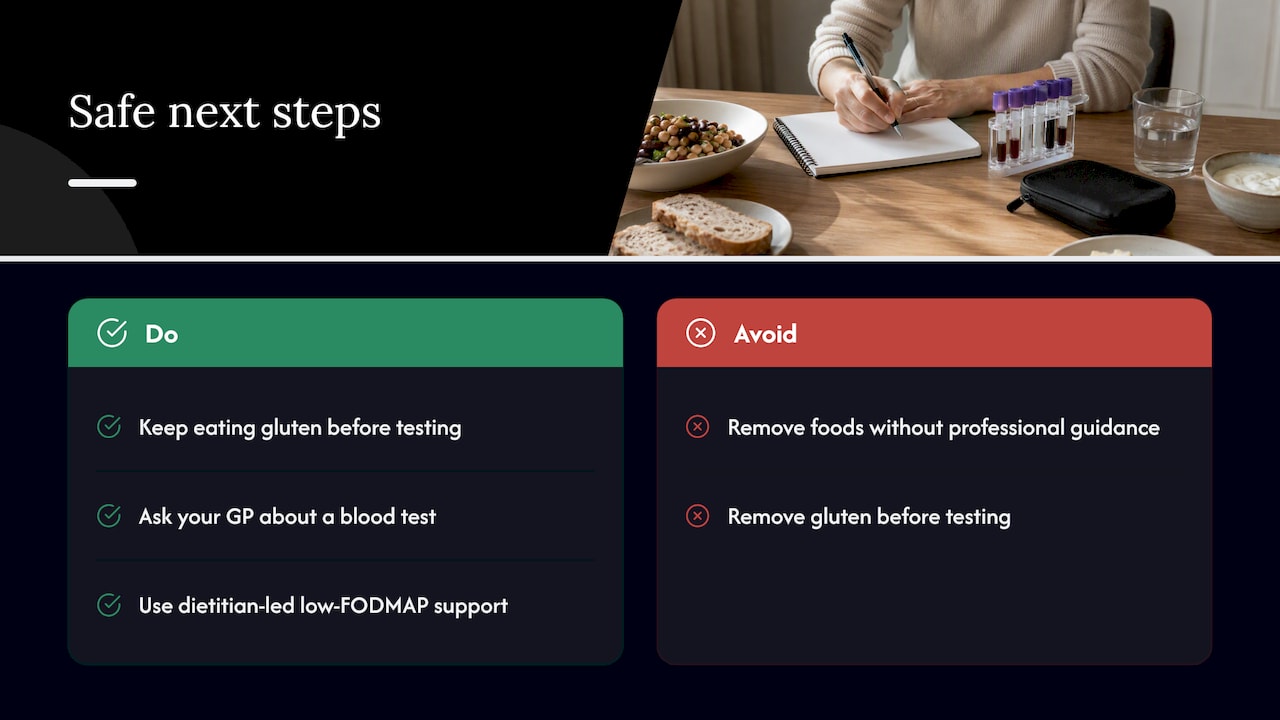
Do not cut out foods without support. The NHS advises against removing foods from your or your child’s diet without professional guidance. Self-prescribed elimination can lead to nutritional gaps, particularly in children, and can mask conditions that need medical testing.
Coeliac disease must be ruled out first. If you suspect coeliac disease, Coeliac UK says to keep eating gluten and ask your GP about testing, because there is only one clear route to diagnosis: a medical one starting with a blood test. Removing gluten early can make the tests unreliable. Legume gas is rarely the sign of coeliac disease, but if you also have diarrhoea, fatigue or weight loss, raise it with your GP.
If simple changes do not work, the next step in the NICE pathway is a dietitian-led low-FODMAP approach, which has been shown to reduce IBS symptoms in up to 70% of people. It runs in phases, typically over several weeks, and works best with specialist supervision.
Our perspective: clarity without the guesswork
We talk to a lot of people who tell us the same thing: they eat well, they like beans, and they still end up uncomfortable. They want an answer, not a lecture.
Here is how we see it. First, gas after legumes is common, and for many people it is not an intolerance at all. Start with the simple steps above and keep a diary. Second, if you have tried those and still feel unwell, a wider picture can help you decide what to discuss with a professional or what to try next.
That is where our tests fit. We offer non-invasive, at-home bioresonance testing using a hair sample, processed at a UK laboratory, with a digital report in 48 to 72 hours. We are open about what this is: a screening tool to point you towards foods and substances worth looking at, particularly for an elimination diet. It is not a medical diagnosis, and it does not replace a GP, a coeliac blood test or a dietitian. National bodies such as Coeliac UK do not support hair analysis for diagnosing digestive problems, and we would rather you know that before you buy. You can read about our research and methodology and the principles behind bio-resonance and decide whether it suits you.
If you do go ahead, we suggest treating the report as a starting list. Introduce changes one at a time, keep your diary going, and bring everything to your GP or dietitian if symptoms persist. Our guide to the food elimination process walks you through it safely, and our page on gas and flatulence covers the symptom in more detail.
— Rob
Ready for a wider picture? Our tests
If your symptoms go beyond beans, for example if several foods seem to bother you, our range might help you narrow things down. The Ultimate Plus Intolerance Test is £140.99 one-off per person. You can also compare the Core, Essential, Premium and Ultimate tests to find the panel size that suits you. Buying for a child? Read our parental guide to food sensitivity first, and speak to your GP or a dietitian before changing a child’s diet.
How it works in short:
- Order online and receive your kit.
- Collect a small hair sample at home.
- Send it to our UK laboratory.
- Receive your digital report within 48 to 72 hours, with guidance on using it for an elimination diet.
Our workflow guide shows each step in detail.
FAQ
Why do beans make me gassy even though I eat them often?
Even regular eaters produce gas from legumes, because GOS and resistant starch always reach the large bowel undigested. Portion size, how quickly you eat, and what else is on the plate all play a part. If your gas is increasing rather than settling, keep a food diary and mention it to your GP.
Can I get rid of bloating after beans quickly?
The NHS suggests moving around, sipping peppermint tea and avoiding more hard-to-digest foods for the rest of the day. A pharmacist can advise on peppermint oil or simeticone. Most bean-related bloating passes within hours, but see a GP if it is severe or keeps returning.
Do I have a legume intolerance or IBS?
You cannot tell from gas alone. Both can cause bloating, wind and discomfort after beans, and IBS needs a clinician to diagnose it after ruling out other conditions. A food diary, plus a conversation with a GP or registered dietitian, is the sensible route.
Should I stop eating legumes completely?
Usually not. They are nutritious, and most people manage with smaller portions, rinsing and gradual increases. If you do want to restrict them, the safest way is under a dietitian’s guidance, especially for children or if you eat a plant-based diet.
Sources
- Wind and bloating, East Cheshire NHS Trust
- Farting (flatulence), NHS
- Bloating, NHS
- Food intolerance, NHS
- Monash FODMAP
- IBS and diet, British Dietetic Association
- Following a plant-based diet whilst having IBS, British Dietetic Association
- IBS wind and bloating, Royal Berkshire NHS Foundation Trust
- Coeliac disease home tests, Coeliac UK
- IBS management, NICE CKS
- Beans on a FODMAP diet, Karlijn’s Kitchen









Leave a Reply
Want to join the discussion?Feel free to contribute!