
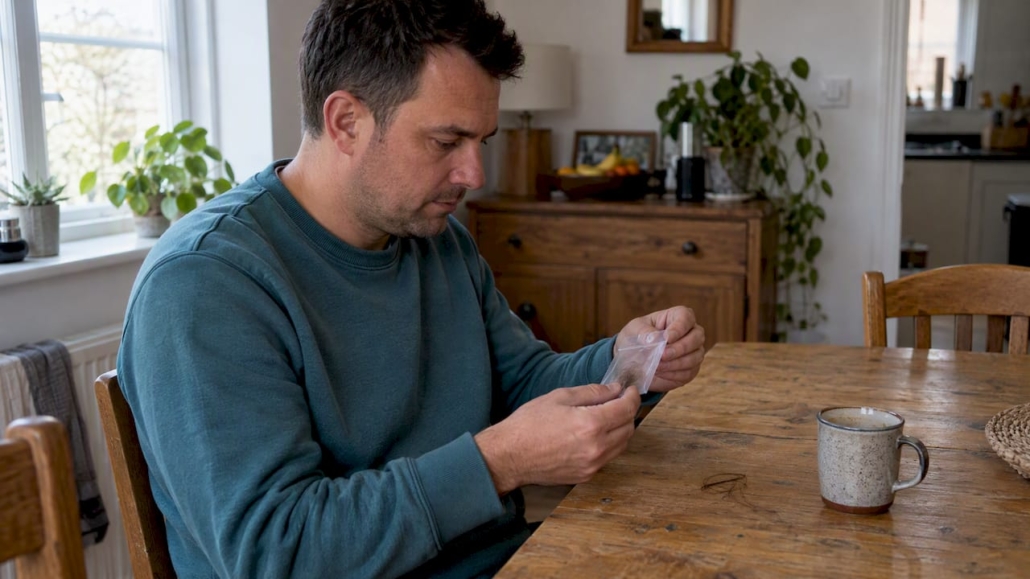
Hair and bio-resonance tests are not validated diagnostic tools for food allergy or intolerance, and clinical bodies including BSACI and Allergy UK do not recommend them for diagnosis. Peer-reviewed research has found poor reproducibility between laboratories testing identical samples. If you or someone near you shows signs of anaphylaxis, treat it as a medical emergency and seek immediate care.
TL;DR:
- For suspected IgE allergy, ask your GP about targeted skin prick or specific IgE testing; positive results need matching symptoms and clinical interpretation.
- A dietitian can guide a two to six week elimination and reintroduction, with suspected foods added back one at a time.
- Start with two or three flagged foods rather than removing everything, and keep a diary of meals and symptoms to judge each reintroduction.
- Facial or throat swelling, breathing difficulty, or sudden dizziness after eating requires immediate emergency care; do not wait for a hair test or report.
Table of Contents
- What hair intolerance testing is and what sellers claim
- What the research and clinical bodies say about reliability
- How validated clinical tests differ from hair testing
- Why unvalidated hair tests remain popular anyway
- If you have symptoms: safe next steps and what to expect
- How our hair testing service works and where it fits
- Which intolerances a hair sample can and cannot flag
- How to collect a hair sample correctly at home
- Making sense of your report and acting on it
- What hair testing can tell you, and where its limits sit
- Comparing our test options by coverage and suitability
- Where hair testing adds genuine value as a screening step
- Balancing patient needs and scientific rigour
- How to order our tests and what you receive
- FAQ
- Sources
What hair intolerance testing is and what sellers claim
Hair intolerance testing describes a family of at-home products that analyse a small hair sample against a panel of foods, drinks or environmental substances, then return a report listing items marked as potential triggers. You might see these marketed as hair analysis, hair strand testing, or bio-resonance testing, and the terms are often used interchangeably even though the underlying methods can differ.
The buying journey is usually the same regardless of which brand you choose:
- You order a kit online and it arrives with instructions and sample pouches.
- You cut a small amount of hair close to the root and post it to a laboratory.
- The laboratory or device processes the sample against its reference panel.
- You receive a digital report, typically within a few days, listing items by category.
Sellers tend to emphasise that the process is non-invasive (no needles, no blood draw), that panels can cover hundreds or even over a thousand items, and that turnaround is fast compared with waiting for a specialist referral. These are genuine practical advantages for people who want a starting point for dietary reflection. What marketing rarely explains in the same breath is how the underlying analysis has performed when tested for consistency, which is the question the next section addresses.
What the research and clinical bodies say about reliability
The clearest evidence on reliability comes from split-sample studies, where the same material is sent to multiple laboratories under different names to see whether the results agree. A widely cited assessment of commercial laboratories performing hair mineral analysis found results that varied enormously between labs testing identical hair samples.
Split-sample testing found very large differences for some minerals between laboratories analysing the same sample, which the study’s authors said undermines the use of hair mineral analysis for individual nutritional or health assessment. Reference ranges also conflicted from one lab to another, meaning the same raw result could be flagged as normal by one provider and abnormal by another.
This pattern is not confined to humans. A separate controlled study of hair and saliva allergy testing in dogs found results that were statistically indistinguishable from chance, with poor agreement when the same sample was tested twice. The authors concluded that this type of testing should not be used to diagnose allergies in companion animals, and the methodological concerns apply equally to how such panels are validated for people.
UK clinical bodies have reached a consistent position. BSACI guidance states that hair analysis, bio-resonance diagnostics and IgG-based tests are not validated methods for diagnosing food allergy or intolerance, and they are not recommended by the NHS or by clinical allergists. Allergy UK’s guidance on food intolerance points people instead towards supervised elimination and reintroduction as the recommended approach.
In practice, poor reproducibility matters because it can send you down the wrong dietary path. Key consequences include:
- You might eliminate foods that were never actually a problem, based on a result that another lab would not have flagged.
- You could miss a genuine trigger that the panel simply did not detect.
- Repeated unnecessary restriction can affect nutritional adequacy, particularly in children.
How validated clinical tests differ from hair testing
Doctors reach for a small number of tools precisely because each one has been tested for what it can and cannot tell you, and because results are interpreted alongside your history rather than read in isolation.
- Skin prick testing introduces a tiny amount of allergen extract just under the skin and measures the local reaction; it is targeted at specific suspected allergens guided by your symptoms, not used as a broad screen.
- Specific IgE blood tests measure antibodies to particular allergens and are interpreted together with clinical history, since a positive result without matching symptoms does not confirm an allergy.
- Hydrogen breath testing detects conditions such as lactose or fructose malabsorption and small intestinal bacterial overgrowth by measuring gases produced during digestion, and hospital-based protocols involve strict pre-test preparation to keep results reliable.
The common thread across all three is clinical correlation: a test result only becomes meaningful when a clinician weighs it against your symptoms, diet and medical history. For many suspected intolerances, particularly non-IgE reactions that do not show up on allergy blood tests, the practical standard is a supervised elimination and reintroduction protocol lasting roughly two to six weeks. This approach removes suspected foods, then reintroduces them one at a time under dietitian guidance to see whether symptoms genuinely return, which is a very different exercise from reading a single hair-based report.
Why unvalidated hair tests remain popular anyway
If the evidence is this mixed, it is fair to ask why hair and bio-resonance testing continue to sell well. The answer has less to do with accuracy and more to do with access.
- At-home kits are convenient and often cheaper than a private specialist appointment, with no waiting list and no referral needed.
- Large panels and confident, scientific-sounding language make results feel authoritative, even when the underlying method has not been validated for diagnosis.
- Customer testimonials describing symptom improvement after cutting foods can be persuasive, even when they are not controlled evidence.
Part of what keeps the testimonials convincing is a genuine psychological effect: symptoms that fluctuate naturally often improve around the time someone makes a change, a pattern known as regression to the mean, and cutting several foods at once can also trigger a placebo response; understanding such patterns can be informed by insights from a comprehensive hormone panel. Neither proves the test identified a real trigger.
Pro Tip: Treat any single hair-based result as a prompt for reflection, not a diagnosis, and track symptoms for at least a couple of weeks before changing your diet based on it.
If you have symptoms: safe next steps and what to expect
Severe allergic reactions need emergency care first, always. MHRA and NHS guidance is unambiguous that anyone showing signs of anaphylaxis, such as swelling of the face or throat, difficulty breathing, or sudden dizziness after eating, should call emergency services immediately rather than waiting to see if symptoms pass.
For less urgent but persistent symptoms, a structured approach works better than guesswork:
- Book a GP appointment and describe your symptoms, their timing and any suspected triggers as clearly as you can.
- Ask about referral to an allergy specialist or registered dietitian if your GP suspects a food-related cause that needs targeted testing.
- Follow a supervised elimination and reintroduction plan, typically running for several weeks, if non-IgE intolerance is suspected rather than true allergy.
- Keep a food and symptom diary before your appointment, noting what you ate, when symptoms started, and how severe they were.
- Bring your diary and any existing test results to clinical appointments so your dietitian or doctor has concrete detail to work from.
A written elimination diet checklist can help you structure this process and stay consistent while you track reactions.
How our hair testing service works and where it fits
We built our hair testing process around convenience: you collect a small hair sample at home, post it to a UK-based laboratory, and receive a digital report within a few days covering a large number of items. We explain the full method, including how we describe bio-resonance technology, on our educational guide to bio-resonance technology.
We are upfront that this is a screening and support tool, not a replacement for clinical allergy diagnosis. If your report flags items worth investigating, or if you experience severe or persistent symptoms, we encourage you to bring those results to your GP or a registered dietitian rather than making major dietary changes alone. Our hair sample testing page walks through exactly what we screen for and how to read what comes back.
Which intolerances a hair sample can and cannot flag
Sellers of hair-based panels typically group what they screen into two broad categories: food items and environmental or household substances. Food panels usually include common categories such as dairy, gluten-containing grains, specific fruits and vegetables, and additives, while environmental panels might flag household items like certain fabrics, dust-related substances or plant extracts.
It is worth being precise about what “detectable” means here. These panels are built to flag a reaction pattern against a reference database, not to confirm an IgE-mediated allergy or a diagnosed digestive condition such as coeliac disease. True food allergies, which involve the immune system and can be life-threatening, are a clinical diagnosis made through history, skin prick testing or specific IgE blood tests, never through a hair panel. Intolerances, which tend to involve digestive discomfort rather than immune reactions, are the category where broad screening panels are more commonly marketed, because there is no single validated lab test that covers the full range of foods someone might react to.
Environmental sensitivity panels work on the same logic: they flag categories worth considering, not a confirmed cause. If a report flags a cluster of related foods or substances, that pattern can be a reasonable starting point for an elimination conversation with a dietitian, provided you treat it as a hypothesis to test rather than a confirmed result.
How to collect a hair sample correctly at home
Sample quality affects what any laboratory can tell you, so a careful collection matters regardless of which kit you use.
Start by washing your hair as normal a day or two before collection, since product residue close to the collection date can affect analysis. Avoid applying oils, serums or heavy styling products on collection day itself.
Select a small section of hair, usually from near the nape of the neck where hair is less exposed to styling products, and cut as close to the scalp as the instructions allow, since the root end carries the most relevant material. Most kits ask for a small pinch, roughly the thickness of a matchstick, which is enough for analysis without being noticeable once cut.
Place the sample directly into the provided pouch or envelope, label it as instructed, and seal it promptly to avoid contamination from other hair, pet fur or environmental fibres. Avoid touching the root end with your fingers, since skin oils can interfere with analysis.
Post the sample promptly using the provided packaging and tracked postage where offered, since delays in transit can affect sample condition. Our own workflow guide for at-home testing walks through each of these steps with photos if you want a visual reference before you begin.
Making sense of your report and acting on it
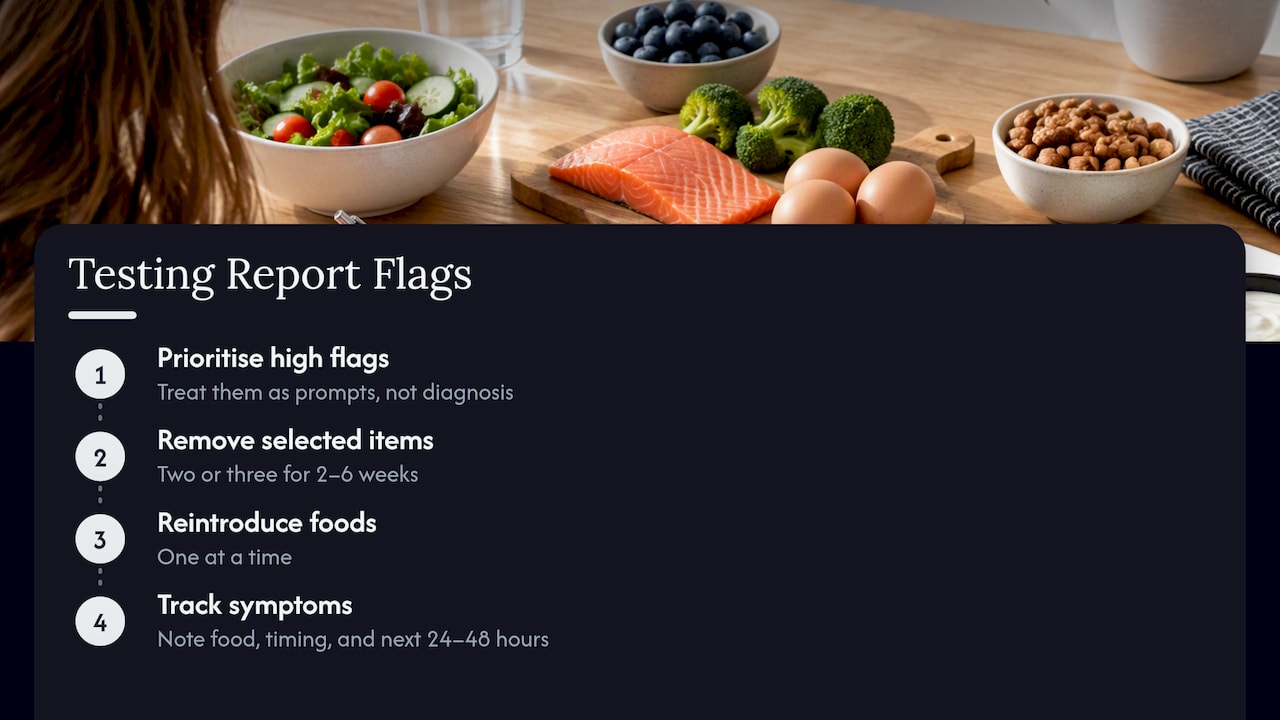
A typical report groups items into bands, often something like low, moderate and high reactivity, rather than a simple yes or no. The most useful way to read this is as a prioritised list for an elimination conversation, not a confirmed diagnosis of what is wrong.
Start with the highest-flagged items rather than trying to remove everything at once. Removing dozens of foods simultaneously makes it almost impossible to tell which change, if any, is responsible for symptom improvement, and it increases the risk of unnecessary nutritional restriction. A more workable approach is to remove two or three flagged items for a defined period, typically two to six weeks as Allergy UK’s elimination guidance describes, then reintroduce them one at a time while tracking symptoms.
Keep a simple diary alongside this process: what you ate, when, and how you felt over the following 24 to 48 hours, since intolerance reactions are often delayed rather than immediate. If a reintroduced food consistently triggers symptoms, that is more meaningful evidence than the original report flag alone, because it reflects your actual response rather than a laboratory pattern match.
Our guide to understanding sensitivity reports breaks down report terminology in more detail, and if you are interpreting results for a child, our guide to children’s sensitivity reports covers the extra care that involves.
What hair testing can tell you, and where its limits sit
The honest scope of hair intolerance testing is narrower than a lot of marketing suggests, and being clear about that boundary protects you from misreading a report. These panels are designed to flag items worth investigating for intolerance-type symptoms, things like bloating, fatigue or skin irritation that build up gradually, not to diagnose a true allergy.
They cannot diagnose IgE-mediated food allergy, which requires clinical testing such as skin prick or specific IgE blood tests interpreted against your history, as BSACI guidance makes clear. They also cannot diagnose conditions like coeliac disease, inflammatory bowel disease or small intestinal bacterial overgrowth, which need specific medical investigations such as biopsy, blood antibody tests or breath testing.
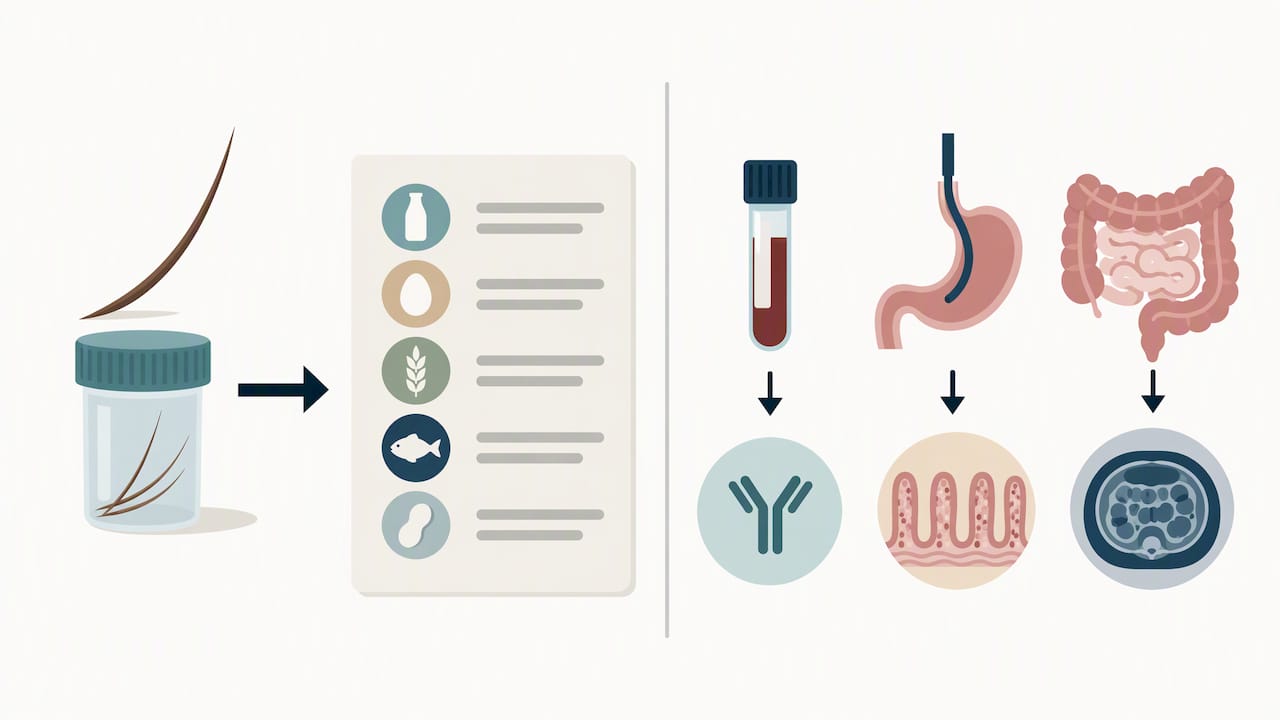
What a hair panel can reasonably offer is a starting point: a structured way to narrow down which foods to investigate first through elimination and reintroduction, rather than guessing blind. Used that way, alongside a food diary and, where symptoms are persistent or severe, a conversation with your GP or a dietitian, a report becomes a practical tool rather than a verdict. Used as a standalone diagnosis, it risks the same pitfall the research keeps surfacing: confident-sounding results that do not reproduce consistently between labs.
Comparing our test options by coverage and suitability
We offer several panels so you can match coverage to what you are trying to investigate, rather than paying for breadth you do not need. Our full test range includes the Core Test, Essential Test, Premium Test and Ultimate Test, each screening a different number of items, alongside focused options like the Gluten Test and the Dairy & Lactose Test for people who already suspect a specific category.
The Core Test suits someone who wants an affordable, general starting point without committing to the largest panel straight away. The Ultimate Test, our most comprehensive option, screens a substantially larger panel and suits people with widespread or long-standing symptoms who have not been able to narrow things down through diet alone. Our Ultimate Plus Intolerance Test covers up to 1,450 items for £140.99 as a one-off per person, which is the broadest single option we offer.
If you already suspect a specific trigger, the Gluten Test or Dairy & Lactose Test gives a focused result without the cost of a full panel. For pet owners, we also offer the Intro 300, Peak 700 and Essential 500 panels through our pet testing range, scaled similarly by coverage. Choosing between these comes down to how broad your symptoms are and whether you already have a reasonable suspicion of where to start.
Where hair testing adds genuine value as a screening step
Used within its real limits, hair intolerance testing has a sensible place for people who have unexplained symptoms and have not yet had a chance to work through them with a clinician. If you have been living with bloating, fatigue, skin flare-ups or low mood that you suspect is diet-related but have not pinned down a cause, a broad panel can give you a structured list of items to test through elimination rather than guessing at random.
It also suits people who want a preventative check before symptoms become disruptive, since the process is non-invasive and does not require a GP referral to get started. For families managing a child’s recurring symptoms, or anyone juggling a long NHS waiting list for an allergy clinic appointment, a hair-based report can be a practical way to begin narrowing things down while still pursuing clinical assessment in parallel rather than instead of it.
The value is in speed and structure, not in replacing a diagnosis. Our guide to food sensitivity evidence covers this balance in more depth, including how to weigh a screening result against ongoing symptoms that warrant a GP visit. Used this way, alongside honest expectations about what the result can and cannot prove, testing becomes one part of a sensible health routine rather than the whole of it.
Balancing patient needs and scientific rigour
The evidence here is consistent: hair and bio-resonance tests have not been validated for diagnosing allergy or intolerance, and reputable bodies are right to say so. That does not make the underlying question people bring to these tests any less real. If your symptoms are persistent, severe or worsening, please see your GP or a registered dietitian rather than relying on a single report. For broader context on managing suspected intolerances, our step-by-step allergy management guide is a reasonable place to start.
— Rob
How to order our tests and what you receive
Getting started is straightforward: choose a kit from our tests, collect a small hair sample at home using the instructions provided, post it to our UK laboratory, and receive your digital report within 48 to 72 hours.
Every report comes with practical guidance for interpreting your results, including how to prioritise flagged items and structure an elimination period safely.
- Browse the full home test kit range to compare panel sizes side by side.
- Check items tested for the exact list your chosen panel covers.
- Read our bioresonance research page if you want the fuller methodology behind our reports.
We always recommend speaking with your GP or a dietitian before making significant dietary changes, particularly for children or anyone with existing medical conditions.
This article is general information, not a substitute for advice from a qualified doctor. Consult a qualified healthcare professional about your own circumstances before acting on anything here.
FAQ
How accurate is a hair test for allergies?
Hair tests are not a validated method for diagnosing food allergy; BSACI guidance states they are not recommended by the NHS or clinical allergists. Split-sample studies have found large inter-laboratory variation on identical samples, which is why they are best treated as a screening tool rather than a diagnostic one.
What 8 foods are 90% of allergies?
Clinical sources commonly group the foods responsible for most IgE-mediated allergic reactions as milk, eggs, peanuts, tree nuts, fish, shellfish, wheat and soya. A hair panel is not the appropriate way to confirm a reaction to any of these; suspected allergy to these foods needs clinical assessment through skin prick or specific IgE testing.
Can I ask my GP for a food allergy test?
Yes, you can ask your GP to assess suspected food allergy symptoms, and they can refer you for skin prick testing, specific IgE blood tests, or a specialist allergy clinic appointment where appropriate. Bring a symptom and food diary to make that conversation more productive.
Does the Alcat test really work?
Alcat and similar commercial blood-based intolerance tests fall into the same category as hair and bio-resonance testing: they are not validated diagnostic methods recognised by BSACI or the NHS. For suspected non-IgE intolerance, a supervised elimination and reintroduction protocol remains the better-supported approach.
Is bio-resonance testing scientifically proven?
No independent, peer-reviewed evidence confirms bio-resonance testing as a validated diagnostic method, and UK clinical guidance does not recommend it for diagnosing allergy or intolerance. Our own tests are positioned as a screening and support tool rather than a clinical diagnosis, which is why we recommend clinical follow-up for persistent or severe symptoms.
Sources
- BSACI resources: investigations — other tests
- Assessment of commercial laboratories performing hair mineral analysis
- MHRA reinforces anaphylaxis emergency guidance as hospital admissions rise
- Allergy UK — food intolerance guidance










Leave a Reply
Want to join the discussion?Feel free to contribute!