

TL;DR:
- Managing food sensitivity involves tracking, elimination, and reintroduction with professional guidance.
- Accurate identification of triggers improves diet safety and reduces unnecessary restrictions.
- Combining careful monitoring with expert advice and at-home testing helps build confidence and healthy habits.
Living with unexplained bloating, headaches, or skin flare-ups can make every meal feel like a gamble. You might suspect certain foods are causing problems, but pinning down exactly what is triggering your symptoms is rarely straightforward. This guide walks you through each stage of managing food sensitivity, from understanding what it actually is, to tracking your triggers, adjusting your diet safely, and building lasting confidence around food. Whether you are just starting out or looking to refine your approach, you will find clear, practical steps here to help you take back control of how you feel every day.
Table of Contents
- Understanding food sensitivity and its impact
- Tracking your symptoms and identifying triggers
- Elimination and reintroduction: safe steps under guidance
- Practical strategies for managing sensitivities every day
- Verifying your approach and moving forward
- What most guides miss about managing food sensitivity
- How at-home testing and expert guidance can help you
- Frequently asked questions
Key Takeaways
| Point | Details |
|---|---|
| Track before changing | A diary of your foods and symptoms is essential for spotting triggers. |
| Get professional guidance | Always consult a GP or dietitian before starting exclusion diets. |
| Read all labels | Carefully read food labels and communicate your needs in social settings. |
| Practical management | Use simple habits—like batch cooking and allergy cards—to make daily life easier. |
| Test for certainty | At-home intolerance tests can validate your findings and help adapt your plan. |
Understanding food sensitivity and its impact
Before you can manage food sensitivity, you need to know what you are actually dealing with. The terms “food allergy,” “food intolerance,” and “food sensitivity” are often used interchangeably, but they describe very different things.
A food allergy is an immune response. Your body identifies a food protein as a threat and reacts quickly, sometimes within minutes. Symptoms can include hives, swelling, or in severe cases, anaphylaxis. A food intolerance tends to involve delayed digestive symptoms, such as bloating, cramps, or diarrhoea, and is not driven by the same immune pathway. Food sensitivity sits in a broader category, often referring to reactions that are harder to pin down, slower to appear, and varied in presentation.
The NHS distinguishes food allergy from intolerance clearly, noting that management differs significantly depending on which condition you have. Getting this right matters, because treating a sensitivity as though it were an allergy can lead to unnecessary food restriction.
In daily life, food sensitivity can show up in ways you might not immediately connect to what you ate. Fatigue after lunch, a foggy head mid-afternoon, or recurring skin breakouts could all be linked to food triggers. The delay between eating and symptoms, sometimes 12 to 48 hours, makes it genuinely difficult to spot the connection.
Common foods that frequently trigger reactions include:
- Dairy products (milk, cheese, yoghurt)
- Wheat and gluten-containing grains
- Eggs
- Soya
- Tree nuts and peanuts
- Certain fruits (especially stone fruits and citrus)
- Fermented foods and alcohol
| Feature | Allergy | Intolerance | Sensitivity |
|---|---|---|---|
| Immune involvement | IgE-mediated | Non-IgE | Variable |
| Onset of symptoms | Minutes | Hours to days | Hours to days |
| Severity | Can be life-threatening | Uncomfortable | Varies |
| Diagnosis method | Skin prick or blood test | Elimination diet | Elimination or testing |
| Management | Strict avoidance | Reduce or manage intake | Identify and limit triggers |
Proper identification of your specific condition is the foundation of effective management. Without it, you risk either over-restricting your diet unnecessarily or missing a genuine trigger entirely.
Tracking your symptoms and identifying triggers
Once you understand what food sensitivity is, your next step is to uncover your unique triggers. The most reliable way to do this is through a food and symptom diary.
The NHS recommends keeping a detailed diary for two to four weeks to identify patterns and triggers. This timeframe gives you enough data to spot recurring connections between specific foods and your symptoms.
Here is how to set yours up:
- Choose a format that suits you, whether that is a notebook, a spreadsheet, or a dedicated app.
- Record every meal, snack, and drink, including portion sizes where possible.
- Note any symptoms that arise, including their type, severity, and timing.
- Log other relevant factors such as stress levels, sleep quality, and physical activity.
- Review your entries at the end of each week, looking for patterns.
A sample diary entry might look like this:
| Date | Meal | Ingredients | Symptoms | Time after eating |
|---|---|---|---|---|
| 14 Jan | Lunch | Pasta, cheese sauce, salad | Bloating, fatigue | 2 hours |
| 15 Jan | Breakfast | Oats, almond milk, banana | None | N/A |
| 15 Jan | Dinner | Stir-fry with soya sauce | Headache, loose stools | 4 hours |
This kind of structured record helps you and any health professional you consult to see the bigger picture. You can find a helpful workflow for food sensitivity management and further tips on tracking intolerance symptoms at home to support your process.
Pro Tip: Use a free app like a notes tool or a habit tracker to log meals consistently. Consistency matters more than detail in the early weeks. Even brief entries are far more useful than gaps.
If your diary reveals clear patterns, that is a strong signal to take the next step. If symptoms remain unpredictable despite careful tracking, consider seeking professional input. A GP or dietitian can help you interpret your findings and plan a structured next step, as outlined in this identifying food sensitivities guide.
Elimination and reintroduction: safe steps under guidance
With your diary uncovering likely triggers, it is time to systematically test your observations using a structured approach. An elimination diet involves removing suspected trigger foods from your diet for a set period, then reintroducing them one at a time to confirm whether they cause symptoms.

This is widely regarded as the most reliable method for confirming food sensitivities. However, it must be done carefully. The NHS advises that you consult a GP or dietitian before making dietary changes, as cutting out food groups without guidance can lead to nutritional deficiencies.
Follow these steps for a safe elimination process:
- Identify your suspects based on your diary findings.
- Remove those foods completely for two to six weeks.
- Monitor your symptoms throughout, continuing to log daily.
- Reintroduce one food at a time, in a normal portion, and observe your response.
- Wait three to five days before reintroducing the next food.
- Record your reactions carefully, noting any returning symptoms.
Pro Tip: Reintroduce foods in their simplest form. If you are testing dairy, start with plain milk rather than a cheese-laden dish. This reduces the number of variables and makes your results much clearer.
Nutritional adequacy is a real concern, particularly if you are eliminating multiple food groups at once. Removing dairy, for example, means you need to find alternative sources of calcium and vitamin D. This is where professional diet guidance for intolerances becomes genuinely valuable. You can also find practical symptom management strategies and tips for managing intolerance naturally to support you through this phase. If you suspect coeliac disease, the NHS provides specific coeliac elimination diet advice worth reviewing before you begin.
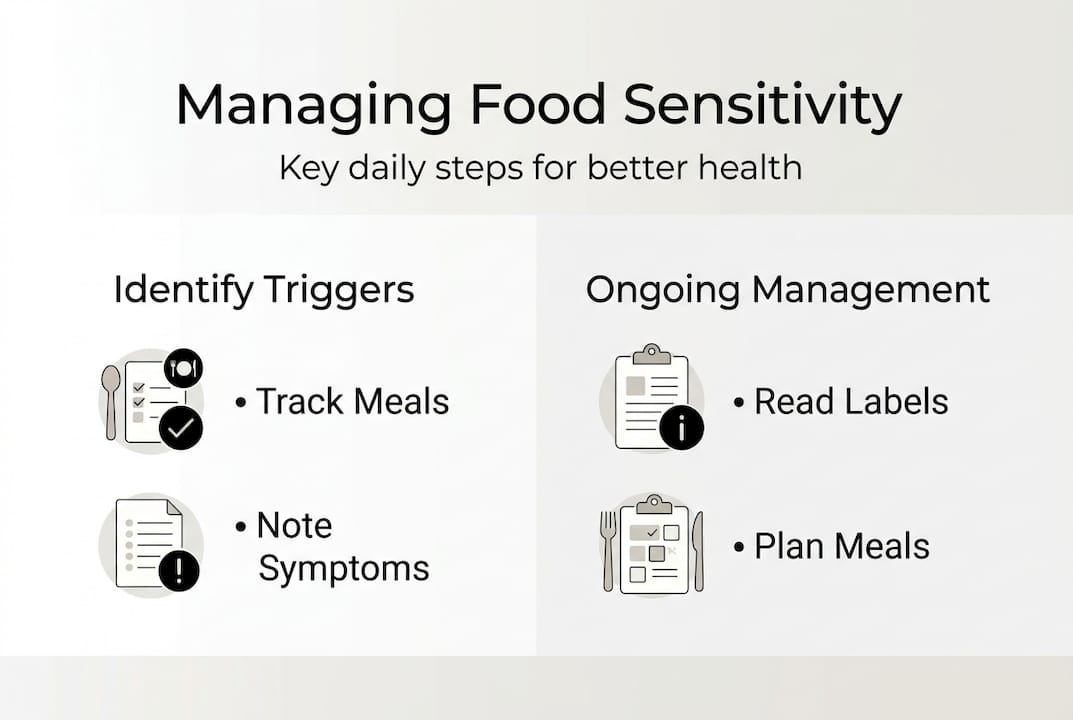
Practical strategies for managing sensitivities every day
Having identified your triggers, managing day-to-day life requires practical habits and confidence. The good news is that with the right tools, it becomes second nature fairly quickly.
Reading food labels is a skill worth developing. Under UK law, 14 major allergens must be clearly highlighted on pre-packed food labels. These include gluten-containing cereals, milk, eggs, nuts, soya, and others. The NHS notes that you should read labels carefully and inform those around you, including family members and restaurant staff, about your sensitivities.
When eating out, do not be shy about asking questions. Most restaurants are accustomed to allergen queries and are legally required to provide allergen information. Calling ahead, checking menus online, and speaking directly to the chef when necessary are all reasonable steps.
Strict avoidance of your trigger foods, especially in social settings, is one of the most effective ways to prevent symptoms. Planning ahead makes this far more manageable than reacting in the moment.
Practical daily strategies include:
- Batch cook meals at home so you always have safe options available
- Keep a small card or note on your phone listing your key triggers to show staff
- Explore free-from alternatives for staple foods (lactose-free milk, gluten-free bread)
- Learn to recognise hidden sources of your triggers (e.g., soya in sauces, gluten in gravies)
- Speak openly with friends and family so social occasions feel less stressful
- If you experience pollen-food syndrome (reactions to raw fruits or vegetables linked to pollen), the BDA guidance on pollen food syndrome offers targeted advice
For families navigating these challenges together, there is helpful advice for family food sensitivity and further methods for managing sensitivities. You can also find guidance on spotting hidden food allergy signs that are easy to overlook.
Verifying your approach and moving forward
Once you have a system in place, it is important to regularly check in and adapt as life changes. Managing food sensitivity is not a one-time fix. Your body, diet, and lifestyle all shift over time, and your approach should shift with them.
Start by tracking improvements. Are your symptoms less frequent? Less severe? These are signs your strategy is working. The NHS notes that for specific intolerances like lactose, you may be able to reduce intake gradually, use lactase enzyme supplements, or switch to lactose-free alternatives, giving you more flexibility over time.
Signs you may need to re-evaluate your plan:
- Symptoms return despite following your elimination plan carefully.
- You have cut out multiple food groups but still feel unwell.
- Your diet has become so restricted that it is affecting your quality of life.
- You have had a significant lifestyle change (new job, pregnancy, travel) that disrupts your routine.
- You have not revisited your trigger list in over six months.
Pro Tip: Before a holiday or a period of disruption, review your plan and pack safe snacks. Airports, unfamiliar restaurants, and social events are common points where your usual habits break down. A little preparation goes a long way.
At-home testing can be a useful tool at this stage, particularly if you have tracked symptoms diligently but still cannot pinpoint the cause. Understanding your results clearly is key, and resources on reading test reports and next steps after testing can help you move forward with confidence.
What most guides miss about managing food sensitivity
Most guides focus entirely on the technical steps: track, eliminate, reintroduce, repeat. That is all valid. But what they rarely address is the emotional and social weight of living with food sensitivity.
We have seen many people fall into the trap of over-restriction. Convinced that more foods are the problem, they cut out entire food groups unnecessarily, end up with a very limited diet, and still feel unwell. Restriction without confirmation is rarely the answer.
Flexibility and pattern awareness often matter more than finding a single “culprit” food. Many people with sensitivities find that their tolerance shifts depending on stress, sleep, and overall gut health. A food that causes problems during a stressful week may be fine during a calmer period.
Social withdrawal is another common pitfall. Avoiding meals with friends or family to “stay safe” can affect your mental wellbeing just as much as the physical symptoms. Managing sensitivities through practical natural methods means finding ways to participate, not retreat.
Celebrate small wins. Feeling 20% better after two weeks of careful tracking is progress. You do not need a perfect answer to start feeling meaningfully better.
Redefine what success looks like. It is not about eliminating every possible trigger forever. It is about understanding your body well enough to make informed choices, most of the time.
How at-home testing and expert guidance can help you
If you want clear answers and extra support for your journey, specialised resources can save time and uncertainty. Tracking and elimination diets are powerful, but sometimes you need a broader picture.

At UK Food Intolerance, our food intolerance test options are designed to give you exactly that. Our at-home test kits use bio-resonance technology to analyse a simple hair sample, covering over 1,100 food and environmental items. You collect the sample at home, post it to our UK laboratory, and receive a detailed digital report within 48 to 72 hours. Explore our full test list to find the option that suits your needs and budget. It is a fast, non-invasive way to add clarity to your journey.
Frequently asked questions
How long should I track my symptoms before making changes?
Aim to keep a detailed food and symptom diary for at least two to four weeks to uncover reliable patterns before drawing conclusions or removing foods.
Is it safe to try an elimination diet on my own?
Only start an elimination diet with input from a GP or dietitian, as cutting foods without guidance risks nutritional deficiencies, particularly when removing multiple food groups at once.
What foods most commonly cause sensitivity?
Common triggers include dairy, wheat (gluten), eggs, nuts, soya, and certain fruits or vegetables, though the specific foods that affect you will depend on your individual response.
How should I manage eating out with a food sensitivity?
Always inform restaurant staff, check menus for allergens in advance, and read labels carefully when buying pre-packed food, carrying safe snacks if your triggers are less common.
When should I consider at-home food sensitivity testing?
Consider at-home testing if you have tracked symptoms carefully for several weeks but still cannot identify clear triggers, or if you want a broader picture before beginning an elimination diet.










Leave a Reply
Want to join the discussion?Feel free to contribute!