
At-home pet hair allergy testing can flag foods and environmental items worth investigating, but it’s an informational screening tool, not a diagnostic one. Treat any result as a hypothesis to test through a careful elimination trial, not a confirmed answer. If your pet has severe, sudden, or breathing-related symptoms, see a veterinarian rather than waiting on a hair test report.
TL;DR:
- Pet hair allergy tests are non-invasive screening tools that produce hypotheses but cannot confirm specific allergies, especially for severe or urgent symptoms.
- The tests compare hair sample frequencies to a database, but studies show they lack reproducibility and fail to reliably distinguish true allergies from noise.
- They are best suited for mild, chronic symptoms or as a low-cost starting point before consulting a veterinarian for confirmation or treatment.
- Proper sample collection focuses on hair with roots, and testing should be combined with a careful elimination and reintroduction diet plan to validate triggers.
- Owners must avoid broad restrictions, over-interpret results, or neglect veterinary advice, especially in emergency situations requiring urgent medical care.
Table of Contents
- How does pet hair allergy testing actually work?
- How accurate is a pet hair sensitivity test?
- When does at-home testing actually help?
- How do you collect a usable hair sample?
- What mistakes should pet owners avoid?
- Using at-home testing responsibly: an editorial view
- Order a pet hair test and get your report in days
- Sources
- FAQ
How does pet hair allergy testing actually work?
Bioresonance testing works on a simple premise: a hair sample is compared against a database of recorded item frequencies, and anything that produces a strong response gets flagged in your report. Vendors describe the process using equipment such as the MARS III, which scans the sample against hundreds or thousands of stored references covering foods, environmental triggers, and everyday pet care products.
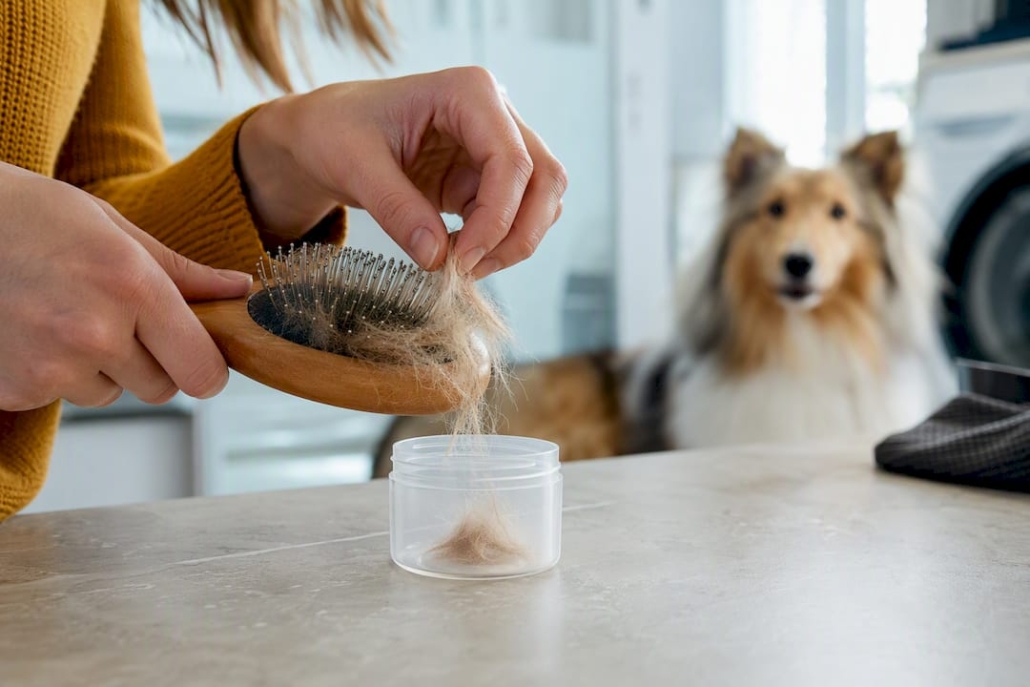
This sits apart from clinical veterinary allergy work. There’s no needle, no skin prick, and no blood draw. You send a small hair sample by post, a UK laboratory runs the analysis, and you get a digital report back within a few days once the sample arrives, though exact turnaround varies by provider and order volume.
A typical report breaks results down by category rather than handing you a single verdict. Expect to see:
- A ranked list of food items showing the strongest response
- Environmental items (dust, pollen types, materials) flagged separately from food
- Pet care products, such as shampoos or bedding materials, where relevant
- A simple scoring or tiering system to show relative strength of response
Because this is a hair sample test rather than a blood or skin test, it’s genuinely non-invasive, no clinic visit, no restraint, no sedation. That’s a real practical advantage for anxious pets or owners who want to start somewhere low-risk before considering anything more involved. You can read more detail on how intolerance tests work if you want the full mechanics behind sample handling.
How accurate is a pet hair sensitivity test?
The honest answer is that reproducibility is the weak point, and the evidence on this is specific rather than vague. A peer-reviewed study published in the Journal of Small Animal Practice tested a commercial hair and saliva allergy product and found it performed no better than chance.
Researchers found that results for healthy and atopic animals showed no meaningful difference from each other, or from synthetic fur and saline controls submitted as fake samples.
That’s the core finding from Coyner and Schick’s 2019 study, and it’s worth sitting with. The synthetic and saline samples, materials with no biological basis for an allergic response at all, still generated positive results in some cases. Paired samples from the same animal didn’t reliably produce matching results either.
Statistic to note: the same study reported a correlation of r = 0.71 between results from real animal samples and synthetic fur samples, a finding the authors used to argue the test wasn’t distinguishing biological signal from noise.
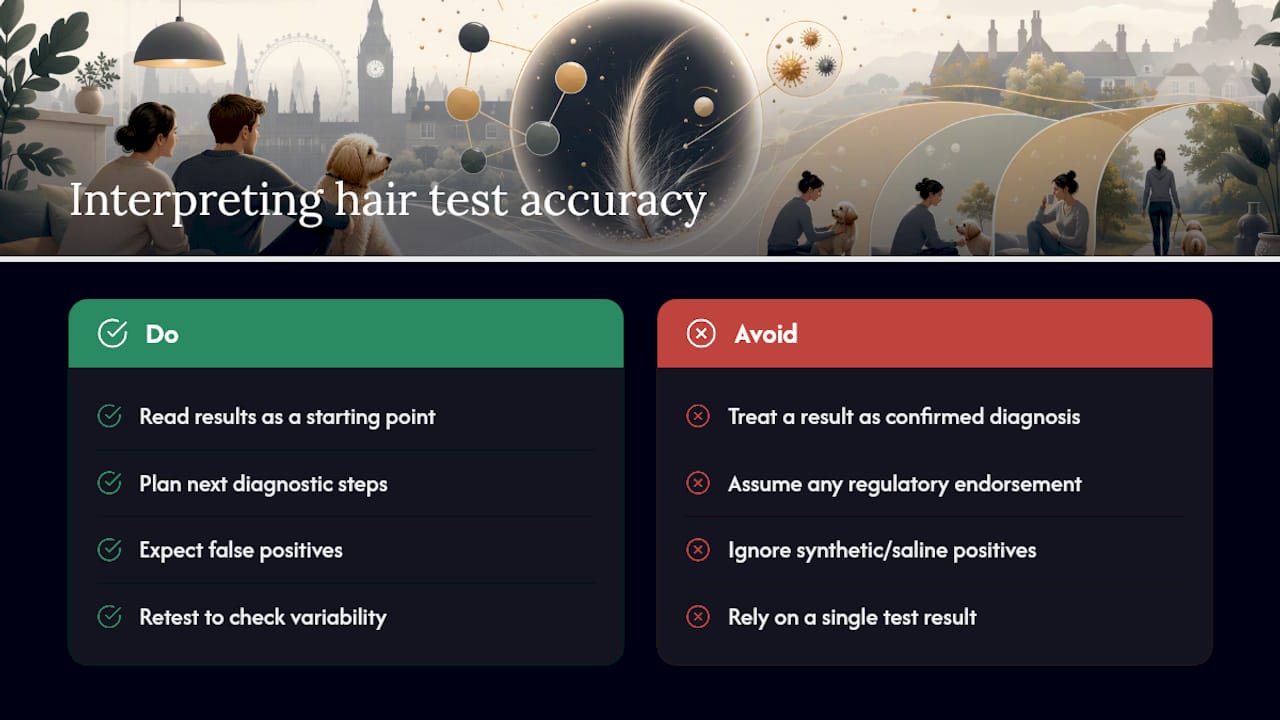
Broader evidence reviews of bioresonance methods reach a similar conclusion: there’s no large-scale, gold-standard validation behind frequency-based testing, and no veterinary regulatory body has endorsed it as a diagnostic method. That doesn’t make the results useless, but it does mean you should read them as a starting point for investigation rather than a confirmed diagnosis. Expect some false positives, variability if you retest, and plan your next steps accordingly.
When does at-home testing actually help?
Non-clinical testing earns its place in specific situations, and it’s the wrong tool in others. Here’s how to tell which camp your pet’s situation falls into.
Good candidates for a home test:
- Chronic, low-grade symptoms, occasional scratching, mild digestive upset, dull coat, with no urgency
- A desire to start somewhere non-invasive before booking a clinical work-up
- Wanting a shortlist of ingredients or environmental items to guide an elimination trial
Situations that need a vet, not a hair test:
- Acute reactions, facial swelling, hives, sudden vomiting after a specific exposure
- Any suspicion of anaphylaxis or difficulty breathing, this is an emergency, always
- A genuine need to confirm IgE-mediated allergy for treatment planning, which veterinary guidance is clear only a professional allergy test can do
Pro Tip: Run a hair test alongside your vet relationship, not instead of it. Share the report at your next appointment so your vet can weigh it against clinical signs, rather than treating it as a standalone verdict.
One more safety point: don’t remove multiple food groups at once based on a long flagged list. Broad, unsupervised restriction risks nutritional gaps, particularly in puppies, kittens, or pets with existing health conditions.
How do you collect a usable hair sample?
Sample quality determines whether your report is worth acting on, and it’s easier to get wrong than you’d think.
Collection steps:
- Choose a patch of fur that hasn’t been recently washed with medicated shampoo
- Cut several strands close to the skin, including the root end, rather than pulling loose or shed fur
- Collect enough to cover the base of the sample bag or envelope provided, more than a few stray hairs
- Seal the sample as instructed and post it promptly to avoid delays sitting in transit
- Log the collection date so you can match it against your pet’s symptom diary later
Root-end hair is preferred over shed fur because it’s what practitioners and lab FAQs consistently recommend for reliable sample material.
Once your report arrives, resist the urge to eliminate everything flagged at once. Instead:
- Sort flagged items by strength of response, strongest first
- Pick one or two of the highest-scoring food items to test first
- Ignore low-tier flags initially; they’re lower priority, not confirmed triggers
Pro Tip: Keep a simple daily log, symptom, severity, and any diet or environment change, from day one of your trial. Without it, you won’t be able to tell whether an improvement is real or coincidental.
A 4 to 6 week elimination trial is the practical standard: remove one suspected item, track symptoms weekly, then reintroduce it slowly and watch for a return of signs. Our elimination diet checklist walks through this pacing in more detail if you want a structured version to follow.
What mistakes should pet owners avoid?
The biggest pitfall isn’t the test itself, it’s what owners do with the report afterwards.
- Over-restriction: cutting five or six items simultaneously makes it impossible to know which one, if any, was responsible for improvement
- Misattribution: blaming a food for symptoms that were actually seasonal, stress-related, or unrelated entirely
- No reintroduction plan: removing an item and never testing whether putting it back actually brings symptoms back, so you never confirm anything
Watch for red flags that override any home testing plan entirely: breathing difficulty, severe or rapidly spreading skin lesions, or noticeable weight loss over days rather than weeks. These need same-day veterinary attention.
For anything beyond a short single-item trial, loop in your vet or a pet nutritionist, particularly for growing animals or pets with existing conditions. Reliable information on introducing new foods safely reinforces the same principle: one change at a time, tracked properly, beats a dramatic overhaul.
Using at-home testing responsibly: an editorial view
At-home pet hair testing gets criticised for not being a clinical diagnostic, and that criticism is fair, but it’s also aimed at the wrong target. Nobody selling a hair sample kit for £30 to £80 is claiming to replace a veterinary allergy panel. The real question is whether it’s useful as a first move, and for chronic, non-urgent symptoms, it often is.
The testing service’s role in that process is to make the informational part genuinely useful: lab-based processing, a digital report within a few days, and FAQs that explain how to read results rather than leaving you with a list of unfamiliar terms. Your sample and personal data are handled under our privacy policy, which sets out exactly how information is stored and used. The limits are real. So is the value of a structured starting point.
— Rob
Order a pet hair test and get your report in days
This testing service gives pet owners a lower-cost, lower-effort starting point than jumping straight to a full veterinary allergy work-up, especially useful when symptoms are mild, chronic, and not urgent. Their at-home kits use a simple hair sample, processed at a UK laboratory, with digital reports covering food, environmental, and pet care items, and turnaround typically landing within a few days of your sample reaching the lab.
Choose between test breadths depending on how thorough you want your first screen to be, and browse the full range of intolerance tests or the detailed test overview to compare coverage. Once your report arrives, our guide on interpreting your results helps you build a shortlist rather than guessing where to start. Speak to your vet before making any significant dietary change, then order a kit and start your pet’s screening this week.
Sources
For readers who want to check the evidence themselves rather than take testing claims at face value:
- Hair and saliva test fails to identify allergies in dogs. Journal of Small Animal Practice. Coyner & Schick (2019)
- Homelabreviews
- Home allergy test for dogs — VRCC blog (2022)
- Elimination diets for dogs and cats — Cotswold Raw
This article is general information, not a substitute for advice from a qualified doctor. Consult a qualified healthcare professional about your own circumstances before acting on anything here.
FAQ
Does a pet hair allergy test diagnose allergies?
No. It’s an informational screening tool that flags possible sensitivities, not a diagnostic test for IgE-mediated allergies, which requires veterinary evaluation.
How is pet hair sensitivity testing different from a clinical allergy test?
A clinical allergy test uses blood or skin-prick methods to measure immune response directly, while a hair test compares a sample’s resonance against a database, an entirely different, non-clinical approach.
How long does it take to get results?
Once your sample reaches the lab, digital reports are typically delivered within a few days.
How much hair do I need to send?
Enough to cover the base of the sample bag, cut close to the skin including the root, rather than a few strands of loose, shed fur.
When should I see a vet instead of ordering a test?
See a vet immediately for breathing difficulty, sudden swelling, severe skin lesions, or rapid weight loss, and generally whenever you need a confirmed diagnosis rather than a starting hypothesis.










Leave a Reply
Want to join the discussion?Feel free to contribute!