

Most commercial food sensitivity tests, including IgG panels, hair analysis and bioresonance kits, are not scientifically validated diagnostic tools, and major professional bodies advise against using them. That does not automatically make every provider fraudulent, but it does mean their results should never dictate a restrictive diet on their own. If you have persistent symptoms, see a GP or registered dietitian rather than relying on a one-off commercial panel to make the call for you.
TL;DR:
- Commercial food sensitivity tests lack scientific validation, and positive results often reflect immune exposure or normal reactions rather than true intolerance.
- Unvalidated methods like IgG panels, hair analysis, and bioresonance show poor reproducibility and are not endorsed by professional health bodies.
- Relying on these tests can lead to nutrient deficiencies, delayed diagnosis of serious conditions, and unnecessary expenses.
- Valid clinical pathways include allergy testing, oral food challenges, and structured elimination diets guided by healthcare professionals.
- At-home tests may offer a low-cost starting point, but their results should always be discussed with a GP or dietitian before making dietary changes.
Table of Contents
- What commercial tests claim to measure and how they are sold
- Why experts say these tests lack validity
- Harms and risks of relying on unvalidated testing
- What actually works: validated tests and clinical pathways
- A consumer checklist and red flags before you pay for any test
- How Ukfoodintolerance’s at-home process works and where it fits
- Why scepticism and responsible testing are not opposites
- If you still want an at-home test, here’s what’s available
- Where to read more
- Sources
- FAQ
What commercial tests claim to measure and how they are sold
Walk through the marketing for most at-home sensitivity kits and you will see a familiar promise: send a sample, get a digital report within days, and finally understand why you feel bloated, tired, or foggy. The methods behind that promise vary widely, and so does their scientific standing.
The most common approaches include:
- IgG/IgG4 blood panels, which measure antibodies to dozens or hundreds of foods and label high readings as “sensitivities.”
- Hair analysis, which claims to detect food reactions from strands of hair, despite no known biological mechanism linking hair composition to digestive symptoms.
- Bioresonance and electrodermal testing, which measures electrical responses on the skin and interprets them against food frequencies.
- Cytotoxicity testing (including the ALCAT method), which observes white blood cell changes when exposed to food extracts in a lab dish.
- Pulse testing and applied kinesiology, older techniques based on heart rate changes or muscle strength after food exposure.
Vendors typically promise sweeping lists of “trigger” foods, tie those results to chronic complaints like fatigue, brain fog, or skin flare-ups, and deliver everything through a slick online checkout with results in 48 to 72 hours. Prices range from affordable basic panels to more expensive tests covering a wide range of items. The speed and convenience are real. The clinical meaning behind the numbers is the part worth questioning, which is exactly what fuels ongoing criticism of food sensitivity testing as a category.
Why experts say these tests lack validity
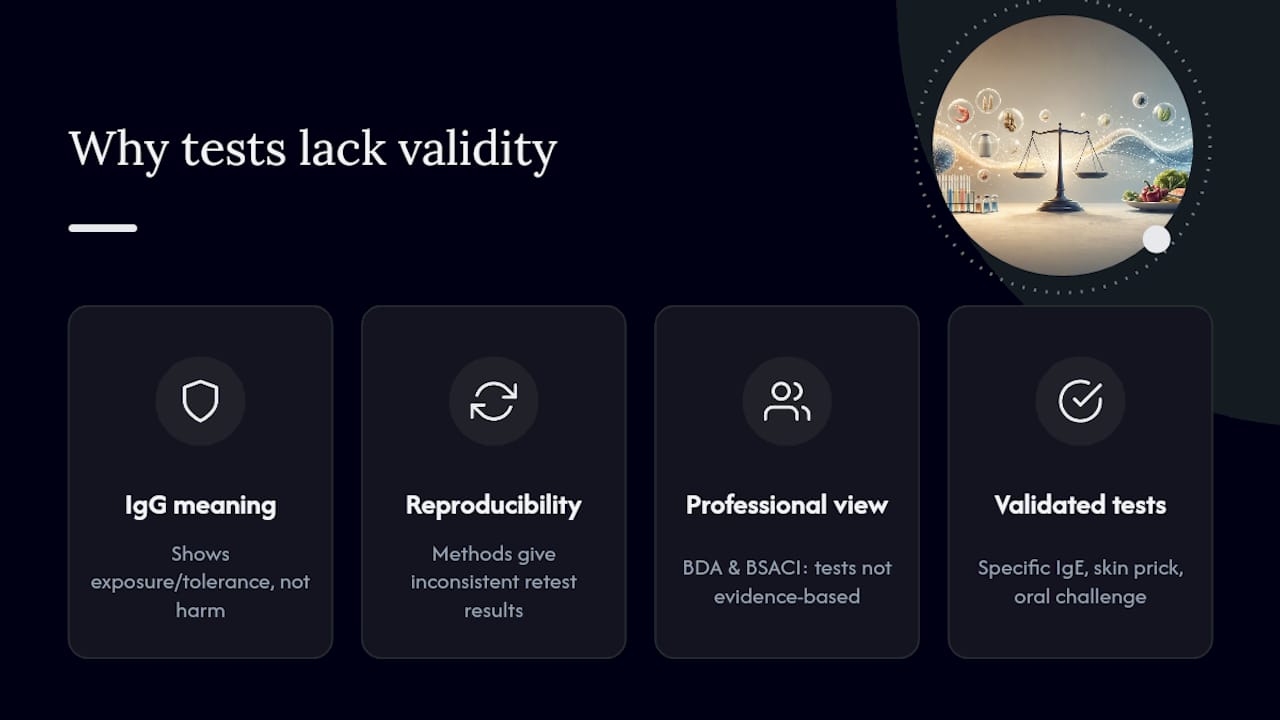
The core problem with IgG testing is not fraud in the traditional sense. It is a biological misunderstanding, sold at scale. IgG antibodies typically indicate that your immune system has been exposed to a food and developed tolerance to it, not that the food is harming you. The AAAAI calls IgG food panel testing a persistent myth and warns that a “positive” result usually reflects normal exposure rather than genuine intolerance.
IgG antibodies are a marker of exposure and tolerance, not evidence that a food is causing symptoms. Treating a positive IgG result as a diagnosis misleads consumers about what their immune system is actually doing.
Reproducibility is the other major failure point. A critical academic review found that hair analysis, bioresonance, cytotoxicity testing and applied kinesiology consistently show poor reproducibility and no meaningful correlation with clinical outcomes when tested under controlled conditions. Retest the same person on the same sample twice, and many of these methods produce different results.
Professional consensus on this is unusually unified. The British Dietetic Association explicitly states that at-home hair, blood and electrical conductivity tests, including bioresonance and IgG testing, are not supported by scientific evidence and should not be used to diagnose intolerance. The BSACI goes further, stating that accurate diagnosis requires a detailed clinical history alongside validated investigations such as specific IgE testing, skin prick testing, or oral food challenge, adding that alternative tests carry no proven benefit. When bodies representing dietitians and allergists on opposite sides of the same clinical question reach the same conclusion, that is not a coincidence worth dismissing.
Harms and risks of relying on unvalidated testing
Getting the wrong answer from a food test is not a harmless inconvenience. It has consequences that compound the longer someone acts on it.
- Nutrient deficiencies, particularly in children, when broad lists of “reactive” foods lead to unnecessary elimination of entire food groups.
- Delayed diagnosis of genuine conditions such as coeliac disease, inflammatory bowel disease, or endocrine disorders that share symptoms with vague “intolerance” complaints.
- Wasted spending on repeat tests, supplements, and specialist elimination products chasing a result that was never medically meaningful.
- False reassurance or false alarm, either dismissing a real allergy risk or triggering unwarranted anxiety about safe foods.
A 2023 review of at-home self-tests sold in the UK found that many studies behind these products carried high applicability concerns, with sampling processes, instructions, and result interpretation all posing risks to consumers rather than simply lacking polish. Around 6% of UK adults report having a food allergy, according to Food Standards Agency reporting, yet many food-related reactions people experience are not IgE-mediated allergies at all. That gap between perception and biology is precisely where unvalidated tests do the most damage. Investigative reporting has documented a market producing misleading reports at scale, with some clinicians calling for outright bans on the least credible methods.
What actually works: validated tests and clinical pathways
Allergy and intolerance are not the same thing, and mixing them up is where most confusion starts. A true food allergy involves the immune system’s IgE antibodies and can trigger rapid, sometimes severe reactions, including anaphylaxis. Intolerance is usually a digestive or metabolic issue, such as lactose intolerance, and produces slower, milder symptoms that never involve the immune system in the same way.
The routes clinicians actually trust look like this:
- Clinical history first. A GP or allergist reviews your symptom pattern, timing, and triggers before ordering any test.
- Specific IgE blood testing and skin prick testing for suspected true allergies, both validated and widely used in NHS allergy clinics.
- Oral food challenge, conducted under medical supervision, remains the diagnostic gold standard for confirming or ruling out a genuine allergy.
- Hydrogen breath testing for suspected lactose intolerance, measuring gas produced by undigested lactose in the gut.
- Coeliac serology and, where indicated, biopsy to rule out coeliac disease before anyone removes gluten unnecessarily.
- Structured elimination and reintroduction, guided by a registered dietitian, remains the pragmatic gold standard for identifying true food triggers when no single test can capture a complex symptom pattern.
That last point matters more than people expect. Even when someone genuinely feels better after cutting a food flagged by an unvalidated test, the improvement can come from a placebo effect, general dietary clean-up, or accidentally removing common triggers like lactose or fructans, not because the test correctly identified anything. A proper elimination protocol typically runs 2 to 4 weeks, followed by single-food reintroduction with a symptom diary, ideally with a dietitian guiding the adjustments so nothing important gets missed.
A consumer checklist and red flags before you pay for any test
Most questionable providers share the same tells, and once you know them, spotting a weak test takes about thirty seconds.
Watch for these red flags:
- Grand claims linking one test to dozens of unrelated symptoms, from migraines to joint pain to weight gain.
- No published, peer-reviewed validation study behind the specific method being sold.
- Vague or unverifiable claims about laboratory accreditation.
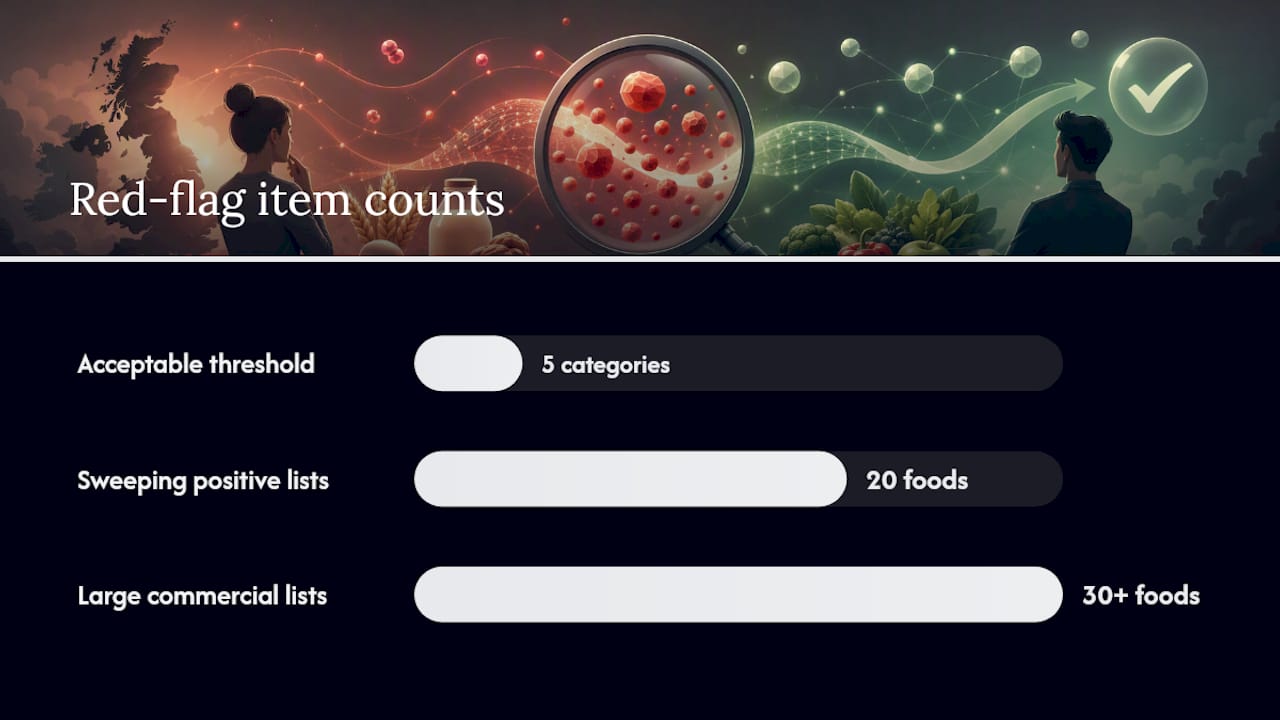
- Sweeping “positive” lists covering 20, 30, or more foods, often including items eaten daily.
- Marketing built almost entirely on testimonials rather than clinical evidence.
Before paying for anything, run through a short checklist: ask the provider for published validation data, check whether the lab holds recognised accreditation, read the stated methodology rather than the marketing copy, note what sample type is required and how it’s meant to be collected, and weigh the cost against what the evidence actually supports. Method reviews consistently point to the same weaknesses behind failed commercial tests: unsupervised sample handling, inconsistent instructions, and algorithms that flag commonly eaten foods regardless of any real reaction.
Pro Tip: If a test claims to diagnose more than five unrelated symptom categories from a single sample, treat that as your biggest red flag; genuine diagnostic tools are narrow and specific, not universal.
If your symptoms are severe, persistent, or worsening, stop shopping for tests altogether and book a GP appointment. That single step resolves more cases than any panel on the market.
How Ukfoodintolerance’s at-home process works and where it fits
Transparency matters here, so here is exactly how our service works. You collect a small hair sample at home following the instructions provided, post it to our UK-based laboratory for bioresonance analysis, and receive a detailed digital report within 48 to 72 hours covering food, environmental, and nutritional items. Our tests are built as a starting point for self-awareness, not a substitute for medical diagnosis.
Use a report responsibly:
- Treat the results as one piece of information about possible triggers, not a confirmed medical finding.
- Share your report with your GP or a registered dietitian before making major dietary changes, especially if you have children or existing health conditions.
- Use flagged items to guide a structured elimination and reintroduction process rather than cutting everything at once.
- Keep a symptom diary during reintroduction so any pattern you notice is based on evidence, not assumption.
Parents testing on behalf of children should take particular care with introducing new foods safely and involve a paediatric dietitian wherever elimination is being considered.
Why scepticism and responsible testing are not opposites
The instinct to distrust an entire industry after reading about IgG myths and poor reproducibility studies is fair. Most of that scepticism is earned. Where the debate goes wrong is treating every at-home test as equally dishonest, when the real issue is how results get used. A test that flags possible triggers and then hands the reader to a clinician is doing something different from one that promises a diagnosis on its own.
If you have already taken a test, don’t panic and don’t overhaul your diet overnight. Take the report to a GP or dietitian, ask which flagged items warrant a proper look, and let clinical oversight decide what happens next. That is not a contradiction of scepticism. It’s what scepticism looks like in practice.
— Rob
If you still want an at-home test, here’s what’s available
If you have read all of this and still want a starting point for exploring your own triggers, Ukfoodintolerance offers two straightforward options. The Ultimate Single Intolerance Test screens over 1,100 items and suits anyone wanting the fullest picture available, while the Core Single Intolerance Test covers 500 items at a more affordable price point for those wanting a lighter first look.

Both work the same way: a hair sample collected at home, analysis at a UK laboratory, and a digital report within 48 to 72 hours that can be used to build a structured elimination plan. Treat the report as a conversation starter with your GP or dietitian, not a final answer, and you get the best of both worlds: a fast, affordable first step, backed by proper clinical follow-up where it counts. Browse our full range of intolerance tests to find the option that matches what you’re trying to understand about your own body.
Where to read more
- British Dietetic Association: UK dietitians’ formal position on home allergy and intolerance testing kits.
- BSACI: clinical guidance distinguishing allergy from intolerance and validated testing routes.
- AAAAI: explains why IgG testing is considered a myth in allergy medicine.
- Monash Lens: academic review of unproven test methods and their reproducibility problems.
Sources
- British Dietetic Association — Home allergy testing kits: more harm than good
- BSACI — Food allergy and food intolerance
- AAAAI — The myth of IgG food panel testing
- Monash lens — The science and pseudoscience of food allergy and intolerance testing
- PMC — Structured elimination and reintroduction as the diagnostic approach
FAQ
Are food sensitivity tests a waste of money?
Many widely marketed tests, including IgG panels and bioresonance kits, are not scientifically validated, so spending money expecting a firm diagnosis is likely to disappoint. They can still offer a starting point for self-reflection if you follow up with a clinician rather than acting on the report alone.
Is food sensitivity testing legitimate?
It depends entirely on the method. Clinically validated routes like specific IgE testing, skin prick testing, and oral food challenge are legitimate and widely used in NHS allergy services, while commercial IgG panels, hair analysis, and bioresonance testing lack recognised scientific validation.
Are there any food intolerance tests that actually work?
For true food allergy, specific IgE testing, skin prick testing, and supervised oral food challenge are the medically validated options. For general intolerance, structured elimination followed by dietitian-supervised reintroduction remains the most reliable approach.
Is it worth getting a food sensitivity test?
An at-home test like the ones Ukfoodintolerance offers can be worth exploring as a low-cost starting point for narrowing down possible triggers, provided you treat the results as a prompt for further conversation with a GP or dietitian rather than a standalone diagnosis.










Leave a Reply
Want to join the discussion?Feel free to contribute!