

Nearly one in five British adults experience persistent digestive problems without any clear cause. Navigating daily life with bloating, discomfort, or fatigue can impact your wellbeing and social confidence. Understanding how food and environmental intolerance tests work empowers you to take control of your symptoms with affordable, non-invasive solutions. This guide uncovers reliable testing options and practical advice, helping you find targeted answers to ongoing digestive issues.
Table of Contents
- What Are Food And Environmental Intolerance Tests?
- Different Types Of Intolerance Testing Methods
- Bio-Resonance Technology And Hair Sample Analysis
- Step-By-Step Process For Home Testing
- Benefits, Limitations And Common Misconceptions
- Comparing Alternatives: Intolerance Vs Allergy Testing
Key Takeaways
| Point | Details |
|---|---|
| Understanding Intolerance Testing | Food and environmental intolerance tests help identify dietary and environmental triggers for health symptoms, though their reliability varies significantly. |
| Elimination Diet as Gold Standard | The elimination diet method remains the most reliable approach for identifying food intolerances, providing direct evidence of physiological responses. |
| Consult Professionals | Always consult healthcare professionals for guidance on testing methods and dietary adjustments to ensure accuracy and safety. |
| Differentiating Allergies from Intolerances | Food allergies and intolerances represent different responses, with allergy tests being more reliable and potentially lifesaving compared to intolerance tests. |
What Are Food And Environmental Intolerance Tests?
Food and environmental intolerance tests are specialised diagnostic approaches designed to help individuals identify potential dietary and environmental triggers causing health symptoms. These tests aim to uncover specific substances that might be creating physiological reactions within your body, ranging from mild discomfort to more significant inflammatory responses.
Typically, these tests analyse how your body responds to various foods, chemicals, and environmental elements through scientific methodologies. Health professionals recommend various testing approaches that may include blood analysis, hair sampling, or specialised screening techniques. The primary goal is to pinpoint potential sources of bodily stress that could be contributing to symptoms like digestive issues, skin problems, fatigue, or unexplained inflammation.
Common testing methods include IgG blood tests, hair analysis, and electrodermal screening. However, it is crucial to understand that not all testing methods are considered equally reliable by medical professionals. Some tests provide more scientifically validated results than others, and interpretation should always involve consultation with healthcare experts who can provide comprehensive guidance on managing potential intolerances.
Pro tip: Consider keeping a detailed food and symptom diary alongside any intolerance testing to track patterns and provide your healthcare provider with comprehensive insights into your body’s reactions.
Different Types Of Intolerance Testing Methods
Food intolerance testing encompasses several methodological approaches, each designed to identify potential adverse reactions to specific foods or environmental substances. These testing methods vary significantly in their scientific validity and reliability, requiring careful consideration and professional medical guidance.
Common testing approaches include IgG blood tests, which analyse antibody responses, applied kinesiology involving muscle response testing, hair analysis for detecting potential toxic exposures, and Vega electrodermal testing which measures electronic currents when the body is exposed to specific substances. However, medical professionals caution that many of these commercial testing methods lack robust scientific evidence to support their diagnostic accuracy.
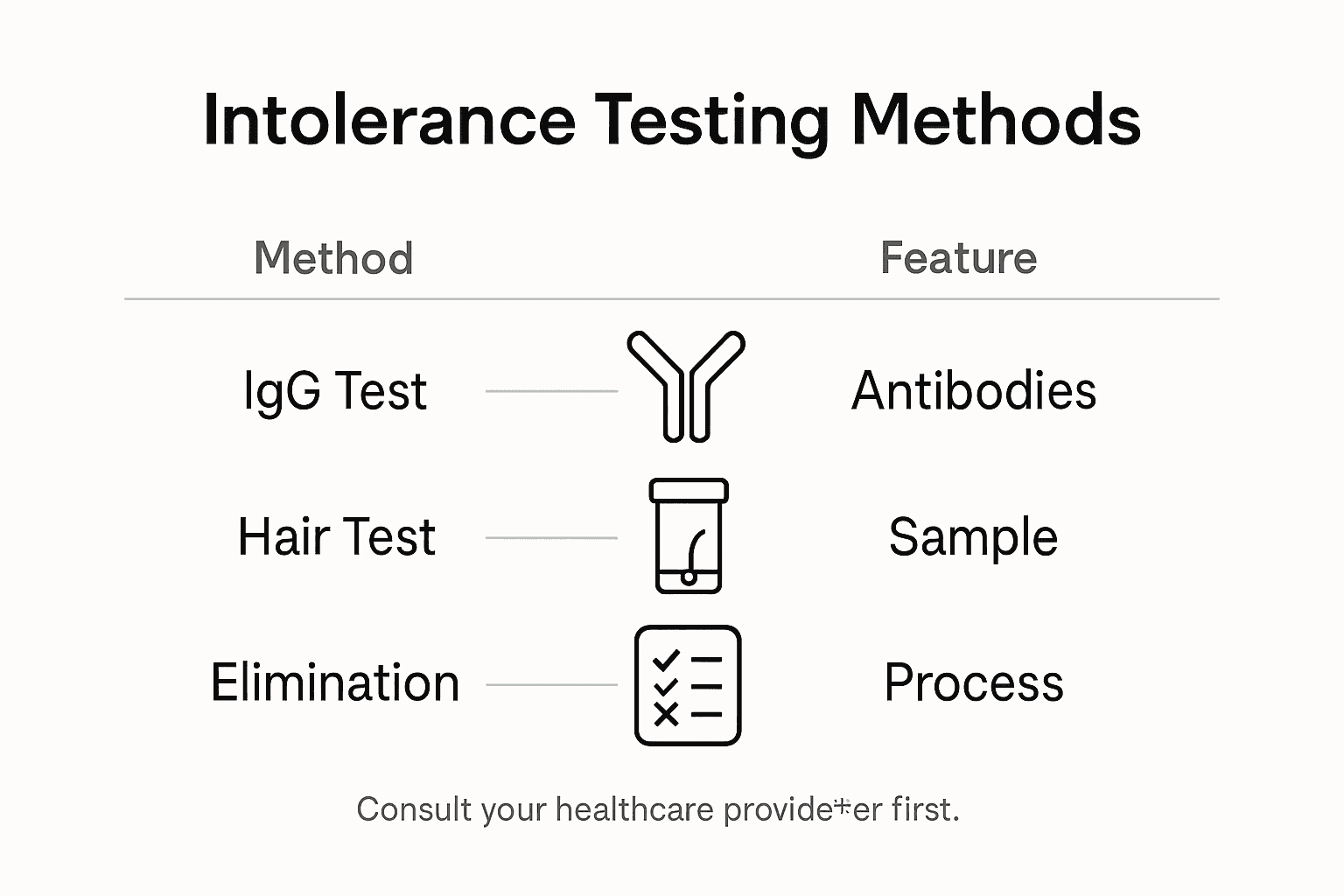
The most recommended approach by healthcare experts remains the elimination diet method. This involves systematically removing suspected trigger foods from one’s diet and then methodically reintroducing them while carefully monitoring physiological responses. Unlike other testing methods, the elimination diet provides direct, observable evidence of how specific foods impact an individual’s health, making it the gold standard for identifying genuine food intolerances.
Expert tip: Always consult a registered dietitian or healthcare professional before undertaking any comprehensive food intolerance investigation to ensure safe and accurate diagnostic practices.
The following table compares common food intolerance testing methods for reliability and scientific validity:
| Testing Method | Principle | Scientific Validity | Typical Limitations |
|---|---|---|---|
| IgG Blood Test | Measures antibody response | Limited clinical evidence | Possible false positives |
| Hair Analysis | Detects toxins in hair strands | Not clinically supported | Lack of standardisation |
| Vega Electrodermal Test | Measures electrical body currents | Poor scientific backing | Results often inconsistent |
| Elimination Diet | Removes/reintroduces foods | Gold standard approach | Requires commitment |
Bio-Resonance Technology And Hair Sample Analysis
Bio-resonance technology represents an alternative approach to health screening that utilises electromagnetic frequency analysis of hair samples to detect potential physiological imbalances. This non-invasive method claims to provide comprehensive health insights by analysing cellular frequencies retained in hair strands, though its scientific validity remains highly contested within medical circles.

The fundamental premise of bio-resonance involves interpreting electromagnetic signals emitted by biological samples, with practitioners suggesting that hair can reveal intricate details about an individual’s nutritional status, potential sensitivities, and underlying health conditions. However, critical medical authorities, including the Advertising Standards Authority, have consistently challenged these claims, emphasising that there is no robust clinical evidence supporting bio-resonance as a reliable diagnostic tool for identifying specific health issues.
Despite the lack of comprehensive scientific validation, bio-resonance technology continues to intrigue individuals seeking alternative health assessment methods. The process typically involves collecting a small hair sample, which is then analysed using specialised equipment designed to detect and interpret electromagnetic frequencies. Proponents argue that this approach can identify subtle imbalances that might be overlooked by traditional medical testing, though medical professionals strongly caution against replacing conventional diagnostic procedures with such alternative methods.
Expert insight: Always consult with a registered healthcare professional and rely on scientifically validated medical tests for accurate health diagnostics, viewing alternative technologies like bio-resonance as complementary rather than primary investigative tools.
Step-By-Step Process For Home Testing
Home intolerance testing involves a systematic approach designed to help individuals identify potential dietary triggers affecting their health. The recommended method focuses on a structured elimination and challenge diet process, which requires careful planning and meticulous documentation.
The typical home testing process comprises several critical stages. First, individuals must comprehensively list suspected food triggers based on their symptoms. Next, a complete elimination phase begins, where all identified potential trigger foods are removed from the diet for a minimum of two weeks. During this period, maintaining a detailed food and symptom diary becomes crucial, tracking every meal, snack, and any physiological responses such as digestive discomfort, skin reactions, or energy levels.
After the initial elimination phase, the reintroduction stage begins, which is perhaps the most delicate and informative part of the process. Foods are systematically and individually reintroduced, with careful monitoring of any symptomatic responses. This methodical approach allows individuals to identify specific foods causing adverse reactions, providing valuable insights into their personal dietary sensitivities. However, it is essential to proceed cautiously and preferably under professional nutritional guidance to ensure comprehensive and safe testing.
Expert tip: Consider working with a registered dietitian who can provide personalised guidance and help you navigate the complexities of food intolerance testing while ensuring nutritional balance.
Benefits, Limitations And Common Misconceptions
Food intolerance testing represents a complex landscape of diagnostic approaches, each carrying distinct advantages and significant potential drawbacks. Commercial testing methods often create confusion by presenting results that lack comprehensive scientific validation, leading many individuals to misinterpret their health indicators.
The primary benefit of intolerance testing lies in its potential to provide personalised insights into individual dietary sensitivities. However, critical limitations exist, particularly with commercial testing methods that may generate false positives or misleading information. A common misconception is that positive IgG antibody results automatically indicate a food intolerance, when in reality these antibodies might simply reflect food exposure rather than an adverse reaction. Medical professionals emphasise that these tests should never replace comprehensive clinical assessment or professional nutritional guidance.
Moreover, unregulated testing approaches can potentially cause more harm than good. Unnecessary dietary restrictions based on unreliable test results might lead to nutritional deficiencies, psychological stress, and potentially compromised dietary diversity. The most reliable method for identifying genuine food intolerances remains the methodical elimination and reintroduction diet, preferably conducted under professional supervision, which allows for precise observation of individual physiological responses to specific foods.
Expert tip: Always prioritise guidance from registered healthcare professionals and view commercial intolerance tests as supplementary information rather than definitive diagnostic tools.
Comparing Alternatives: Intolerance Vs Allergy Testing
Food allergies and food intolerances represent two distinctly different physiological responses that are often confused by individuals seeking to understand their dietary challenges. Diagnostic approaches for these conditions differ significantly in their medical methodology and clinical interpretation, with allergy testing providing more scientifically validated and precise results.
Allergy testing focuses on identifying immediate immune system reactions through established medical protocols such as skin prick tests and specific IgE blood tests. These tests can detect potentially life-threatening immune responses, with results that are clinically measurable and reproducible. In contrast, food intolerance testing lacks standardised scientific validation, often relying on less precise methodologies like elimination diets, symptom tracking, and alternative screening techniques that do not directly measure immune system responses.
The key distinctions between these testing approaches are profound. Allergy tests can identify immediate, potentially severe immune reactions that might trigger anaphylaxis, whereas intolerance investigations primarily aim to understand chronic, subtle physiological responses. Allergy tests are conducted by trained healthcare professionals using regulated diagnostic tools, while intolerance assessments frequently depend on patient-reported symptoms and less rigorous screening methods. This fundamental difference underscores the importance of consulting medical professionals who can provide accurate, comprehensive guidance tailored to individual health circumstances.
Expert tip: Prioritise consultation with healthcare professionals who can recommend appropriate testing strategies based on your specific symptoms and medical history.
Here is a side-by-side summary of allergy and intolerance testing approaches:
| Aspect | Allergy Testing | Intolerance Testing |
|---|---|---|
| Immune Response | Immediate, can cause anaphylaxis | Delayed, non-life-threatening |
| Diagnostic Methods | Skin prick, IgE blood test | Elimination diet, symptom diary |
| Reliability | High, clinically validated | Variable, often unregulated |
| Professional Guidance | Always required | Strongly recommended |
Discover Your True Dietary Triggers with Easy At-Home Testing
If you have been struggling with unexplained digestive discomfort, persistent fatigue, or frustrating skin issues, understanding how intolerance tests work can be your key to renewed wellbeing. The detailed insights from tests like the elimination diet and bio-resonance technology can help identify hidden food and environmental sensitivities that may be causing inflammation and distress. Many readers find the complexity of testing methods overwhelming but desire a clear, non-invasive way to pinpoint their triggers without lengthy clinical visits.
Start your journey today with UK Food Intolerance’s reliable home testing solutions. Choose from the comprehensive Ultimate Single Intolerance Test covering over 1,100 items or the budget-friendly Core Single Intolerance Test. Simply collect a small hair sample, send it to our UK-based laboratory, and receive a detailed, easy-to-understand digital report within 48-72 hours. Empower yourself to take control of your health through personalised insights that support effective elimination diets. Do not wait for symptoms to worsen. Visit UK Food Intolerance now and unlock clear answers to what might be affecting your wellbeing.
Frequently Asked Questions
What are food and environmental intolerance tests?
Food and environmental intolerance tests are diagnostic methods designed to identify specific dietary and environmental triggers that may cause health symptoms, such as digestive issues or skin problems.
How do food intolerance tests work?
Food intolerance tests typically involve analysing how your body responds to various substances, often through methods like blood analysis, hair sampling, or elimination diets that track and monitor physiological responses to different foods.
What is the most reliable method for testing food intolerances?
The elimination diet method is considered the gold standard for identifying food intolerances. It involves removing suspected trigger foods from your diet for a period and then systematically reintroducing them to observe any physiological responses.
Are hair analysis and bio-resonance testing reliable for identifying food intolerances?
Hair analysis and bio-resonance testing lack strong scientific evidence for reliability. Medical professionals caution against relying on these methods for accurate diagnostics and recommend scientifically validated tests instead.










Leave a Reply
Want to join the discussion?Feel free to contribute!