

Food intolerance symptoms are triggered by specific foods, food chemicals, and non-food co-factors that cause adverse reactions without involving the immune system. Unlike a food allergy, these reactions are non-immune adverse reactions driven by mechanisms such as enzyme deficiencies, pharmacological responses to food chemicals, and sensitivities to additives. The key characteristics that set them apart are dose-dependency and delayed onset. You might tolerate a small amount of a trigger food without any problem, yet experience significant symptoms after a larger portion.
The main trigger categories include:
- Enzyme deficiencies such as lactase deficiency, which prevents proper digestion of lactose in dairy products
- Food chemicals including histamine, tyramine, and caffeine found naturally in aged, fermented, or cured foods
- Food additives and preservatives such as sulphites, benzoates, and glutamates
- Carbohydrate malabsorption including fructose and certain fermentable sugars (FODMAPs)
- Non-food co-factors such as stress, physical activity, infections, and NSAID use
Both the NHS and the British Society for Allergy and Clinical Immunology (BSACI) describe food intolerance as a distinct condition from food allergy, with its own diagnostic pathway and management approach.
Table of Contents
- What are the typical symptoms of food intolerance?
- How does food intolerance differ from food allergy?
- Which foods and ingredients most commonly trigger intolerance reactions?
- Can non-food factors trigger or worsen your symptoms?
- How is food intolerance diagnosed in the UK?
- How can you manage food intolerance symptoms day to day?
- How Ukfoodintolerance can help you identify your triggers at home
- Key takeaways
What are the typical symptoms of food intolerance?
Recognising intolerance symptoms is the first step towards managing them. They tend to affect the digestive system most prominently, but the impact can spread well beyond the gut.
Common gastrointestinal symptoms include:
- Bloating and abdominal distension
- Stomach cramps or pain
- Diarrhoea or constipation
- Excessive wind and rumbling
- Nausea
Beyond the gut, you may also experience:
- Headaches or migraines
- Fatigue and low energy
- Skin reactions such as flushing, urticaria (hives), or eczema flares
- Rhinitis or breathing difficulties in some cases
- Joint or muscle pain
One of the most confusing aspects of food intolerance is timing. Symptoms often develop several hours or even days after eating the trigger food, rather than immediately. This delay makes it genuinely difficult to connect what you ate to how you feel. Severity also varies with the amount consumed, so a small portion might cause mild discomfort while a larger serving produces pronounced symptoms. Symptoms can also overlap with conditions like irritable bowel syndrome (IBS) or fibromyalgia, which is why medical consultation before making dietary changes is so important.
How does food intolerance differ from food allergy?
This is one of the most common points of confusion, and getting it right genuinely matters for how you manage your health.
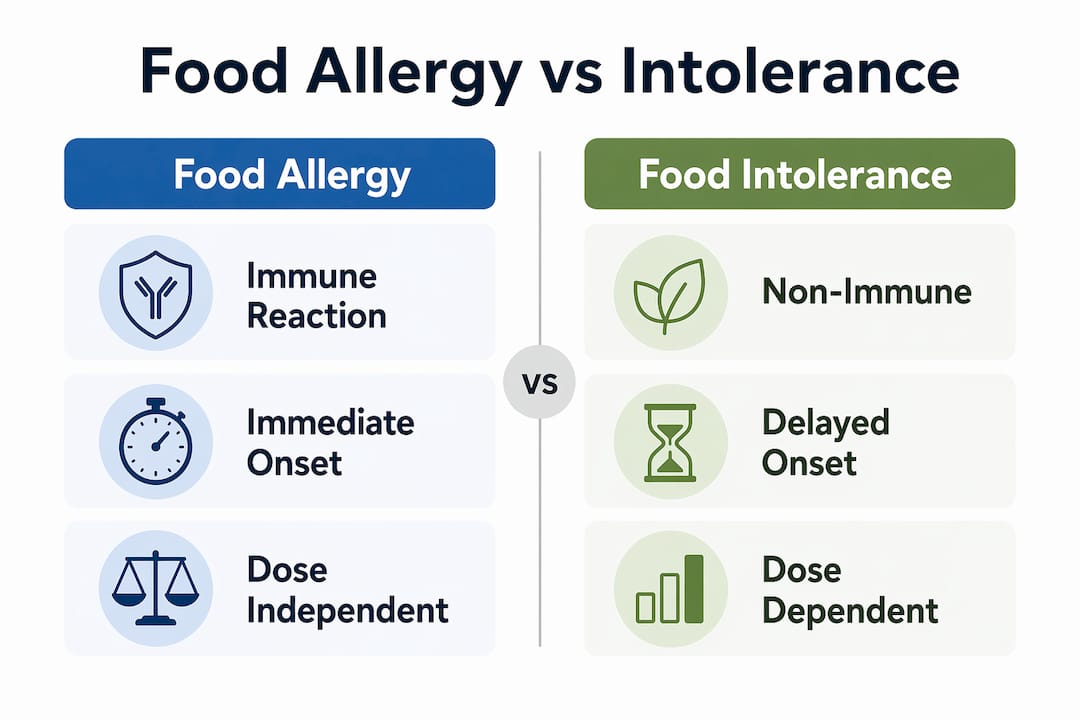
Food allergy is an immune-mediated reaction. The immune system mistakenly identifies a food protein as a threat and mounts a response, which can be IgE-mediated (immediate) or non-IgE-mediated (delayed). Immediate allergic reactions typically appear within minutes to two hours and can include oropharyngeal itching, swelling of the lips or tongue, hives, respiratory symptoms, and in severe cases, anaphylaxis. These reactions are potentially life-threatening.
Food intolerance involves no immune activation. Reactions are non-immune, dose-dependent, and usually delayed. They are uncomfortable and disruptive, but not life-threatening.
| Feature | Food allergy | Food intolerance |
|---|---|---|
| Immune involvement | Yes (IgE or non-IgE) | No |
| Onset | Minutes to 2 hours (IgE) | Hours to days |
| Dose-dependency | Often small amounts trigger reaction | Usually dose-dependent |
| Life-threatening risk | Yes (anaphylaxis possible) | No |
| Diagnosis | Skin prick test, specific IgE blood test | Clinical history, elimination diet |
According to BSACI clinical guidelines, the diagnostic approach for each condition differs significantly. Allergy testing uses validated skin and blood tests, while intolerance diagnosis relies primarily on clinical history and structured elimination diets. Knowing which condition you are dealing with shapes every decision that follows, from what to avoid to how strictly you need to avoid it.
Which foods and ingredients most commonly trigger intolerance reactions?
The causes of intolerance symptoms vary widely, but certain foods and ingredients appear repeatedly across clinical reports and patient histories. According to Food Standards Agency research, cow’s milk and dairy products are common intolerance triggers in the UK, frequently reported by people with a food intolerance, followed by cereals containing gluten at 21%.

Here is a practical intolerance triggers list covering the main categories:
Lactose (dairy products)
Lactose intolerance occurs when the body produces insufficient lactase enzyme to break down the sugar in milk. Symptoms include bloating, wind, diarrhoea, and stomach cramps after consuming milk, cheese, yoghurt, or cream.
Gluten and wheat
Gluten is a protein mixture found in wheat, barley, and rye. Gluten intolerance (distinct from coeliac disease, which is autoimmune) can cause digestive discomfort, fatigue, and skin reactions. Some people with gluten sensitivity also react to oats due to cross-contamination.
Fructose and FODMAPs
Fructose malabsorption and sensitivity to other fermentable carbohydrates (FODMAPs) are particularly common in people with IBS. Foods rich in onions, garlic, apples, and legumes are frequent culprits. BSACI notes that many IBS sufferers report increased symptoms following foods rich in carbohydrates, fatty foods, coffee, alcohol, and spices.
Histamine-rich foods
Histamine is produced during fermentation, storage, or decay. Foods such as cured meats, aged cheeses, wine, beer, champagne, fermented soy products, and certain fresh fruits contain significant levels. People with reduced diamine oxidase (DAO) enzyme activity struggle to break down histamine efficiently, leading to symptoms like headaches, flushing, and digestive upset.
Food additives and preservatives
- Sulphites (found in wine, cider, dried fruits, and some processed foods) particularly affect people with asthma
- Benzoates, used as preservatives in soft drinks and condiments
- Monosodium glutamate (MSG), a flavour enhancer in some processed and restaurant foods
- Artificial colourings and flavourings
Key figure: Cow’s milk and dairy products are the single most commonly reported food intolerance trigger in the UK, cited by 38% of people reporting a food intolerance in Food Standards Agency research.
Can non-food factors trigger or worsen your symptoms?
Diet is not the whole picture. Several non-food co-factors can lower your tolerance threshold, meaning that a quantity of food you normally manage without difficulty can suddenly cause symptoms when other stressors are present.
These co-factors include:
- Physical exercise can accelerate gut transit and increase intestinal permeability, making reactions more likely
- Psychological stress affects gut motility and the gut-brain axis, amplifying digestive sensitivity
- Infections (particularly gastrointestinal infections) can temporarily reduce enzyme levels or disrupt the gut lining
- NSAID use (such as ibuprofen or aspirin) can increase gut permeability and sensitise the intestinal lining
- Alcohol can exacerbate reactions to histamine and other food chemicals, and irritate the gut directly
- Hormonal changes during the menstrual cycle or pregnancy can shift tolerance levels noticeably
This is why your symptoms might seem inconsistent. You could eat the same meal on two different days and feel fine on one occasion but unwell on another. The food itself has not changed; your body’s capacity to cope with it has. Tracking these co-factors alongside your food intake gives you a much clearer picture of what is actually driving your symptoms.

How is food intolerance diagnosed in the UK?
Diagnosis is one of the more challenging aspects of managing food intolerance, and it helps to know what the clinical standards actually say.
There are no validated laboratory tests for most non-immune food sensitivities. The exceptions are lactose intolerance (hydrogen breath test) and coeliac disease (blood test and biopsy). For the vast majority of intolerances, diagnosis depends on a detailed clinical history and a structured elimination diet with supervised reintroduction.
The process typically follows these steps:
- Symptom and food diary to identify patterns and potential triggers over two to four weeks
- Clinical assessment by a GP or dietitian to rule out underlying conditions like coeliac disease or IBD
- Elimination diet removing the suspected food for four to six weeks to observe symptom changes
- Reintroduction of the eliminated food to confirm whether it reproduces symptoms
Pro Tip: A food and symptom diary is the clinical gold standard for identifying delayed intolerance triggers. Record everything you eat, the time, and any symptoms that follow, including their severity. Even two weeks of consistent logging can reveal patterns that feel invisible day-to-day.
One important caution: many alternative tests marketed for food intolerance diagnosis, including hair analysis kits claiming to identify allergies, IgG antibody panels, and applied kinesiology, lack scientific validity according to BSACI. They can lead to misdiagnosis and unnecessary dietary restrictions. Always discuss testing options with a qualified healthcare professional before making significant dietary changes.
You can also learn more about how to identify intolerances using structured approaches at home before seeking a clinical referral.
How can you manage food intolerance symptoms day to day?
The good news is that most food intolerances do not require total elimination of the trigger food. Many intolerances are dose-dependent, meaning small amounts are often tolerated without symptoms. Management is about finding your personal threshold, not necessarily cutting foods out entirely.
Practical strategies include:
- Portion control rather than complete avoidance, particularly for lactose and fructose intolerances
- Gradual reintroduction after an elimination period to identify your individual tolerance level
- Diet variation to avoid overloading on any single trigger food on a given day
- Label reading to spot hidden ingredients such as sulphites, lactose, or gluten in processed foods
- Enzyme supplements such as lactase tablets, which can help manage lactose intolerance when eating out
- Keeping a symptom log to monitor how dietary changes affect your wellbeing over time
Seek professional advice if your symptoms are severe, persistent, or if you are losing weight unintentionally. A registered dietitian can guide you through an elimination and reintroduction programme safely, making sure your diet remains nutritionally balanced throughout. Unnecessarily restricting multiple food groups without guidance can lead to nutritional deficiencies, so targeted, evidence-based changes are always preferable to broad exclusions.
How Ukfoodintolerance can help you identify your triggers at home
If you are trying to work out what triggers intolerance symptoms for you specifically, Ukfoodintolerance offers a practical starting point. The service uses bio-resonance technology, a method that analyses the energetic frequencies of a hair sample to screen for potential sensitivities across a wide range of food and non-food items. Results are processed at a UK-based laboratory and delivered as a detailed digital report within 48–72 hours.

Here is what the testing process looks like:
- Collect a small hair sample at home, no needles or clinic visits required
- Post it to the UK laboratory using the prepaid envelope included with your kit
- Receive your digital report within 48–72 hours, covering over 1,100 items including foods, environmental factors, nutritional markers, and gut biome indicators
- Use the results to guide your elimination diet, focusing on the specific items flagged rather than broad food group exclusions
The reports cover potential sensitivities to foods, drinks, additives, environmental triggers, and nutritional imbalances, giving you a structured starting point for dietary investigation. This is particularly useful if you have been experiencing unexplained symptoms for some time and are not sure where to begin.
Important note: Ukfoodintolerance’s bio-resonance testing is a sensitivity screening tool, not a clinical diagnostic test. Results should be used alongside a food and symptom diary and, where appropriate, discussed with a healthcare professional. For suspected coeliac disease or food allergy, clinical testing remains the appropriate route.
Ukfoodintolerance’s at-home intolerance tests are available to order directly online, with options to suit different budgets and testing needs. Whether you are dealing with persistent digestive discomfort, skin flare-ups, or unexplained fatigue, having a clearer picture of your potential triggers is a genuinely useful first step.
Key takeaways
Food intolerance symptoms are triggered by specific foods, chemicals, and non-food co-factors through non-immune mechanisms, and accurate identification requires structured tracking, clinical assessment, and targeted dietary adjustment.
| Point | Details |
|---|---|
| Dose-dependency matters | Small amounts of a trigger food are often tolerated; symptoms typically worsen with larger portions. |
| Delayed onset complicates diagnosis | Symptoms can appear hours or days after eating, making a food and symptom diary the most reliable identification tool. |
| Cow’s milk and dairy products are the most commonly reported food intolerance triggers in the UK, cited by 38% of people reporting a food intolerance, followed by gluten-containing cereals at 21%, according to Food Standards Agency research. | |
| Non-food factors shift your threshold | Stress, exercise, infections, and NSAID use can trigger symptoms even when food intake stays the same. |
| Clinical testing has clear limits | No validated lab test exists for most intolerances; elimination diets with supervised reintroduction remain the clinical standard. |










Leave a Reply
Want to join the discussion?Feel free to contribute!