
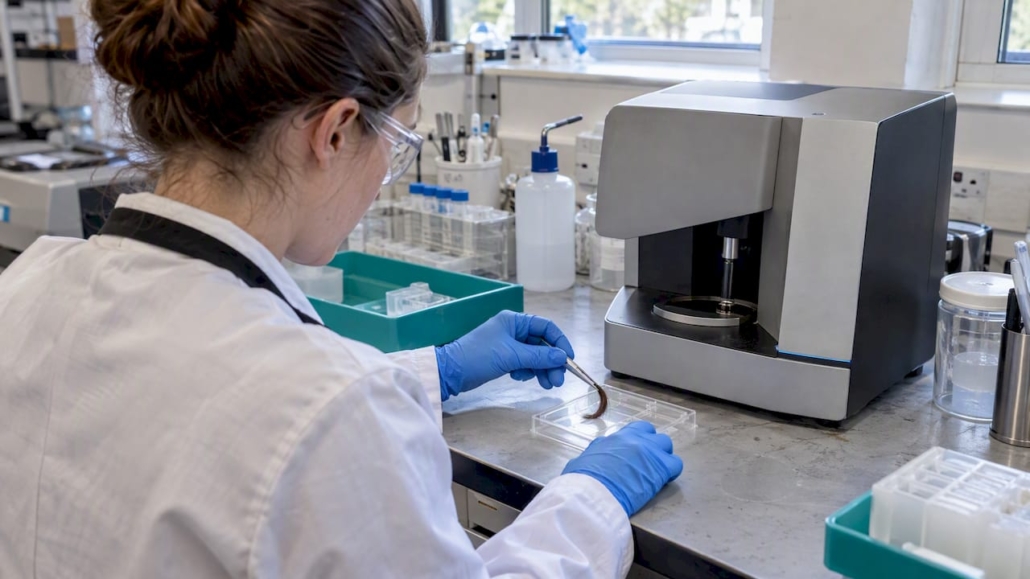
At-home hair bioresonance tests are not recognised as validated diagnostic tools by UK clinical bodies, so we treat results as informational rather than medical proof. If you have symptoms that concern you, a GP or dietitian is still the right first call. Below, we walk through how these tests work, what the evidence says, and how to use a report safely.
TL;DR:
- UK health bodies and regulators do not validate at-home bioresonance hair tests as accurate diagnostic tools for food intolerance.
- These tests produce reports with broad reactivity categories, but their diagnostic accuracy remains unsupported, and claims to the contrary are often misleading.
- Relying on unvalidated tests can lead to unnecessary food restrictions that cause nutritional deficiencies and delay proper medical diagnosis.
- The recommended clinical pathway involves detailed history-taking, targeted testing, and supervised reintroduction, avoiding broad screening panels.
- Bioresonance reports should be used as prompts for further professional discussion, not as definitive diagnoses or guides to elimination.
Table of Contents
- How bioresonance hair sample tests claim to work
- What UK health organisations and regulators say about accuracy
- Risks of relying on unvalidated hair bioresonance tests
- The validated clinical pathway for diagnosing food intolerance
- How to interpret a bioresonance report and use it safely
- Should you buy an at-home hair bioresonance test?
- A note on how we frame these results
- Where our tests fit as an informational screening option
- FAQ
- Sources
How bioresonance hair sample tests claim to work
Bioresonance testing works on the premise that a hair sample carries detectable energy or frequency patterns, and that a device can compare these against reference signals for foods, environmental substances or other items. Providers describe this as a way of flagging “reactivity”, not as a blood or skin test that measures antibodies or allergens directly. This article covers that bioresonance screening approach specifically, not laboratory hair tissue mineral analysis, which uses chemical methods to measure mineral and heavy-metal levels in hair and sits outside what we are discussing here.
A typical report groups tested items into reactivity bands and can cover a large number of foods, drinks, household products or environmental triggers in one pass. Understanding the report format matters because the scale of a panel can look authoritative, even though scale alone says nothing about diagnostic accuracy.
- Reports usually sort items into categories such as low, moderate or high reactivity.
- Panels can span a large number of individual items in one test.
- Results are generated per hair sample, not per symptom or clinical history.
What UK health organisations and regulators say about accuracy
The NHS states plainly that it does not recommend at-home food intolerance testing kits, noting there is no reliable, validated test that can diagnose a food intolerance from a sample alone. That guidance sits alongside advice from allergy and dietetic professional bodies, who take a similarly cautious line on unconventional testing methods.
- The NHS points patients toward clinical history and targeted testing rather than broad consumer screening.
- Allergy UK lists hair analysis among methods not recommended for diagnosing food allergy or intolerance, alongside IgG testing, Vega testing and kinesiology.
- Advertising regulators have intervened directly where bioresonance claims cross into misleading territory.
The Advertising Standards Authority advises that objective diagnostic claims for bioresonance lack convincing clinical evidence. That single line from the regulator responsible for UK advertising standards shapes how any bioresonance provider, including us, can legitimately describe what a test does.
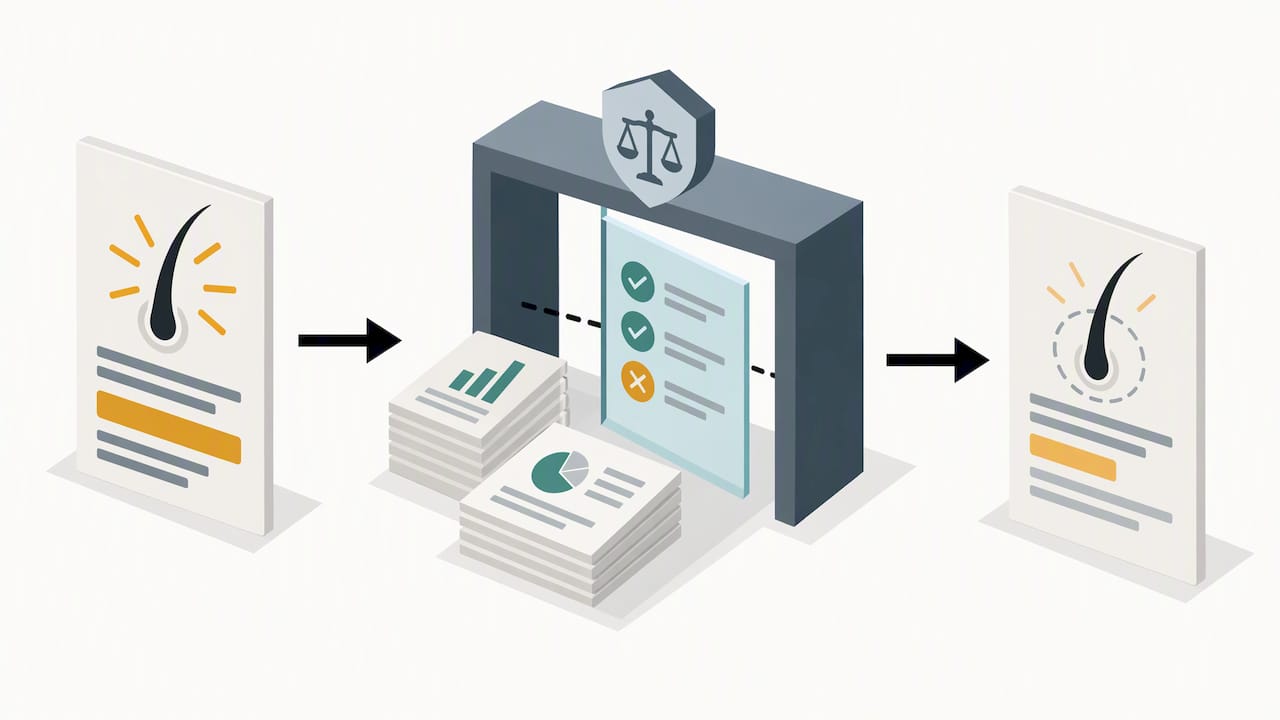
The ASA has also acted on specific cases. An adjudication against a bioresonance hair test provider found that marketing implying diagnostic certainty was likely to mislead consumers, and required changes to the claims being made.
Risks of relying on unvalidated hair bioresonance tests
Treating a bioresonance report as a clinical diagnosis carries real downsides, not just a theoretical gap in evidence. The clearest risk is dietary: cutting out foods flagged as “reactive” without professional oversight can leave you short on nutrients those foods were providing, especially if several items are eliminated at once.
- Unsupervised elimination of multiple foods can lead to nutritional shortfalls over time.
- A test result can mask or delay recognition of a condition that needs proper clinical investigation.
- Long-term, unnecessary restriction can affect quality of life, social eating and mental wellbeing.
- Advertisers making unsubstantiated diagnostic claims face regulatory risk, which should tell you something about how those claims hold up.
Pro Tip: Before changing your diet based on any at-home report, write down which symptoms you actually have and check whether the suggested eliminations match them, rather than removing everything flagged.
The validated clinical pathway for diagnosing food intolerance
Clinicians work from a different starting point: your history first, then targeted tests chosen because they fit that history. Guidance for food allergy in adults sets out that diagnosis usually requires a detailed history, targeted testing and, where needed, an oral food challenge, rather than broad screening across hundreds of items.
- A detailed symptom and food diary gives a clinician the pattern needed to narrow down likely culprits before any test is ordered.
- Skin-prick tests and specific IgE blood tests are used for suspected allergy, but only for items a compatible history points to, because testing too broadly increases false positives.
- An oral food challenge, where a suspected food is reintroduced under supervision, remains the most definitive way to confirm or rule out a reaction.
- Elimination and reintroduction for suspected non-IgE intolerances typically runs over a period of weeks, guided by a dietitian to protect nutritional balance.
- A referral to a dietitian or allergy specialist is appropriate once initial symptoms or a GP consultation point to a likely trigger worth investigating formally.
This pathway exists because testing without clinical context, as our guide to food intolerance types and testing explains further, tends to generate more false leads than answers.
How to interpret a bioresonance report and use it safely
A bioresonance report can be a prompt for further thought, not a verdict. Treat any item flagged as “high reactivity” as a question to ask yourself, such as whether you have noticed symptoms after eating it, rather than an instruction to remove it immediately.
- Cross-check flagged items against your own symptom history before acting on anything.
- Avoid starting strict multi-food elimination without dietetic input, particularly for children or anyone already managing a health condition.
- Ask any provider what UK-based laboratory processes the sample and how results are generated, since transparency here varies.
Pro Tip: Keep a simple diary of what you eat and how you feel for two weeks before and after reviewing a report. It gives you something concrete to discuss with a GP or dietitian. Our hair sample analysis guide covers this process in more detail.
Should you buy an at-home hair bioresonance test?
A hair bioresonance test can be worth considering as a starting point for exploration, but it is not a substitute for clinical assessment if your symptoms are significant or ongoing.
- Consider your symptom severity first: persistent or severe symptoms warrant a GP visit before, or alongside, any home test.
- Check whether you have already had a clinical assessment, since a test result means less without that context.
- Be clear with yourself about purpose: exploring possible triggers is different from seeking a diagnosis.
- Watch for red flags such as vague “comprehensive” claims with no explanation of methodology or laboratory transparency.
- Plan your follow-up before you order: decide now whether you will discuss results with a GP or dietitian, and how you will reintroduce any eliminated foods.
Our piece on the risks and benefits of at-home testing goes into more depth on weighing these trade-offs.
A note on how we frame these results
We built our service on hair sample collection processed through laboratories, with digital reports delivered within a few days. We say clearly that these reports are informational screening tools, not medical diagnoses, and we recommend clinical follow-up when symptoms are significant. That framing is not a formality for us: it is the basis of every report we send out.
— Rob
Where our tests fit as an informational screening option
If you are curious about potential triggers behind unexplained symptoms, hair sample tests can give you a practical starting point without needing a clinical referral first. Samples are processed in laboratories and digital reports are delivered within a few days, with panels covering a large number of items on the most detailed tests; for more detail on hair sampling biology and interpretation, see our guide on how to interpret hair follicle research findings.
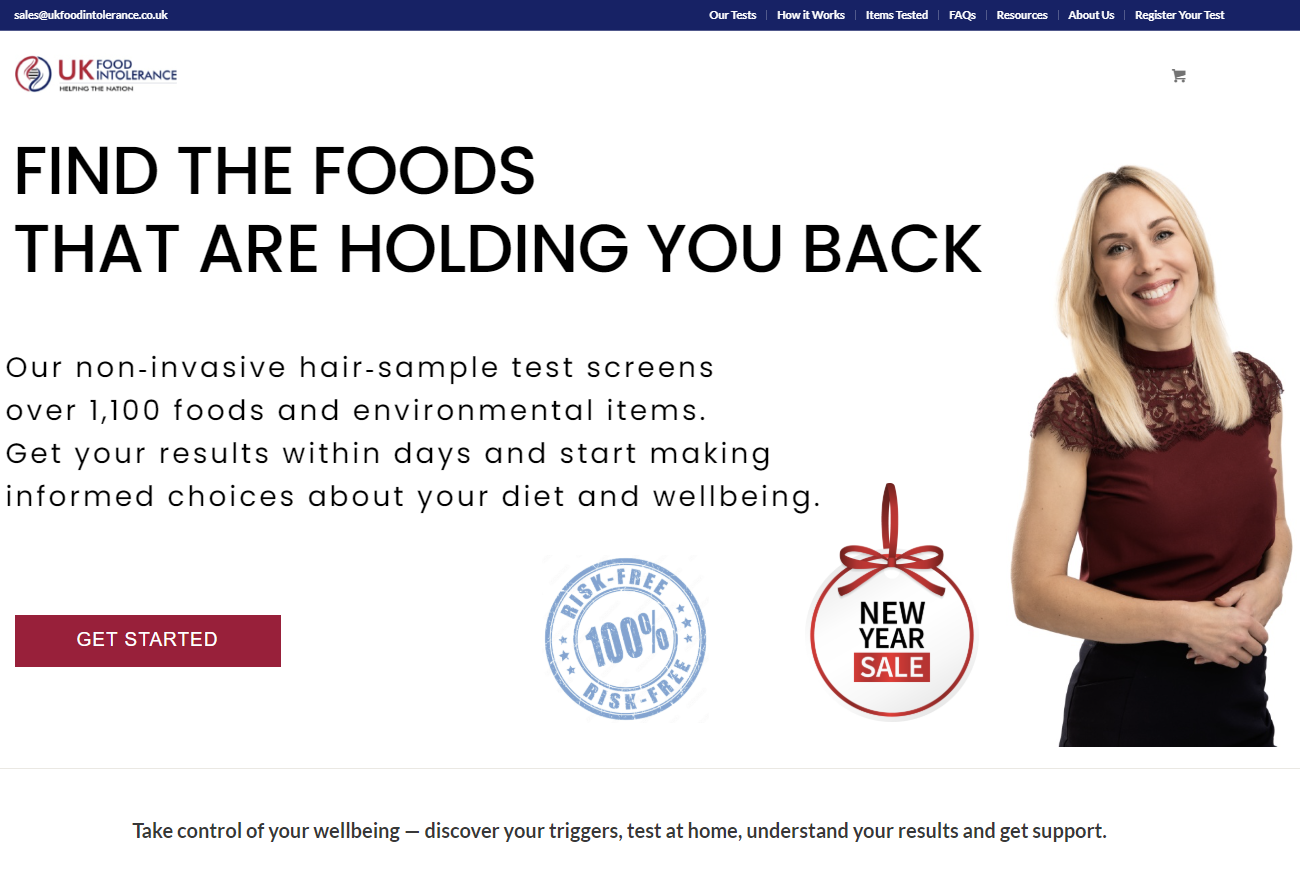
- Our reports are built for exploration and elimination diet planning, not as a replacement for a clinical diagnosis.
- We recommend discussing significant or persistent symptoms with a GP or dietitian alongside anything our report flags.
- Our range of tests includes options sized to different budgets and needs, from a smaller core panel to our most extensive Ultimate Plus Intolerance Test.
If you want a simple, non-invasive way to start that conversation with yourself about what might be affecting how you feel, take a look at our tests and choose the panel that fits where you are starting from.
FAQ
Is hair mineral analysis accurate for diagnosing food intolerance?
No UK clinical body currently validates at-home hair bioresonance testing as a diagnostic method for food intolerance. The NHS specifically advises against relying on at-home intolerance testing kits and recommends clinical history and targeted testing instead.
What do UK regulators say about bioresonance test claims?
The ASA has found that objective diagnostic claims for bioresonance lack convincing clinical evidence and has required specific advertisers to amend misleading marketing. This means phrases implying certainty, such as guaranteed diagnosis, should be treated with caution wherever you see them.
What should I do instead of relying only on a hair test result?
Keep a food and symptom diary, then discuss significant or persistent symptoms with a GP, who can refer you for targeted IgE testing or recommend an oral food challenge if appropriate. A dietitian can also guide a supervised elimination and reintroduction process safely.
Can a hair bioresonance report still be useful?
Used as a prompt for further thought rather than a diagnosis, a report can help you notice patterns worth discussing with a professional. We frame our own reports this way, as a starting point for exploration rather than a clinical answer.
How much does a hair intolerance test cost?
Our Ultimate Plus Intolerance Test costs £140.99 one-off per person, and our full range of tests includes other panel sizes with pricing available on request.
Sources
- NHS — Food intolerance
- Allergy UK — Food allergy testing and diagnosis (PDF)
- ASA — advice on bioresonance therapy
- Clinical guidance — use of laboratory allergy testing (NHS trust guidance)










Leave a Reply
Want to join the discussion?Feel free to contribute!