
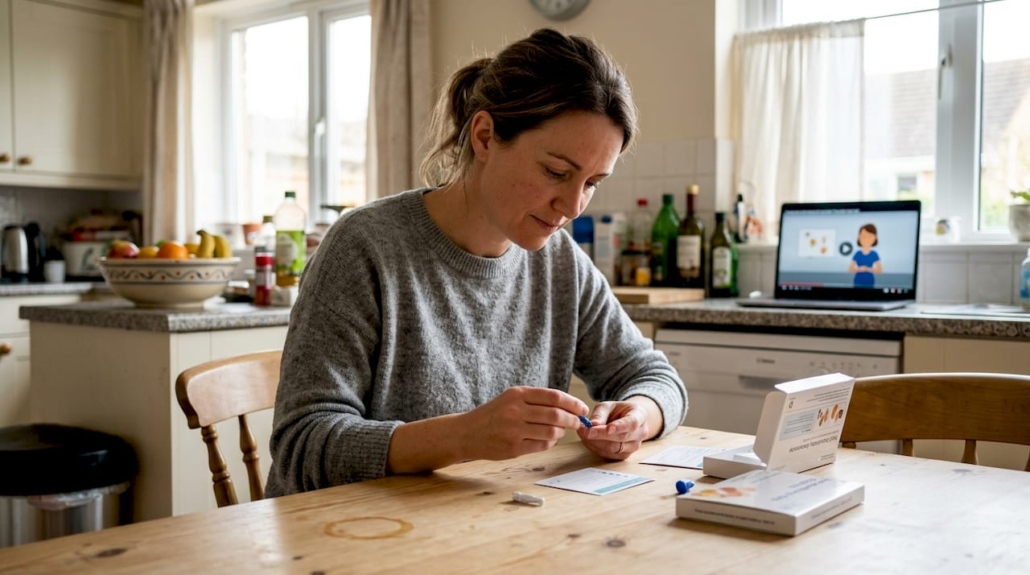
Many people in the UK struggle with unexplained digestive discomfort, fatigue, or skin issues and wonder if certain foods might be the culprit. At-home food sensitivity tests promise quick answers without needles or GP visits, but medical experts remain sceptical about their reliability. This guide clarifies what these tests actually measure, examines the scientific evidence behind them, and outlines safer, evidence-based approaches to identifying food sensitivities. You’ll discover how to navigate testing options responsibly whilst avoiding unnecessary dietary restrictions that could harm your nutritional balance.
Table of Contents
- Key takeaways
- What are at-home food sensitivity tests and how do they work?
- Scientific consensus and limitations of at-home IgG and bio-resonance tests
- Recommended approaches to identifying and managing food sensitivity responsibly
- Comparing at-home food sensitivity tests: IgG blood tests vs bio-resonance hair testing
- Explore trusted UK food intolerance tests and support
- Frequently asked questions
Key Takeaways
| Point | Details |
|---|---|
| IgG tests limitations | IgG tests measure exposure to foods rather than intolerance and have no diagnostic value according to major allergy organisations. |
| Bio resonance concerns | Hair based bio resonance testing lacks robust scientific validation and is not endorsed for diagnosing food sensitivities. |
| NHS stance | NHS and expert bodies do not endorse at home IgG or bio resonance tests due to inaccuracy and the risk of unnecessary dietary restrictions. |
| Safer approaches | Symptom diaries, elimination diets, and professional allergy testing provide safer, evidence based approaches to identify sensitivities. |
What are at-home food sensitivity tests and how do they work?
At-home non-invasive food sensitivity tests in the UK primarily include two types: finger-prick blood IgG antibody tests and hair sample bio-resonance tests. Each uses a different methodology to identify potential food triggers, though their scientific validity varies considerably.
IgG blood tests require you to prick your finger, collect a small blood sample on a card, and post it to a laboratory. The lab measures food-specific IgG antibodies, with providers testing 200+ foods, delivering results in 3-7 days at prices ranging from £125 to £239. IgG antibodies are proteins your immune system produces when exposed to foreign substances, including foods. Many providers include telephone consultations to discuss your results and suggest elimination strategies.
Bio-resonance hair tests take a different approach entirely. You snip a small hair sample at home and send it for analysis. These tests claim to screen 500-1100+ items non-invasively, delivering results in 48-72 hours for £65-£150 with no needles required. Bio-resonance technology purportedly measures electromagnetic frequencies from your hair to identify sensitivities to foods, environmental triggers, and other substances. The appeal lies in the painless collection method and broader screening scope.
Both test types share certain characteristics that attract consumers:
- Complete privacy and convenience of home testing without GP appointments
- Fast turnaround times compared to NHS referral pathways
- Comprehensive food panels covering hundreds of potential triggers
- Digital reports with colour-coded severity levels for each item
- Guidance for implementing elimination diets based on results
However, significant concerns exist around accuracy and interpretation. The food intolerance testing guide at home emphasises understanding test limitations before purchasing. Hair sample testing for intolerance remains particularly controversial in medical circles due to the lack of peer-reviewed validation for bio-resonance methodology.
Pro Tip: Define technical terms when first encountered. IgG antibodies are immunoglobulin G proteins that represent the most abundant antibody type in your blood, typically indicating past exposure rather than current sensitivity.
Scientific consensus and limitations of at-home IgG and bio-resonance tests
The medical establishment maintains a clear position on these testing methods. NHS and experts including Allergy UK and Which? do not recommend home IgG or bio-resonance tests due to lack of accuracy and evidence, warning they may lead to unnecessary dietary restrictions. This consensus stems from fundamental misunderstandings about what these tests actually measure.
“Food intolerance testing kits may give false positive results, leading people to unnecessarily restrict their diet and risk nutritional deficiencies. The NHS does not recommend using them.” — NHS Digital
Peer-reviewed research reveals that IgG indicates exposure and tolerance, not intolerance, with no diagnostic value according to the European Academy of Allergy and Clinical Immunology and the American Academy of Allergy, Asthma & Immunology. When you regularly consume a food, your body naturally produces IgG antibodies as part of normal immune function. High IgG levels to eggs or wheat might simply mean you eat these foods frequently, not that they cause symptoms.
This creates a paradox where the foods you eat most often show the strongest reactions on IgG tests, potentially leading you to eliminate staples from your diet unnecessarily. Someone eating toast daily will likely show elevated IgG to wheat, but this reflects normal exposure rather than pathology.

Bio-resonance testing faces even greater scepticism. No robust peer-reviewed studies validate the claim that electromagnetic frequencies from hair samples can identify food sensitivities. The proposed mechanism contradicts established principles of immunology and biochemistry.
Interestingly, some studies show IgG-guided diets improved outcomes in specific cases involving irritable bowel syndrome and migraine, but these findings are not generalisable to the broader population. Researchers emphasise these were controlled studies with professional supervision, not validation for commercial home testing kits.
Pro Tip: Before making dietary changes based on any test results, consult your GP or a registered dietitian. Eliminating multiple food groups without professional guidance risks nutritional deficiencies, particularly in calcium, iron, B vitamins, and fibre.
The choosing intolerance tests UK resource helps you evaluate test options critically, whilst managing food sensitivities tips provides evidence-based strategies that don’t rely solely on unvalidated testing.
Recommended approaches to identifying and managing food sensitivity responsibly
Rather than relying on commercial tests of questionable validity, medical professionals advocate systematic, evidence-based approaches. The NHS recommends symptom diary, elimination diet under dietitian supervision, and breath tests for lactose intolerance, with GP referral for IgE allergy tests when appropriate.
A food and symptom diary forms the foundation of responsible investigation. Record everything you eat and drink alongside any symptoms, their severity, and timing. This creates objective data revealing patterns that might point to specific triggers. You might notice bloating consistently follows dairy consumption or that headaches emerge two hours after eating processed meats.
Elimination diets represent the gold standard for identifying food sensitivities when conducted properly. Under dietitian guidance, you systematically remove suspected foods for 2-4 weeks, then reintroduce them one at a time whilst monitoring symptoms. This controlled approach provides clear cause-and-effect evidence without the false positives plaguing commercial tests.
Follow this step-by-step approach for safe, effective food sensitivity investigation:
- Maintain a detailed food and symptom diary for at least two weeks before making any changes
- Consult your GP to rule out coeliac disease, inflammatory bowel disease, or true food allergies requiring medical testing
- Request referral to a registered dietitian who specialises in food intolerance and elimination diets
- Work with your dietitian to identify likely trigger foods based on your diary and symptoms
- Follow a supervised elimination phase, removing suspected foods completely for 2-4 weeks
- Reintroduce foods individually every 3-4 days whilst monitoring and recording any symptom changes
- Develop a long-term eating plan that avoids confirmed triggers whilst maintaining nutritional balance
Other diagnostic tools offer objective evidence for specific conditions. Hydrogen breath tests accurately diagnose lactose or fructose malabsorption by measuring gases produced when your body fails to digest these sugars properly. Skin prick tests and specific IgE blood tests identify true food allergies involving immediate immune responses.
Pro Tip: Never eliminate entire food groups without professional supervision. Removing dairy risks calcium and vitamin D deficiency; cutting out gluten-containing grains may reduce fibre and B vitamin intake. A dietitian ensures nutritional adequacy whilst you investigate sensitivities.
The home food sensitivity testing checklist provides a practical framework for this process, whilst understanding food intolerance symptoms helps you recognise genuine reactions versus unrelated health issues.
Comparing at-home food sensitivity tests: IgG blood tests vs bio-resonance hair testing
Understanding the practical differences between these two dominant at-home testing methods helps you make informed decisions about their potential role in your health journey.
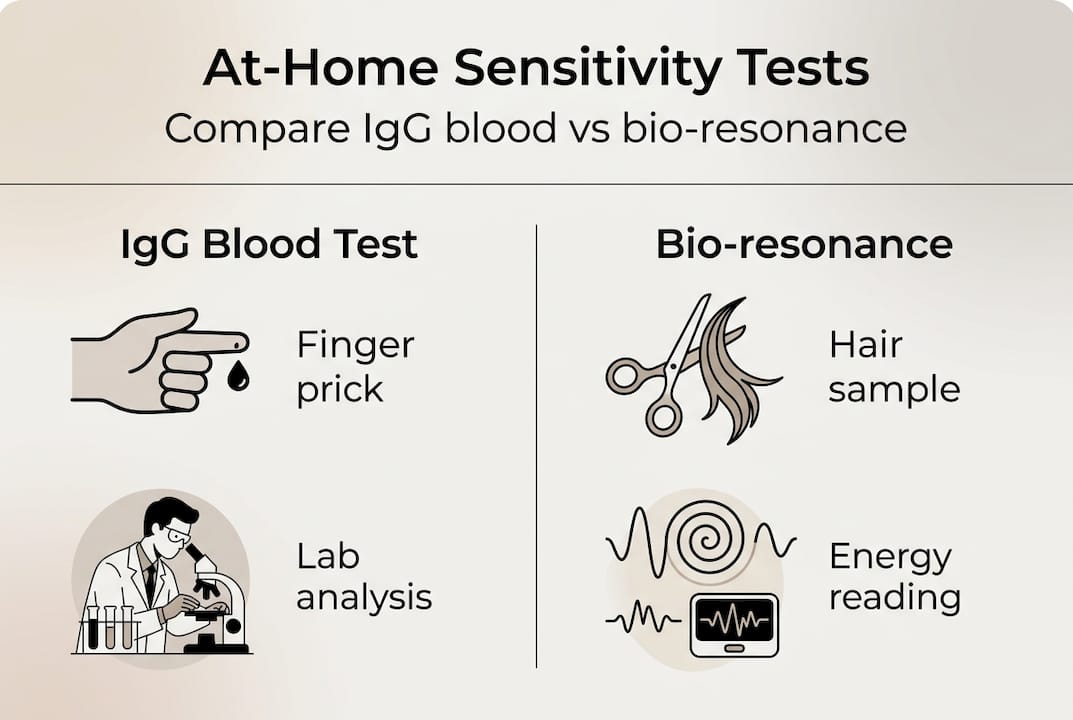
| Feature | IgG Blood Tests | Bio-Resonance Hair Tests |
|---|---|---|
| Sample method | Finger-prick blood sample | Hair sample clipping |
| Invasiveness | Minimally invasive (small needle prick) | Completely non-invasive |
| Items tested | 200-300 foods typically | 500-1100+ foods and environmental factors |
| Turnaround time | 3-7 days | 48-72 hours |
| Cost range | £125-£239 | £65-£150 |
| Scientific basis | Measures actual IgG antibodies (though interpretation disputed) | No validated scientific mechanism |
| Medical acceptance | Not recommended by NHS/allergy experts | Rejected by medical community |
| Best for | Those wanting antibody data despite limitations | Those avoiding needles and seeking broad screening |
IgG blood tests offer these advantages and limitations:
- Measures real biological markers (IgG antibodies) through established laboratory techniques
- Often includes telephone consultation with nutritional therapist or advisor
- May identify foods you consume frequently, which could be useful for rotation diets
- However, elevated IgG typically indicates tolerance, not sensitivity, leading to false positives
- More expensive and requires blood sample collection some find uncomfortable
Bio-resonance hair tests present a different profile:
- Completely painless collection method appeals to needle-phobic individuals
- Screens broader range including environmental sensitivities and non-food items
- Faster results and lower cost make them accessible
- However, lacks any validated scientific mechanism or peer-reviewed evidence
- May produce entirely random results with no biological basis
The practical impact for UK consumers centres on understanding that neither test type enjoys medical endorsement. If you choose to use these services despite expert warnings, treat results as potential starting points for supervised elimination diets rather than definitive diagnoses. The bio-resonance testing role explores this technology’s claims and limitations in detail.
A common misconception suggests these tests diagnose food allergies. They do not. True food allergies involve IgE antibodies and immediate, potentially severe reactions. These at-home tests measure different markers entirely and cannot identify life-threatening allergies requiring emergency treatment.
The food intolerance testing guide helps you navigate these distinctions and make choices aligned with your health goals and risk tolerance.
Explore trusted UK food intolerance tests and support
If you’re considering at-home testing despite the medical caveats discussed, UK Food Intolerance offers bio-resonance hair testing with extensive screening coverage and clear interpretation support. Their tests analyse 500 to over 1,100 items, providing detailed digital reports within 48-72 hours to help you identify potential dietary triggers.

Whilst bio-resonance technology lacks mainstream medical validation, many customers find the comprehensive screening useful as a starting point for supervised elimination diets. UK Food Intolerance provides guidance on interpreting results responsibly and emphasises working with healthcare professionals when implementing dietary changes. Explore our wide range of intolerance tests to understand your options, review the interpreting intolerance results guide for clear next steps, and consult the food sensitivity testing checklist before making your decision.
Frequently asked questions
What is the difference between food allergy, intolerance and sensitivity?
Food allergy involves an IgE-mediated immune system response that can trigger severe, immediate reactions including anaphylaxis, swelling, hives, or breathing difficulties. Food intolerance typically affects the digestive system rather than the immune system, causing delayed symptoms like bloating, diarrhoea, or stomach cramps, with lactose intolerance being the most common example. Food sensitivity is a broader, less scientifically defined term often used to describe any adverse reaction to foods that doesn’t fit allergy or intolerance categories, frequently based on self-reported symptoms rather than objective testing.
Are at-home food sensitivity tests reliable for diagnosis?
No, the NHS and allergy experts do not recommend IgG or bio-resonance tests for diagnosing food sensitivities due to lack of scientific evidence and accuracy concerns. These tests often indicate exposure rather than intolerance, producing false positive results that may lead you to unnecessarily restrict your diet. Professional evaluation through supervised elimination diets and validated medical tests provides far more reliable information for identifying genuine food sensitivities.
What steps should I take if I suspect a food sensitivity?
Start by keeping a detailed food and symptom diary for at least two weeks, recording everything you eat alongside any symptoms, their timing, and severity. Consult your GP to rule out serious conditions like coeliac disease or inflammatory bowel disease before making dietary changes. Request referral to a registered dietitian who can supervise a proper elimination diet, systematically removing and reintroducing suspected foods whilst monitoring reactions. Avoid self-diagnosis and overly restrictive diets without professional support, as these risk nutritional deficiencies and may not address the actual cause of your symptoms.










Leave a Reply
Want to join the discussion?Feel free to contribute!