

Bloating, fatigue, and unpredictable stomach discomfort can make daily life feel uncertain for many British adults striving for better wellbeing. Digestive issues often leave people wondering if their favourite foods are secretly causing inflammation. Understanding the real difference between food intolerance and allergy is crucial, as these conditions are frequently confused. This guide breaks down the science behind food intolerances and debunks common myths, helping you discover evidence-based, non-invasive testing options to identify your personal dietary triggers.
Table of Contents
- Defining Food Intolerance And Common Misconceptions
- Key Types And Digestive Mechanisms Involved
- Symptoms, Onset Triggers, And Health Impacts
- The Role Of At-Home And Laboratory Testing
- Risks, Limitations, And Dietary Management
Key Takeaways
| Point | Details |
|---|---|
| Understanding Food Intolerance | Food intolerance involves digestive system difficulties rather than immune responses, often resulting in gradual and persistent symptoms. |
| Misconceptions | Many confuse food intolerance with food allergies, overlooking the physiological nature of intolerances and the potential for long-term health effects. |
| Importance of Testing | While at-home testing can provide insights, professional assessments are essential for accurate identification and dietary management. |
| Nutritional Management | Effective management requires a balanced approach, focusing on identifying triggers while ensuring nutritional adequacy and avoiding overly restrictive diets. |
Defining Food Intolerance and Common Misconceptions
Food intolerance is a complex physiological response where an individual’s digestive system struggles to process certain food substances effectively. Unlike food allergies, which trigger immediate immune reactions, food intolerances often develop gradually and manifest through subtle, persistent symptoms.
The primary distinction lies in the body’s response mechanism. Food intolerance involves digestive system challenges rather than an immune system overreaction. These challenges can stem from various factors:
- Enzyme deficiencies (such as lactose intolerance)
- Chemical sensitivities
- Difficulty metabolising specific food compounds
- Genetic predispositions
- Gastrointestinal microbiome imbalances
Common misconceptions about food intolerances can lead to misunderstandings about their true nature. Many people mistakenly believe that food intolerances are identical to food allergies or that symptoms are purely psychological. However, scientific research demonstrates that food intolerances represent genuine physiological responses with measurable impacts on digestive health.
Here’s a clear summary of key differences between food allergy and food intolerance:
| Aspect | Food Intolerance | Food Allergy |
|---|---|---|
| Response Mechanism | Digestive system involvement | Immune system overreaction |
| Onset of Symptoms | Hours after eating trigger food | Immediate, often minutes |
| Typical Symptoms | Bloating, fatigue, mild headaches | Rash, swelling, anaphylaxis |
| Severity | Usually mild to moderate | Can be life-threatening |
Symptoms typically manifest hours after consuming triggering foods and can include:
- Bloating and abdominal discomfort
- Irregular bowel movements
- Persistent fatigue
- Mild headaches
- Skin irritations
Pro tip: Keep a detailed food diary to track potential trigger foods and associated symptoms, helping you identify patterns more effectively.
Key Types and Digestive Mechanisms Involved
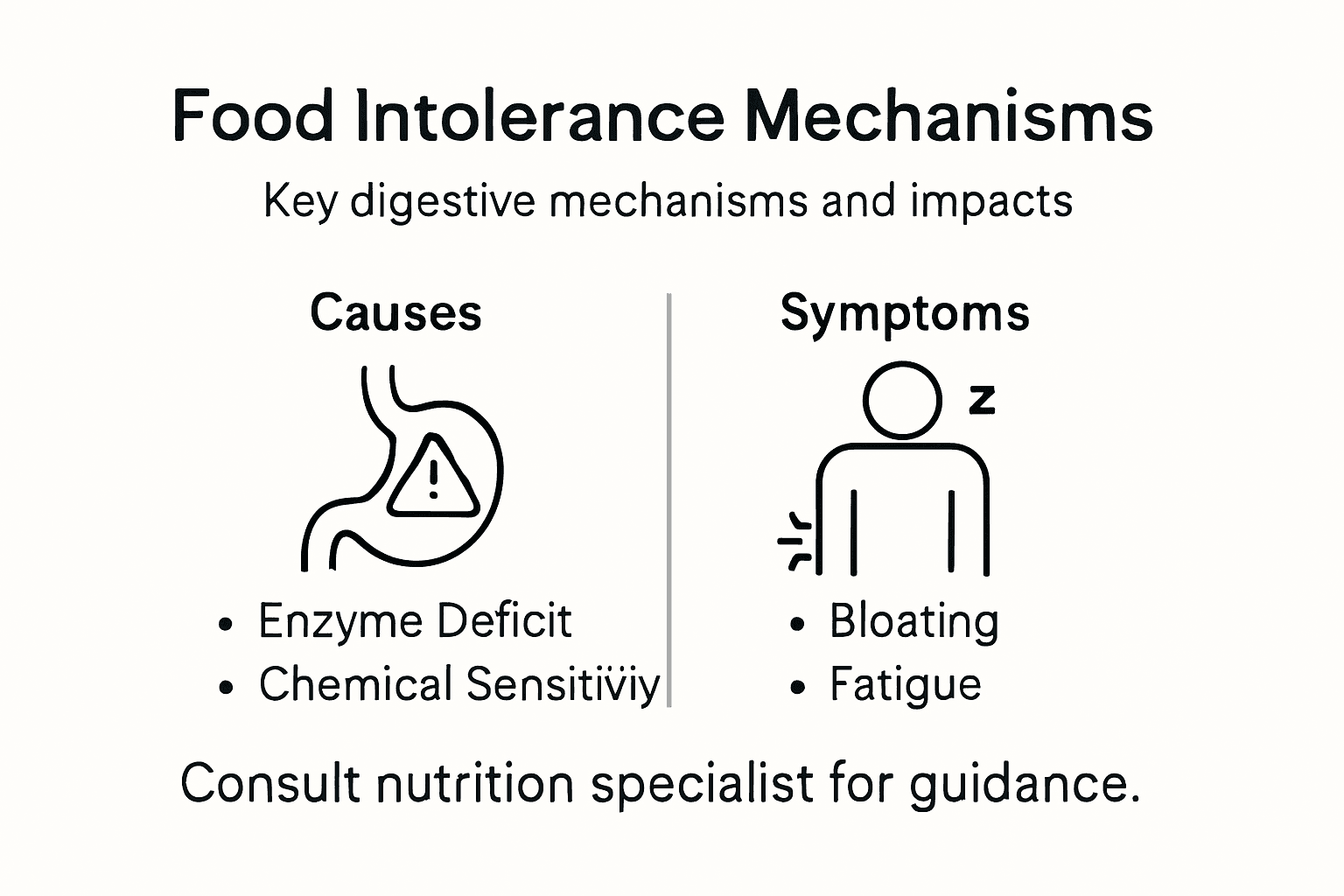
Digestive mechanisms underlying food intolerances are complex physiological processes that vary significantly across different types of food sensitivities. Enzyme defects play a critical role in determining how the human body processes specific food compounds and nutrients.
The primary types of food intolerances can be categorised based on their underlying mechanisms:
-
Enzyme Deficiency Intolerances
- Lactose intolerance (inability to digest milk sugar)
- Fructose malabsorption
- Sucrose intolerance
-
Chemical Sensitivity Intolerances
- Histamine intolerance
- Caffeine sensitivity
- Salicylate sensitivity
-
Metabolic Processing Intolerances
- Gluten sensitivity
- Non-coeliac wheat sensitivity
- Food additive reactions
Each type of intolerance represents a unique challenge for the digestive system. Enzyme deficiency intolerances occur when specific digestive enzymes are absent or functioning inadequately, preventing proper breakdown of food molecules. Chemical sensitivities involve abnormal reactions to naturally occurring food compounds, while metabolic processing intolerances relate to the body’s inability to metabolise certain food proteins or substances effectively.
Symptoms of food intolerances typically emerge gradually and can persist for several hours after consuming trigger foods, distinguishing them from immediate allergic responses.
Pro tip: Consider consulting a nutritional specialist who can perform comprehensive testing to identify your specific digestive mechanism and potential food triggers.

Symptoms, Onset Triggers, and Health Impacts
Food intolerance symptoms manifest as complex physiological responses that can significantly disrupt daily wellbeing. Typical symptoms emerge hours after consuming trigger foods, creating a challenging landscape of digestive discomfort and systemic reactions.
The primary symptoms of food intolerances include:
-
Digestive Disturbances
- Bloating and abdominal pain
- Diarrhoea and constipation
- Excessive gas and flatulence
- Stomach cramps
-
Systemic Reactions
- Persistent fatigue
- Headaches
- Skin rashes and inflammation
- Joint pain
- Mood fluctuations
Chronic exposure to food triggers can lead to more profound health complications. Prolonged digestive inflammation may result in nutrient malabsorption, potentially causing deficiencies that impact overall metabolic function. The cascading effects extend beyond immediate digestive discomfort, potentially influencing cognitive performance, energy levels, and emotional stability.
Unaddressed food intolerances can contribute to long-term health challenges, including increased risk of irritable bowel syndrome and chronic inflammatory conditions.
Pro tip: Maintain a detailed food and symptom diary to help identify potential trigger foods and track your body’s specific inflammatory responses.
The Role of At-Home and Laboratory Testing
Food intolerance testing has evolved significantly, offering individuals multiple approaches to understanding their dietary sensitivities. Various commercial testing methods exist with varying levels of scientific validation and reliability.
The primary testing methodologies include:
-
Blood-Based Tests
- IgG antibody profiling
- Comprehensive immunoglobulin screening
- Inflammatory marker analysis
-
Non-Invasive Testing
- Hair follicle analysis
- Electrodermal screening
- Bioresonance technology
-
Clinical Assessment Methods
- Elimination diet protocols
- Symptom tracking journals
- Professional dietary consultation
While at-home testing provides convenience, it’s crucial to understand its limitations. Most commercial tests lack comprehensive scientific validation, and results should be interpreted cautiously. Professional guidance remains essential in translating test outcomes into meaningful dietary modifications.
This table provides an at-a-glance comparison of popular food intolerance testing approaches:
| Method | How It Works | Scientific Support |
|---|---|---|
| Blood-Based Tests | Analyses immune markers | Moderate evidence |
| Non-Invasive Screening | Measures electrical or hair changes | Limited scientific backing |
| Clinical Assessment | Tracks symptoms through diet | Strong clinical reliability |
At-home testing can offer initial insights, but should never replace professional medical advice or comprehensive diagnostic procedures.
Pro tip: Combine at-home testing results with a professional nutritionist’s assessment to develop a truly personalised dietary management strategy.
Risks, Limitations, and Dietary Management
Dietary management for food intolerances requires a nuanced and carefully structured approach. Food intolerance management focuses on identifying trigger foods while maintaining nutritional balance and overall health.
Key risks and considerations include:
-
Nutritional Challenges
- Risk of dietary nutrient deficiencies
- Potential unintended weight changes
- Compromised nutritional intake
- Reduced dietary diversity
-
Diagnostic Limitations
- Lack of standardised testing protocols
- Potential for misinterpretation of results
- Variability in individual responses
- Limited scientific validation of some testing methods
-
Management Strategies
- Systematic elimination diets
- Professional nutritional guidance
- Careful food reintroduction protocols
- Regular health monitoring
Individuals must approach food intolerance management with caution, understanding that overly restrictive diets can potentially cause more harm than the original symptoms. Professional supervision is crucial in navigating these complex dietary adjustments, ensuring that nutritional needs are met while minimising symptomatic responses.
Effective management requires a balanced approach, prioritising individual health needs over rigid dietary restrictions.
Pro tip: Consult a registered dietitian to develop a personalised dietary strategy that addresses your specific food intolerance while maintaining comprehensive nutritional support.
Take Control of Your Wellbeing by Understanding Food Intolerance Mechanisms
Many individuals face the challenge of unexplained digestive discomfort, fatigue, or inflammatory symptoms without knowing the root cause. This article delves into the complex mechanisms behind food intolerance and how these silent responses can affect your everyday health. If you relate to issues like bloating, headaches, or irregular digestion that linger after meals, it is vital to uncover your unique triggers and digestive sensitivities with reliable support.

Discover how non-invasive at-home testing with UK Food Intolerance can help you identify specific food and environmental sensitivities quickly and affordably. Using advanced bio-resonance technology, their Ultimate Single Intolerance Test and Core Single Intolerance Test offer comprehensive insights based on your body’s individual responses. Start your journey towards improved gut health today by exploring resources such as IBS & Gut Health – Symptoms, Triggers and Food Intolerance Links and Digestive Health Archives – UK Food Intolerance. Act now to regain control over your wellbeing with clear, personalised results delivered within 72 hours at https://ukfoodintolerance.co.uk.
Frequently Asked Questions
What are the main symptoms of food intolerance?
Food intolerance symptoms can include bloating, abdominal discomfort, irregular bowel movements, fatigue, mild headaches, and skin irritations. These symptoms typically emerge hours after consuming trigger foods.
How is food intolerance different from food allergy?
Food intolerance involves the digestive system’s challenges in processing certain foods, whereas food allergies trigger an immediate immune system overreaction. Symptoms of food intolerance usually onset gradually, while allergic reactions occur within minutes.
How can I identify potential food intolerances?
Keeping a detailed food and symptom diary can help track potential trigger foods and associated symptoms. Consulting a nutritional specialist for comprehensive testing can provide further insights into specific intolerances and digestive mechanisms.
What dietary management strategies can I use for food intolerances?
Effective dietary management includes systematic elimination diets, professional nutritional guidance, careful food reintroduction protocols, and regular health monitoring. It’s essential to maintain balanced nutrition while minimising symptoms.










Leave a Reply
Want to join the discussion?Feel free to contribute!