

A staggering one in three British adults experience regular digestive discomfort, often without a clear explanation from routine tests. If persistent bloating or stomach pain leaves you searching for answers, non-invasive intolerance testing could unlock vital clues to your wellbeing. With easy-to-follow steps and expert-backed strategies, this guide empowers you to confidently review your results, pinpoint dietary triggers, and make positive changes for lasting digestive health.
Table of Contents
- Step 1: Prepare To Review Your Intolerance Test Results
- Step 2: Interpret Your Results For Key Triggers
- Step 3: Identify Foods And Substances To Eliminate
- Step 4: Implement Dietary Changes To Reduce Symptoms
- Step 5: Monitor Your Progress And Reintroduce Safely
Quick Summary
| Key Point | Explanation |
|---|---|
| 1. Prepare for your results | Gather your test report, pen, and seek a quiet space to effectively review findings. |
| 2. Identify your food triggers | Categorise trigger foods by reactivity levels and note associated symptoms. |
| 3. Create an elimination list | Compile a list of foods to remove, ensuring to categorize for easy reference. |
| 4. Implement dietary changes | Gradually replace eliminated foods with nutrient-rich alternatives to maintain health. |
| 5. Monitor and reintroduce safely | Track dietary changes diligently and systematically reintroduce foods for analysis. |
Step 1: Prepare to review your intolerance test results
Getting ready to review your intolerance test results requires a strategic approach. Your primary goal is understanding the comprehensive insights your test provides about potential food sensitivities and their impact on your health.
Before diving into your results, gather some essential preparatory materials. You will need a quiet space, your test report, a pen for notes, and ideally, a basic understanding of what these tests reveal. It is crucial to recognize that many commercial food intolerance tests require professional interpretation to ensure accurate understanding. This means approaching your results with a critical yet open mindset.
Consider scheduling a consultation with a nutritionist or healthcare professional who can help you navigate the nuances of your test outcomes. They can provide context about specific sensitivities, help you understand potential dietary adjustments, and offer personalised guidance on managing any identified intolerances.
Pro tip: Create a dedicated folder or digital document to track your test results, dietary changes, and health observations for future reference and potential medical discussions.
Step 2: Interpret your results for key triggers
Now that you have your intolerance test results, understanding the specific food triggers becomes crucial for managing your health effectively. The goal is to transform these complex test results into actionable dietary insights that can improve your overall wellbeing.
Test results require careful clinical interpretation beyond simply reading the document. Start by identifying foods marked as potential triggers and categorise them into high, moderate, and low reactivity levels. Pay close attention to symptoms associated with each food item such as bloating, digestive discomfort, or skin reactions. Remember that a positive test result indicates sensitivity rather than a definitive allergy, so consider this a starting point for further investigation.
To validate your results, consider working with a nutritionist who can guide you through an elimination diet strategy. This involves systematically removing identified trigger foods from your diet and then carefully reintroducing them while monitoring your body’s response. By tracking your symptoms meticulously, you can develop a personalised understanding of how specific foods impact your health.
Pro tip: Create a detailed food and symptom diary during your elimination diet to help identify precise connections between your diet and physical responses.
Step 3: Identify foods and substances to eliminate
Identifying the specific foods and substances to eliminate from your diet is a critical step in managing your food intolerances. Your intolerance test results provide a roadmap to understanding which ingredients might be triggering adverse reactions in your body.

Food Standards Agency guidance emphasises carefully checking food labels and understanding potential allergen information when eliminating substances. Begin by creating a comprehensive list of identified trigger foods from your test results. This typically includes common problem ingredients like lactose, gluten, specific proteins, or food additives. Group these foods into categories such as dairy, grains, proteins, and processed foods to help you systematically remove them from your diet.
Consider working with a registered nutritionist who can help you develop a balanced meal plan that replaces eliminated foods with nutrient-rich alternatives. This approach ensures you maintain proper nutrition while avoiding potential inflammatory or reactive substances. Start by gradually removing one food group at a time, monitoring your body’s response and keeping a detailed symptom journal to track any changes in your overall health.
Pro tip: Photograph food labels and ingredient lists to build a personal reference guide of safe and unsafe products during your elimination diet journey.
The following table summarises common food intolerance triggers and possible symptoms:
| Food Group | Example Trigger | Typical Symptoms |
|---|---|---|
| Dairy | Lactose | Bloating, cramps, diarrhoea |
| Grains | Gluten | Fatigue, stomach discomfort |
| Proteins | Egg white | Skin rash, headache |
| Food Additives | Sulphites | Asthma, skin irritation |
Step 4: Implement dietary changes to reduce symptoms
Transitioning to a diet that supports your health after identifying food intolerances requires careful planning and strategic implementation. Your goal is to minimise symptoms while maintaining optimal nutrition and overall wellbeing.
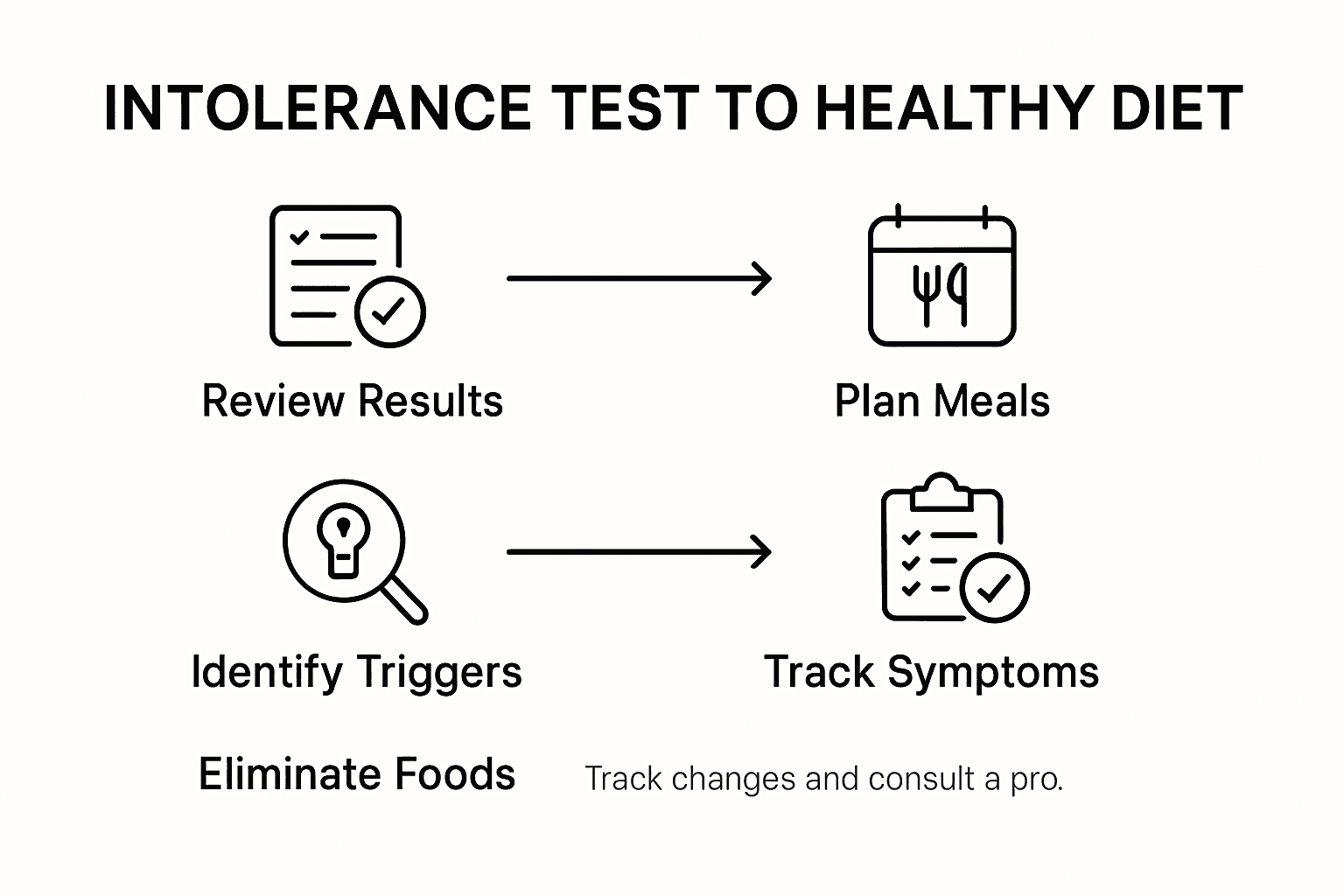
Dietitians recommend implementing dietary changes through a structured approach that prevents nutritional deficiencies while managing food sensitivities. Begin by creating a comprehensive meal plan that replaces eliminated foods with nutrient-dense alternatives. Focus on whole foods such as fresh vegetables, lean proteins, and complex carbohydrates that support your body’s nutritional needs while avoiding identified trigger ingredients.
Gradually introduce changes to allow your body to adapt and to make tracking symptoms easier. Start by removing one food group at a time and replacing it with suitable alternatives. Maintain a detailed symptom diary to document your body’s response to these dietary modifications. Consider consulting a registered nutritionist who can provide personalised guidance and ensure you are meeting all your nutritional requirements during this transition.
Pro tip: Batch cook meals in advance using intolerance friendly ingredients to simplify your dietary transition and reduce stress around food preparation.
Step 5: Monitor your progress and reintroduce safely
Carefully tracking your dietary changes and systematically reintroducing potential trigger foods is crucial for understanding your body’s unique responses and managing food intolerances effectively.
Food reintroduction should follow a structured approach, guided by careful symptom monitoring to ensure your safety and wellbeing. Begin by creating a detailed symptom tracking journal where you can record your physical reactions, energy levels, digestive health, and any other relevant changes. When reintroducing foods, start with tiny portions of a single ingredient and wait at least 72 hours before introducing another, allowing sufficient time to observe any potential adverse reactions.
Consult with a registered nutritionist or dietitian who can provide personalised guidance throughout this process. They can help you develop a systematic reintroduction plan that considers the severity of your initial test results and your individual health profile. Pay close attention to both immediate and delayed reactions, which might include digestive discomfort, skin changes, headaches, or mood shifts. Your goal is to build a comprehensive understanding of your body’s specific tolerances and sensitivities.
Pro tip: Use a dedicated smartphone app or spreadsheet to track your food reintroduction progress, making it easier to identify patterns and share detailed information with healthcare professionals.
Here is a comparison of two popular methods for managing food intolerances:
| Approach | Key Features | Advantages | Limitations |
|---|---|---|---|
| Elimination Diet | Gradual food group removal | Personalised results | Time-intensive, requires tracking |
| Laboratory Reintroduction | Controlled reintroduction after testing | Identifies delayed reactions | Needs professional supervision |
Take Control of Your Health with Precise Intolerance Testing
Understanding your intolerance test results can feel overwhelming. You want clear insights to identify the key food triggers that affect your wellbeing and practical guidance to adjust your diet confidently. At UK Food Intolerance, we recognise these challenges and offer reliable, non-invasive at-home testing that empowers you to make informed decisions. Whether you choose the comprehensive Ultimate Single Intolerance Test or the more affordable Core Single Intolerance Test, you receive fast, precise reports designed to support elimination diets and reduce symptoms effectively.
Start your journey to improved digestive health and reduced inflammation today. Visit UK Food Intolerance to order your test kit now and discover the specific food and environmental sensitivities impacting your body. Taking this vital step enables a personalised approach to managing your health with expert guidance and proven bio-resonance technology.
Frequently Asked Questions
How should I prepare to review my intolerance test results?
To prepare for reviewing your intolerance test results, gather your test report, a pen for notes, and ensure you are in a quiet space. Consider scheduling a consultation with a nutritionist or healthcare professional for help interpreting the results.
What steps should I take to interpret my test results effectively?
Begin by identifying foods marked as potential triggers in your test results and categorising them by reactivity levels. Work with a nutritionist to implement an elimination diet strategy, allowing you to monitor your symptoms and validate your test outcomes.
How can I create a list of foods to eliminate from my diet?
To create a list of foods to eliminate, start by identifying common problem ingredients from your test results, such as lactose or gluten. Group these into categories, like dairy and grains, and consult with a registered nutritionist to develop a balanced meal plan that avoids these substances.
What dietary changes should I implement to reduce symptoms?
Implement dietary changes by gradually removing one food group at a time and replacing it with nutrient-dense alternatives such as fresh vegetables and lean proteins. Document your symptoms to understand how these changes impact your overall health, aiming for a noticeable reduction in adverse reactions within a few weeks.
How do I safely reintroduce foods after an elimination period?
When reintroducing foods after an elimination period, start with a small portion of one food item and wait at least 72 hours before introducing another. Use a symptom-tracking journal to monitor your body’s responses to each reintroduced food, and consult with a nutritionist to ensure you are following a structured approach.
What is the difference between an elimination diet and a laboratory reintroduction method?
An elimination diet involves the gradual removal of food groups to identify triggers, while a laboratory reintroduction method allows for controlled testing of reintroduced foods. Both approaches are effective, but elimination diets require more time and tracking to see personalised results.










Leave a Reply
Want to join the discussion?Feel free to contribute!