

Receiving your food intolerance test results can feel overwhelming, especially when you’re unsure how to translate the data into meaningful dietary changes. Many individuals in the UK struggle to understand what their test results actually mean and how to use them safely to address unexplained symptoms. This guide provides a clear, step-by-step approach to interpreting your intolerance test results, helping you distinguish between reliable evidence and misleading claims. You’ll learn how to combine test data with symptom tracking, work with healthcare professionals, and implement dietary changes that genuinely improve your wellbeing without compromising nutrition.
Table of Contents
- Understanding Intolerance Tests And Their Accuracy
- Preparing To Interpret Your Intolerance Test Results Correctly
- Step-By-Step Approach To Interpreting Your Intolerance Results
- Common Challenges And How To Avoid Misinterpretation
- Explore Reliable Intolerance Testing Options With UK Food Intolerance
- Frequently Asked Questions
Key takeaways
| Point | Details |
|---|---|
| Test reliability varies significantly | IgG antibody tests lack scientific validation, whilst breath tests and supervised elimination diets offer more reliable results for identifying true intolerances. |
| Professional guidance is essential | Always consult your GP before making major dietary changes based on test results to avoid unnecessary restrictions and nutritional deficiencies. |
| Symptom tracking validates results | Keeping a detailed food and symptom diary helps correlate test findings with actual reactions, improving interpretation accuracy. |
| Distinguish allergy from intolerance | Food allergies involve immediate IgE immune responses, whilst intolerances cause delayed digestive symptoms without immune involvement. |
| Elimination diets require supervision | Removing food groups without professional support risks nutritional imbalances and may not address underlying health issues effectively. |
Understanding intolerance tests and their accuracy
Before interpreting any test results, you need to understand what different intolerance tests actually measure and how reliable they are. The market offers various testing methods, but not all provide scientifically valid information about food intolerances. Knowing which tests to trust helps you avoid unnecessary dietary restrictions and wasted money.
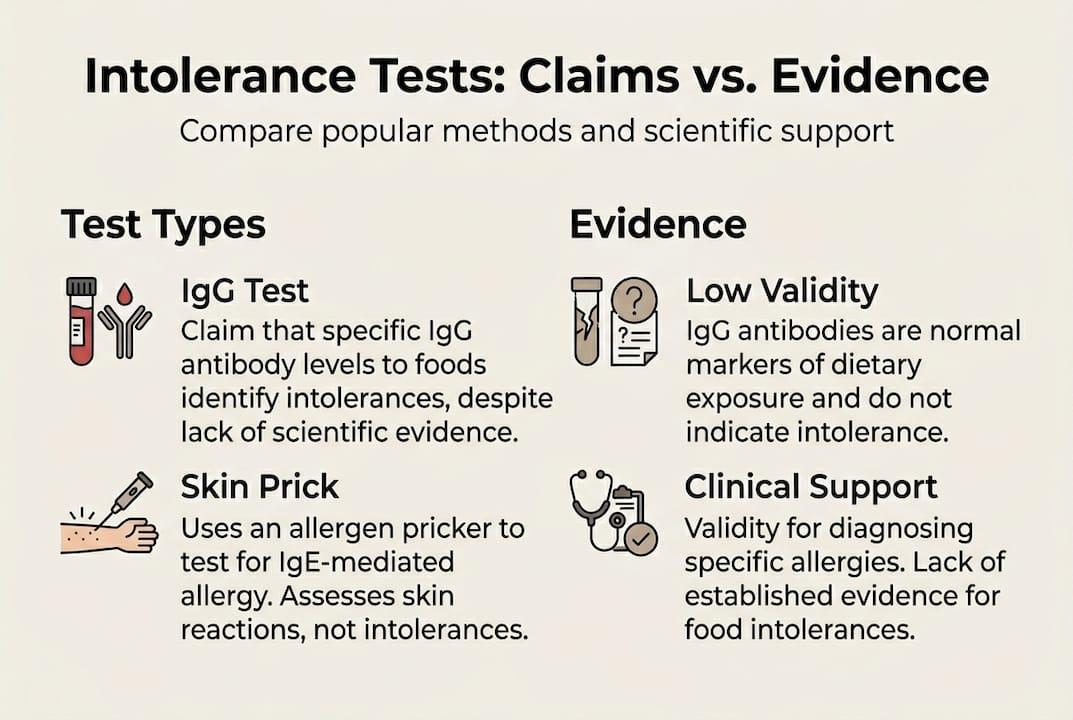
The NHS recommends against home IgG intolerance tests due to limited evidence for accuracy, preferring GP referral for elimination diets, breath tests, or blood tests under supervision. IgG antibody tests measure immunoglobulin G levels in response to specific foods, but elevated IgG often indicates normal exposure and tolerance rather than intolerance. Your immune system naturally produces IgG antibodies when you regularly consume certain foods, which means high readings may actually reflect foods your body handles well.
Several test types claim to identify food intolerances:
- IgG antibody tests measure immune responses but lack scientific validation for diagnosing intolerance
- Breath tests detect specific enzyme deficiencies like lactose intolerance through hydrogen measurement
- Elimination diets systematically remove and reintroduce foods under professional supervision
- Skin prick tests identify allergies but cannot diagnose intolerances
- Bio-resonance testing analyses hair samples for sensitivity patterns
Understanding the difference between test claims and actual scientific evidence protects you from making drastic dietary changes based on unreliable information. Many commercial tests promise symptom relief through food elimination, but without proper validation, you risk removing nutritious foods unnecessarily. The gold standard remains supervised elimination diets where you systematically remove suspected foods, monitor symptoms, and reintroduce items under professional guidance.
When using intolerance tests wisely, treat results as potential clues rather than definitive diagnoses. No single test can comprehensively identify all food intolerances, and false positives occur frequently with certain testing methods. Combining test data with symptom tracking and medical advice gives you the most accurate picture of your true food sensitivities.
Preparing to interpret your intolerance test results correctly
Proper preparation before reviewing your test results dramatically improves your ability to identify genuine intolerances and avoid misinterpretation. Taking specific steps beforehand creates a framework for making informed decisions about dietary changes. This preparation phase is just as important as the test itself.
Start by keeping a detailed symptom diary for at least two weeks before and after receiving your results. Record everything you eat, the time of consumption, and any symptoms that occur within 72 hours. Note the severity, duration, and type of symptoms, whether digestive discomfort, skin reactions, fatigue, or headaches. This diary becomes your primary tool for validating test findings against real-world experiences.
The NHS recommended approach prioritises consultation before acting on commercial tests, using results only as elimination guides rather than diagnoses. Your GP can help distinguish between food intolerance, allergy, and other conditions that mimic intolerance symptoms. Conditions like irritable bowel syndrome, coeliac disease, or inflammatory bowel disease require different management strategies than simple food intolerances.
Understanding the crucial difference between allergy and intolerance prevents dangerous mistakes:
- Food allergies trigger immediate IgE-mediated immune responses, potentially causing severe reactions like anaphylaxis
- Food intolerances produce delayed symptoms, typically digestive, without immune system involvement
- Allergies require strict avoidance and may need emergency medication
- Intolerances often allow small amounts without severe consequences
- Only allergies show up on standard allergy tests like skin prick or IgE blood tests
When preparing for intolerance testing, maintain your normal diet beforehand so results reflect your typical food exposures. Avoiding suspected foods before testing can produce misleading results, as your immune system may not show responses to foods you haven’t consumed recently.

Pro Tip: Create a simple spreadsheet tracking meals, symptoms, and timing. This makes patterns easier to spot when comparing against test results and helps your healthcare provider make informed recommendations.
Consider your overall health context, including stress levels, sleep quality, and other medications or supplements. These factors influence digestive function and symptom presentation, potentially affecting how you interpret test results. A holistic view ensures you don’t attribute symptoms solely to food when other factors contribute significantly.
Step-by-step approach to interpreting your intolerance results
Once you’ve received your test results and completed your preparation, follow a systematic process to interpret findings safely and effectively. This structured approach prevents overreaction whilst ensuring you address genuine intolerances. Each step builds on the previous one to create a comprehensive understanding.
Step 1: Review your test report carefully, noting which foods show elevated responses. Don’t immediately assume every flagged food causes problems. Look for severity indicators or response levels that distinguish strong reactions from mild ones. Many reports categorise responses as high, moderate, or low, helping you prioritise which foods to address first.
Step 2: Compare test results directly with your symptom diary. Circle foods in your diary that appear on your test results and see if symptoms consistently followed consumption. Commercial tests claim 70-95% symptom improvement via IgG-guided elimination, but peer-reviewed data shows poor specificity, whilst supervised elimination diet remains the gold standard. Genuine intolerances show clear correlations between consumption and symptoms.
Step 3: Prioritise foods that appear both on your test results and correlate with diary symptoms. Avoid eliminating entire food groups based solely on test results without symptom correlation. Removing multiple foods simultaneously makes it impossible to identify which specific items cause problems. Focus on the most likely culprits first.
Step 4: Implement a supervised elimination diet with professional support. Remove prioritised foods completely for 4-6 weeks whilst maintaining detailed symptom records. This period allows your body to clear potential triggers and symptoms to resolve if foods were genuinely problematic. Your healthcare provider can ensure you maintain adequate nutrition during elimination.
Step 5: Systematically reintroduce eliminated foods one at a time, waiting 3-4 days between reintroductions. Monitor symptoms carefully during this phase. Foods that cause no reaction can return to your diet permanently, whilst those triggering symptoms require longer-term avoidance or portion control.
| Approach | Advantages | Disadvantages |
|---|---|---|
| IgG antibody test | Quick results, tests many foods simultaneously, convenient home sampling | Lacks scientific validation, high false positive rate, may indicate tolerance not intolerance |
| Supervised elimination diet | Gold standard accuracy, identifies true intolerances, safe under professional guidance | Time-consuming, requires discipline, needs professional support, more expensive initially |
When reading intolerance test reports, remember that test results represent potential sensitivities requiring validation through elimination and reintroduction. No test alone provides definitive proof of intolerance. The reintroduction phase often reveals that some flagged foods cause no actual symptoms, allowing you to maintain a more varied, nutritious diet.
Pro Tip: Photograph your meals during elimination and reintroduction phases. Visual records help you remember exactly what you ate and make it easier to identify problem ingredients in complex dishes.
Track not just digestive symptoms but also energy levels, skin condition, sleep quality, and mood. Food intolerances can manifest in surprising ways beyond stomach discomfort. Some people notice improved mental clarity or reduced joint pain when removing trigger foods, symptoms they hadn’t initially connected to diet.
Common challenges and how to avoid misinterpretation
Even with careful preparation, several pitfalls can lead to misinterpreting test results and making unnecessary dietary changes. Understanding these common mistakes helps you navigate the interpretation process more successfully. Awareness of these challenges protects both your health and quality of life.
The most frequent error involves treating every positive IgG result as confirmed intolerance. IgG testing lacks scientific validation, with positive IgG not predicting symptoms and potentially leading to overdiagnosis and nutritional deficiencies. High IgG levels often reflect regular consumption and normal immune tolerance rather than problematic reactions. Eliminating all flagged foods can result in unnecessarily restricted diets lacking essential nutrients.
Many people eliminate major food groups like dairy or gluten without professional guidance, risking calcium, vitamin D, or B vitamin deficiencies. These nutrients play crucial roles in bone health, immune function, and energy production. If you must remove entire food groups, work with a registered dietitian to identify appropriate substitutes and supplementation strategies.
Avoid these common interpretation mistakes:
- Assuming correlation equals causation without proper elimination and reintroduction testing
- Removing foods permanently based solely on test results without symptom validation
- Ignoring the role of portion size, as small amounts may be tolerable
- Failing to consider food preparation methods that might reduce intolerance triggers
- Neglecting to retest periodically, as intolerances can change over time
Commercial test marketing often oversells accuracy and understates limitations. Claims of comprehensive sensitivity detection or guaranteed symptom resolution should raise scepticism. No test can identify every possible food reaction, and individual responses vary significantly. Treat marketing promises as aspirational rather than guaranteed outcomes.
“The evidence for IgG food antibody testing as a diagnostic tool for food intolerance is limited and inconsistent. Positive IgG results may simply indicate previous exposure to foods rather than intolerance, and there is no convincing evidence that eliminating foods based solely on IgG results improves symptoms.”
Maintaining balanced nutrition during elimination phases requires careful planning. Each removed food should be replaced with nutritionally equivalent alternatives. For example, if eliminating dairy, ensure adequate calcium and protein from fortified plant milks, leafy greens, and other sources. Your body needs consistent nutrient intake to function optimally, regardless of which specific foods provide those nutrients.
When interpreting intolerance results, remain flexible and willing to adjust your approach based on actual symptom changes rather than rigidly following test results. Some people become so focused on test findings that they ignore their body’s actual responses. If eliminating a flagged food produces no symptom improvement after six weeks, that food likely isn’t problematic for you.
Consider psychological factors in symptom perception. Expecting certain foods to cause problems can create nocebo effects where you experience symptoms simply because you believe you should. This doesn’t mean symptoms are imaginary, but awareness helps distinguish genuine physical reactions from anxiety-driven responses. Blind challenges, where someone else prepares food without telling you whether it contains suspected triggers, can help identify true intolerances.
Explore reliable intolerance testing options with UK Food Intolerance
Now that you understand how to interpret test results effectively, choosing a testing service that provides clear, actionable information becomes crucial. UK Food Intolerance offers comprehensive food intolerance tests covering over 1,100 foods and environmental items, helping you identify potential triggers with convenient at-home sampling. Their bio-resonance technology analyses hair samples in UK-based laboratories, delivering detailed digital reports within 48-72 hours.

Their testing services include personalised interpretation support and dietary recommendations, ensuring you don’t navigate results alone. Whether you choose the Ultimate Single Intolerance Test for comprehensive analysis or the more affordable Core Single Intolerance Test covering 500 items, you’ll receive clear guidance on interpreting intolerance results alongside your report. This professional support helps you implement safe, effective dietary changes that genuinely improve your wellbeing. Explore their range of intolerance test options to find the right solution for your health goals and budget.
Frequently asked questions
What is the difference between food intolerance and food allergy?
Food allergies trigger immediate immune responses through IgE antibodies, potentially causing severe reactions like anaphylaxis, swelling, or breathing difficulties within minutes to hours. Food intolerances produce delayed symptoms, typically digestive discomfort, bloating, or fatigue, without involving the immune system’s IgE pathway. The NHS distinguishes allergy from intolerance, noting that only some laboratory tests like lactose breath tests reliably diagnose intolerance, whilst allergy requires different testing methods. Understanding this distinction ensures you seek appropriate medical care and avoid dangerous situations.
Are IgG tests reliable for diagnosing food intolerance?
IgG tests are not recommended by major health organisations for diagnosing food intolerance because they lack scientific validation. Elevated IgG indicates normal exposure or tolerance, not intolerance, as your immune system naturally produces these antibodies when regularly consuming foods. High IgG levels often reflect foods your body handles well rather than problematic items. Relying solely on IgG results can lead to unnecessary food eliminations and nutritional deficiencies without addressing actual symptoms.
How should I use my food intolerance test results?
Combine test results with a detailed symptom diary and professional medical advice rather than treating them as definitive diagnoses. The NHS guidance recommends using results only as guides within supervised elimination diets, always consulting your GP to avoid unnecessary restrictions. Start by eliminating only foods that correlate with both test results and documented symptoms, then systematically reintroduce them under professional supervision. This approach validates which foods genuinely cause problems whilst maintaining nutritional balance.
What steps can I take if symptoms persist after dietary changes?
Reassess your diet and symptoms with a healthcare professional who can evaluate whether you’ve correctly identified trigger foods or if other conditions require investigation. NHS advice on ongoing symptoms recommends retesting or further medical assessment if elimination diets don’t resolve issues after 4-6 weeks. Persistent symptoms may indicate conditions like coeliac disease, inflammatory bowel disease, or irritable bowel syndrome requiring different treatment approaches. Your GP can arrange appropriate specialist referrals and additional diagnostic tests to identify underlying causes beyond simple food intolerances.










Leave a Reply
Want to join the discussion?Feel free to contribute!