

Every parent faces those days when their child complains of tummy aches, bloating, or tiredness that just will not go away. Watching your child struggle with digestive problems that appear without warning can feel frustrating, especially when there is no quick explanation. Understanding the difference between a food intolerance and an allergy is crucial, as symptoms such as diarrhoea, stomach pain, and fatigue often build gradually and can be tricky to connect to specific foods. This guide shows how non-invasive home testing can offer a practical first step towards better health and more confident meal times for your child.
Table of Contents
- What Food Intolerance in Children Means
- Main Types and Typical Triggers
- Common Symptoms and How They Present
- The Role of At-Home Intolerance Testing
- Managing Diet and Supporting Wellbeing
- Avoiding Common Mistakes and Safety Concerns
Key Takeaways
| Point | Details |
|---|---|
| Understanding Food Intolerance | Food intolerance is a digestive issue, distinct from food allergies that involve immune responses. Symptoms often develop gradually and can be subtle, leading to underdiagnosis in children. |
| Identifying Trigger Foods | Common triggers for children in the UK include dairy, gluten, and certain food additives. Keeping a detailed food and symptom diary can be instrumental in identifying specific sensitivities. |
| Importance of Professional Guidance | Consulting healthcare professionals is crucial before making dietary changes to prevent nutritional deficiencies and ensure proper management of food intolerances. |
| Positive Dietary Management | After identifying triggers, focus on maintaining a balanced diet and involve children in meal planning to support their emotional connection to food. |
What Food Intolerance in Children Means
Food intolerance in children refers to your child’s body having difficulty digesting certain foods or specific food ingredients. This is fundamentally different from a food allergy, which involves an immune system response. With food intolerance, the problem lies in the digestive system’s inability to process or react negatively to particular food components. The distinction matters because it affects how symptoms develop, their severity, and what you’ll observe in your child’s day-to-day behaviour and health.
When your child has a food intolerance, symptoms typically emerge gradually, sometimes hours after eating the problematic food. Common signs include stomach discomfort, bloating, diarrhoea, and unexplained fatigue. Your child might experience skin rashes or general malaise that you can’t quite link to anything specific. The challenge for many UK parents is that these symptoms can be subtle and inconsistent, making it difficult to identify which foods are causing problems. Unlike allergies, which usually produce immediate and obvious reactions, intolerances build up slowly, which is why so many children go undiagnosed for months or even years. Digestive symptoms from food intolerances can significantly impact your child’s quality of life without being serious enough to warrant emergency intervention.
While food intolerance is generally not life-threatening, it can profoundly affect your child’s wellbeing if left unaddressed. Regular consumption of trigger foods means your child experiences ongoing discomfort, reduced energy levels, poor concentration at school, and disrupted sleep patterns. Some children develop behavioural changes or mood swings linked to digestive distress. The cumulative effect of these daily challenges can reduce their confidence, affect social interactions at mealtimes, and limit their enjoyment of food. Many parents describe their children as “just not themselves” until they identify and remove the offending foods. The good news is that once you understand what your child reacts to, you can make targeted dietary adjustments that bring noticeable improvements in energy, mood, digestion, and overall wellbeing within weeks.
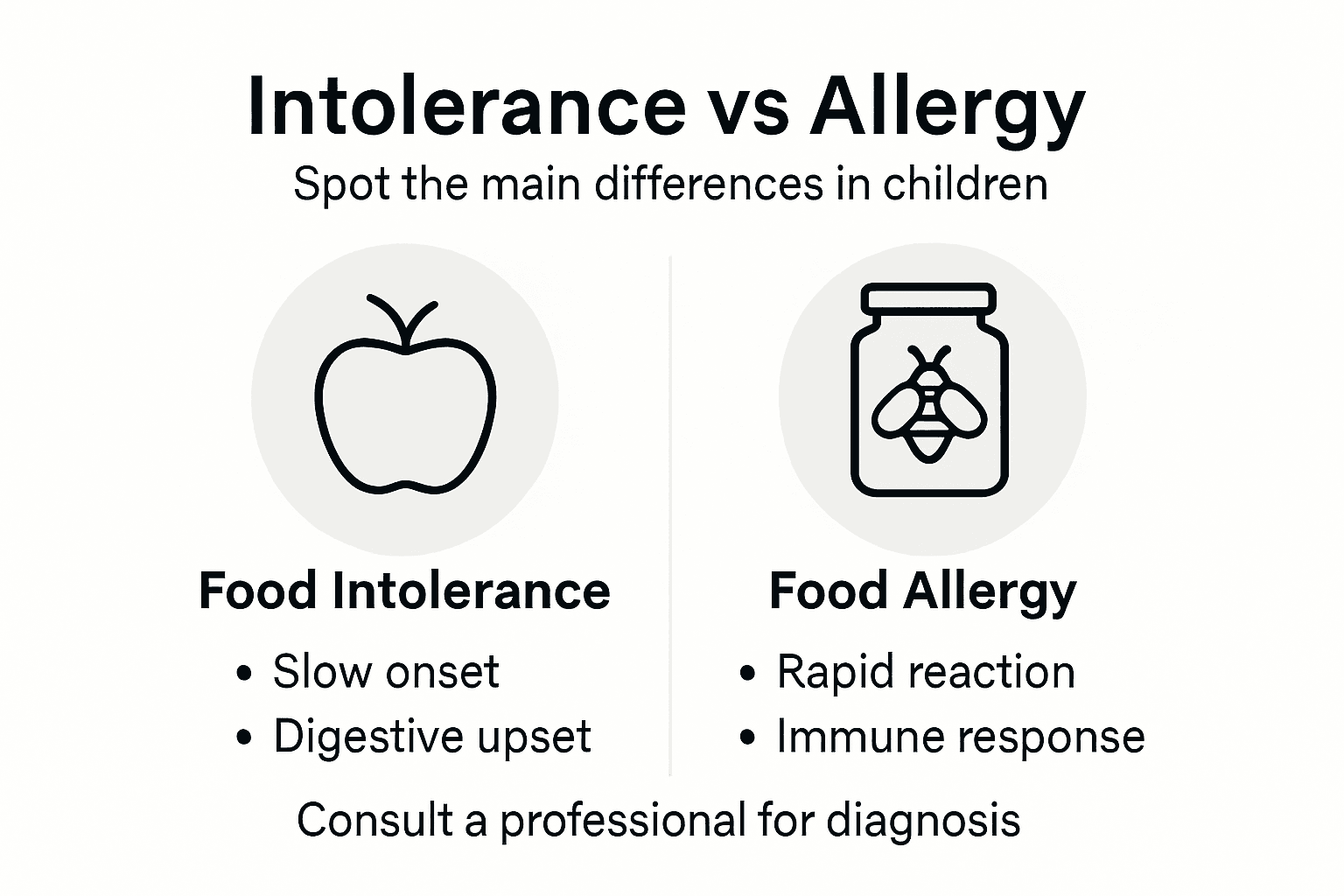
Here’s a quick comparison of food intolerance and food allergy in children for clearer understanding:
| Aspect | Food Intolerance | Food Allergy |
|---|---|---|
| Onset of Symptoms | Gradual, hours after eating | Immediate, within minutes |
| Body System Affected | Digestive system | Immune system |
| Severity | Usually mild to moderate | Can be severe or life-threatening |
| Management Approach | Dietary adjustments, symptom monitoring | Strict avoidance, emergency measures |
Pro tip: Keep a simple food and symptom diary for one to two weeks before testing, noting what your child eats and any physical changes you observe, as this practical record will help you interpret your test results more effectively and identify patterns you might otherwise miss.
Main Types and Typical Triggers
Several distinct types of food intolerance commonly affect children in the UK, and understanding which ones are most prevalent helps you recognise patterns in your own child’s symptoms. Lactose intolerance is the most frequent type, occurring when your child’s body lacks sufficient lactase enzyme to digest milk sugars found in dairy products. This means milk, cheese, yoghurt, and butter can trigger bloating, stomach cramps, and diarrhoea within hours of consumption. Gluten intolerance presents differently, affecting children who react negatively to gluten proteins found in wheat, barley, and rye products. Bread, pasta, cereals, and many processed foods contain gluten, making this intolerance particularly challenging to manage without careful label reading. Beyond these two major types, children frequently react to food additives and artificial ingredients such as sulphites, monosodium glutamate (MSG), artificial food colourings, and synthetic sweeteners. These chemical additives appear in everything from fizzy drinks to processed snacks, and some children’s bodies simply cannot tolerate them effectively.
The typical trigger foods you’ll want to monitor are often everyday staples in British households. Dairy products top the list for obvious reasons, with milk being the primary culprit for lactose-sensitive children. Wheat-based foods come second, particularly affecting those with gluten intolerance. Beyond these, common triggers include eggs, nuts, soya, fish, and shellfish, though these can vary significantly from child to child. Food additives and artificial sweeteners deserve special attention because they hide in unexpected places. Your child might react to preservatives in packaged foods, artificial food colourings in sweets and drinks, or flavour enhancers in savoury snacks. Some children show sensitivity to naturally occurring chemicals in foods like tomatoes, chocolate, citrus fruits, or strawberries. The frustrating reality is that trigger foods are highly individual. Two children with food intolerance might have completely different reactions, which is why identifying your child’s specific sensitivities matters far more than relying on general lists.
What makes identifying triggers particularly tricky is that reactions aren’t always immediate or obvious. Your child might consume a trigger food at breakfast and not show symptoms until late afternoon. Symptoms can also be subtle enough that you might attribute them to tiredness, misbehaviour, or growing pains rather than food. Additionally, some children show cumulative reactions, meaning small amounts of a trigger food cause no problem, but regular consumption builds up symptoms over time. This delayed and variable response is precisely why many parents find elimination diets helpful, though they work best when you have accurate information about which foods your child actually reacts to. Testing through biosonance technology can eliminate the guesswork by identifying your child’s specific sensitivities from a comprehensive list of common and uncommon triggers, allowing you to focus on removing only the foods that genuinely affect your child rather than unnecessarily restricting their diet.
Pro tip: When you notice symptoms, write down not just what your child ate, but also the time, portion size, and how long symptoms took to appear, as this pattern information will help you and your doctor identify which specific foods or additives are truly problematic rather than coincidental.
Common Symptoms and How They Present
Food intolerance symptoms in children manifest across multiple body systems, and recognising them can be the breakthrough moment for many parents struggling to understand why their child seems constantly unwell. The most obvious signs centre on the digestive system. Your child might experience persistent bloating that makes their stomach visibly distended, particularly after meals. Diarrhoea is common, appearing within hours of eating a trigger food and potentially lasting days. Some children swing between diarrhoea and constipation, creating an unpredictable pattern that makes it difficult to pinpoint the cause. Stomach cramps and abdominal pain often accompany these issues, ranging from mild discomfort to severe cramping that disrupts school attendance or playtime. Excessive flatulence and wind-related discomfort can be embarrassing for older children and socially isolating if they feel self-conscious about symptoms at school. Beyond obvious digestive complaints, food intolerance symptoms extend to fatigue, headaches, skin problems, and joint discomfort that many parents initially dismiss as unrelated to diet.

What makes food intolerance particularly tricky to diagnose is the delayed and variable nature of symptoms. Unlike food allergies that trigger immediate reactions within minutes, food intolerance symptoms typically emerge several hours after consumption, sometimes not appearing until the following day. This gap between cause and effect confuses parents who naturally look for direct connections. Your child eats pasta at lunch and develops stomach pain at teatime, but you might not immediately connect the two events. Symptoms can also last for hours or days, creating a cumulative effect where your child remains unwell long after the offending food has left their system. Skin reactions such as rashes, eczema flare-ups, or unexplained redness may develop independently or alongside digestive issues. Some children show respiratory symptoms like mild congestion or a persistent cough that worsens after certain meals. Headaches and migraines can appear without obvious triggers, and parents often miss the dietary connection entirely. General tiredness and low energy frequently accompany food intolerances, making affected children seem lethargic, unmotivated, or unable to concentrate at school.
The presentation of symptoms varies dramatically between children, which is why you cannot rely on a checklist approach. One child might experience severe digestive symptoms with minimal skin reactions, whilst another shows prominent rashes and fatigue but minimal digestive complaints. Some children develop joint pain or muscle aches that could be mistaken for growing pains or childhood sports injuries. Behavioural changes can accompany physical symptoms too, with some children becoming irritable, anxious, or emotionally sensitive when their system is reacting to trigger foods. This emotional component often surprises parents who didn’t expect food to affect mood and behaviour, yet nutritional stress clearly impacts a child’s emotional regulation and social interactions. The key to recognising food intolerance in your child is pattern recognition rather than waiting for textbook symptoms. You’re looking for clusters of symptoms that appear together after certain meals, persist over weeks despite no obvious illness, and improve when you remove suspected trigger foods from their diet. Keeping detailed records of symptoms helps tremendously because the connections often become clear only when you review patterns over time rather than relying on memory.
Pro tip: Use a simple spreadsheet or notes app to track the date, time, and type of meal your child ate alongside specific symptoms, including severity on a scale of one to ten, which creates a searchable record that often reveals patterns invisible to the naked eye.
The Role of At-Home Intolerance Testing
At-home intolerance testing occupies an interesting space in the journey towards identifying your child’s food triggers. These tests use biosonance technology to analyse hair samples and identify potential sensitivities across a comprehensive range of foods and additives. Unlike clinical diagnostic tests that definitively confirm allergies, at-home testing serves as a screening and investigative tool that gives you actionable information to work with. The key distinction is understanding what at-home testing does and doesn’t do. It does not replace medical diagnosis, nor should it substitute professional healthcare advice. Instead, it functions as a starting point, helping you narrow down which foods merit closer attention and experimentation. For many UK parents juggling busy schedules and lengthy NHS waiting lists, at-home testing provides a practical way to begin investigating suspected triggers without waiting months for appointments. The results give you a focused list of potential problem foods rather than forcing you to blindly eliminate entire food groups or keep endless food diaries hoping to spot patterns.
The practical value of at-home testing lies in how it streamlines the identification process. Traditional methods involve maintaining food and symptom diaries for weeks or months whilst your child continues consuming all foods, hoping to spot connections between meals and symptoms. This approach requires tremendous patience, detailed record-keeping, and often considerable time before patterns emerge. At-home testing compresses this investigation phase significantly. You receive a detailed report within 48 to 72 hours showing your child’s potential sensitivities across over 1,100 items (depending on the test chosen). This information then informs your next steps more intelligently. Rather than randomly removing foods and hoping for improvement, you can focus on eliminating the specific items flagged as potential triggers. This targeted approach reduces unnecessary dietary restriction, which is crucial because overly restrictive diets can negatively impact your child’s nutrition and social eating experiences. At-home testing essentially gives you a roadmap, transforming a vague exploration into a systematic process with clear direction. You then use this information to conduct supervised elimination diets, removing suspected triggers for two to four weeks and monitoring whether your child’s symptoms improve.
When using at-home test results, integration with professional support produces the best outcomes. The test results work most effectively when you share them with your GP, health visitor, or a registered dietitian who can help you interpret findings in context of your child’s individual health picture. Healthcare professionals understand that test results represent potential triggers requiring further investigation, not definitive diagnoses. They can guide you through elimination diet processes safely, ensuring your child maintains adequate nutrition throughout any dietary changes. They can also identify whether symptoms might stem from other causes entirely, helping you avoid unnecessary food avoidance. The at-home testing approach works particularly well for children with multiple vague symptoms that don’t fit obvious allergen patterns. Parents frequently report that test results validate their concerns, providing relief after months of wondering whether they were imagining their child’s problems. This validation alone has psychological value, shifting you from questioning your observations to confidently investigating specific suspects. The combination of at-home screening combined with professional guidance creates a practical, efficient pathway to identifying genuine food triggers whilst maintaining your child’s nutritional wellbeing and quality of life.
The table below summarises at-home intolerance testing compared to traditional food diary methods:
| Feature | At-Home Testing | Traditional Food Diary |
|---|---|---|
| Time Required | 2-3 days for results | Several weeks or months |
| Information Provided | List of potential sensitivities | Symptom patterns over time |
| Ease for Parents | Convenient, minimal effort | Labour-intensive, detailed notes |
| Need for Professional Advice | Recommended for safe changes | Essential for proper assessment |
| Practical Outcome | Focused dietary elimination | Requires data analysis |
Pro tip: Photograph or download your at-home test results before your GP or dietitian appointment, then prepare a specific list of your child’s symptoms correlated with the flagged foods, which helps healthcare professionals quickly understand your situation and provide more tailored guidance.
Managing Diet and Supporting Wellbeing
Once you have identified your child’s food triggers, the real work of dietary management begins, and this is where many parents encounter both challenges and opportunities for improvement. The core principle is straightforward: avoid the identified trigger foods whilst maintaining a nutritionally balanced, varied diet that supports your child’s growth, development, and overall health. This sounds simple in theory but requires thoughtful planning in practice. Removing certain foods creates gaps in your child’s meals, and you need to ensure they’re not missing essential nutrients. For instance, if your child is lactose intolerant, you cannot simply eliminate dairy and hope for the best. You must replace milk with suitable alternatives like oat milk, almond milk, or lactose-free dairy whilst ensuring adequate calcium, vitamin D, and protein intake. Similarly, removing wheat-based foods requires substituting with other grains and ensuring your child still consumes sufficient fibre and B vitamins. This is precisely why working with a registered dietitian makes such a difference. They help you design elimination diets that remove only the problematic foods whilst maintaining complete nutrition, preventing your child from becoming deficient in any critical nutrients during the adjustment period.
The practical management of your child’s diet involves several overlapping strategies that work together to support wellbeing. Start by systematically removing identified trigger foods for a period of two to four weeks, keeping careful records of your child’s symptoms during this elimination phase. Most children show noticeable improvement within this timeframe if the triggers have been correctly identified. Reduced bloating, improved digestion, better energy levels, and clearer skin often emerge during this phase. Once your child demonstrates improvement, the next step involves gradual reintroduction of foods, one at a time, separated by several days. This process, sometimes called a challenge or reintroduction phase, helps confirm which foods truly trigger symptoms and which were coincidental. Reintroduction also identifies foods that cause mild symptoms your child can tolerate occasionally versus severe reactions requiring permanent avoidance. Throughout this process, maintaining a detailed food and symptom record remains invaluable. It creates an objective record that helps you and healthcare professionals understand cause and effect relationships. Beyond dietary mechanics, focus on your child’s emotional relationship with food. Restrictive diets can create anxiety, shame, or obsessive thinking around eating if not managed carefully. Frame dietary management as a positive choice that makes your child feel better rather than as punishment or deprivation.
Supporting your child’s overall wellbeing involves recognising that food is just one piece of a larger puzzle. Physical activity, sleep quality, stress management, and emotional support all influence how your child’s body responds to foods and how much symptoms affect their daily life. A child who gets adequate sleep, engages in regular physical activity, and feels emotionally secure will likely tolerate minor food sensitivities better than an anxious, sleep-deprived child. Create a positive eating environment where your child feels comfortable discussing food-related concerns without fear or judgment. Involve your child in meal planning and preparation appropriate to their age, building confidence and autonomy around food choices. Help them understand their body’s signals and develop the ability to communicate when they feel unwell after eating something. This self-awareness becomes invaluable as they grow older and increasingly manage their own diet independently. Social situations present particular challenges because many children’s social interactions revolve around food. School lunches, birthday parties, and visits to friends’ houses can create anxiety if your child feels their dietary needs won’t be understood or accommodated. Prepare your child with strategies for these situations, teach them how to politely explain their needs, and communicate proactively with schools and other caregivers. Most people respond positively when they understand your child’s health needs, and preparation prevents embarrassment or distress.
Pro tip: Create a simple, laminated card listing your child’s trigger foods and key symptoms to carry in their school bag, enabling teachers, playground supervisors, and friends’ parents to quickly understand what your child can and cannot eat without requiring lengthy explanations each time.
Avoiding Common Mistakes and Safety Concerns
Parents managing food intolerance in children frequently encounter pitfalls that undermine their efforts and sometimes create new problems. The most consequential mistake is confusing food intolerance with food allergy, then managing them identically. Allergies involve immune system reactions and can be life-threatening, requiring strict permanent avoidance and emergency medications. Intolerances are digestive reactions that may allow small amounts of trigger foods and sometimes improve over time as children’s digestive systems mature. Treating an intolerance like an allergy leads to unnecessarily restrictive diets that damage your child’s nutrition and social experiences. Another frequent error is removing multiple foods simultaneously without professional guidance, hoping to solve the problem quickly. This approach creates nutritional deficiencies, makes it impossible to identify which foods actually cause problems, and leaves you unable to reintroduce foods later because you won’t know what triggered improvement. Parents sometimes interpret ambiguous symptoms as food-related when other causes are responsible. A child with fatigue and stomach pain might have a viral infection, anxiety disorder, or iron deficiency rather than food intolerance. Removing foods in response treats a symptom rather than addressing the real cause. This is why consulting healthcare professionals before removing foods remains essential. Your GP or dietitian can help distinguish between food intolerance and other conditions, ensuring your child receives appropriate treatment for their actual problem.
A critical safety concern involves nutritional deficiencies developing during dietary exclusion. When you remove trigger foods without replacing them with suitable alternatives, your child loses essential nutrients. Removing all dairy without providing adequate calcium leads to weak bones and poor tooth development. Eliminating wheat without substituting other whole grains causes fibre deficiency and digestive problems. These deficiencies can cause long-term harm to growing children. Medically supervised dietary plans ensure that excluded foods are properly replaced, maintaining complete nutrition throughout any dietary changes. Dietitians possess expertise in formulating balanced diets within constraints, creating plans that remove triggers whilst delivering all essential vitamins, minerals, proteins, and calories your child needs. Another safety consideration involves accidental exposure to trigger foods in settings outside your control. Schools, childcare settings, friends’ houses, and restaurants may not understand your child’s needs or may accidentally serve trigger foods. This requires proactive communication and preparation. Provide clear written information about your child’s triggers to all relevant settings. Work with schools to ensure staff understand the difference between food intolerance and allergy, know which foods to avoid, and understand what to do if accidental exposure occurs. Teach your child to communicate their needs, though recognise that young children cannot be expected to monitor all foods independently. Older children can learn to read labels, ask questions about ingredients, and make safer choices, but they still need adult supervision and support.
Parents sometimes fall into the trap of unnecessarily restricting foods based on assumptions rather than evidence. A child might develop mild symptoms coincidentally related to a particular meal, but the parent assumes causation and removes the food permanently. Over time, this creates an increasingly restricted diet based on false connections. This is precisely why food and symptom diaries matter so much. Record not just what your child ate but their actual symptoms, timing, and severity. Look for patterns across multiple instances before concluding a food is problematic. A food that causes symptoms once might be tolerable the next time, suggesting other factors like portion size, combination with other foods, or stress level influenced the reaction. Additionally, avoid blaming yourself or your child for having food intolerance. It is a physiological reality, not a failure of parenting or personal discipline. Children sometimes internalise shame around dietary restrictions, especially if parents express frustration or present limitations as punishments. Frame dietary management as a positive health choice that helps your child feel better. Celebrate improvements in energy, mood, and symptom relief. Normalise food differences rather than treating them as bizarre or embarrassing. Most importantly, maintain open communication with your child about their body’s signals and their needs, creating a foundation of trust that supports their long-term health and wellbeing.
Pro tip: Before removing any foods from your child’s diet, photograph three days of typical meals and symptoms, then discuss this information with your GP or dietitian who can verify whether food intolerance is likely before you make any permanent dietary changes.
Unlock Your Child’s Comfort and Wellbeing with Targeted Food Intolerance Testing
Managing food intolerance in children can feel overwhelming due to delayed symptoms and the challenge of pinpointing exact triggers such as dairy, gluten or food additives. If you are seeking clear answers to persistent digestive issues and unexplained symptoms impacting your child’s daily life, our non-invasive at-home testing offers a practical, reliable solution. By identifying your child’s unique sensitivities through bio-resonance technology, you gain a focused list of foods to monitor, enabling tailored dietary changes that restore energy and mood.

Discover how the Ultimate Single Intolerance Test or Core Single Intolerance Test can bring clarity and relief faster than traditional methods. Start your journey today with expert guidance and easy-to-follow results at UK Food Intolerance. Learn more about managing symptoms linked to digestion in our Digestive Health Archives – UK Food Intolerance. If eggs or other common triggers are a concern, explore insights into Egg Intolerance – Symptoms, Allergy Difference & How to Test. Take control of your child’s wellbeing now by testing and understanding their unique food sensitivities to improve daily life.
Frequently Asked Questions
What are the common signs of food intolerance in children?
Common signs of food intolerance in children include stomach discomfort, bloating, diarrhoea, fatigue, skin rashes, and unexplained mood changes. Symptoms can develop gradually and may not be immediately linked to specific foods.
How can I differentiate between food intolerance and food allergy in my child?
Food intolerance typically presents symptoms gradually, often hours after consuming the trigger food, and affects the digestive system. In contrast, food allergies trigger immediate and sometimes severe reactions involving the immune system.
What types of foods commonly cause intolerance in children?
Common trigger foods for intolerance in children include dairy products (for lactose intolerance), gluten-containing foods (such as wheat and barley), and certain food additives like preservatives and artificial colourings. Individual triggers can vary widely among children.
How can at-home testing help identify food intolerances?
At-home testing uses biosonance technology to analyse samples and identify potential sensitivities to various foods. This can help streamline the identification process, allowing parents to focus on specific foods that might be causing symptoms rather than eliminating multiple items without guidance.










Leave a Reply
Want to join the discussion?Feel free to contribute!