

Preventative testing is worth considering if you experience unexplained digestive symptoms, low energy, or skin issues and want a clear starting point before making dietary changes. The UK National Screening Committee is clear that any screening, NHS or commercial, should be a personal, informed choice backed by balanced information about what a test can and cannot do. At-home food and environmental sensitivity tests work best as a baseline tool, not a diagnosis, and results are most useful when they feed into a structured elimination-and-rechallenge plan with professional support.
- At-home sensitivity tests can establish a personal baseline quickly and flag items worth investigating further.
- The NHS Health Check demonstrates that many important health markers present without symptoms, making early identification genuinely useful.
- The UK NSC recommends that screening should aim to detect conditions at a stage where action is most effective.
- The safest next step after any positive result is a supervised elimination-and-rechallenge process, ideally with a GP or registered dietitian.
Table of Contents
- What can preventative testing actually tell you?
- When are at-home food sensitivity tests most useful?
- How do you use test results safely?
- How do you choose an at-home test in the UK?
- What does an at-home test cost and how long does it take?
- What are the risks, and who needs extra caution?
- How does preventative testing fit into a wider health plan?
- Key takeaways
- A safety-first approach to at-home testing
- Ukfoodintolerance: a clear, fast at-home option for UK readers
- Useful sources and further reading
What can preventative testing actually tell you?
At-home tests fall into a few broad categories. Blood spot tests measure specific markers such as cholesterol or vitamin levels. Breath tests assess enzyme activity, commonly used for lactose intolerance. Hair-based bioresonance sensitivity screens, like those offered by Ukfoodintolerance, analyse a hair sample to identify potential food and environmental sensitivities across multiple items.
Each type has a defined scope. Blood spot tests can indicate risk markers for metabolic or nutritional concerns. Breath tests can point to enzyme deficiency. Bioresonance sensitivity screens can highlight items your body may be reacting to, giving you a structured list to investigate through dietary adjustment.
What no at-home test can do is provide a clinical diagnosis. The NHS screening guidance is explicit: screening tests are not 100% accurate and often require diagnostic follow-up. False positives can cause unnecessary anxiety; false negatives can provide false reassurance.
The distinction between screening and diagnosis matters. NHS screening programmes carry end-to-end quality assurance, follow-up pathways, and clinical oversight. Commercial wellness tests, as GOV.UK guidance notes, may offer genuine peace of mind but vary widely in evidence base. Treat results as a starting point for conversation with a clinician, not a final verdict.
When are at-home food sensitivity tests most useful?
At-home testing adds real value in specific situations. If you have been experiencing symptoms for weeks without a clear cause, a sensitivity screen gives you structured data to bring to a GP appointment rather than a vague list of complaints. If you have recently changed your diet and want to track whether your body is responding, a repeat test can show measurable change over time.
Practical use cases where at-home testing genuinely helps:
- Establishing a baseline before starting an elimination diet, so you have something concrete to compare against.
- Identifying a shortlist of candidate foods for a structured elimination trial rather than cutting out items at random.
- Monitoring wellbeing markers alongside lifestyle changes such as improved sleep or reduced alcohol intake.
- Supporting a conversation with your GP or dietitian with objective data rather than symptom memory alone.
The NHS advises against cutting out food groups based on self-testing alone. Unsupervised exclusion can cause nutritional deficiencies, particularly in children. Any elimination plan should involve a dietitian or GP.
Special cautions apply if you are considering testing for a child or during pregnancy. Children’s nutritional needs are specific and rapidly changing; restricting foods without professional oversight carries real risk of growth and developmental impact. Pregnant people should always discuss dietary changes with a midwife or GP before acting on any test result. For practical guidance on child intolerance testing, professional support is strongly recommended at every stage.

How do you use test results safely?
The core principle is straightforward: use results to guide a structured, supervised elimination-and-rechallenge process, not to cut out multiple foods at once.
Start by recording your current diet and symptoms for at least one week before making any changes. This gives you a genuine baseline. Once you have your test results, identify the highest-priority items flagged and remove one or two at a time for a defined period, typically two to six weeks, as recommended by NICE guidance on food allergy management. Keep a daily symptom diary noting energy, digestion, skin, and mood. After the elimination period, reintroduce the food deliberately and observe whether symptoms return. That rechallenge step is what confirms whether the sensitivity is real.
Set measurable goals before you start. Decide what a successful outcome looks like: fewer bloating episodes per week, improved energy scores, clearer skin. Without a defined measure, it is easy to lose track of whether the process is working.
When to contact a GP or dietitian: if you are considering removing more than two food groups, if symptoms are severe or worsening, if you are pregnant, or if the person being tested is a child. Seek urgent care for any signs of anaphylaxis, including throat swelling, difficulty breathing, or a rapid drop in blood pressure.
Pro Tip: Pair your test results with a simple wearable or app-based tracker for sleep and energy. Objective data alongside a symptom diary makes it far easier to spot genuine patterns rather than relying on memory alone.
For a step-by-step walkthrough of the process, the elimination diet checklist from Ukfoodintolerance covers each stage clearly.
How do you choose an at-home test in the UK?
Not all at-home tests are equal. Before purchasing, check for these trust signals:
- Transparent methodology: the provider should explain clearly how the test works and what it measures.
- UK lab processing or accreditation: samples processed in a UK-accredited laboratory carry stronger quality assurance.
- Clear limitations statement: a reputable provider will tell you what the test cannot do, not just what it can.
- Interpretive support: look for a detailed digital report, access to FAQs, and guidance on next steps rather than a raw data dump.
- Sample type clarity: understand whether you are providing a hair sample, finger-prick blood, or breath sample, and whether the method suits you.
- Turnaround time: know when to expect results before you order.
- Price transparency: understand what is included in the base price and what costs extra, such as clinician follow-up or repeat testing.
Cost tends to rise with the number of items tested, the complexity of reporting, and whether clinical oversight is included. A test covering 500 items will typically cost less than one covering 1,100 or more. The bioresonance research and methodology page from Ukfoodintolerance is a useful reference for understanding what quality indicators look like in practice.
What does an at-home test cost and how long does it take?
| Test type | Typical turnaround | Key cost drivers |
|---|---|---|
| Hair bioresonance sensitivity screen | 48–72 hours after lab receipt | Number of items tested, report detail |
| At-home blood spot panel | 48–72 hours | Number of markers, clinician review |
| Breath test (lactose/hydrogen) | Same day to 48 hours | Kit type, lab or home-based |
Budget for the full process, not just the kit. Follow-up GP or dietitian appointments, dietary substitutions, and any repeat tests add to the overall cost. Factor these in before you decide which test to order.
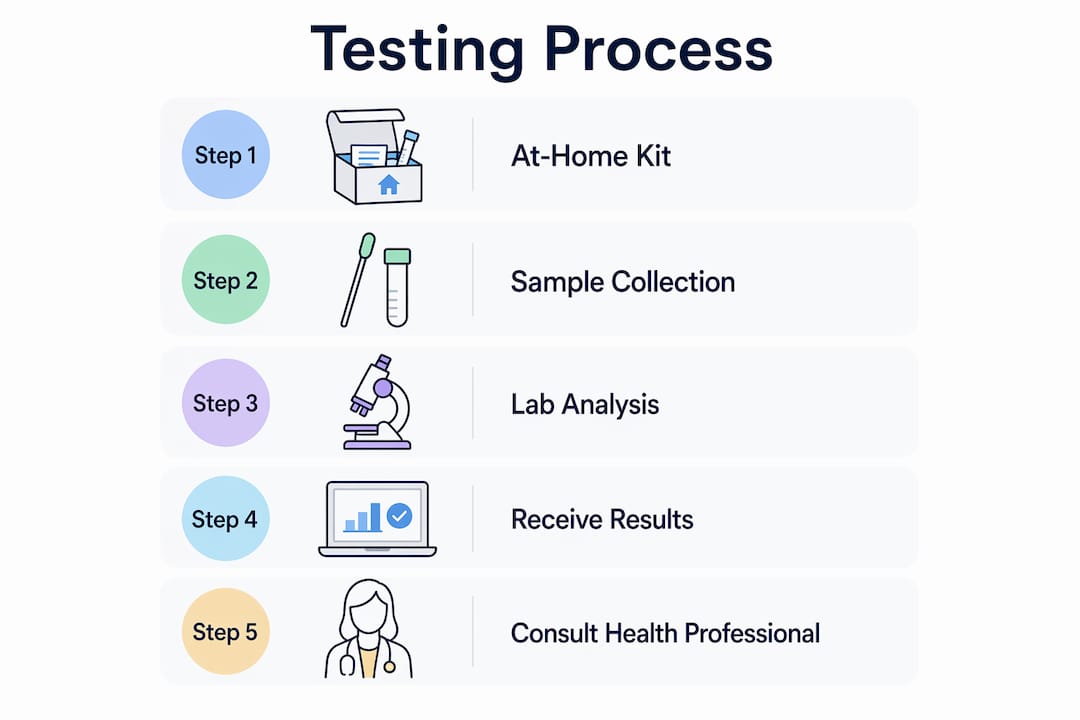
Ukfoodintolerance reports a 48–72 hour turnaround from lab receipt for its hair-based sensitivity screens, with digital reports delivered directly. That speed matters if you are trying to act quickly on symptoms rather than waiting weeks for results.
What are the risks, and who needs extra caution?
The main risks from at-home sensitivity testing are not from the test itself but from how results are acted upon.
- Over-restriction: cutting out multiple foods based on a single test result can cause nutritional deficiencies, particularly protein, calcium, and iron.
- False reassurance: a negative result does not mean a food is safe for someone with a true allergy. Clinical allergy testing via the NHS remains the appropriate route for suspected allergic reactions.
- False positives: as NHS screening guidance notes, false positives can trigger unnecessary anxiety and costly follow-up.
- Tests without quality assurance: some commercial tests lack transparent methodology or robust lab standards. Always check before you buy.
Children and pregnant people require professional supervision before any dietary exclusion. The NHS guidance on food intolerance is explicit that unsupervised exclusion can cause harm, particularly in children where growth and development depend on nutritional adequacy.
Seek urgent NHS care if you or your child experiences any signs of anaphylaxis. At-home sensitivity testing is not a substitute for clinical allergy assessment when reactions are severe or immediate.
How does preventative testing fit into a wider health plan?
A single test result is a data point. A series of results taken over time, combined with measurable lifestyle goals, is a health plan.
The greatest value of preventative testing comes when you use results to set specific, trackable goals: reduce bloating episodes, improve sleep quality scores, increase energy levels. NICE’s person-centred care principles emphasise that people should be involved in decisions about their own health and that plans should be tailored to individual circumstances. That means your test results should inform a conversation with your GP or dietitian, not replace it.
Simple measurement approaches work well alongside testing: a daily symptom diary, weekly energy ratings, sleep duration from a wearable, and any objective lab markers your GP tracks. Repeat the test after three to six months of dietary adjustment to see whether your sensitivity profile has shifted.
Key takeaways
Preventative at-home sensitivity testing is most useful as a structured baseline tool that feeds into a supervised elimination-and-rechallenge plan, not as a standalone diagnosis.
| Point | Details |
|---|---|
| Testing is a starting point | Results indicate sensitivities to investigate; they do not confirm a clinical diagnosis. |
| Professional support matters | Consult a GP or dietitian before removing more than one or two foods, especially for children. |
| Choose a quality provider | Look for UK lab processing, transparent methodology, and clear interpretive support. |
| Track outcomes over time | A symptom diary and repeat measures turn a single result into a genuinely useful health plan. |
| Ukfoodintolerance offers a practical option | Hair-based bioresonance screens covering hundreds of items, with 48–72 hour turnaround and detailed digital reports. |
A safety-first approach to at-home testing
At Ukfoodintolerance, we believe testing should give you clarity, not confusion. Our approach aligns with NHS and UK NSC principles: we are transparent about what bioresonance sensitivity testing can and cannot do, and we provide detailed digital reports alongside interpretive resources so you can take safe, informed next steps. We do not make diagnostic claims. What we do offer is a clear, structured starting point for understanding how your body may be responding to the foods and environmental factors in your daily life. Every report comes with guidance on how to use results responsibly, including when to involve a GP or registered dietitian.
Ukfoodintolerance: a clear, fast at-home option for UK readers
If you want a non-invasive, straightforward way to get a sensitivity baseline at home, Ukfoodintolerance offers hair-based bioresonance testing with results delivered as a detailed digital report within 48–72 hours of your sample reaching the UK lab. There is no blood draw, no clinic visit, and no waiting weeks for an appointment.
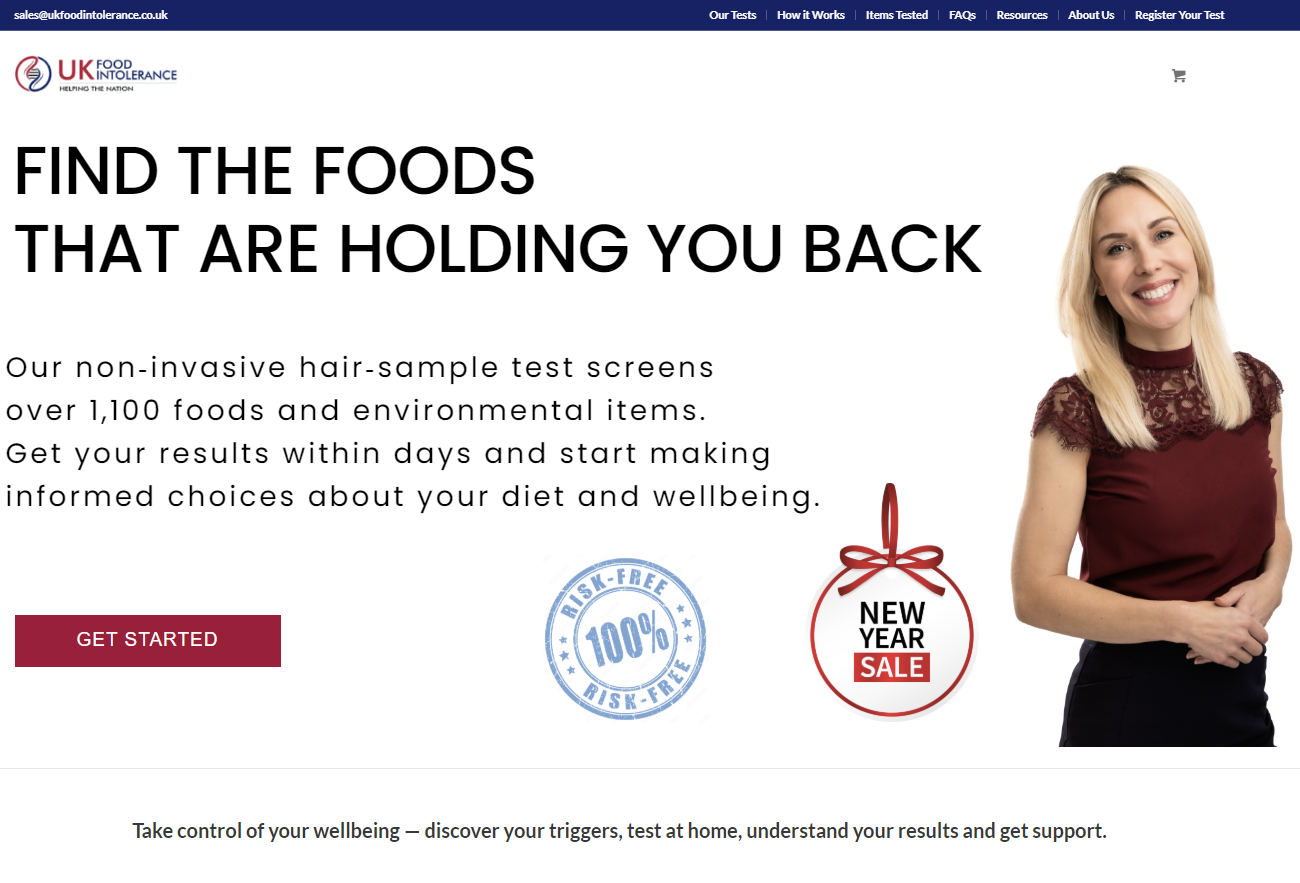
Reports include a clear breakdown of flagged sensitivities, guidance on how to interpret results, and suggested next steps for a safe elimination process. The Core and Ultimate test options are available at different price points depending on how many items you want screened. If you are ready to get a clearer picture of your sensitivities, browse the full range of at-home test kits and order directly online.
Useful sources and further reading
| Source | What it covers |
|---|---|
| NHS: food intolerance | NHS guidance on symptoms, diagnosis, and the elimination-and-rechallenge approach |
| GOV.UK: NHS and commercial screening tests | UK NSC guidance on evaluating commercial wellness tests and informed choice |
| GOV.UK: population screening principles | Principles underpinning NHS screening programmes |
| NHS: screening overview | Plain-language explanation of screening accuracy, false positives and follow-up |
| NICE: person-centred care | NICE principles for involving patients in dietary and health decisions |
| Ukfoodintolerance: our tests | Test scope, sample type, turnaround times and report detail |
| Ukfoodintolerance: bioresonance research | Methodology transparency and quality indicators for bioresonance testing |









Leave a Reply
Want to join the discussion?Feel free to contribute!