

TL;DR:
- Food intolerance is a non-immune reaction to food that causes digestion issues and affects wellbeing. Most intolerances result from enzyme deficiencies or chemical sensitivities that impair food breakdown. Diagnosis relies on symptom patterns and elimination diets, with limited validated testing options available.
Food intolerance is defined as a non-immune adverse reaction to food that disrupts digestion and affects overall wellbeing, without triggering the immune response seen in allergies. Understanding key food intolerance terms matters because lactose intolerance alone affects over 50% of the global population, making it one of the most widespread digestive conditions worldwide. Yet confusion between intolerance and allergy remains common, and that confusion leads to poor decisions about diet and health. This guide cuts through the noise, explains the core terminology clearly, and gives you a practical foundation for identifying and managing your own sensitivities.
What are the key food intolerance terms you need to know?
Most food intolerances stem from enzyme deficiencies or chemical sensitivities that impair the body’s ability to break down certain foods. That is the starting point for understanding the terminology. Each term below describes a distinct mechanism, not just a list of foods to avoid.
- Lactose intolerance occurs when the body produces insufficient lactase, the enzyme needed to digest lactose, the sugar found in dairy products. Without enough lactase, undigested lactose ferments in the gut, causing bloating, cramping, and diarrhoea.
- Histamine intolerance is a chemical sensitivity caused by reduced activity of the enzyme diamine oxidase (DAO), which normally breaks down histamine in food. Aged cheeses, red wine, and fermented products are common triggers.
- Gluten intolerance refers to digestive sensitivity to gluten, the protein in wheat, barley, and rye, without the autoimmune damage seen in coeliac disease. Coeliac disease is a separate, clinically distinct condition requiring strict, lifelong gluten avoidance.
- FODMAP intolerance relates to fermentable carbohydrates (Fermentable Oligosaccharides, Disaccharides, Monosaccharides, and Polyols) that are poorly absorbed in the small intestine and strongly linked to irritable bowel syndrome (IBS).
- Fructose intolerance describes impaired absorption of fructose in the small intestine, distinct from the rare genetic condition hereditary fructose intolerance, which is far more serious.
- Additive and chemical sensitivities cover reactions to substances such as sulphites, monosodium glutamate (MSG), and artificial colourings, which can trigger headaches, skin reactions, or digestive upset in sensitive individuals.
The table below shows how these common intolerance types differ in their underlying cause and primary symptoms.
| Intolerance type | Underlying cause | Primary symptoms |
|---|---|---|
| Lactose | Lactase enzyme deficiency | Bloating, diarrhoea, cramping |
| Histamine | DAO enzyme deficiency | Headaches, flushing, digestive upset |
| Gluten (non-coeliac) | Digestive sensitivity to gluten | Bloating, fatigue, abdominal pain |
| FODMAP | Poor carbohydrate absorption | IBS symptoms, gas, bloating |
| Fructose | Impaired fructose absorption | Bloating, diarrhoea, abdominal pain |
| Additives/chemicals | Chemical sensitivity | Headaches, skin reactions, nausea |
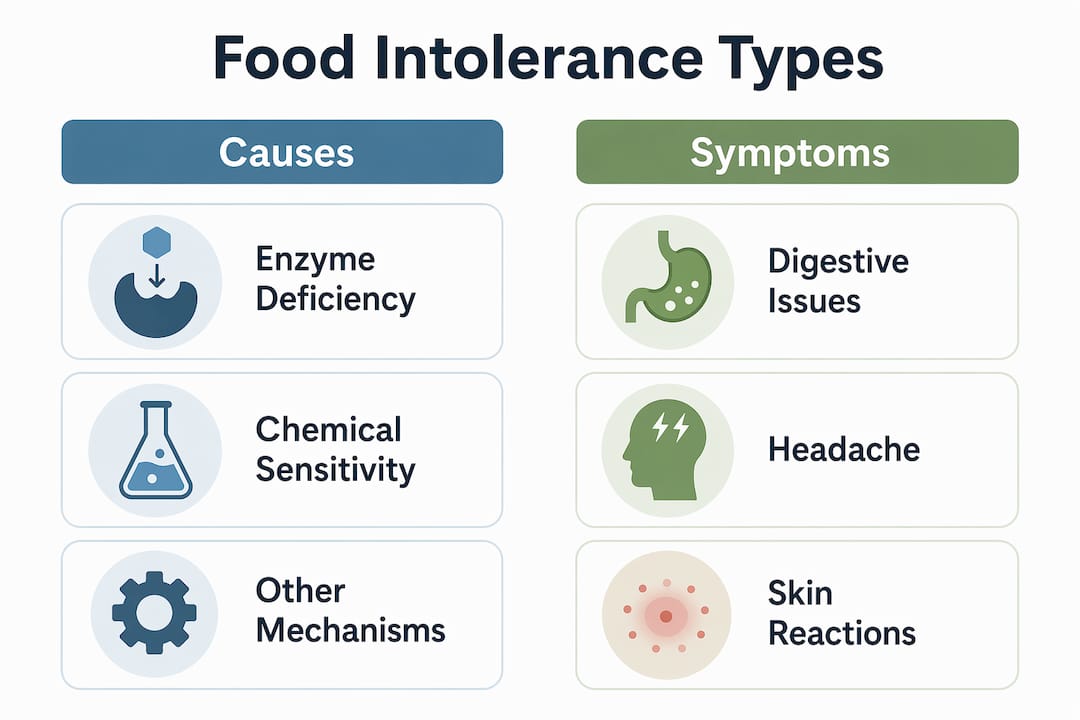
Knowing which mechanism applies to you changes how you approach your diet. A lactase deficiency calls for a different strategy than a histamine sensitivity.

How do symptoms of food intolerance differ from food allergies?
The distinction between food intolerance and food allergy is one of the most clinically significant in nutrition. Getting it wrong carries real consequences.
Food intolerance symptoms are dose-dependent and typically delayed, appearing several hours to a full day after eating the trigger food. Food allergies, by contrast, trigger an immune response within minutes. That time gap is the first clue when you are trying to work out what is causing your symptoms.
Common symptoms of food intolerance include:
- Bloating and excessive gas
- Diarrhoea or loose stools
- Abdominal pain and cramping
- Nausea
- Headaches or migraines
- Fatigue and low energy
These symptoms vary by individual and by the amount consumed. Dose-dependency means small portions of a trigger food may cause no reaction at all, while a larger serving produces significant discomfort. This is fundamentally different from a food allergy, where even a trace amount can provoke a severe response.
Red flag symptoms that signal a food allergy, not an intolerance, include sudden swelling, hives, difficulty breathing, or anaphylaxis. These require immediate emergency medical attention. Recognising these warning signs is not optional. Treating an allergic reaction as an intolerance can be life-threatening.
The practical implication is clear. If your symptoms appear hours after eating, vary with portion size, and remain digestive in nature, food intolerance is the more likely explanation. If symptoms are immediate and systemic, seek medical evaluation without delay.
How is food intolerance diagnosed and what makes it difficult?
Diagnosis is the area where most people encounter the most frustration. Food intolerance diagnosis relies primarily on clinical history, symptom patterns, and elimination diets rather than laboratory tests. There is no single definitive test for most intolerances. That is not a gap in modern medicine. It reflects the nature of the condition itself.
Many popular commercial intolerance tests lack medical validity. IgG antibody panels, for example, measure immune exposure to foods, not intolerance. A positive IgG result simply means you have eaten that food, not that it is harming you. Hair analysis panels sold as intolerance tests are similarly unvalidated by clinical standards. The lactose breath test is a validated exception. It measures hydrogen gas produced by gut bacteria fermenting undigested lactose, and clinicians accept it as a reliable diagnostic tool for lactose intolerance specifically.
Pro Tip: Keep a detailed food and symptom diary for at least two weeks before any medical appointment. Record what you ate, the time, portion size, and any symptoms that followed. This pattern data is the single most useful thing you can bring to a clinician.
The most reliable path to diagnosis involves these steps:
- Record every meal, snack, and drink alongside any symptoms and their timing
- Identify patterns across multiple days and different portion sizes
- Work with a GP or registered dietitian to design a supervised elimination diet
- Reintroduce foods one at a time to confirm which triggers a reaction
- Avoid self-diagnosing and cutting entire food groups without professional input
Eliminating foods without guidance risks nutrient deficiencies that affect weight, energy, and metabolism. Cutting dairy without planning calcium alternatives, for instance, creates a real risk of bone density loss over time. Professional support is not a luxury here. It is a safeguard.
What dietary adjustments help when managing food intolerances?
Managing food intolerances involves modifying trigger food intake rather than eliminating entire food groups, and maintaining nutritional balance through informed substitutions. The goal is to reduce symptoms without shrinking your diet unnecessarily.
Practical strategies that work:
- Start with an elimination protocol. Remove suspected trigger foods for two to four weeks, then reintroduce them one at a time. Use your symptom diary to track responses at each stage. An elimination diet checklist can help you stay organised through the process.
- Manage portions before cutting foods entirely. Because intolerance symptoms are dose-dependent, you may tolerate small amounts of a trigger food without any reaction. Test your threshold before deciding a food is completely off limits.
- Find nutritional substitutes. Lactose-free dairy, oat milk, and fortified plant milks replace dairy without sacrificing calcium. Gluten-free grains such as rice, quinoa, and buckwheat replace wheat for those with gluten sensitivity.
- Monitor nutrient intake actively. Track calcium, iron, B vitamins, and fibre when removing food groups. A registered dietitian can identify gaps before they become deficiencies.
- Work with a healthcare professional. A GP or dietitian provides a tailored plan based on your specific triggers, health history, and nutritional needs.
Pro Tip: When reintroducing foods after an elimination phase, test one food at a time and wait 48–72 hours before testing another. Introducing multiple foods simultaneously makes it impossible to identify which one caused a reaction.
Careful journaling alongside clinically supervised food challenges remains the most reliable method for distinguishing intolerances in complex cases. The process takes patience, but the clarity it delivers is worth it. You end up with a precise, personalised picture of your diet rather than a blanket list of foods to fear.
Key takeaways
Understanding food intolerance terms gives you the foundation to identify your triggers, manage symptoms effectively, and protect your nutritional health without unnecessary food restrictions.
| Point | Details |
|---|---|
| Intolerance is not allergy | Food intolerance involves no immune response and is generally not life-threatening, unlike food allergies. |
| Symptoms are delayed and dose-dependent | Reactions typically appear hours after eating and worsen with larger portions of the trigger food. |
| Most tests lack clinical validation | Only the lactose breath test is widely accepted; IgG panels and hair analysis are not clinically validated. |
| Elimination diets need professional guidance | Removing food groups without support risks nutrient deficiencies affecting energy and metabolism. |
| Journaling is the most reliable diagnostic tool | A detailed food and symptom diary gives clinicians the pattern data needed to identify triggers accurately. |
What I have learned from years of watching people navigate food intolerances
People come to food intolerance research in one of two states. Either they are frustrated after months of unexplained symptoms, or they have just received a vague result from a commercial test and do not know what to do with it. Both situations share a common problem: the terminology was never properly explained to them.
The word “intolerance” gets used loosely. I have seen people describe a mild preference for avoiding onions as an intolerance, and I have seen others dismiss genuine lactose intolerance as “just a sensitive stomach.” Neither framing helps. Precision in language leads to precision in action.
The biggest mistake I see is over-reliance on unvalidated tests. A positive result from an IgG panel or a commercial hair analysis report feels like an answer. It rarely is. These tests generate long lists of flagged foods that often bear no relationship to actual symptoms. People then cut out 30 foods at once, feel briefly better because they are eating less overall, and conclude the test was accurate. The real cause of their symptoms remains unidentified.
The second most common mistake is impatience with the elimination process. Two weeks feels like a long time when you are uncomfortable. But cutting the process short means you never get clean data. The discomfort of the elimination phase is the price of clarity.
My honest advice: start with a symptom diary before you do anything else. It costs nothing, requires no test, and gives your GP or dietitian something concrete to work with. Pair that with a food intolerance guide that explains the clinical context, and you are already ahead of most people who walk into a consultation with nothing but a vague sense that “something is wrong.”
The goal is not a shorter food list. The goal is a clearer picture of your body.
— Rob
How Ukfoodintolerance supports your sensitivity testing
If you are ready to move beyond symptom guessing and want structured data to work with, Ukfoodintolerance offers at-home testing that screens for sensitivities across 900+ food and non-food items. The process is straightforward. You collect a small hair sample at home, post it to a UK laboratory, and receive a detailed digital report within 48–72 hours.

The reports are designed to be read alongside an elimination protocol, giving you a starting point for identifying which foods to test and in what order. Ukfoodintolerance offers two options: the Core Single Intolerance Test covering 500 items, and the Ultimate Single Intolerance Test covering over 1,100 items. Both are non-invasive, fast, and affordable. You can view all available tests and choose the option that fits your needs and budget.
FAQ
What is the difference between food intolerance and food allergy?
Food intolerance causes delayed, dose-dependent digestive symptoms and does not involve the immune system. Food allergy triggers a rapid immune response that can cause life-threatening anaphylaxis even from a trace amount.
What are the most common food intolerances?
The most common food intolerances are lactose intolerance, gluten intolerance, histamine intolerance, FODMAP intolerance, and fructose intolerance, each caused by a distinct enzyme deficiency or absorption issue.
How long do food intolerance symptoms last?
Symptoms of food intolerance typically appear several hours after eating and can last for hours to a full day, depending on the individual and the amount consumed.
Are commercial food intolerance tests reliable?
Most commercial tests, including IgG antibody panels and hair analysis kits, are not clinically validated for diagnosing food intolerances. The lactose breath test is the main validated exception, accepted by clinicians for confirming lactose intolerance.
Can I manage food intolerance without cutting out foods entirely?
Yes. Because intolerance symptoms are dose-dependent, many people tolerate small amounts of trigger foods without any reaction. A supervised elimination and reintroduction protocol, guided by a dietitian, helps identify your personal threshold rather than requiring complete avoidance.










Leave a Reply
Want to join the discussion?Feel free to contribute!