

TL;DR:
- Gut health testing analyzes microbial imbalances, infections, and food sensitivities to inform personalized management.
- However, consumer microbiome results show high variability, and clinical validation remains limited.
- Trusted diagnostic tests and professional guidance are essential for effective digestive health care in 2026.
Gut health testing is defined as the use of scientific methods to analyse digestive function, identify microbial imbalances, and detect food sensitivities that may be disrupting your wellbeing. The role of testing in gut health spans everything from clinical stool pathogen panels used in hospitals to at-home food intolerance kits from providers like Ukfoodintolerance and YorkTest. Understanding what each test type actually measures, and where its limits lie, is the difference between acting on useful information and drawing the wrong conclusions. This article breaks down the main testing methods, their reliability in 2026, and how results can genuinely inform the way you manage your digestive health.
What is the role of testing in gut health?
Gut health diagnostics serve one core function: to replace guesswork with data. When you experience bloating, irregular digestion, skin reactions, or persistent fatigue, testing gives you a structured way to identify what is happening inside your digestive system rather than eliminating foods at random.

The tests available today fall into three broad categories. Microbiome sequencing tests analyse the bacteria, fungi, and other microorganisms living in your gut. Stool pathogen panels detect specific infectious agents. Food intolerance and sensitivity tests identify immune or physiological responses to particular foods. Each category answers a different question, and choosing the wrong test for your symptoms means the results will not help you.
The importance of gut testing lies in its ability to personalise your approach. Two people with identical bloating symptoms may have completely different underlying causes. One may have an overgrowth of a specific bacterial strain; the other may be reacting to gluten or dairy. Without testing, both would follow the same generic advice. With testing, each can take a targeted path.
Common gut health testing methods and what they reveal
The table below summarises the main gut health testing methods, what they detect, and their typical cost range in the UK.
| Test type | What it detects | Typical UK cost |
|---|---|---|
| 16S rRNA microbiome sequencing | Bacterial genera and relative abundance | £100 to £250 |
| Shotgun metagenomics | Full microbial genome, including viruses and fungi | £200 to £350 |
| Stool pathogen PCR panel | Specific bacteria, viruses, and parasites | £80 to £200 |
| Food intolerance test | Sensitivity markers for specific foods and environmental items | £75 to £200 |
| Inflammatory marker panel | Calprotectin, CRP, and other IBD-related biomarkers | £50 to £150 |
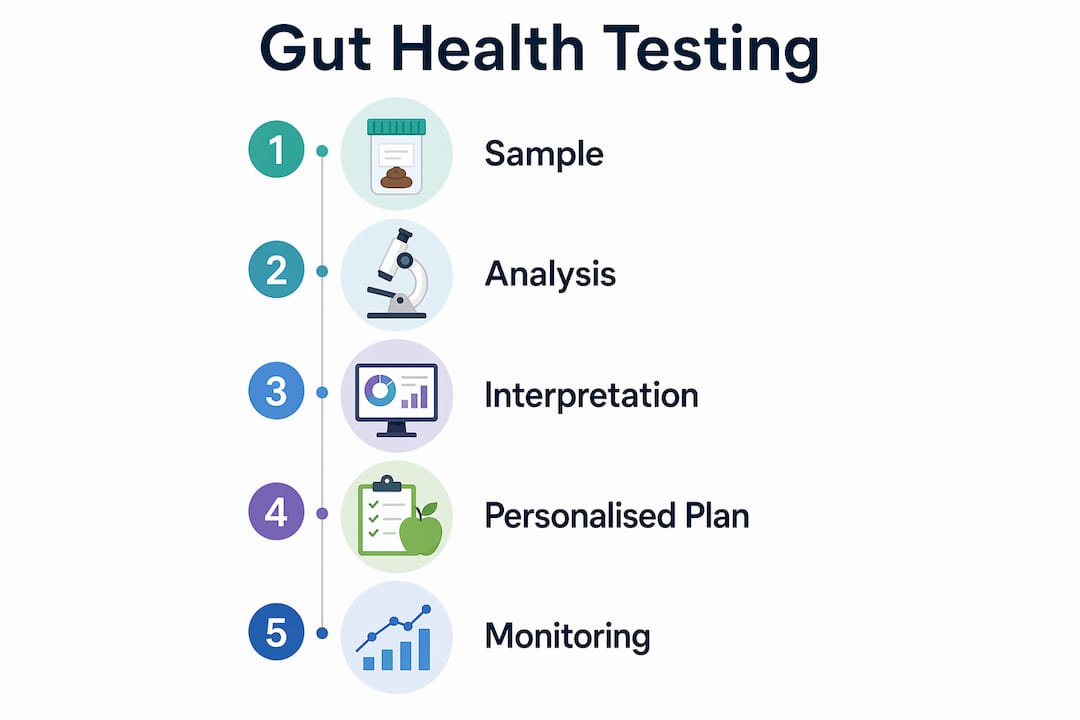
16S rRNA sequencing analyses a specific gene region shared by all bacteria, allowing labs to identify which bacterial genera are present in your gut. It is the most common method used by consumer microbiome kits. Shotgun metagenomics goes further, sequencing all genetic material in a sample, which means it can detect viruses, fungi, and antibiotic resistance genes alongside bacteria. It is more informative but also more expensive.
Stool pathogen PCR panels work differently. Rather than mapping your entire microbiome, they look for the nucleic acid signatures of specific pathogens. Cleveland Clinic Laboratories recommends PCR pathogen panels for individuals presenting with diarrhoea alongside fever, bloody stools, or compromised immunity. These panels are clinically validated and FDA-cleared, which places them in a different category from consumer wellness kits.
Food intolerance testing, such as the panels offered by Ukfoodintolerance, identifies sensitivity responses to hundreds of food and environmental items. The benefits of intolerance testing are most apparent when results are used to guide a structured elimination diet, removing identified triggers and monitoring symptom changes over several weeks.
How reliable are gut microbiome tests?
This is where the picture becomes more complicated, and where many consumers are caught off guard. At-home microbiome kits are popular, but their scientific reliability in 2026 remains a genuine concern.
A study published in Communications Biology analysed standardised faecal samples sent to seven different microbiome testing companies. The results were striking: only 3 microbial genera were consistently identified across all seven companies out of 1,200 total genera reported. That level of inconsistency makes it very difficult to draw firm conclusions from any single company’s results.
The reasons for this variability are technical. Analytical differences can arise at every stage of the process, including sample collection, storage conditions, DNA extraction methods, sequencing approach, and the bioinformatics pipeline used to interpret the raw data. A change in any one of these steps can produce meaningfully different results from the same sample. The same Communications Biology research notes that standardisation protocols could improve reproducibility, but these are not yet widely adopted across the industry.
Regulatory oversight adds another layer of concern. No FDA-approved direct-to-consumer microbiome test exists as of 2026, placing most popular kits in a regulatory grey area between medical devices and wellness products. The UK has its own regulatory framework, but consumer microbiome kits similarly lack the clinical diagnostic approval that stool pathogen panels carry.
- Results from different companies on the same sample can vary dramatically
- Microbiome composition changes day to day within individuals, so a single sample is a snapshot, not a fixed portrait
- Clinicians at Henry Ford Health state that microbiome tests lack sufficient clinical validity to guide personalised nutrition or medical treatment reliably
- Consumer kits typically cost between £100 and £300, but price does not correlate with accuracy
Pro Tip: Treat microbiome test results as a starting point for conversation with a healthcare professional, not as a diagnosis. Use them to identify patterns and questions, not to make immediate dietary or supplement decisions on your own.
How does testing influence personalised gut health management?
Testing influences gut health management most effectively when you match the right test to the right purpose. Clinical diagnostic tests and consumer wellness tests serve different functions, and conflating the two leads to either over-reliance on unvalidated data or dismissal of genuinely useful information.
Here is a practical framework for understanding when testing meaningfully directs health decisions:
- Suspected infection or IBD flare. A stool pathogen PCR panel or inflammatory marker test (calprotectin) is the appropriate first step. These are clinically validated tools that can confirm or rule out specific conditions and guide treatment.
- Unexplained digestive symptoms without a clear diagnosis. Food intolerance testing can identify specific triggers. Food intolerance tests covering 900 or more items give you a broad picture of potential sensitivities, which you can then test through a structured elimination diet.
- General microbiome curiosity or wellness optimisation. Consumer microbiome kits can provide interesting data on bacterial diversity, but results should be viewed as characterisation tools rather than prescriptive guides.
- Probiotic or supplement selection. Some microbiome tests include recommendations for specific strains, but clinicians urge caution here. The evidence linking specific microbiome profiles to specific probiotic benefits remains limited in 2026.
“Until microbiome testing standards and evidence-based interpretive frameworks mature, dietitians and clinicians should emphasise communication and education with clients about the limits and potential of testing.” — Today’s Dietitian
Food sensitivity testing for gut health is particularly well-suited to individuals who have already ruled out clinical conditions and are trying to refine their diet. When food intolerance tests inform dietary changes by identifying specific triggers, and those results are used alongside professional guidance, they can support meaningful improvements in digestive wellbeing. The key word is “alongside.” Testing data is most useful when a qualified professional helps you interpret it in the context of your full health picture.
Choosing the right gut health test: what to consider
Selecting the appropriate test depends on your symptoms, your goals, and a clear-eyed view of what each test can and cannot tell you. The following factors should guide your decision.
Symptom type and severity. Acute symptoms such as sudden diarrhoea, fever, or blood in stools require clinical investigation, not a consumer wellness kit. Chronic, low-grade symptoms such as bloating, fatigue, or skin reactions are more appropriate candidates for food intolerance testing.
Clinical guidance. If a GP or specialist has already assessed you, ask which test type they recommend before purchasing anything. Stool pathogen panels are most useful when ordered or reviewed by a clinician who can interpret results alongside your clinical presentation.
Test reliability and methodology. Ask any provider whether their test uses validated laboratory methods, what accreditations their lab holds, and how results are reported. For at-home food intolerance tests, check whether the provider offers clear guidance on interpreting results and using them for dietary planning.
Cost versus utility. At-home microbiome kits typically cost between £100 and £300 and provide a snapshot of microbial composition at one point in time. That snapshot has real limitations. Food intolerance tests at a similar price point may offer more immediately applicable information if your primary concern is identifying dietary triggers.
| Symptom or goal | Recommended test type | Key consideration |
|---|---|---|
| Acute diarrhoea with fever | Stool pathogen PCR panel | Requires clinical oversight |
| Suspected IBD or inflammation | Calprotectin or CRP panel | Clinically validated markers |
| Unexplained food reactions | Food intolerance test | Use with elimination diet |
| General microbiome curiosity | 16S rRNA consumer kit | Treat as exploratory only |
| Personalised probiotic guidance | Shotgun metagenomics | Evidence base still developing |
Rob’s view: testing is useful, but only if you use it correctly
I have spent a lot of time reviewing the evidence on gut health testing, and my honest position is this: the gap between what these tests promise and what they can currently deliver is wider than most marketing suggests. That is not a reason to avoid testing. It is a reason to go in with clear expectations.
The clinical tools, stool pathogen panels and inflammatory marker tests, are genuinely reliable and have a well-established place in diagnosing gut disorders. The consumer microbiome kits are a different matter. The inter-company variability data from Communications Biology is difficult to ignore. When the same sample produces dramatically different results depending on which company analyses it, the results cannot be treated as definitive.
What I find genuinely useful is food intolerance testing, particularly when it is used as a structured starting point for dietary investigation rather than a final answer. Identifying 20 potential triggers and systematically removing and reintroducing them is a practical, low-risk approach that many people find genuinely clarifying. The role of at-home intolerance tests is not to replace clinical care. It is to give you better questions to bring to that care.
The future of gut health diagnostics is genuinely exciting. Standardisation frameworks are being developed, and the science of the microbiome is advancing quickly. But in 2026, the most responsible approach is to use validated tests for clinical concerns, use intolerance tests to guide dietary exploration, and stay sceptical of any test that claims to tell you exactly what your gut needs.
— Rob
Start understanding your gut with Ukfoodintolerance
If you are experiencing unexplained digestive symptoms, persistent bloating, or suspect that certain foods are affecting your wellbeing, Ukfoodintolerance offers a clear, non-invasive starting point.

The process is straightforward. You collect a small hair sample at home, post it to a UK-based laboratory, and receive a detailed digital report within 48 to 72 hours. Ukfoodintolerance tests cover over 1,100 food and environmental items, giving you one of the broadest sensitivity panels available in the UK. Results come with clear guidance to support an elimination diet, so you know exactly what to do with the information. Explore the full range of food intolerance tests and find the option that fits your needs and budget.
FAQ
What does gut health testing actually measure?
Gut health testing measures different things depending on the test type. Microbiome tests analyse the bacteria and other microorganisms in your digestive system, stool pathogen panels detect specific infections, and food intolerance tests identify sensitivity responses to particular foods or environmental items.
Are at-home microbiome tests accurate?
At-home microbiome tests have significant accuracy limitations. A Communications Biology study found that only 3 microbial genera were consistently identified across 7 different testing companies analysing the same sample, which highlights the variability in current consumer kits.
Can food intolerance testing improve digestive health?
Food intolerance testing can support digestive health when results are used to guide a structured elimination diet. Identifying and removing specific dietary triggers, then monitoring symptom changes, gives you a practical and evidence-informed way to improve how you feel.
When should I see a doctor instead of using a home test?
You should seek clinical assessment for acute symptoms such as sudden diarrhoea, fever, blood in stools, or unexplained weight loss. These symptoms require clinically validated tests like stool pathogen PCR panels or inflammatory marker panels, not consumer wellness kits.
How much do gut health tests cost in the UK?
Gut health tests in the UK typically range from around £75 for food intolerance panels to £350 for advanced shotgun metagenomics microbiome kits. Clinical stool pathogen panels ordered through a GP or private laboratory generally fall between £80 and £200.
Key takeaways
Gut health testing is most useful when you match the test type to your specific symptoms and goals, rather than treating all tests as interchangeable.
| Point | Details |
|---|---|
| Test types serve different purposes | Clinical panels diagnose infections; intolerance tests guide dietary changes; microbiome kits offer exploratory data. |
| Microbiome test reliability is limited | Inter-company variability is high, with only 3 genera consistently identified across 7 companies from the same sample. |
| Food intolerance testing has practical value | When paired with an elimination diet and professional guidance, it can meaningfully reduce digestive symptoms. |
| Regulatory gaps exist for consumer kits | No FDA-approved direct-to-consumer microbiome test exists in 2026; treat results as informative, not diagnostic. |
| Professional input improves outcomes | Test results are most useful when interpreted alongside a GP, dietitian, or qualified health professional. |










Leave a Reply
Want to join the discussion?Feel free to contribute!