

An at-home bioresonance hair test can flag gluten as a possible sensitivity, but it is a screening tool, not a coeliac diagnosis. It won’t replace NHS blood tests or biopsy. UK Food Intolerance is one option offering this route, processing hair samples at a UK laboratory and returning a digital report within 48 to 72 hours.
TL;DR:
- The at-home bioresonance hair test can indicate possible gluten sensitivity but cannot diagnose coeliac disease or wheat allergy.
- UK regulators have repeatedly found no clinical evidence supporting the diagnostic claims made by hair analysis and bioresonance marketing.
- The test results should be treated as screening signals, prompting supervised elimination and reintroduction rather than immediate dietary changes.
- The test process takes 48 to 72 hours from UK-based lab processing, with panel sizes and cost varying, but results are not medical diagnoses.
- People with red-flag symptoms or serious health concerns should consult a GP rather than rely solely on at-home testing.
Table of Contents
- What is gluten sensitivity testing in the UK, and how does it work?
- What do UK regulators say about hair and bioresonance testing?
- Who suits at-home screening, and who needs the GP instead?
- How do you interpret a non-diagnostic report and act on it safely?
- What should you check before trusting a test provider?
- A pragmatic way to use at-home screening
- Ready to try an at-home gluten screen?
- Sources
- FAQ
What is gluten sensitivity testing in the UK, and how does it work?
Gluten sensitivity testing in this context means a non-invasive, at-home screening process. You order a kit, snip a small hair sample at home, and post it to a UK laboratory. Instrument analysis compares your sample against a panel of items, and a digital report lands in your inbox, typically within 48 to 72 hours.
The report claims to flag potential sensitivities, including gluten, across a wide panel that can run into the hundreds or thousands of items depending on the test tier you choose. It does not diagnose coeliac disease or wheat allergy. That distinction matters because the clinical pathway is entirely different.
NHS diagnostic testing for coeliac disease relies on blood tests looking for specific antibodies, followed by a small bowel biopsy if those come back positive. That process requires you to still be eating gluten, and it’s run through your GP, not through a home kit. NHS guidance on food intolerance recommends a symptom history and, where needed, dietitian-supervised elimination trials rather than laboratory screens for general intolerance symptoms.
The practical workflow for an at-home test looks like this:
- Order your chosen panel size online and receive the kit by post
- Collect a small hair sample following the enclosed instructions
- Post the sample to the UK lab for processing
- Receive a digital report by email within 48 to 72 hours
- Use the report as a starting point for a monitored elimination trial, not a final answer
What do UK regulators say about hair and bioresonance testing?
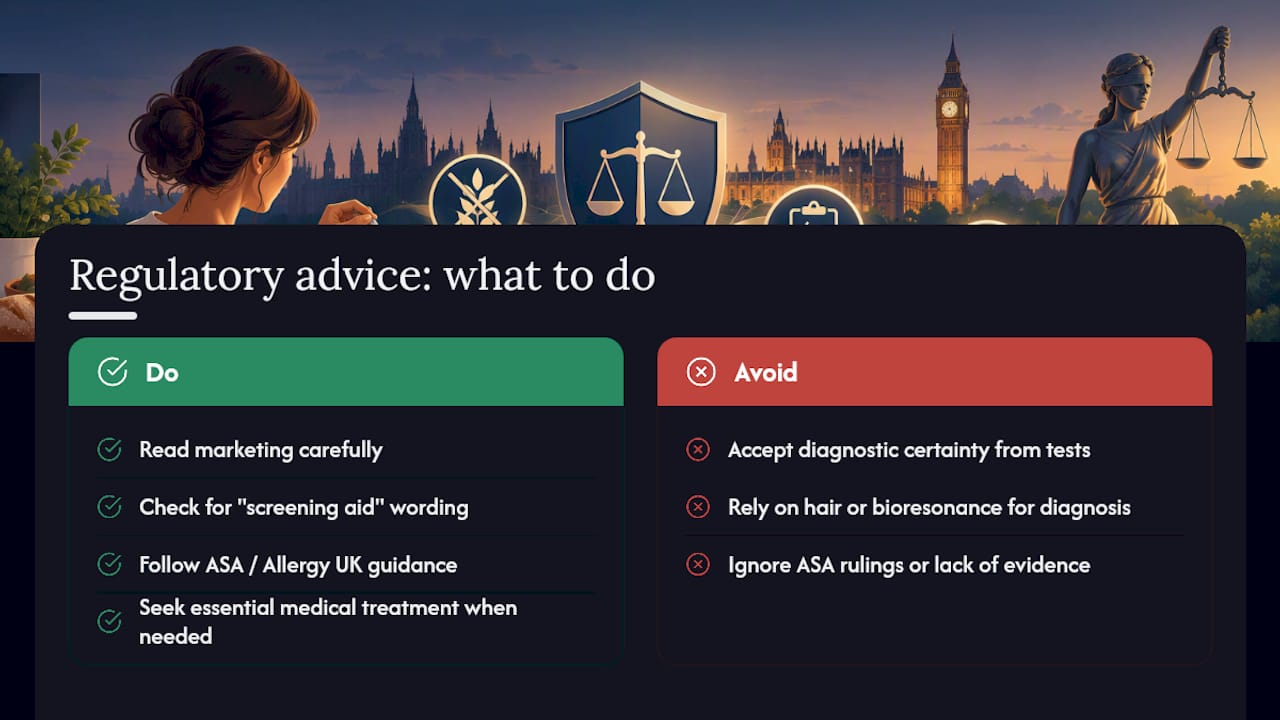
The Advertising Standards Authority has ruled repeatedly that hair-analysis and bioresonance marketing claims are not sufficiently substantiated for diagnostic use. A recent example is the ASA ruling against Global Health Tests Ltd, which found the company’s diagnostic claims for hair testing lacked robust clinical evidence. Similar rulings on bioresonance devices go back over a decade, so this isn’t a new or isolated finding.
The ASA’s own advice on bioresonance therapy states plainly that these devices lack convincing evidence to diagnose or predict medical conditions, and that marketers must never discourage anyone from seeking essential medical treatment. Allergy UK echoes this, confirming there is currently no validated blood or hair test for general food intolerance.
None of that means the tests are worthless as a wellbeing tool. It means you should read the marketing carefully. Look for phrases that describe the report as a screening aid rather than a diagnosis, and treat any provider claiming clinical certainty with caution.
Who suits at-home screening, and who needs the GP instead?
Deciding whether to try a hair test or book a GP appointment comes down to your symptoms and your goals. Screening suits people who want data to inform lifestyle choices; it does not suit anyone with warning signs that need clinical investigation.
- Try at-home screening if you have mild, intermittent digestive discomfort, want a starting point for a monitored elimination diet, or are curious about wellbeing without acute red-flag symptoms.
- See your GP if you notice unexplained weight loss, persistent anaemia, ongoing severe gastrointestinal bleeding, or a child failing to grow as expected. These need blood tests and possibly a biopsy, not a home kit.
- Get emergency care if you experience a severe, immediate allergic reaction after eating, such as swelling, breathing difficulty, or widespread hives. That’s an allergy, not an intolerance, and it needs urgent clinical attention.
- Start a symptom diary regardless of route. Recording what you eat and how you feel afterwards, hour by hour, gives both you and any dietitian better data than a single test result alone.
How do you interpret a non-diagnostic report and act on it safely?
A positive result on a gluten item is a prompt to investigate further, not proof of a problem. Treat it the same way you’d treat a hunch worth testing, rather than a verdict worth acting on immediately and permanently.
The safest route is a structured elimination and reintroduction sequence. The British Dietetic Association’s guidance recommends removing the suspected food for 2 to 6 weeks, then reintroducing it in a controlled way to see whether symptoms return. Doing this with a registered dietitian reduces the risk of cutting out foods unnecessarily and missing key nutrients.
A few habits make this process far more reliable:
- Keep a daily food and symptom diary throughout the elimination period
- Remove one food group at a time rather than several at once
- Watch for the nocebo effect, where expecting a reaction can make you notice symptoms that aren’t actually linked to gluten
- Reintroduce gradually and note the timing and severity of any symptoms that reappear
- Talk to a dietitian before cutting gluten long-term, since wheat products carry fibre and B vitamins worth replacing properly
Pro Tip: Start your food diary a week before your hair sample even arrives back. Having a baseline of what you normally eat and how you normally feel makes it far easier to spot a genuine pattern once your report comes through.
Removing several major food groups simultaneously without guidance is one of the more common ways people end up with nutritional gaps rather than answers, a point Allergy UK makes clearly in its own guidance on intolerance testing.
What should you check before trusting a test provider?
The ASA’s bioresonance advice sets the bar most UK providers should be judged against: no claims to diagnose or treat medical conditions without robust evidence, and no discouraging anyone from essential medical treatment. Where a device or kit is marketed with medical claims, the MHRA’s expectations around device regulation also come into play, tightening what a provider can honestly say about accuracy.
Before ordering any at-home gluten screen, run through this checklist:
- Does the provider use clear non-diagnostic language, rather than words like “diagnose” or “detect disease”?
- Is the testing methodology published somewhere you can read it?
- Is your sample processed at a UK-based laboratory?
- Is there a clear, accessible privacy policy covering what happens to your data and sample?
- Does the provider point you towards a dietitian or GP for anything beyond general wellbeing screening?
A provider that ticks all five is being straight with you about what the test can and can’t do.
A pragmatic way to use at-home screening
The workflow that makes sense to me is simple: order a kit, collect the sample, read the report as one data point, then start a food diary before you touch your diet. If gluten flags up, that’s your cue to talk to a dietitian about a proper elimination and reintroduction trial, not your cue to strip wheat from every meal overnight.
Publishers in this space can be judged on what they’re willing to state plainly: UK lab processing, 48 to 72 hour turnaround, and panel sizes stated upfront. None of that is a clinical claim, and it shouldn’t be dressed up as one. The genuine benefit most people get isn’t a diagnosis. It’s better self-observation and a more targeted conversation with a professional when they need one.
— Rob
Ready to try an at-home gluten screen?
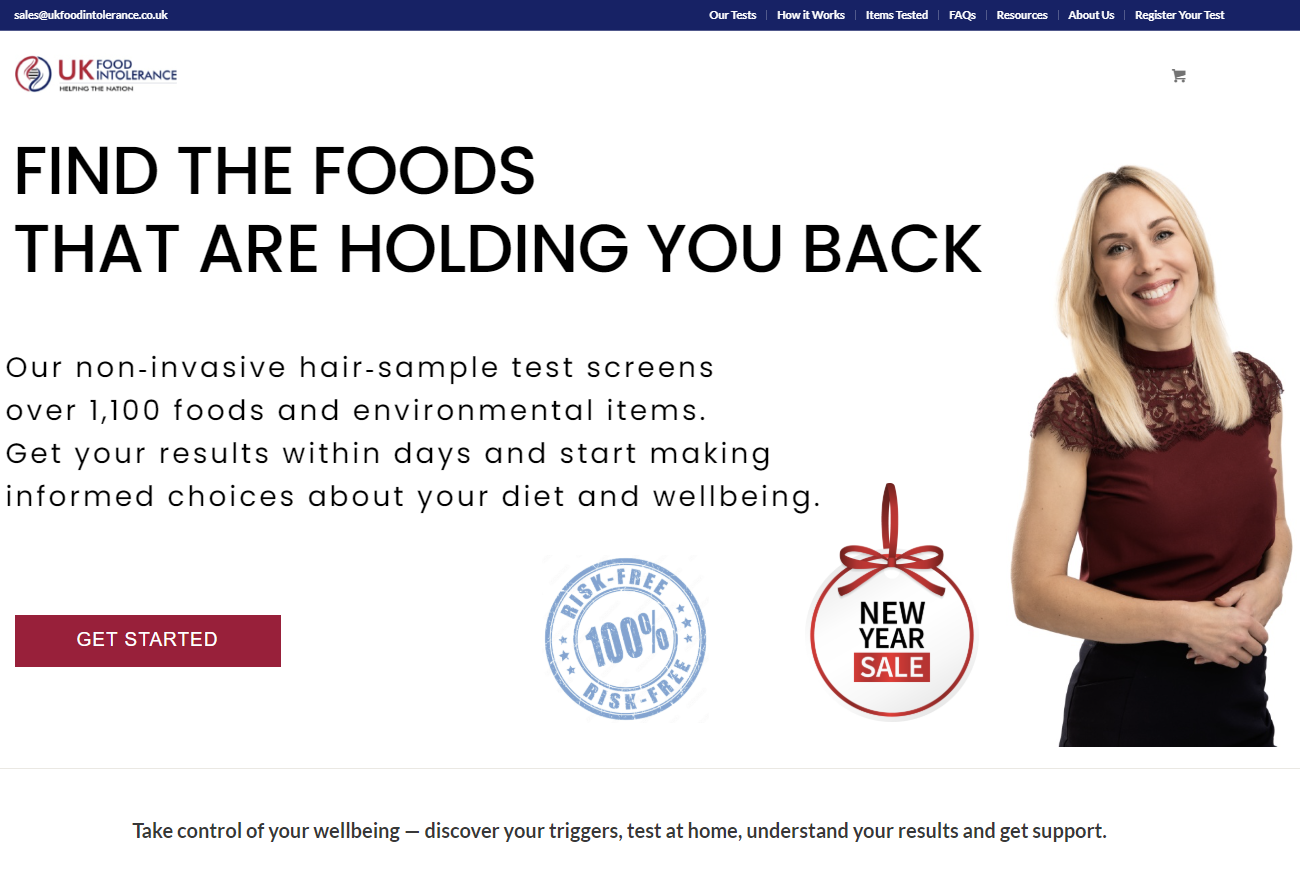
If you’ve read this far and want a practical next step, UK Food Intolerance offers a straightforward route: order online, collect your hair sample at home, and receive your digital report within 48 to 72 hours from UK-based lab processing. Tests range from smaller panels through to the Ultimate Plus Intolerance Test at £140.99 one-off per person, covering the largest item panel available across the range.
Whichever panel you choose, treat the result as a screening signal rather than a medical verdict. Browse the full range of tests to compare panel sizes, or check the items tested list to see exactly what’s covered before you order. If your symptoms include any of the red flags mentioned earlier, speak to your GP first and use screening as a complement to that care, not a substitute for it.
Sources
FAQ
Is there a validated gluten sensitivity test in the UK?
No test, including hair analysis, is clinically validated for diagnosing general gluten sensitivity. NHS guidance points to symptom history and supervised elimination as the reliable approach, while coeliac disease itself requires blood antibody testing and biopsy through your GP.
How long does an at-home gluten screening report take?
UK Food Intolerance returns digital reports within 48 to 72 hours of your hair sample reaching its UK laboratory. Turnaround can vary slightly depending on postal delivery times to the lab.
Can a bioresonance hair test diagnose coeliac disease?
No. Bioresonance and hair testing are screening tools, and ASA rulings have found diagnostic claims for these methods lack robust substantiation. Coeliac disease diagnosis requires NHS blood tests and often a biopsy while you’re still eating gluten.
What does UK Food Intolerance’s gluten test cost?
UK Food Intolerance lists several test tiers, with current prices available on the tests page. The Ultimate Plus Intolerance Test, covering the widest panel, is priced at £140.99 one-off per person.
Should I stop eating gluten straight after a positive screening result?
No. Removing gluten immediately without guidance risks missing key nutrients and makes it harder to confirm whether gluten was truly the trigger. Dietitian-supervised elimination and reintroduction over several weeks gives a far more reliable picture.










Leave a Reply
Want to join the discussion?Feel free to contribute!