

Most commercial “intolerance” tests, including IgG blood tests and hair or bioresonance analysis, are not recommended for diagnosing food intolerance in pregnancy. Do not start restricting foods based on one of these results. If you’re having symptoms, see your GP, keep a food and symptom diary for around one to two weeks, and ask about a dietitian referral. Supervised elimination and reintroduction remains the reliable route to an answer.
TL;DR:
- Food intolerance tests like IgG blood tests, hair analysis, and bioresonance are not supported by strong evidence and should not guide dietary restrictions during pregnancy.
- The NHS recommends supervised elimination and reintroduction, with hydrogen breath tests for lactose intolerance being the most validated diagnostic tool in pregnancy.
- Restrictive diets based on unproven tests can lead to nutrient deficiencies, posing risks to fetal development, especially for nutrients like iron, folate, calcium, and vitamin D.
- Keeping a detailed food and symptom diary and consulting a dietitian is the safest way to identify true food triggers during pregnancy.
- At-home sensitivity testing can serve as a starting point for discussion with healthcare professionals but should not replace supervised elimination diets.
Table of Contents
- Which pregnancy intolerance testing options exist, and how reliable are they?
- What to do if you suspect an intolerance: the NHS pathway
- Why restrictive diets carry extra risk during pregnancy
- How diagnosis actually happens: supervised elimination and reintroduction
- Can food intolerances affect your baby’s development?
- Managing symptoms beyond changing your diet
- Is it pregnancy or an intolerance? Telling the symptoms apart
- Supplementing safely during a supervised elimination diet
- Author perspective: a cautious, evidence-led approach for pregnant readers
- Using at-home testing responsibly alongside your care team
- Sources
Which pregnancy intolerance testing options exist, and how reliable are they?
Pregnancy intolerance testing covers a wider range of products than most people realise, and the quality gap between them is enormous. Some are backed by decades of clinical use. Others are sold with confident marketing but almost no evidence behind them.
IgE tests and skin prick testing look for a true allergic response, where your immune system reacts to a specific protein. Blood-based IgE testing can be used safely during pregnancy, though skin prick testing is sometimes postponed or handled with extra caution because of the small risk of triggering a reaction. These tests are appropriate when a doctor suspects a genuine allergy, not general digestive discomfort.
IgG blood tests and hair or bioresonance tests are a different matter entirely. Neither the NHS nor the British Dietetic Association recommends them for identifying food intolerance, and both bodies point to limited evidence that they measure anything meaningful. WebMD’s review of bioresonance similarly notes there isn’t enough reliable evidence to support its use, and pregnancy is exactly the wrong time to gamble on an unproven method.
Hydrogen breath testing sits in a different category altogether. It’s a validated clinical tool used specifically to diagnose lactose malabsorption, and it’s one of the few intolerance-specific tests your GP might actually arrange.
A 2025 Guardian investigation found a persistent mismatch between how heavily online sensitivity tests are marketed and what the underlying science actually supports, a gap that leaves many buyers with results they can’t safely act on.
Here’s the practical breakdown:
- IgE blood or skin tests: clinically validated, used for suspected true allergy.
- Hydrogen breath test: validated for lactose intolerance specifically.
- IgG blood tests: not recommended, poor evidence base.
- Hair analysis or bioresonance: not recommended, no established clinical evidence.
None of these tests, including the validated ones, tell you the full story on their own. They narrow down possibilities. Diagnosis still depends on matching results to what you actually experience after eating.
What to do if you suspect an intolerance: the NHS pathway
If certain foods seem to be causing problems, the NHS-recommended route is straightforward, and it starts with your GP rather than a home testing kit.
- Book a GP appointment to rule out other causes. Pregnancy brings its own digestive changes, and some symptoms that feel like an intolerance have nothing to do with food at all.
- Keep a food and symptom diary for 7 to 14 days. Log what you ate, roughly how much, the time, which symptoms followed, how severe they were, and anything else going on, such as stress or poor sleep, that might muddy the picture.
- Ask about a dietitian referral if your GP thinks it’s warranted. Registered dietitians assess patterns in your diary against your medical history and can spot links a quick conversation might miss.
- Expect a hydrogen breath test if lactose is suspected. This is one of the few pregnancy intolerance testing options with genuine diagnostic backing, and results usually inform next steps within a few weeks.
Pro Tip: Photograph your meals as you go rather than relying on memory at the end of the day. A quick picture captures portion size and hidden ingredients far more accurately than a diary entry written hours later.
This pathway takes longer than ordering a kit online. It also gives you an answer you can actually trust, which matters more when you’re eating for two.
Why restrictive diets carry extra risk during pregnancy
Pregnancy increases your need for several nutrients at once, so cutting out entire food groups on the strength of an unproven test can do real harm. Folate, iron, iodine, calcium, protein, and vitamin D all matter more now than they did before you conceived, and many of them come from the very food groups people eliminate first, such as dairy, wheat, or eggs.
The British Dietetic Association has warned specifically that unverified test results often push people into unnecessary restriction, and that dietitian supervision exists precisely to prevent that outcome. A test result claiming “sensitivity” to a dozen foods, dairy, gluten, eggs, and yeast, might sound thorough. In practice, it often means cutting your intake of calcium, iron, and B vitamins simultaneously, based on a method with no proven diagnostic value.
While you wait for a proper assessment, safer interim steps include:
- Swap suspected trigger foods for a similar item rather than removing the food group entirely (oat milk instead of cow’s milk, for instance, while keeping calcium intake up elsewhere).
- Track symptoms alongside meals rather than removing foods pre-emptively.
- Keep meals varied rather than narrowing your diet on a hunch.
Seek urgent care immediately if you notice swelling of the face or throat, difficulty breathing, a rapid widespread rash, or signs of severe weight loss or dehydration. These are not intolerance symptoms to manage at home. They need emergency assessment.
How diagnosis actually happens: supervised elimination and reintroduction
The gold standard for identifying a genuine food trigger is a structured elimination and reintroduction process, not a lab test of any kind. Done properly, it works like this:
- Remove the suspected food for a defined period while a dietitian monitors your nutrient intake to prevent gaps.
- Record symptoms objectively throughout, using the same diary format you started with your GP, so improvement (or lack of it) is measurable rather than assumed.
- Reintroduce the food gradually, watching closely for symptoms returning. This step confirms or rules out the suspected trigger with far more confidence than any blood or hair sample can offer.
- Repeat only if needed, for a second suspected food, always one at a time so results stay clear.
Dietitian supervision matters here because removing a food group without a replacement plan creates the exact nutritional gaps discussed earlier. A dietitian also knows when to defer a formal food challenge until after pregnancy, particularly if a genuine allergic reaction is suspected rather than an intolerance.
Realistic timelines: most people notice a change in symptoms within one to two weeks of elimination if the food is genuinely responsible. Convincing evidence means symptoms fade during elimination and return, consistently, during reintroduction. One improved day proves very little on its own.
Can food intolerances affect your baby’s development?
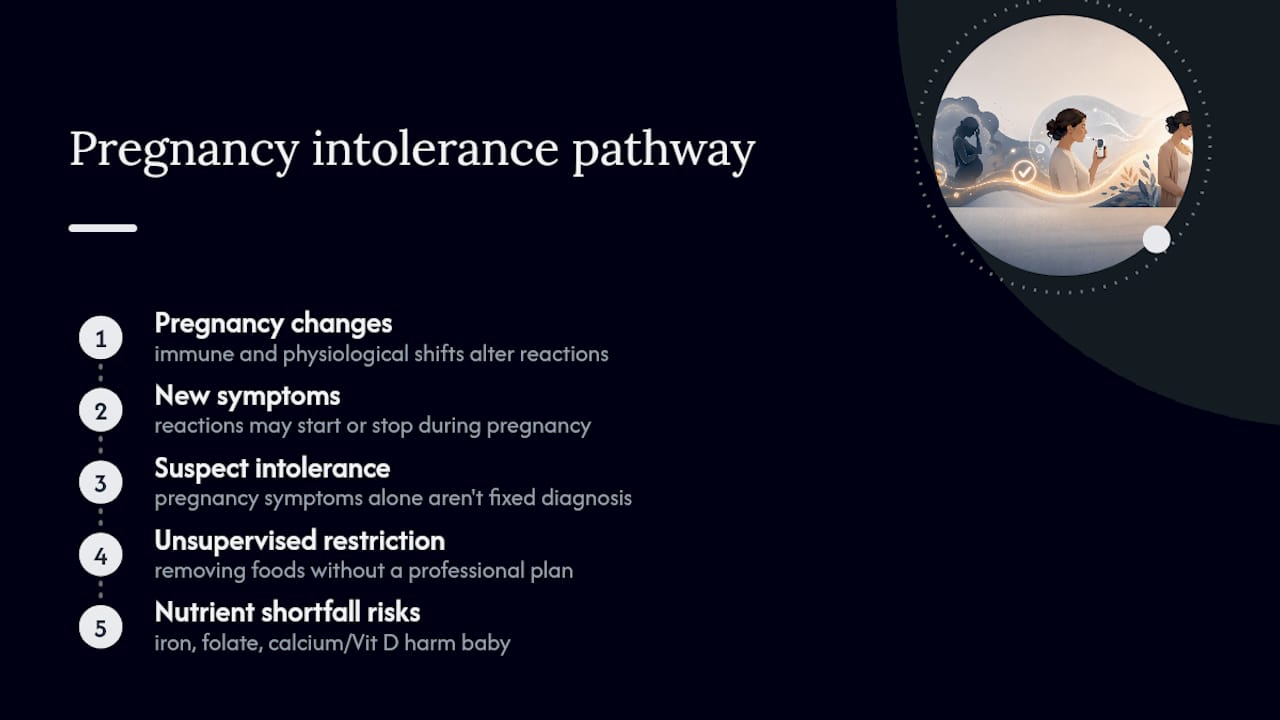
An intolerance itself, once properly managed, has not been shown to threaten fetal development. The real risk comes from what people do in response to a suspected intolerance, particularly unsupervised restriction that removes key nutrients over weeks or months.
Pregnancy already shifts how your body handles food. Immune and physiological changes during pregnancy can alter how you react to certain proteins, which is part of why symptoms that never bothered you before might appear now, and why symptoms can also fade again after birth. This is a key reason clinicians are cautious about labelling a reaction as a fixed, lifelong intolerance based on pregnancy symptoms alone.
The bigger concern for fetal development is prolonged nutritional shortfall. Iron deficiency in pregnancy is linked to low birth weight and preterm delivery. Inadequate folate intake around conception and in early pregnancy raises the risk of neural tube defects. Calcium and vitamin D support your baby’s developing skeleton. None of these risks come from having an intolerance. They come from removing whole food groups without a plan to replace what’s lost, often on the basis of a test with no proven accuracy.
This is exactly why the clinical pathway, GP, diary, dietitian, matters more in pregnancy than at any other time. A managed process protects both your health and your baby’s development. A guess does not.
Managing symptoms beyond changing your diet
Diet is not the only lever available if you’re dealing with suspected intolerance symptoms during pregnancy. A few other strategies can ease day-to-day discomfort while you work through proper diagnosis.
Meal timing and portion size often make more difference than the food itself. Smaller, more frequent meals reduce the digestive load that triggers bloating and reflux, both of which mimic intolerance symptoms in later pregnancy simply because your growing uterus is compressing your stomach.
Stress and sleep management genuinely affect gut symptoms. Cortisol changes gut motility and sensitivity, so a stressful week can worsen digestive symptoms independent of anything you ate.
Gentle movement, such as short walks after meals, supports digestion and can ease bloating and constipation, two of the most commonly mistaken “intolerance” symptoms in pregnancy.
Working with a midwife or dietitian on symptom triggers beyond food, including position, hydration, and activity level, often resolves issues that were never dietary in the first place.
None of these replace proper investigation if symptoms are persistent or severe. They’re useful alongside it, particularly during the diary-keeping weeks before you see a specialist, when you want relief without jumping to elimination too early.
Is it pregnancy or an intolerance? Telling the symptoms apart
This is where a lot of self-diagnosis goes wrong. Pregnancy itself causes bloating, nausea, heartburn, constipation, and food aversions, all of which overlap almost exactly with common intolerance symptoms.
A few distinguishing clues help. Pregnancy-related nausea tends to cluster in the first trimester and often responds to small, frequent meals regardless of what’s on the plate. Intolerance symptoms, by contrast, tend to follow a consistent pattern tied to a specific food, showing up within minutes to a few hours of eating it, every time you eat it, not just occasionally.
Heartburn from pregnancy hormones relaxing the oesophageal sphincter tends to worsen as pregnancy progresses and with larger meals generally, rather than reacting to one particular ingredient. Genuine intolerance-related discomfort is usually more targeted; you can often name the food before you even check your diary.
The diary is the tool that actually resolves this ambiguity, which is precisely why the NHS pathway leans on it so heavily. Two weeks of consistent logging reveals whether symptoms track a specific food or simply track the stage of pregnancy you’re in. Guessing rarely gets this right. A dietitian reading a properly kept diary usually does.
Supplementing safely during a supervised elimination diet
If your dietitian recommends a short elimination period, supplementation isn’t optional; it’s part of the plan. Dietitians typically build a targeted supplementation strategy around whatever food group is being removed, with particular attention to iron, folic acid, vitamin D, and iodine, the nutrients most likely to run short during pregnancy.
If dairy is excluded, calcium and vitamin D intake need a specific replacement plan, not just a general prenatal vitamin and hope. If wheat or several grains are removed together, iron and B vitamin intake often needs closer attention, since fortified cereals are a major source for many pregnant people. A dietitian will usually recommend keeping the elimination window as short as clinically useful, generally two to four weeks, precisely to limit how long you’re relying on supplements to cover a gap rather than food.
Never start a new supplement regime alongside an elimination diet without discussing it with your GP or dietitian first, particularly with iron and vitamin A, where excess intake carries its own risks in pregnancy. The goal of supplementation here isn’t general wellness top-up. It’s covering a specific, identified gap created by removing a specific food, for a defined and limited period.
Author perspective: a cautious, evidence-led approach for pregnant readers
Most digestive symptoms in pregnancy are transient, tied to hormones, growing pressure on your stomach, or stress, not a hidden intolerance. The advice that actually holds up under scrutiny hasn’t changed in years: see your GP, keep a proper diary, get a dietitian involved before you cut anything out. Before an appointment, write down your worst three symptoms and when they happen. That single page will do more for your consultation than any test result.
— Rob
Using at-home testing responsibly alongside your care team
There are other routes into this picture, breath tests, GP referrals, dietitian-led elimination, and each has its place. If you’re curious about a wider nutritional picture before or alongside those routes, Ukfoodintolerance’s at-home testing gives you a starting point without a GP waiting list: a hair sample collected at home, analysed at a UK laboratory, with a digital report covering hundreds to over a thousand items delivered within 48 to 72 hours.

The right way to use a report like this is as a conversation starter, not a self-prescribed diet plan. Take it to your GP or dietitian, discuss which flagged items are worth investigating through the supervised elimination process, and avoid cutting major nutrient groups without that professional input. Our digital report guide walks through how to read your results and what questions to bring to that appointment. If you decide to proceed, browse the full range of intolerance tests to find the coverage that fits your situation.
This article is general information, not a substitute for advice from a qualified doctor. Consult a qualified healthcare professional about your own circumstances before acting on anything here.
Sources
- Food intolerance | NHS
- Food allergy and food intolerance testing | British Dietetic Association
- A review of current evidence on food allergies during pregnancy – PMC










Leave a Reply
Want to join the discussion?Feel free to contribute!