

A stuffy nose after wine is usually down to alcohol widening the blood vessels in your nose, plus the histamine and related amines in the wine and, for a smaller group, sulphites. The Food Standards Agency requires sulphite labelling, and sulphite sensitivity is more common in people with asthma. If you have any difficulty breathing or throat swelling, get emergency help straight away.
TL;DR:
- UK labels must declare sulfites above 10 mg/L, but not the amount; sensitivity is estimated at under 2% generally and 5% to 13% with asthma.
- Histamine exposure adds up across wine and food, so pair wine with fresher options and avoid stacking it with aged cheese or cured meats.
- Standard IgE tests miss most amine or sulfite sensitivities; clinical guidance supports a 2 to 4 week elimination, followed by reintroduction and symptom tracking.
- Loratadine reduced nasal symptoms in some people during a red wine trial, but it only eases symptoms; ask a pharmacist whether it suits you.
- Throat swelling or breathing difficulty requires emergency help, especially with widespread hives or collapse, because these symptoms may signal a severe allergic reaction.
Table of Contents
- Why does wine make your nose block up?
- Histamine and amines in wine: what it means for your plate and glass
- How can you check a bottle for sulphites?
- Is it an allergy, a sensitivity or an intolerance?
- How do you find your triggers?
- What helps with congestion after wine?
- What does the research say?
- My view: start small and keep it simple
- How can at-home intolerance testing help you find triggers?
- FAQ
- Sources
Why does wine make your nose block up?
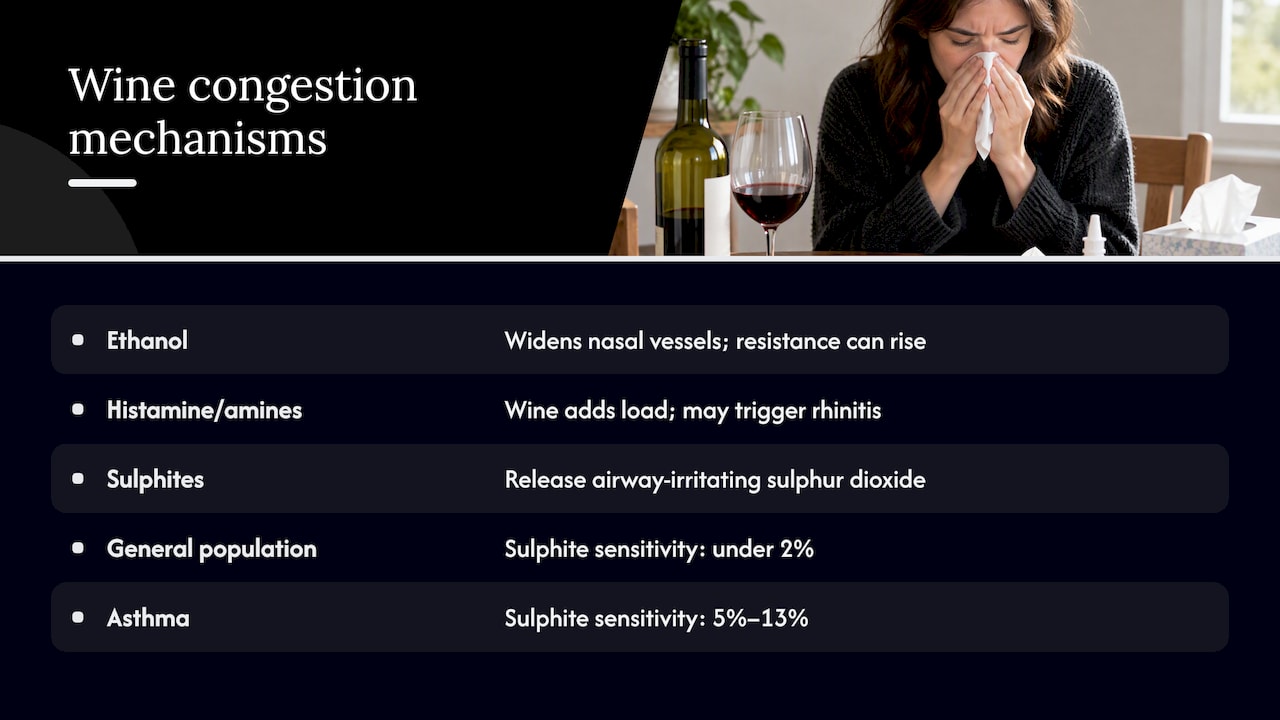
Three things tend to be at work, and they can overlap. The first is alcohol itself. Ethanol has a vasoactive effect, meaning it widens blood vessels, and the vessels lining your nose are no exception. Research on acute alcohol intake and nasal patency found that nasal airway resistance can rise after drinking, with larger effects in people who already have allergic rhinitis. The practical result is a nose that feels full and blocked even though nothing has “gone wrong” with your immune system.
The second is histamine and similar vasoactive amines. Wine, especially red and aged wine, can add to the histamine your body already has to deal with. When your load tips past what you can break down comfortably, you can get rhinitis-like symptoms: a blocked or runny nose, sneezing and sometimes flushing.
The third is sulphites. Winemakers use them as preservatives, and they can release sulphur dioxide, an airway irritant. Guidance on sulphites and airway symptoms notes that people with marked sensitivity, especially those with asthma, may need to avoid them. Sulphite sensitivity is estimated at under 2% of the general population but 5% to 13% of people with asthma.
Timing varies from person to person, as does how long symptoms last. Flushing, sneezing and a runny nose often travel with the blockage. Survey evidence on alcohol-induced upper airway symptoms reports that nasal blockage is the most prominent complaint, that red and white wine are both commonly named as triggers, and that people with coexisting respiratory disease are affected more often. If your symptoms follow this pattern, you are far from alone, and there are sensible steps you can take.
Histamine and amines in wine: what it means for your plate and glass
Histamine does not only come from the wine. Your body deals with a running total from everything you eat and drink, which is why a glass that was fine on Tuesday can cause trouble on Saturday. Think of it as a threshold: you may feel perfectly well until the combined load crosses a line, and then symptoms appear.
Foods and drinks that commonly carry higher levels of histamine or other vasoactive amines include:
- Red wine, and aged or fermented wines more generally
- Matured and blue cheeses
- Cured and smoked meats, such as salami and ham
- Fermented foods like sauerkraut and soy sauce
- Tinned or smoked fish
- Ready meals and leftovers that have sat for a while
Clinical advice for people with amine sensitivity points to the same pattern: vasoactive amines build up in aged and fermented foods and drinks, so choosing fresher items and avoiding ready meals can reduce your exposure.
That has a few practical consequences for a wine evening. A glass of red alongside a cheese board and cured meats stacks several high-amine items into one sitting, which is exactly how people cross their threshold. Try pairing wine with fresher, simpler food instead, keep portions modest, and avoid combining several of the items above on the same occasion. You do not need to overhaul your whole diet. Often a small change to what sits next to your glass is enough to show you whether the cumulative load idea fits your experience.
If you suspect other foods are adding to the picture, our guide on dealing with the symptoms of a food intolerance covers practical everyday measures.
How can you check a bottle for sulphites?
In the UK, a wine containing more than 10 mg/l of sulphur dioxide must say “contains sulphites” on the label, according to the Food Standards Agency’s wine labelling rules. That gives you a quick, free check at the shelf. A short routine makes it easier:
- Turn the bottle round and look for “contains sulphites” or “sulphur dioxide” on the back label.
- Note which wines you have tolerated and which have caused trouble, and compare their labels over time.
- Check for other declared ingredients or fining agents if you are avoiding specific substances.
- If the label is unclear, ask the retailer or producer how much sulphite they use and whether any fining agents were involved.
- Record what you find in your symptom diary so patterns stand out.
Pro Tip: Contact the producer or retailer if the label leaves you unsure. Some ecological wines may use fewer additives, and a producer who knows their process can often tell you more than the bottle does.
Remember that a sulphite declaration only tells you the threshold has been passed, not how much is in the glass, so use it as a clue rather than a verdict.
Is it an allergy, a sensitivity or an intolerance?
The terms get blurred, so it helps to separate them. A true allergy is IgE-mediated: your immune system reacts quickly and can affect the whole body, with a risk of anaphylaxis. Signs include swelling of the lips or throat, wheezing, widespread hives or collapse. That is an emergency.
A sensitivity or pharmacological intolerance is different. Nasal congestion, headache and flushing after wine usually fall here, and they do not involve a systemic anaphylactic reaction. Many wine reactions are driven by alcohol’s vascular effects, amines or sulphite irritation rather than a classic allergy. That is reassuring in one sense, but it also means the usual allergy tests may not explain what you are feeling, and specialist testing for histamine sensitivity is not standardised.
Our guides on food intolerance versus allergy and on spotting triggers safely walk through the distinction in plain terms. If you want to know which symptoms need urgent attention, our allergy symptoms checklist is a handy reference.
Talk to your GP or an allergy specialist if you have had a severe reaction, if you get recurring chest symptoms such as wheeze or tightness, or if your asthma seems harder to control around alcohol. Those signs deserve a proper clinical assessment rather than guesswork.
How do you find your triggers?
Be realistic about testing. Standard IgE blood tests look for allergic antibodies, so they have little to say about non-IgE sensitivities such as amine or sulphite reactions. There are also no validated clinical tests for histamine sensitivity. Practical guidance on sensitivity to histamine and other vasoactive amines recommends a pragmatic route instead: a 2 to 4 week elimination of high-amine foods, followed by controlled reintroduction while you record what happens.
Keep that process tidy and the answers come more easily. A simple diary entry for each drink might include:
- Date and time
- The drink and how much you had
- Other foods eaten alongside it
- Symptoms, and how long after drinking they began
- Any medicines taken, including antihistamines
Look for patterns over a few weeks. Does red wine cause more trouble than white? Does the same glass behave differently with and without cheese? Do symptoms arrive faster on an empty stomach? Understanding timing also helps, and our article on how long after eating symptoms can appear explains typical delays.
Once you have a candidate list, reintroduce one item at a time rather than several at once, so you can tell which one is responsible. If an elimination diet feels daunting or you have other health conditions, involve your GP or a registered dietitian before restricting your diet.
What helps with congestion after wine?
In the short term, a few measures can ease things. There is trial evidence behind antihistamines: a controlled study found that loratadine reduced red wine-induced rhinitis symptoms in responders. That makes a non-sedating antihistamine a symptomatic option, not a cure, and it will not work for everyone. Check with a pharmacist or your GP that it suits you, particularly if you take other medicines.
Things you can try:
- Take a non-sedating antihistamine before drinking, if your pharmacist or GP agrees it is appropriate
- Use saline nasal irrigation or a saline spray to clear and soothe the nose
- Drink water alongside the wine and avoid stacking other triggers, such as cheese and cured meats
- Choose white or fresher wines if you have found they cause fewer problems
- Keep a smaller measure and pace yourself
Pro Tip: Change one thing at a time. If you switch wine, food and medication all at once, you will not know which change made the difference.
For the longer term, limiting how much you drink is the most dependable step, since alcohol’s effect on nasal blood vessels is part of the problem. Where you can find them, lower-histamine or ecological wines may be worth trying. If you have asthma or allergic rhinitis, make sure they are well controlled, because poorly controlled airway disease makes alcohol-related symptoms more likely. It is also worth reviewing your medicines with your GP, as some can add to nasal congestion or interact with alcohol.
What does the research say?
The evidence is not enormous, but it points in a consistent direction. A rhinometry-based study of acute alcohol intake found that alcohol impaired nasal patency and raised nasal airway resistance, with the biggest effects in people with allergic rhinitis.
Acute alcohol intake has been shown to impair nasal patency and to increase nasal airway resistance within hours of consumption.
For management, a trial of loratadine in red wine-induced rhinitis reported that the antihistamine reduced nasal symptoms and secretion in responders. Some people may find that different wines affect their symptoms differently, but the evidence here is uncertain.
Survey evidence reports that a few per cent of adults experience alcohol-induced nasal symptoms, with nasal blockage the most common complaint. In short, the mechanisms are plausible, antihistamines have trial support as a symptomatic aid, and the wine-type findings are still open.
My view: start small and keep it simple
I would begin with a symptom diary and one simple change, such as trying a different style of wine or taking a break from wine. Small experiments tell you far more than a sweeping diet overhaul. If symptoms keep coming back or ever feel severe, see your GP rather than pushing on alone. Our guides on allergy versus intolerance can help you decide what to ask.
— Rob
How can at-home intolerance testing help you find triggers?
We offer a home option for people who want an organised way to explore possible triggers. You can compare our panels on our tests page and see how to collect your sample at home before you order. We see it as a screening aid that suggests items to explore with an elimination approach and clinician follow-up, not as proof of allergy. You can compare our panels on our tests page and see how to collect your sample at home before you order.
This article is general information, not a substitute for advice from a qualified doctor. Consult a qualified healthcare professional about your own circumstances before acting on anything here.
FAQ
Why does my nose get blocked after alcohol?
Alcohol widens the blood vessels in the lining of your nose, which raises airway resistance and makes the nose feel blocked. Research on acute alcohol intake found this effect within hours of drinking, and it was larger in people with allergic rhinitis.
What type of alcohol is best for people with histamine intolerance?
There is no single safe drink, because tolerance varies. Fresher, less aged options tend to carry fewer vasoactive amines than aged or fermented ones, so many people trial white wine or lower-amine choices in small amounts and record how they feel.
Is it possible to develop a sudden intolerance to alcohol?
Yes, reactions can appear or change over time, for example as your overall histamine load, medicines or respiratory health change. Because standardised tests for these sensitivities are lacking, a diary and a 2 to 4 week elimination with reintroduction, as in clinical guidance on vasoactive amines, is the practical way to explore it.
Can antihistamines stop a stuffy nose after wine?
They can help some people. A trial found that loratadine reduced red wine-induced nasal symptoms in responders, but it eases symptoms rather than removing the cause, so check with a pharmacist first.
Sources
- Effects of Acute Alcohol Intake on Nasal Patency
- Effects of loratadine on red wine-induced symptoms and signs of rhinitis
- Openresearch-repository
- Alcohol-induced upper airway symptoms: prevalence and co-morbidity
- Sensitivity to Histamine and other Vasoactive Amines










Leave a Reply
Want to join the discussion?Feel free to contribute!