

TL;DR:
- Food intolerance affects about 20% of the UK population, with dairy and gluten being the most common triggers. The only validated diagnosis method is a supervised elimination-reintroduction diet overseen by a registered dietitian, while IgG and hair tests lack scientific backing. UK regulations mandate allergen labeling but do not require specific intolerance labels, leading to reliance on consumer vigilance and professional support.
Food intolerance is defined as a non-allergic, dose-dependent reaction to certain foods, driven by enzyme deficiencies or chemical sensitivities rather than IgE immune responses. This distinction matters enormously when explaining UK intolerance trends 2026, because the two conditions require completely different diagnostic approaches and management strategies. Roughly 20% of the UK population experiences food intolerances, with dairy, gluten, eggs, and soy topping the list of common triggers. Understanding where the science stands, which tests work, and what the regulatory picture looks like in 2026 gives you a real foundation for managing your health.
What are the latest UK food intolerance trends in 2026?
Food intolerance prevalence in the UK has reached a point where it shapes both healthcare demand and retail behaviour. Around 20% of UK adults report symptoms consistent with food intolerance. That figure means roughly 13 million people are navigating digestive discomfort, skin reactions, or fatigue linked to what they eat.
The most commonly reported intolerances in the UK follow a clear pattern:
- Dairy (lactose): The most prevalent, driven by reduced lactase enzyme activity in adults
- Gluten (non-coeliac gluten sensitivity): Distinct from coeliac disease, which is autoimmune
- Eggs and soy: Frequently reported alongside multiple food sensitivities
- FODMAPs: Fermentable carbohydrates linked to irritable bowel syndrome (IBS) symptoms
- Food chemicals: Histamine, salicylates, and additives affecting a smaller but significant subset
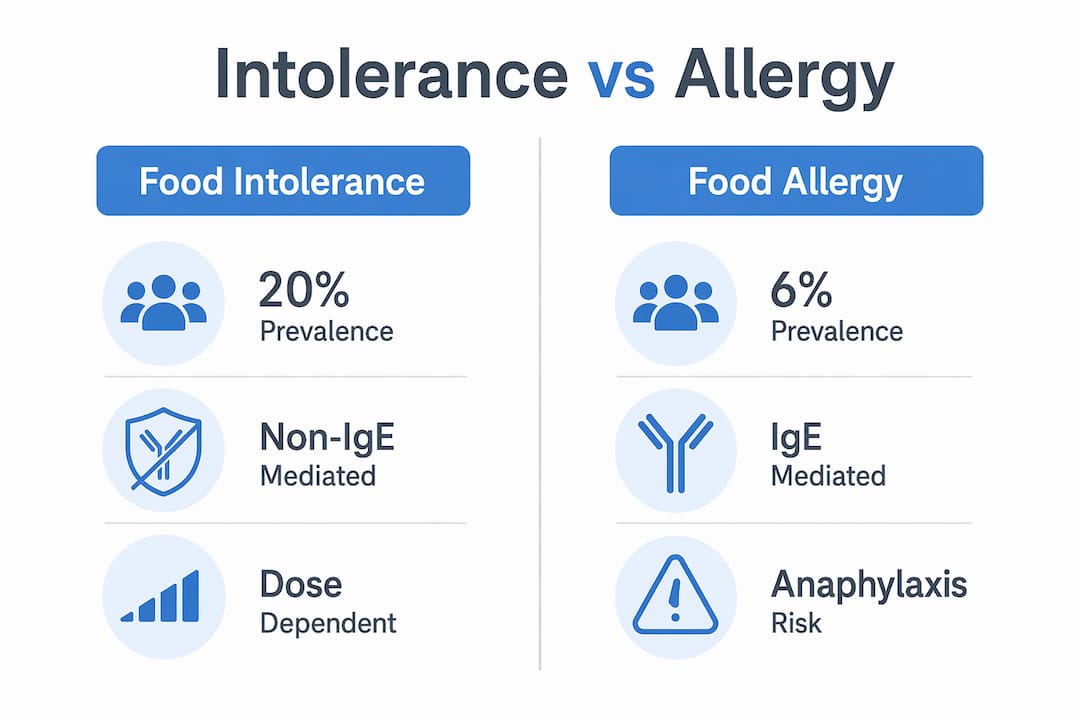
The table below compares food intolerance and food allergy prevalence in the UK to clarify the scale of each condition.
| Condition | Estimated UK prevalence | Immune mechanism | Severity |
|---|---|---|---|
| Food intolerance | ~20% of population | Non-IgE, dose-dependent | Uncomfortable, rarely life-threatening |
| Food allergy | ~2% of adults, ~5–8% of children | IgE-mediated | Potentially life-threatening |
Food allergy is an IgE-mediated immune response and can trigger anaphylaxis. Food intolerance produces slower, less acute symptoms such as bloating, headaches, and fatigue. Confusing the two leads to either under-treatment of genuine allergies or unnecessary dietary restriction based on misdiagnosis.
Demographically, women report food intolerance symptoms more frequently than men, and urban populations show higher diagnosis rates, partly because of greater access to healthcare and nutrition services. The UK intolerance analysis 2026 also shows growing interest in personalised nutrition, with food intolerance trends now influencing supermarket product ranges, restaurant menus, and NHS dietitian referral volumes.

How is food intolerance diagnosed in the UK in 2026?
The gold standard for diagnosing food intolerance is the supervised elimination-and-reintroduction diet. This is not a shortcut process. The evidence-based protocol involves a 2–6 week elimination phase, followed by gradual reintroduction of individual foods every 3–4 days, with detailed symptom logging throughout. A HCPC-registered dietitian oversees the process to avoid false positives and unnecessary restrictions.
The table below compares recommended and discouraged diagnostic approaches in the UK.
| Testing method | Recommended? | Why |
|---|---|---|
| Supervised elimination diet | Yes | Only clinically validated method endorsed by NHS and BSACI |
| Coeliac antibody blood test | Yes | Identifies autoimmune coeliac disease before dietary changes |
| IgG antibody testing | No | Not validated; reflects food exposure, not intolerance |
| Hair analysis testing | No | No scientific basis for intolerance diagnosis |
| Kinesiology or Vega testing | No | No clinical evidence; discouraged by BSACI and NICE |
IgG antibody and hair analysis tests are not validated for food intolerance diagnosis under UK clinical guidelines from BSACI and NICE. Positive IgG results generally reflect how often you eat a food, not whether it causes symptoms. Acting on these results can lead to cutting out nutritious foods without any clinical justification.
The elimination-reintroduction diet supervised by a HCPC-registered dietitian remains the only clinically recommended diagnostic method endorsed by NHS-aligned guidelines. This approach produces personalised management plans grounded in your actual symptom responses, not laboratory markers that lack clinical meaning.
Pro Tip: Before spending money on any private intolerance test, ask your GP for a coeliac antibody blood test first. Coeliac disease must be ruled out before you remove gluten from your diet, because cutting gluten early invalidates the test result.
What practical steps should you take if you suspect a food intolerance?
A clear, step-by-step approach reduces the risk of misdiagnosis and unnecessary dietary restriction. Here is the process recommended by UK clinical standards in 2026.
-
Book a GP appointment first. Your GP can rule out conditions such as coeliac disease, inflammatory bowel disease, and thyroid disorders, all of which produce symptoms that overlap with food intolerance.
-
Request a coeliac antibody blood test. This is a simple blood test available on the NHS. Do not reduce your gluten intake before the test, as this produces a false negative result.
-
Ask for a referral to a HCPC-registered dietitian. NHS dietitian consultations are free via GP referral, while private sessions cost approximately £60–£120 per appointment. Both routes provide access to supervised elimination diet protocols.
-
Begin the elimination phase. Remove the suspected food or food group for 2–6 weeks. Keep a daily symptom diary recording what you eat, when symptoms occur, and their severity.
-
Reintroduce foods systematically. Reintroduce one food every 3–4 days. This controlled pace allows you to identify specific triggers without confounding results.
-
Follow your dietitian’s personalised plan. HCPC-registered dietitians apply detailed symptom tracking and carefully designed elimination protocols to avoid false positives and unnecessary food restrictions.
Pro Tip: Keep your symptom diary digital if possible. Apps such as the NHS-recommended Cara Care or a simple notes app make it far easier to spot patterns across weeks of data than a paper diary does.
Avoid purchasing unregulated home test kits that claim to identify intolerances through IgG panels or hair samples. These tests are not endorsed by the NHS, BSACI, or NICE, and their results can send you down a path of unnecessary food avoidance that harms your nutritional status.
How do UK regulations and public awareness shape intolerance management?
The regulatory and social context around food intolerance in the UK has shifted considerably, and understanding it helps you make better decisions about your health.
UK law mandates food businesses to declare 14 major allergens but does not require specific food intolerance labelling. This regulatory gap means that while allergy safety has improved significantly, people managing intolerances must still read labels carefully and ask questions when eating out. The 14 allergens include milk, gluten-containing cereals, eggs, and soya, which happen to overlap with the most common intolerance triggers. That overlap provides some practical benefit, even if the legal intent is allergy-focused.
Public awareness of food intolerance has grown sharply, driven by social media, online health communities, and increased media coverage of gut health. This awareness has a positive side: more people seek diagnosis earlier. It also has a negative side: misleading claims around IgG intolerance testing have increased demand for unvalidated tests, causing confusion and unnecessary dietary restriction across the UK.
The retail sector has responded to rising intolerance awareness with expanding free-from product ranges. Supermarkets including Tesco, Sainsbury’s, Marks and Spencer, and Waitrose now stock dedicated free-from aisles. This commercial response reflects genuine consumer demand, though it also reinforces the perception that intolerance is more widespread than clinical data confirms.
Key factors shaping the 2026 picture include:
- Growing NHS dietitian referral volumes for gut-related conditions, particularly IBS
- Increased integration of intolerance awareness into workplace wellbeing programmes
- Research into the gut microbiome informing new dietary interventions
- Continued pressure on regulators to clarify intolerance labelling requirements
Food intolerance trends influence food retail and healthcare sectors, with personalised nutrition becoming a mainstream health priority rather than a niche interest. This shift means more resources, better products, and greater professional awareness are available to you than at any previous point.
Key takeaways
Food intolerance in the UK is a non-IgE-mediated, dose-dependent condition affecting around 20% of the population, and the only clinically validated diagnostic method remains the supervised elimination-and-reintroduction diet.
| Point | Details |
|---|---|
| Intolerance vs allergy | Food intolerance is dose-dependent and non-IgE-mediated; allergy is IgE-driven and potentially life-threatening. |
| UK prevalence | Approximately 20% of the UK population experiences food intolerances, with dairy and gluten most common. |
| Gold standard diagnosis | A 2–6 week supervised elimination diet followed by systematic reintroduction is the only NHS-endorsed method. |
| Tests to avoid | IgG antibody and hair analysis tests are not validated and can cause unnecessary dietary restriction. |
| Regulatory gap | UK law covers 14 allergen declarations but does not mandate intolerance-specific labelling on food products. |
Why I think the UK is getting intolerance testing badly wrong
From where I sit, the biggest problem in UK food intolerance management is not a lack of information. It is an excess of the wrong kind. Every week, people spend money on IgG panels and hair analysis kits, receive long lists of foods to avoid, and then spend months eating a restricted diet that was never clinically justified. I have seen this pattern cause real harm, from nutritional deficiencies to anxiety around eating.
The supervised elimination diet is not glamorous. It takes patience, professional support, and a willingness to track your symptoms carefully over weeks. But it is the only method that actually tells you what your body is responding to. The UK clinical standards for diagnosis exist for good reason, and they are grounded in decades of evidence.
What I find encouraging about 2026 is that the conversation is maturing. More GPs are aware of the distinction between allergy and intolerance. More dietitians are accessible, both via the NHS and privately. And more people are asking better questions before they hand over money for a test. My honest advice: start with your GP, get the coeliac test done, and work with a registered dietitian before you change your diet based on any commercial test result. That sequence protects your health and your wallet.
— Rob
How Ukfoodintolerance supports your intolerance journey
If you are trying to make sense of your symptoms and want a starting point before or alongside professional consultation, Ukfoodintolerance offers a practical route forward.
Ukfoodintolerance provides non-invasive, at-home testing using bio-resonance technology, covering over 900 food and environmental items. The process is simple: collect a small hair sample at home, post it to the UK-based laboratory, and receive a detailed digital report within 48–72 hours. These reports are designed to support your understanding of potential sensitivities and work well alongside an elimination diet supervised by a dietitian. Explore the full range of food intolerance tests to find the option that fits your needs and budget.
FAQ
What is the difference between food intolerance and food allergy?
Food allergy is an IgE-mediated immune response that can be life-threatening, while food intolerance is a non-IgE, dose-dependent reaction causing uncomfortable but rarely dangerous symptoms. Distinguishing between the two is critical for choosing the right diagnostic pathway.
How many people in the UK have a food intolerance?
Approximately 20% of the UK population experiences food intolerances, with dairy, gluten, eggs, and soy among the most commonly reported triggers.
Are IgG food intolerance tests reliable?
No. IgG testing is not recommended by BSACI or NICE because positive results reflect food exposure rather than intolerance. Acting on these results can lead to unnecessary and potentially harmful dietary restrictions.
What is the recommended way to diagnose food intolerance in the UK?
The only clinically endorsed method is a supervised elimination-and-reintroduction diet managed by a HCPC-registered dietitian. NHS dietitian consultations are available free via GP referral, with private appointments costing approximately £60–£120.
Does UK law protect people with food intolerances?
UK law requires food businesses to declare 14 major allergens but does not mandate intolerance-specific labelling. This means people managing intolerances must read labels carefully, as legal protections are primarily designed for allergy sufferers.










Leave a Reply
Want to join the discussion?Feel free to contribute!