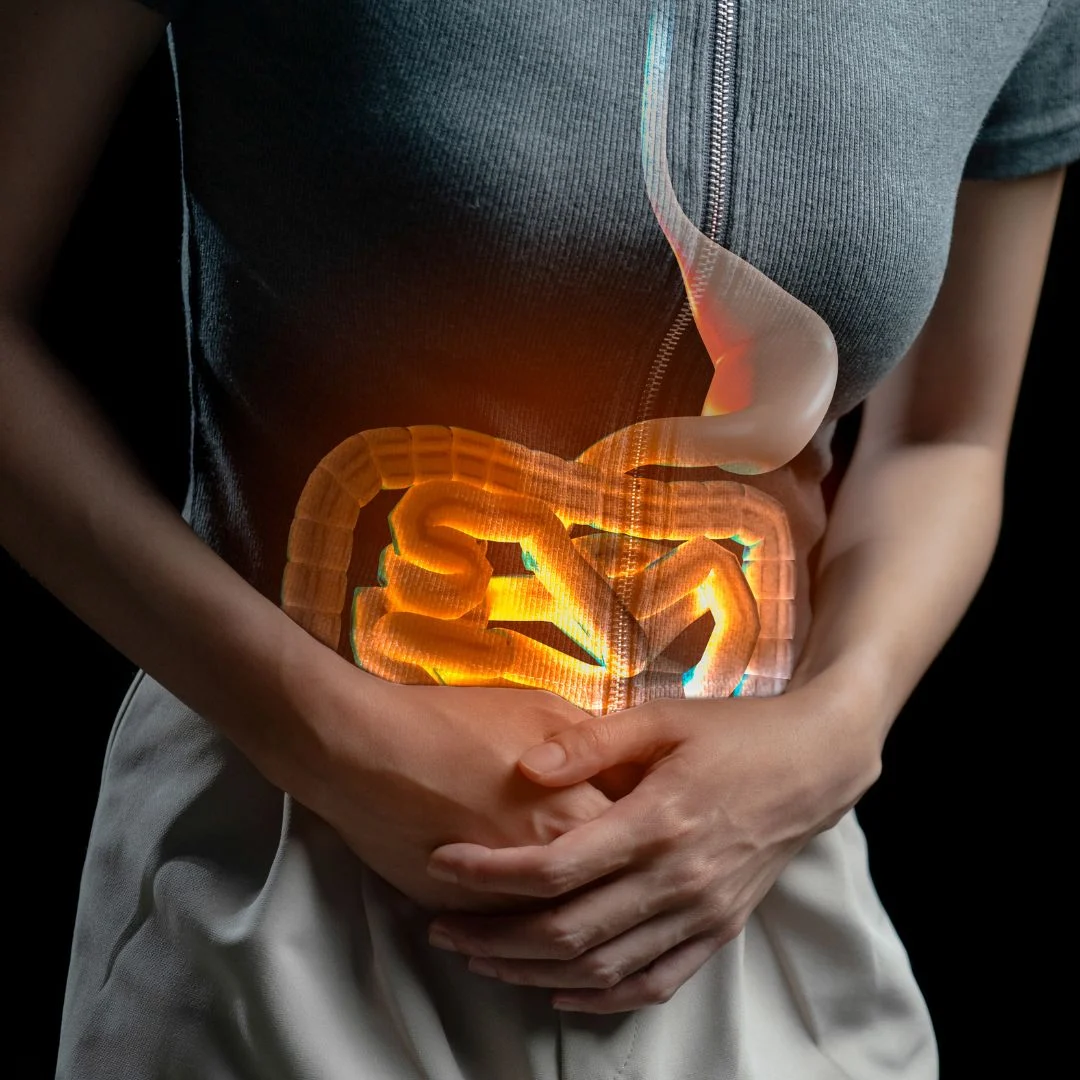
Stomach pain after eating is most often caused by indigestion, trapped wind or eating too much, too quickly. Common food triggers include fatty, fried and spicy food, onions and garlic, beans and lentils, wheat, milk, coffee, alcohol and fizzy drinks.
If the pain keeps following the same foods, a food intolerance may be part of the picture. The good news is that a pattern is usually easy to spot once you start looking for it, and small changes often make a big difference.
Why does your stomach hurt after eating?
Eating sets off a lot of activity. Your stomach stretches and releases acid, and your gut muscles squeeze food along. Anything that makes that harder or slower can cause discomfort.
- Indigestion. A burning or full, heavy feeling in the upper tummy, often after large, rich or spicy meals. If it comes with heartburn, our guide to reflux after meals has more on triggers and simple changes.
- Trapped wind. Sharp or crampy pain that moves around, eased by passing wind. It usually comes from food being fermented by gut bacteria, or from air you swallow while eating.
- Constipation. When things are moving slowly, a meal can bring on cramping lower down.
- How you eat. Eating fast, eating late, big portions and lying down soon after a meal all add to the load.
- Stress. Your gut and brain are closely linked, and many people notice more stomach pain during stressful weeks.
The NHS stomach ache page covers the wider list of causes, including the less common ones.
Which foods commonly cause stomach pain?
| Food or drink | Why it can hurt | Worth trying |
|---|---|---|
| Fatty, fried and creamy food | Fat slows down how quickly your stomach empties, so meals sit heavily | Smaller portions, grilled rather than fried |
| Spicy food | Can irritate the stomach and bring on indigestion | Milder versions, or spice on the side |
| Onions and garlic | Contain fructans, which ferment and make gas | Garlic-infused oil, chives or spring onion greens |
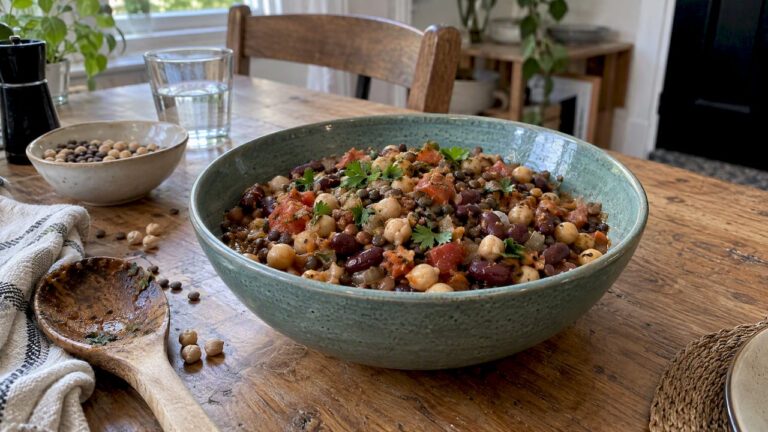
| Beans, lentils and chickpeas | Contain sugars your gut can’t fully digest | Smaller portions, rinsed tinned pulses |
| Wheat (bread, pasta, pastry) | Also high in fructans, and a common trigger for sensitive guts | Sourdough, oats, rice or potatoes for a week |
| Milk, cream and soft cheese | Lactose can cause cramps and wind if you don’t digest it well | Lactose-free milk, hard cheese, yoghurt |
| Coffee and alcohol | Both can irritate the stomach lining and speed up the gut | Cut back for a week and compare |
| Fizzy drinks and sweeteners | Add gas, and some sweeteners have a laxative effect | Still water, fewer “sugar-free” sweets |
Several of these have their own guides, including garlic and onion intolerance, lactose intolerance vs dairy sensitivity and gas after beans and lentils.
If wheat seems to be a trigger, rule out coeliac disease before you cut it out. Coeliac disease is diagnosed with a GP blood test, which only works while you’re still eating gluten. Our guide to wheat sensitivity vs coeliac disease explains why.
Does the timing of the pain tell you anything?
Timing isn’t a diagnosis, but it’s a useful clue.
- During or soon after eating: often the stomach itself, such as indigestion, reflux or simply a very full stomach.
- A few hours later: cramps and wind lower down are more likely to come from food fermenting in the gut, which is typical of foods like onions, beans, wheat and milk.
- The next day: slower reactions are the hardest to link to a food, which is why writing things down helps so much.
What can you do to ease stomach pain after eating?
- Eat smaller meals more often, rather than two big ones.
- Slow down and chew well. Put your fork down between mouthfuls.
- Leave a few hours between your last meal and bedtime.
- Sit upright for a while after eating, or go for a gentle walk.
- Try peppermint tea or a warm (not hot) heat pad on your tummy for crampy pain.
- Swap fizzy drinks for still water for a week.
- Change one thing at a time, so you know what actually helped.
How do you find your own trigger foods?
Start with two weeks of notes. Write down what you eat and drink, when, and any pain, with how strong it was and when it started. Our food and symptom diary guide includes a free template.
If one or two foods keep turning up before your worst days, try removing just those for two to four weeks, then bring them back one at a time. How to do an elimination diet properly walks you through it, so you don’t cut out more than you need to.
When to speak to a GP
- The pain is severe, getting worse or keeps coming back.
- You’re losing weight without trying, or being sick a lot.
- You notice blood in your sick or poo, or your poo is black.
- You have difficulty swallowing.
Sudden, severe stomach pain needs urgent help: call 999 or go to A&E. If eating ever causes swelling of your lips, mouth or throat, hives or difficulty breathing, that could be an allergic reaction and needs urgent medical help. Intolerance testing is not a substitute for allergy testing.
Where hair sample testing fits
If you’ve tried the simple changes and still can’t see a clear pattern, testing can give you a starting point. Our Ultimate Intolerance Test tests 1,100 items, including foods, drinks and E-numbers, and groups them into high, medium and low response. You can see the layout in our example report.
You’d then use the report to decide which foods to try removing first, with the elimination plan and food diary that come with it. If you only want to look at foods, the Core Intolerance Test covers 500 food items.
There’s no kit to wait for. Your instructions arrive by email straight away, and your report follows within 3–5 working days of your sample arriving, or 48 working hours with priority. Testing is a complementary approach, not a medical diagnosis, and it doesn’t test for allergies or coeliac disease.
Frequently asked questions
Why does my stomach hurt every time I eat?
Pain after every meal often comes from how you eat, such as large portions, eating quickly or eating late, as well as from what you eat. It can also mean a common ingredient, such as wheat, onion or milk, is in most of your meals. If it happens every day, keep a food diary and speak to a GP.
How long does stomach pain after eating usually last?
Indigestion and trapped wind usually ease within a few hours as your meal moves through. Cramps from foods that ferment can last into the evening. Pain that lasts for days, keeps coming back or is severe should be checked by a GP.
Can a food intolerance cause stomach pain?
Yes. Cramps, wind and bloating a few hours after eating are among the most common signs people notice with a food intolerance. The key sign is that the pain follows the same foods again and again.
What should I eat when my stomach hurts after meals?
Plain, simple meals are usually easiest: rice, potatoes, oats, eggs, chicken or fish, and cooked vegetables like carrots. Keep portions small, and go easy on fatty, spicy and fizzy things until it settles.
This guide is general wellness information, not medical advice. Our test uses bioresonance, a complementary (CAM) method; it does not diagnose allergies, coeliac disease or any medical condition. Speak to a GP if you have severe or ongoing symptoms.