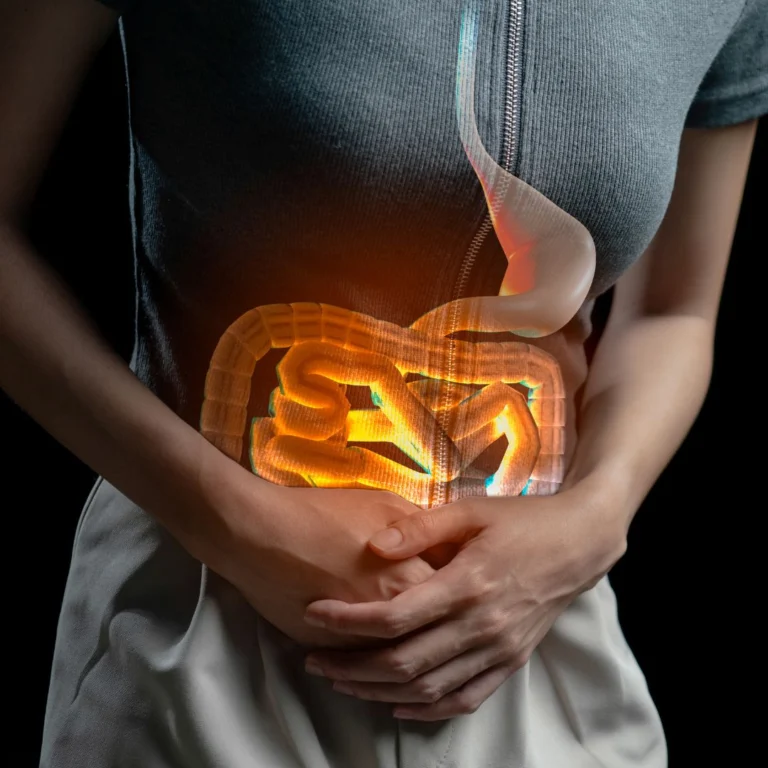
Bloating after eating is usually caused by gas building up in your gut, either from food being fermented by gut bacteria or from air you swallow while eating. The most common food triggers are wheat, onions and garlic, beans and lentils, some fruits, milk, fizzy drinks and sweeteners, and eating large meals quickly makes it worse.
Most bloating is uncomfortable rather than worrying. The useful question is whether it follows a pattern: the same foods, the same time of day, or the same kind of meal. Once you can see the pattern, you can change it.
Why do you get bloated after eating?
Your small intestine absorbs most of what you eat. Some carbohydrates and fibres are not fully absorbed there, so they travel on to the large intestine, where bacteria ferment them and release gas. In most people this is normal and barely noticed. In a sensitive gut, the same amount of gas causes a tight, swollen feeling, wind and sometimes cramps.
Other common contributors include:
- Swallowed air from eating fast, talking while eating, fizzy drinks and chewing gum.
- Large or late meals, which give your gut more to process at once.
- Constipation, which slows everything down and lets gas build up.
- Hormones. Many people feel more bloated around their period.
The NHS bloating page also lists food intolerance, coeliac disease and irritable bowel syndrome among common causes.
Which foods most often cause bloating?
These are the foods people most often link with bloating. You are unlikely to react to all of them, so treat this as a list to check rather than a list to avoid.
| Food group | Examples | Why it can bloat |
|---|---|---|
| Wheat | Bread, pasta, cereals, crackers | Contains fermentable carbohydrates (fructans) |
| Onions and garlic | Sauces, soups, ready meals, stock | Rich in fructans, even in small amounts |
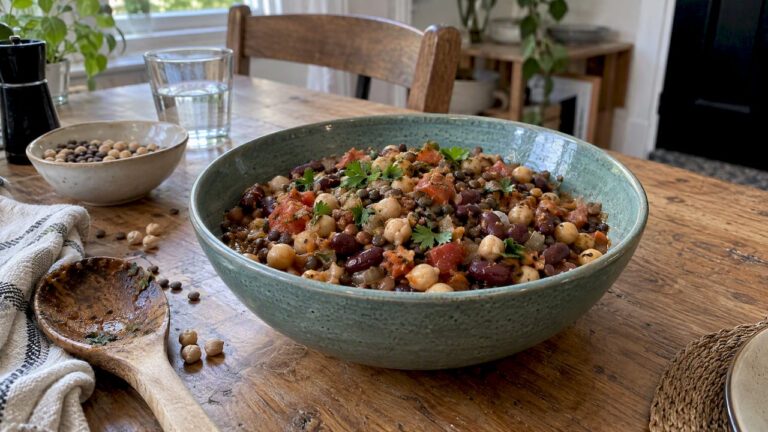
| Beans and lentils | Baked beans, chickpeas, kidney beans, lentils | Contain sugars our gut cannot digest, so bacteria ferment them |
| Some fruits | Apples, pears, mango, dried fruit | Higher in fructose or sorbitol |
| Milk and soft dairy | Milk, yoghurt, soft cheese, ice cream | Lactose is poorly digested by many adults |
| Brassicas | Cabbage, sprouts, cauliflower, broccoli | Fermentable fibre and sulphur compounds |
| Sweeteners and fizzy drinks | Sugar-free gum and sweets, diet drinks, beer | Sugar alcohols ferment; bubbles add gas directly |
Many of these share one feature: they are high in FODMAPs, a group of fermentable carbohydrates. Our guide to FODMAPs and why they cause bloating explains the groups in plain English. If beans are your main problem, read gas after beans and lentils, and if milky drinks or cheese seem to set you off, see dairy intolerance symptoms and triggers.
If you suspect wheat or gluten, check for coeliac disease before changing your diet. It is diagnosed with a GP blood test while you are still eating gluten, and Coeliac UK advises keeping gluten in your diet until testing is done.
Is it the food or the way you eat?
Often it is both. The same meal can feel fine on a calm Sunday and leave you bloated when eaten at your desk in ten minutes.
- Eat more slowly and chew well. It cuts down swallowed air and gives your stomach time to signal that it is full.
- Have smaller, more regular meals rather than one or two large ones.
- Leave a few hours between your evening meal and bed.
- Swap fizzy drinks for still water, and go easy on chewing gum.
- Sit upright while you eat rather than slouching on the sofa.
How can you tell if bloating is a food intolerance?
A few clues point towards a food rather than general digestion:
- Bloating follows the same food or meal type on several occasions.
- It starts a few hours after eating and builds through the day.
- It is worse when you eat more of that food, or eat it twice in a day.
- It eases on days when you happen not to eat it.
If several of these ring true, a short food and symptom diary is the next step. Note what you eat, when, and how bloated you feel on a 0 to 10 scale. Two weeks is usually enough to see patterns. Then remove one or two suspects for a few weeks and bring them back one at a time.
Breakfast is often a good place to start because people tend to eat the same thing every day. Our guide to breakfast foods that cause bloating has easy swaps, and if porridge is part of your routine, read about oats and bloating after porridge.
What can you try to reduce bloating?
- Change one thing at a time. If you swap five foods at once, you will not know which one helped.
- Build fibre up slowly. A sudden jump in fibre can make bloating worse. Increase it gradually and drink enough fluid.
- Soak, rinse and cook pulses well, and start with small portions.
- Keep moving. A short walk after meals helps gas move through.
- Try peppermint tea after meals. Many people find it soothing.
- Ask a pharmacist about over-the-counter remedies for wind and bloating.
For a wider look at symptoms that often come with bloating, see our food intolerance symptoms checklist.
When should you see a GP about bloating?
- You feel bloated regularly, or changing your diet has not helped.
- Bloating comes with weight loss you cannot explain or blood in your poo.
- You have a lump or swelling in your tummy, or bloating that does not go away.
- Bloating comes with severe or sudden tummy pain, vomiting or a high temperature (get urgent advice from 111).
If your bloating comes with cramps or pain, our guide to stomach pain after eating covers the common causes, and Christmas bloating has tips for the biggest meal of the year.
Where hair sample testing fits
If your diary shows bloating after lots of different meals, it can be hard to know where to start. Testing gives you a starting point: a report that shows which items had the strongest response, so you can decide what to try removing first.
The Ultimate Intolerance Test tests 1,100 items, including foods and drinks, E-numbers and sweeteners, alongside non-food items. Your report groups them into high, medium and low response and comes with a 6–8 week elimination plan and a printable food diary, so you can test the high-response items one at a time.
You order online and post a few strands of hair to our UK lab. There is no kit to wait for, and your report arrives within 3–5 working days of your sample arriving, or 48 working hours with priority. It is a wellness test rather than a medical diagnosis, so use it alongside your diary and your reintroductions.
Frequently asked questions
How long does bloating after eating last?
Bloating from a meal usually eases within a few hours as gas moves through. If the trigger was a food you are sensitive to, it can linger into the evening or next day. Bloating that is there most of the time, regardless of what you eat, is worth discussing with a GP.
Why am I bloated after every meal?
Bloating after every meal often points to how you eat as well as what you eat, such as eating quickly, large portions or fizzy drinks. It can also mean a common ingredient, like wheat, onion or milk, appears in most of your meals. A food diary helps you spot an ingredient that keeps turning up.
What drink helps with bloating?
Still water and peppermint tea are gentle choices that many people find helpful. It is worth cutting back on fizzy drinks, beer and drinks with sweeteners, which can add gas. If coffee seems to upset your stomach, try reducing it for a week and see what changes.
Is bloating a sign of food intolerance?
It can be, especially if it reliably follows the same food a few hours after eating. But bloating is very common and also comes from eating habits, constipation, hormones and gut conditions. Looking for a repeated pattern is the best way to tell.
This guide is general wellness information, not medical advice. Our test uses bioresonance, a complementary (CAM) method; it does not diagnose allergies, coeliac disease or any medical condition. Speak to a GP if you have severe or ongoing symptoms.