
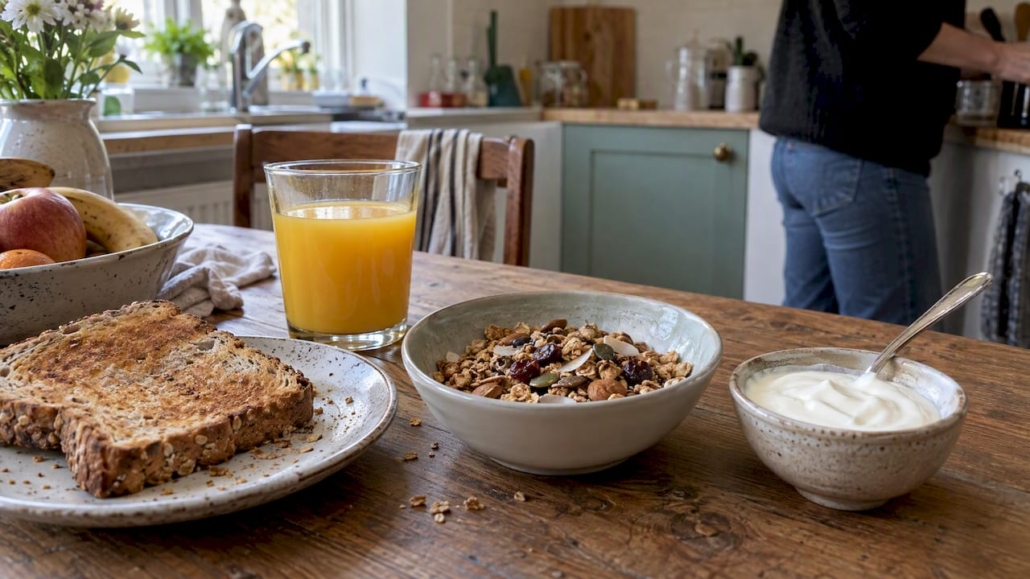
If you feel tight and puffy within an hour of breakfast, the cause is often a handful of everyday foods: wheat cereals and bread, high-fibre muesli and granola, milk containing lactose, and fruits such as apples and pears. These foods are not “bad”. They contain carbohydrates and fibre that some guts ferment into gas more readily than others. The good news is that a few swaps and a short, structured food diary can usually show you which ones matter for you.
This guide covers the usual suspects, why they cause trouble, what to eat instead, and how to work out your personal triggers without cutting out half your diet.
TL;DR
- The most common breakfast triggers are wheat-based cereals and bread, muesli, granola, lactose-containing dairy, apples, pears and dried fruit.
- Bloating happens when gut bacteria ferment carbohydrates and fibre that are not fully absorbed, which produces gas.
- Gentler options include porridge oats, rice-based cereals, lactose-free milk or yoghurt, bananas, grapes and strawberries.
- How you eat matters too: smaller portions, slower chewing and increasing fibre gradually all help.
- See your GP if bloating is regular, persists despite diet changes, or comes with weight loss or blood in your poo.
Table of Contents
- Why breakfast can leave you bloated
- The usual suspects at the breakfast table
- Which breakfast cereal does not cause bloating?
- What to eat in the morning to reduce bloating
- An elimination diet for breakfast: how to find your own triggers
- Our perspective: start simple, then narrow down
- Want a shorter list of suspects?
- When bloating needs a professional
- FAQ
- Sources
Why breakfast can leave you bloated
The NHS says bloating is most commonly caused by a lot of gas in the gut. That gas can come from food and drink, constipation, food intolerance, coeliac disease or irritable bowel syndrome (IBS). So the same bowl of cereal can be fine for one person and uncomfortable for another.
The main mechanism is fermentation. FODMAPs are fermentable carbohydrates that can cause bloating when they are not fully absorbed in the small intestine and are then fermented by bacteria in the large intestine. Fibre works in a similar way. Guts UK explains that fibre from grains, nuts and seeds is partly or fully broken down by gut bacteria, which can produce gas. In people with certain gut conditions, that can mean bloating, wind and tummy pain.
Breakfast is a particularly common time to notice it. Many classic breakfasts stack several of these ingredients in one bowl: wheat, dairy, dried fruit, seeds and fruit juice. If you want to understand the wider picture, our guide to FODMAP sensitivity explains the symptoms and causes in more detail.
The usual suspects at the breakfast table
Here is a quick overview of the foods most often linked with morning bloating, and a gentler alternative for each. Individual tolerance varies, so treat this as a list of things to check, not things to fear.
| Breakfast food | Why it can cause bloating | Gentler swap to try |
|---|---|---|
| Wheat cereals, toast, bagels | Wheat is a high-FODMAP food | Porridge oats, rice-based cereal, spelt sourdough |
| Muesli, granola, wholegrain cereal | High in resistant starch and fibre | Porridge, or lower-fibre cornflakes-style cereals |
| Milk, yoghurt, soft cheese | Lactose is poorly absorbed by some people | Lactose-free milk or yoghurt |
| Apples, pears, dried fruit | Fermentable sugars and sorbitol | Bananas, grapes, strawberries |
| Seeds and nut mixes | Fibre that gut bacteria ferment | Small amounts, introduced slowly |
| Sugar-free products | Sweeteners such as sorbitol | Regular versions in small amounts |
Wheat cereals and bread
The Southampton patient leaflet on a gentle low FODMAP diet lists wheat, in bread and cereals, among the common high-FODMAP foods to limit during the restriction phase. That covers toast, bagels, crumpets and many shop-bought cereals. If you notice bloating mostly after toast or a cereal bowl, wheat is a sensible first suspect. Pasta is another wheat food that regularly causes the same problem later in the day, which we look at in why pasta often causes bloating.
The same leaflet lists 100% spelt sourdough bread among its lower-FODMAP alternatives, along with rice-based cereals.
Muesli, granola and wholegrain cereals
Healthy-looking breakfasts are often the biggest culprits. Cambridge University Hospitals says resistant starch is fermented by bacteria in the large bowel and naturally produces gas, which in a sensitive bowel can cause wind, bloating and abdominal pain. Its list of breakfast cereals high in resistant starch includes muesli, wholegrain cereals and granola.
So, can granola cause bloating? Yes, it can. It also usually combines oats, nuts, seeds and dried fruit, and BBC Good Food notes that a typical 45g serving provides about 4g of fibre, though recipes and brands vary. Dried fruit adds another layer: the NHS lists dried fruit and foods containing sorbitol among foods that can make you pass wind.
If you love granola, try a smaller portion (a couple of tablespoons over yoghurt rather than a full bowl) and see how you feel.
Milk, yoghurt and other dairy
Lactose is the sugar in milk. Some people do not break it down well, and it then ferments in the gut. The Southampton leaflet lists lactose-containing dairy among high-FODMAP foods, and suggests lactose-free milk or yoghurt as breakfast alternatives.
One caution: if you have coeliac disease or suspect it, speak to a healthcare professional before cutting out lactose. Coeliac UK notes that lactose intolerance is usually temporary in coeliac disease, because once the gut heals on a gluten-free diet, lactose digestion usually returns to normal.
Apples, pears and dried fruit
Fruit is not off limits, but the type matters. Apples and pears are high-FODMAP fruits. Bananas, grapes and strawberries appear on the lower-FODMAP breakfast list. A sliced banana on porridge is a simple, usually gentle swap for a chopped apple or a handful of raisins.
Seeds, nuts and added fibre
Does eating seeds cause gas? They can, because they are a source of fermentable fibre. The key is going slowly. Oxford University Hospitals advises starting linseeds at 1 teaspoon a day and chia seeds at 1 tablespoon a day, increasing slowly and taking at least 150ml of fluid with each tablespoon, so your gut can adjust.
Sugar-free products
Sugar-free gum, mints and some “diet” yoghurts use sweeteners that can add to gas. The British Dietetic Association (BDA) suggests limiting sugar-free mints and chewing gum, along with beans, pulses, Brussels sprouts and cauliflower, if bloating and wind are a problem. Check labels on flavoured yoghurts and breakfast bars.
Which breakfast cereal does not cause bloating?
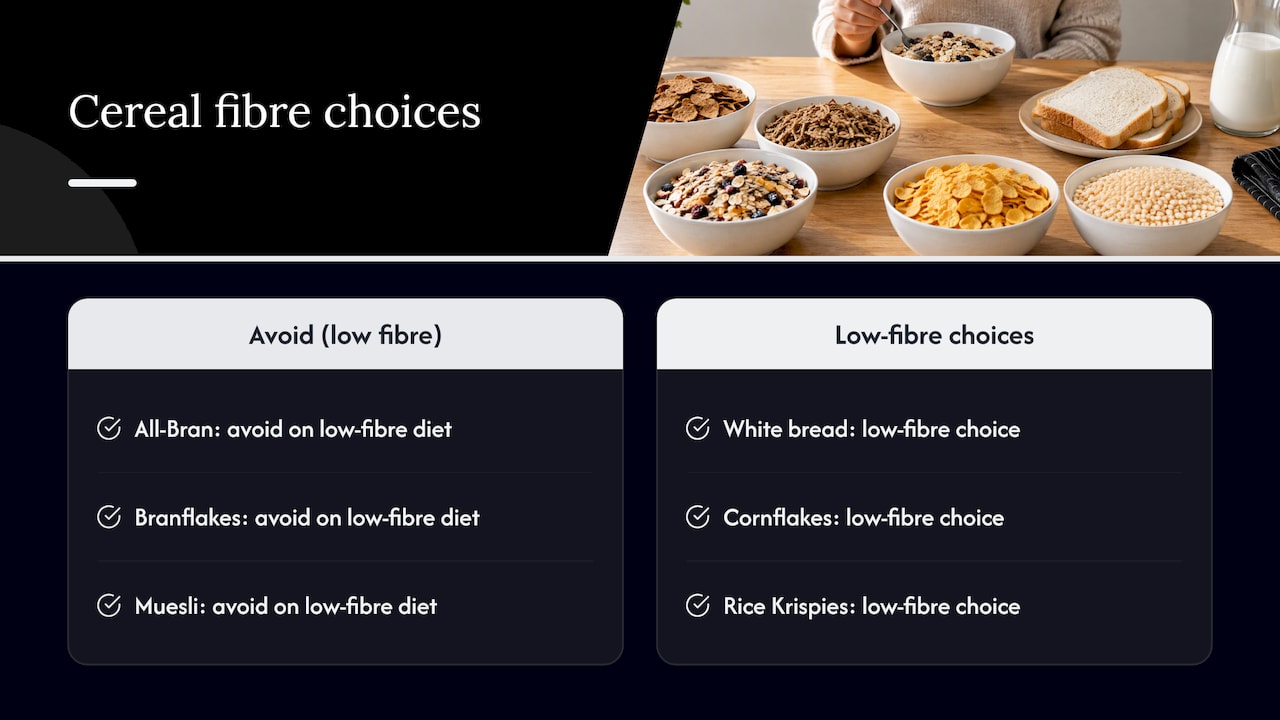
There is no single cereal that suits everyone, but some are easier on a sensitive gut than others. A Leeds Teaching Hospitals leaflet on reducing fibre lists All Bran, Branflakes and muesli as foods to avoid on a low-fibre diet, and white bread, Cornflakes and Rice Krispies as low-fibre choices. Low fibre is not the goal for everyone, and you should not stay on it long term without advice. But if a high-fibre cereal leaves you bloated, a gentler one can help you test whether fibre is the issue.
For porridge, the picture is mixed. The BDA lists oats as a low-FODMAP option, and a BDA fact sheet hosted by NHS Scotland says oats may be useful for IBS-related bloating and wind. Even so, some people do react to oats. If that sounds like you, read our piece on bloating after oats for causes and checks.
What to eat in the morning to reduce bloating
The answer is partly what, and partly how. The BDA’s simple steps for bloating include eating regular, smaller meals, eating in a calm environment, chewing thoroughly and taking time to relax. The NHS gives similar advice: smaller, more frequent meals and avoiding lots of gas-producing foods.
Some gentle breakfast ideas, drawn from the lower-FODMAP lists above:
- Porridge made with lactose-free milk or water, topped with sliced banana
- Rice-based cereal with lactose-free milk and a few strawberries
- Lactose-free yoghurt with grapes
- Spelt sourdough toast with a simple topping
- Eggs with a slice of toast, if wheat is not an issue for you
A word on fibre: cutting it all out is rarely the answer. A sudden jump in fibre can worsen bloating, and the BDA suggests increasing fibre gradually while drinking enough fluid. If cereals or grains trigger symptoms, the NHS suggests getting your fibre from fruit and vegetables instead. For more everyday habits that support your gut, see our simple, evidence-based steps for digestive health.
An elimination diet for breakfast: how to find your own triggers
If swapping a few foods is not enough, a structured approach helps. The idea of an elimination diet is simple: remove suspected foods for a limited time, then bring them back one at a time and watch for symptoms. Breakfast is a good place to begin because it is the meal people eat most repetitively, so changes are easy to track.
- Keep a diary for one to two weeks. Note what you eat, portion sizes, the time, and any bloating, wind or discomfort. Patterns often appear quickly.
- Pick one or two suspects. Wheat and lactose are common first choices, as the research above suggests.
- Swap them at breakfast. Use the gentler alternatives in the table: oats, rice-based cereal, lactose-free dairy, bananas.
- Give it a fair run. Keep everything else steady so you can see what changes.
- Reintroduce one food at a time. The Southampton guidance describes reintroducing foods one at a time over several days to monitor symptoms, so you do not restrict your diet longer than necessary. If you need a pattern for introducing a food, this guide on how to introduce new foods safely shows the same one-at-a-time principle.
- Get professional help for strict diets. Low FODMAP diets are best followed with a dietitian. Our elimination diet checklist and guide to the food elimination process can help you stay organised.
Do not cut out food groups for children, or if you are pregnant, underweight or have a medical condition, without speaking to a GP or dietitian first. And if you suspect coeliac disease, do not remove gluten before you have been tested, because that can affect the result.
If the diary leaves you with too many possibilities, our guide to identifying food triggers and tips for managing food triggers give more practical examples.
Our perspective: start simple, then narrow down
At UK Food Intolerance, we hear the same story a lot: someone has eaten a “healthy” breakfast for years, feels unwell afterwards, and cannot tell which part of it is the problem. Our advice is to begin with the basics. Eat smaller portions, chew well, change one thing at a time and write it down. Many people find their answer that way, and it costs nothing.
Where people get stuck is when several foods seem to be involved at once. That is where we can help. Our home tests use bio-resonance analysis of a hair sample, processed at a UK laboratory, and are designed to screen for possible food sensitivities so you have a shorter list to work from. We are open about what this is: a screening tool to guide an elimination diet, not a medical diagnosis, and not a replacement for testing for coeliac disease or for medical advice. You can read about our research and methodology if you want to see how we explain the method and its limits.
We would always rather you feel in control of the process than chasing a perfect answer. Use any results as a starting point, introduce changes slowly, and keep talking to your GP or dietitian if symptoms continue.
— Rob
Want a shorter list of suspects?
If you have tried swapping foods and still feel bloated, our Ultimate Plus Intolerance Test is a simple way to screen for food and environmental sensitivities from home. It costs £140.99 one-off per person. You collect a small hair sample, send it to our UK laboratory and receive a digital report you can use to plan your elimination diet. You can see the full range, including smaller panels, on our tests page.

The process is straightforward, and our step-by-step sample collection guide shows what to expect. When your report arrives, our guide to interpreting intolerance results explains how to turn it into a practical breakfast plan. You can order the Ultimate Plus test here whenever you are ready.
When bloating needs a professional
Diet changes are a sensible first step, but they are not always enough. The NHS says to see a GP if you feel bloated regularly, if you have tried changing your diet but keep feeling bloated, or if bloating comes with unintentional weight loss or blood in your poo. A GP may refer you to an NHS dietitian if general tips are not helping.
It is also worth knowing that bloating is one of the symptoms used to assess IBS, which the BDA says affects around one in five adults. Our page on IBS and food intolerance explains how the two can overlap. Seeing your GP first is the safest way to rule out other causes before you change your diet significantly.
FAQ
What should I eat in the morning to reduce bloating?
Choose smaller portions of gentler foods, such as porridge oats, rice-based cereal, lactose-free milk or yoghurt, and bananas, grapes or strawberries. Eat slowly, chew well and sit down to eat. If you want more fibre, build it up gradually and drink plenty of fluid.
Can granola cause bloating?
Yes, it can. Granola is listed among breakfast cereals high in resistant starch, which ferments in the bowel and can cause wind, bloating and tummy pain in sensitive people. Dried fruit, nuts and seeds in many recipes add to the effect, so try a small portion.
Does eating seeds cause gas?
Seeds contain fibre that gut bacteria ferment, so in some people they can cause gas and bloating. Start with a small amount, such as 1 teaspoon of linseeds a day, increase slowly and drink water alongside them.
Which breakfast cereal does not cause bloating?
No cereal suits everyone. Lower-fibre, simple options such as cornflakes or rice-based cereals are often easier on a sensitive gut than bran cereals or muesli. Porridge oats work well for many people, though a few react to them.
Is it bloating from food, or something else?
Food is a common cause, but constipation, coeliac disease and IBS can also be behind it. If bloating is regular or does not improve with diet changes, speak to your GP before cutting out major food groups.
Sources
- Bloating – NHS
- Gentle low FODMAP diet – patient information, University Hospital Southampton
- Fibre – Guts UK
- Resistant starch – Cambridge University Hospitals
- Is granola healthy? – BBC Good Food
- Farting (flatulence) – NHS
- Lactose and coeliac disease – Coeliac UK
- Seeds and Your Gut Health – Oxford University Hospitals
- Irritable bowel syndrome and diet – British Dietetic Association
- Dietary advice on how to reduce the fibre in your diet – Leeds Teaching Hospitals
- Food Fact Sheet: Irritable bowel syndrome – NHS Scotland
- Good foods to help your digestion – NHS










Leave a Reply
Want to join the discussion?Feel free to contribute!