
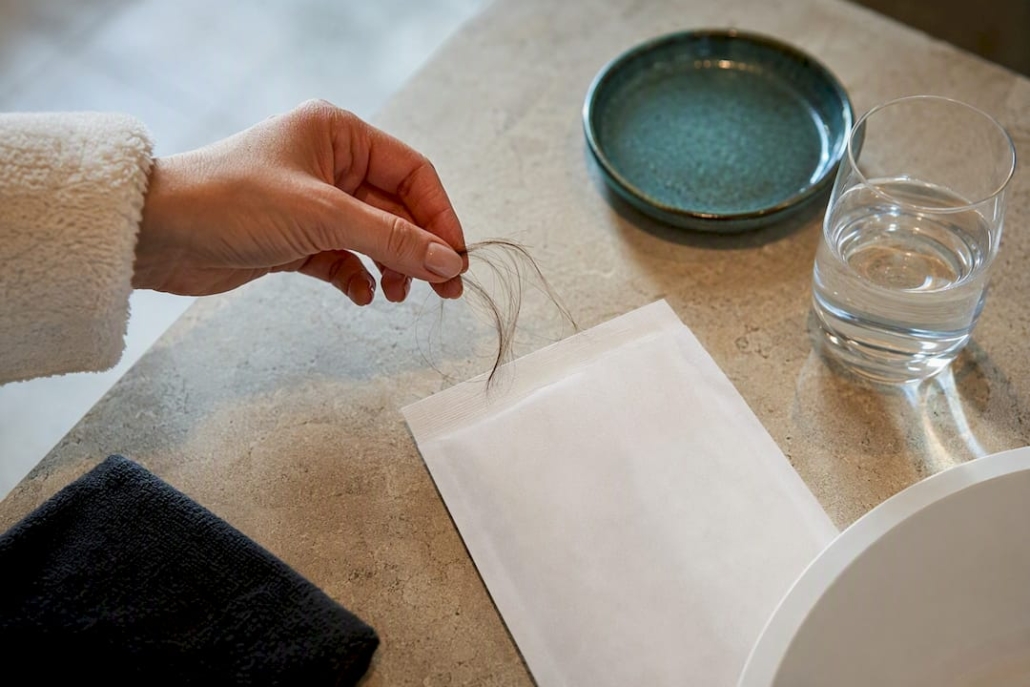
Most commercial intolerance kits are not worth the cost on their own. The NHS, the British Dietetic Association, and BSACI all say home tests like IgG panels, hair analysis, and bioresonance lack the evidence to diagnose anything reliably. A handful of clinician-ordered tests, such as coeliac serology or the lactose breath test, are genuinely validated. If you’re struggling with symptoms, start with a food and symptom diary, then see your GP.
TL;DR:
- Commercial intolerance tests like IgG panels, hair analysis, and bioresonance lack scientific validation and are unlikely to provide accurate diagnoses.
- Valid tests such as lactose breath tests, coeliac serology, and supervised elimination diets are the recommended approaches when health issues are suspected.
- Using unvalidated tests can lead to nutritional deficiencies, delayed diagnosis, and unnecessary food restrictions without improving health outcomes.
- Many regulators and health organizations have officially warned against relying on at-home testing kits for food intolerance diagnosis.
- Starting with a food and symptom diary followed by professional medical advice is the safest and most effective way to identify food-related issues.
Table of Contents
- What commercial “intolerance” tests actually claim to do
- What does the evidence say about intolerance test effectiveness?
- The real risks of unvalidated food intolerance testing
- When is intolerance testing actually worth it?
- If you’re tempted by a home test: safe steps to take
- Why we sell at-home testing and still tell you to see a GP
- If you want an at-home test: how our service works and when it might help
- Sources
What commercial “intolerance” tests actually claim to do
Walk into this market and you’ll find a surprising range of methods, all promising the same thing: a definitive list of foods your body supposedly can’t handle. They work in very different ways, and knowing the mechanism helps you judge the claim.
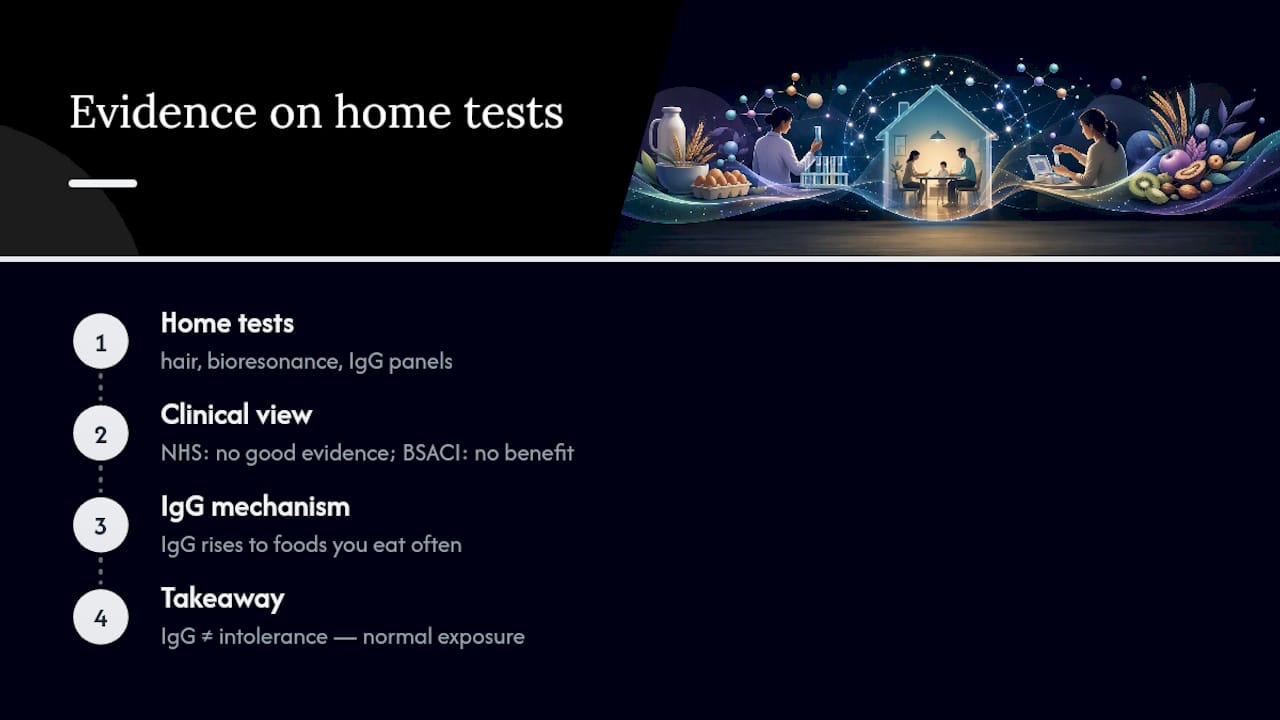
- IgG/IgG4 blood panels measure antibodies your immune system produces after eating a food, then providers claim high levels signal intolerance. In reality, raised IgG is often just a marker of frequent exposure, not a problem.
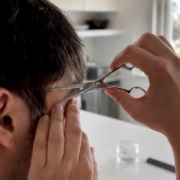
- Hair analysis involves sending a small sample away, with providers claiming the hair’s structure or resonance can be matched against a database of food and environmental substances.
- Bioresonance and electrodermal (Vega) testing use handheld devices that claim to detect energetic frequencies from the body, said to indicate sensitivity to specific substances.
- Pulse tests involve taking your heart rate before and after eating a suspect food, on the theory that a rise signals a reaction.
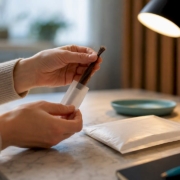
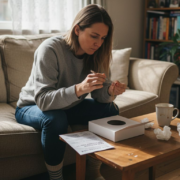
Kits typically arrive by post as a hair sample, a finger-prick blood card, or a saliva swab, with prices ranging from around £20 for basic hair tests up to £200 for larger panels, according to Which?’s review of testing kits.
What does the evidence say about intolerance test effectiveness?
Here’s where the enthusiasm for at-home testing runs into a wall of clinical consensus. The NHS states plainly that there is no good evidence that hair analysis, bioresonance, or IgG blood tests can accurately diagnose a food intolerance, and it advises against relying on them.
BSACI goes further, stating that alternative testing methods have no proven benefit at all. Their guidance is unambiguous:
That’s not a minor caveat. It’s a direct statement that the popular home-test category doesn’t meet the bar clinicians use to actually diagnose anything.
The reproducibility problem compounds this. Review literature on IgG testing shows these panels frequently flag foods you eat often, not foods that cause symptoms. Your body produces more IgG antibodies to foods you eat regularly, which is a sign of normal exposure, not intolerance. That single mechanism explains why so many people who take these tests come back with long lists of “problem” foods that happen to be dietary staples: bread, eggs, dairy, whatever you eat most.
Regulators have noticed too. The ASA and CAP have repeatedly ruled that advertising for alternative allergy and intolerance tests makes unsubstantiated medical claims, forcing some marketers to withdraw or rewrite their copy. When the advertising regulator and the national health body are saying the same thing from different angles, that’s a strong signal worth listening to.
The real risks of unvalidated food intolerance testing
A wrong result from an unvalidated test isn’t a harmless inconvenience. It can actively make your health worse, and the harm tends to fall hardest on people who can least afford it.
Cutting out entire food groups on the strength of a hair sample or a bioresonance reading can lead to genuine nutritional shortfalls, particularly for children, pregnant women, or anyone already managing a restricted diet. Remove dairy without a plan and you risk low calcium and vitamin D. Remove several groups at once, as many test reports recommend, and the risk compounds fast.
- Prolonged, unsupervised exclusion of a food can occasionally increase sensitivity to it when reintroduced.
- Money spent on an inaccurate test is money not spent on a GP appointment that could find the real cause.
- Investigative reporting has found online sensitivity tests frequently overreport problems, pushing users towards broader exclusions than their symptoms justify.
- A false result can delay diagnosis of something more serious, like coeliac disease or IBS, because you believe you’ve already found the answer.
Pro Tip: Never remove more than one food group at a time without a dietitian’s input. If a report tells you to cut five things at once, that’s your cue to get professional guidance before acting on it, not a reason to panic.
When is intolerance testing actually worth it?
Not every test in this space is unreliable. Some are gold-standard diagnostic tools, but they come from a clinic, not a mailbox. The distinction matters more than almost anything else in this article.
- Lactose breath test and coeliac serology are validated, evidence-backed investigations your GP can arrange when lactose intolerance or coeliac disease is suspected.
- Specific IgE blood tests and skin prick tests are the standard route for diagnosing a true IgE-mediated allergy, alongside a supervised oral food challenge where needed, as BSACI guidance sets out.
- A GP-led, dietitian-supervised elimination and rechallenge, usually run over two to six weeks, is what NICE recommends for identifying non-IgE-mediated reactions, and it protects your nutrition while it works.
The difference between these and a home kit isn’t the sample type. It’s that a clinician interprets the result against your actual symptoms and history, rather than a database matching a hair strand.
If you’re tempted by a home test: safe steps to take
If you’re still leaning towards buying a kit, you can do it in a way that limits the damage and keeps your expectations realistic.
- Start a simple food and symptom diary for two to three weeks before you spend a penny; it often points to the culprit faster than any test.
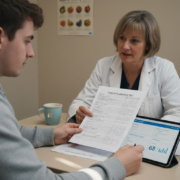
- Book a GP conversation first, especially if symptoms are severe, persistent, or affecting a child.
- Ask what the test actually measures, and check whether the provider publishes its methodology anywhere you can scrutinise it.
- Resist the urge to cut multiple foods the moment a report arrives; treat any result as a hypothesis, not a diagnosis.
- Plan, before you buy, to confirm any positive result with a dietitian or your GP, ideally through a supervised elimination diet.
Pro Tip: Before buying anything, ask yourself what a positive result will actually let you do differently. If the answer is “cut out this food and see what happens,” you can often skip straight to a supervised elimination diet and save the cost of the test entirely.
Why we sell at-home testing and still tell you to see a GP
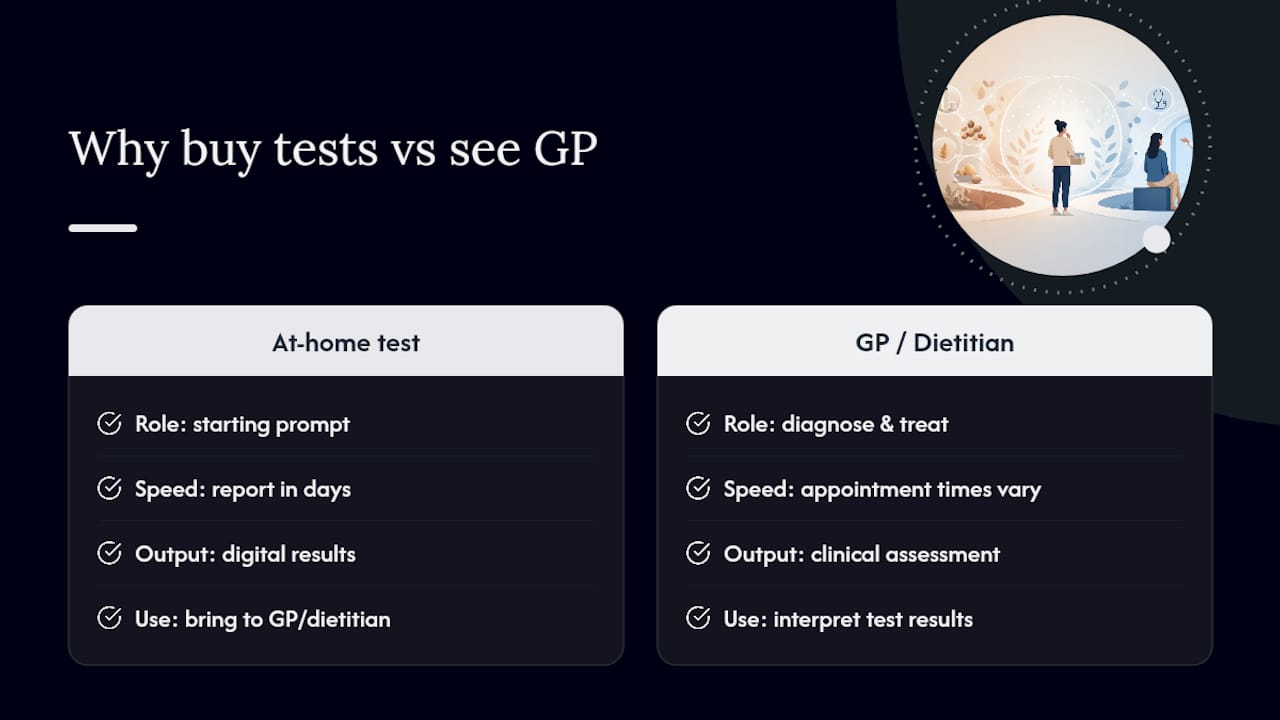
I’ll be direct: Ukfoodintolerance sells hair-sample tests, and I still think the guidance above is correct. Those two things aren’t in conflict once you understand what the test is for. We’re not trying to replace a GP or a dietitian, and we say so consistently.
Our process is simple by design: send a hair sample and receive a digital report covering a wide range of items within a few days. That speed and clarity is genuinely useful as a starting point, particularly if you’ve been struggling to narrow down where to even begin. But a report is a prompt for a conversation with a professional, not a replacement for one. Every result should be treated as information to bring to your GP or dietitian, not a verdict to act on alone. That’s the honest way to use a tool like this, and it’s the only way we’d want you to use ours.
— Rob
If you want an at-home test: how our service works and when it might help
If you’ve read this far and still want a starting point for your own investigation, our Ultimate and Core Single Intolerance Tests work from a simple at-home hair sample, analysed at a UK laboratory, with a digital report covering over 1,450 items sent back within 48 to 72 hours.
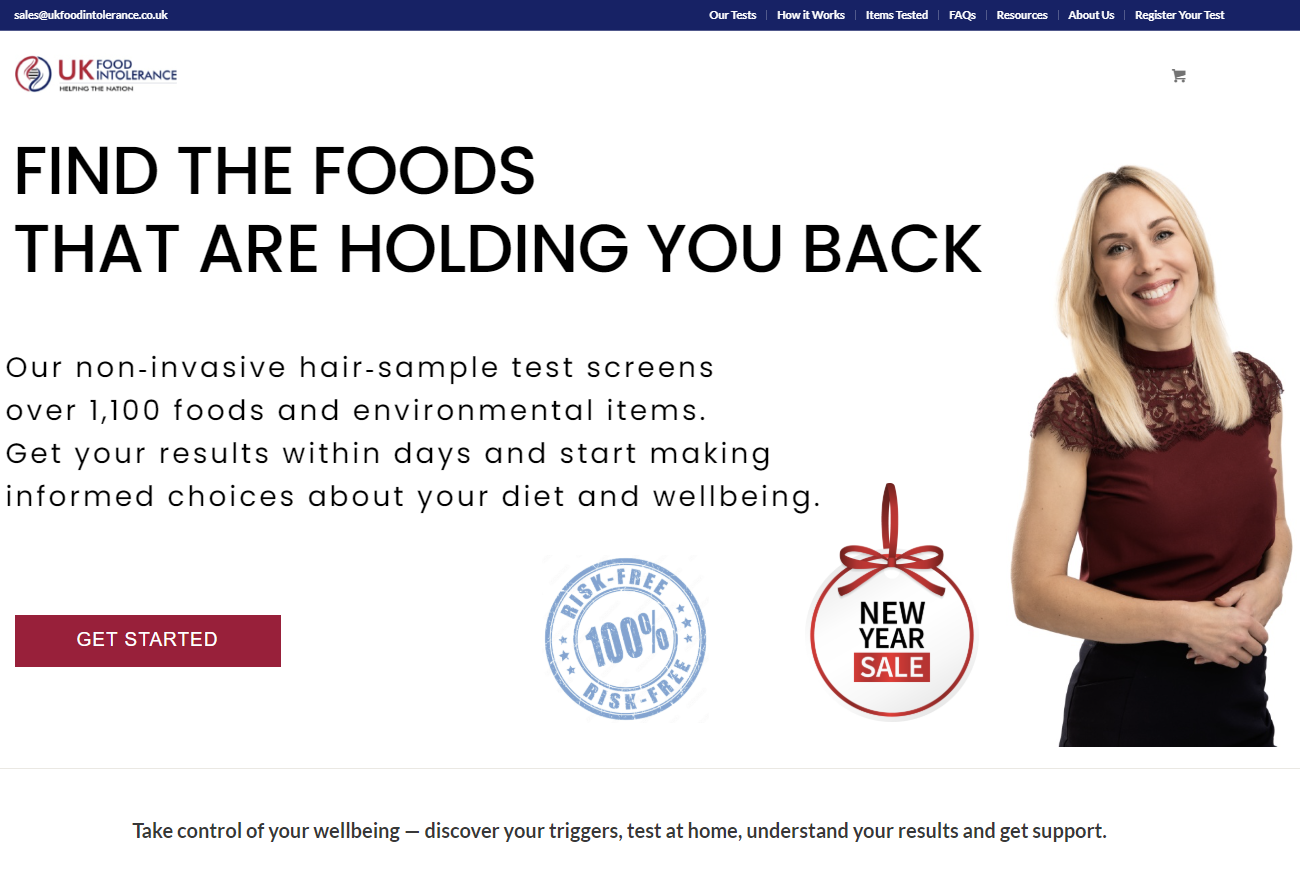
This suits readers who want a broad, fast first look at possible triggers and who commit to treating the result as a lead to discuss with a GP or dietitian rather than a final answer. It’s not a substitute for specific IgE testing if you suspect a true allergy, and if your symptoms are severe or sudden, see your GP before ordering anything. For everyone else weighing up cost and next steps, browse our full range of intolerance tests and use the report as the first page of a conversation, not the last.
Sources
The clinical claims here rest on the NHS, which sets national guidance on intolerance testing; the British Dietetic Association, the professional body for UK dietitians; BSACI, the specialist allergy and immunology society; NICE, which issues clinical guidelines; the ASA, the advertising regulator; and Which?, the independent consumer body that has tested kit reliability directly. If you’re planning next steps around introducing foods safely, this guide on introducing new foods is worth a read too.
- Food intolerance — NHS
- Choosing wisely on the use of alternative testing — BSACI
- Food allergy and intolerance testing kits: are they worth it? — Which?
- ASA advice on health and food allergy testing — ASA





Leave a Reply
Want to join the discussion?Feel free to contribute!