
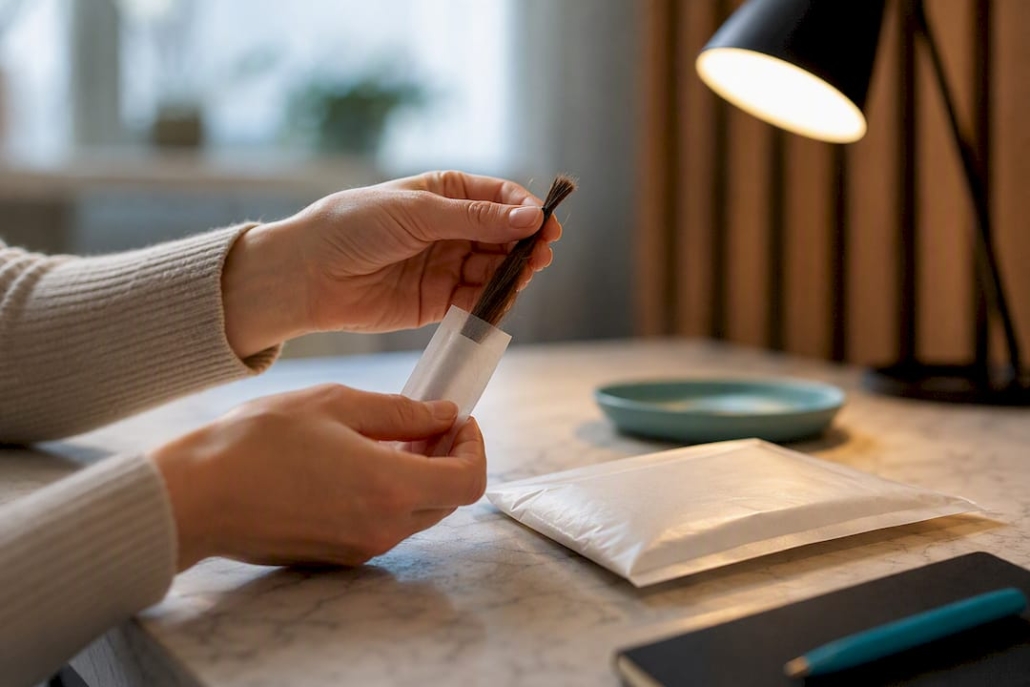
At-home bioresonance hair tests can be a useful starting point for spotting non-allergic food intolerance patterns that might be feeding your eczema, but they are not a medical diagnosis. Used alongside a careful, time-limited elimination and reintroduction plan, they can help you build a shortlist of suspects worth investigating. Used alone, or in place of a GP visit for severe symptoms, they cannot. Some at-home tests return a digital report within 48 to 72 hours, with guidance to help you act on it sensibly.
TL;DR:
- Hair sample quality significantly affects test reliability; avoid chemically treated, small, or residue-covered hair samples and follow proper collection guidance.
- The tests are useful for generating hypotheses about potential food sensitivities but cannot replace clinical allergy diagnostics or provide definitive diagnoses.
- Reproducibility is weak, and results should always prompt further investigation rather than immediate elimination of foods.
- Use the report to identify two or three top suspects and eliminate them one at a time over several weeks, with careful observation and reintroduction.
- Seek professional medical advice immediately if severe symptoms such as difficulty breathing, widespread skin infection, or unexplained weight loss occur.
Table of Contents
- How hair-based bioresonance sensitivity tests work
- What these tests can and cannot tell you about eczema triggers
- Turning a test report into a safe eczema investigation plan
- What the research and professional bodies actually say
- When a home test isn’t enough: red flags to act on
- How Ukfoodintolerance’s test works and what support you get
- A measured take on testing and eczema
- Ready to try an at-home test? Here’s what happens next
- Sources
How hair-based bioresonance sensitivity tests work
You send a small hair sample to a UK laboratory, and the report that comes back typically lists hundreds of food and non-food items scored by reactivity, sometimes with notes on nutritional balance. That is the entire physical process from your side: snip, post, wait. Everything else happens off-site, which is exactly why sample quality matters so much.
Bioresonance testing works on the premise that different substances produce distinguishable energetic signals your hair can carry a record of, and the lab reads that pattern against a reference library. It is a fundamentally different concept from clinical allergy testing, which measures immune antibody response. Providers frame it as a way of flagging non-allergic sensitivities that a standard allergy test would not pick up, and the British Dietetic Association’s guidance on intolerance testing is worth reading precisely because it explains that distinction clearly.
Your results are only as good as the sample you send, and a handful of collection mistakes account for most unreliable reports:
- Chemically treated hair (dyed, bleached, permed) close to the last treatment date can distort readings.
- Too small a sample, or hair cut from just one spot, gives the lab less to work with than it needs.
- Freshly washed hair with product residue left in can interfere with analysis.
- Sending hair from someone other than the person being tested is a surprisingly common error.
Pro Tip: Take your sample from close to the scalp, from a few different areas of the head, and follow a proper step-by-step guide to collecting hair samples rather than guessing. A rushed thirty-second snip is the single biggest cause of a confusing report.
What these tests can and cannot tell you about eczema triggers
A hair test is genuinely good at one thing: generating hypotheses. If your report flags dairy, wheat, or a handful of other items you have never suspected, that gives you somewhere sensible to start looking rather than eliminating foods at random. Where symptoms and scores line up, that pattern is worth taking seriously as a starting point for investigation.
What it cannot do is replace clinical allergy diagnostics. Skin prick testing, specific IgE blood tests, and supervised oral food challenges remain the recognised route for diagnosing true allergy, and bioresonance results are not designed to be compared against them.
The evidence base for bioresonance specifically is thin. A randomised trial in children with atopic dermatitis found no measurable benefit from active bioresonance treatment over a sham version, when both were added to standard inpatient care. That trial tested a therapeutic use of bioresonance rather than diagnostic hair testing, but it is the clearest controlled data available on the technology’s biological claims, and it points the same way as most independent reviews: the mechanism has not been proven under scientific scrutiny.
Three things worth remembering before you act on a report:
- Food intolerance (the focus here) and food allergy are medically distinct; intolerance does not involve the immune system’s IgE pathway the way allergy does.
- Reproducibility is a known weak point. Retesting the same person can sometimes produce different item lists.
- A report is a prompt for investigation, not a verdict.
Turning a test report into a safe eczema investigation plan
Once your report arrives, resist the urge to cut out everything it flags at once. That approach makes it impossible to know which change, if any, actually helped, and it can leave you short on nutrients for no good reason. A more controlled process gets you a clearer answer:
- Read the full report first. Note the two or three highest-scoring items rather than reacting to every flag.
- Eliminate one suspect at a time, typically for two to four weeks, keeping everything else in your diet unchanged.
- Keep a daily record. A simple symptom diary with photos of affected skin gives you something concrete to compare against, not just memory.
- Reintroduce deliberately. Bring the food back in a normal portion and watch for a reaction over the following 48 to 72 hours before drawing conclusions.
- Repeat with the next suspect only once you have a clear result from the first.
For children, do not run broad, unsupervised exclusions. Growing bodies need consistent nutrition, and a dietitian-supervised approach to introducing foods protects against the nutritional gaps that untargeted elimination can cause. The same caution applies to pets: a restrictive diet imposed on a dog or cat without professional input can do more harm than the suspected intolerance ever would.
Pro Tip: If your suspect list involves more than two food groups, book time with a dietitian before you start. Removing several things at once makes cause and effect almost impossible to untangle, and it raises your risk of nutritional shortfall.
What the research and professional bodies actually say
The scientific record on bioresonance is more cautious than most marketing copy suggests, and it is worth reading the caveats before you commit to a testing-led approach.
- The British Dietetic Association warns that many commercial hypersensitivity tests lack a solid evidence base, and it specifically flags the risk of nutritional harm when results lead to unnecessary exclusions.
- A controlled trial in children with atopic dermatitis found bioresonance added no measurable benefit over sham treatment.
- Case reports have described patients placed on narrow, restrictive diets after a bioresonance-based diagnosis, only for the real cause to turn out to be contact dermatitis rather than a food trigger at all, delaying the correct treatment.
Bioresonance-based diagnostics, used in isolation, have been linked in published case analyses to misdirected treatment: patients excluded foods unnecessarily while the actual driver of their skin symptoms went unaddressed for months.
The practical safety takeaway is straightforward. Watch for unintended weight loss, a restrictive diet that has dragged on for months without clear benefit, or the sense that testing has become a substitute for seeing anyone qualified. None of those are acceptable trade-offs for chasing a hunch.
When a home test isn’t enough: red flags to act on
Some symptoms need a GP or specialist, not a testing kit, and no home report should delay that call. Seek clinical assessment straight away if you notice:
- Breathing difficulty, or swelling of the face, lips, or throat.
- Widespread, infected, or rapidly worsening skin, especially with fever.
- Unexplained or rapid weight loss, or a child falling off their growth curve.
Your GP can arrange skin prick testing, specific IgE blood work, or a supervised food challenge, and can refer you to a dietitian for elimination diets that need professional oversight. Treat a hair test result as one input among several, never the final word.
How Ukfoodintolerance’s test works and what support you get
Ukfoodintolerance runs the same hair-and-lab process described above, built around clear instructions and follow-up support rather than leaving you to interpret a spreadsheet of numbers alone. The collection guide walks you through getting a usable sample first time, which matters more than almost anything else in this process.
- Non-invasive hair sample, analysed in a UK laboratory.
- Digital report delivered within 48 to 72 hours of the lab receiving your sample.
- FAQs and elimination diet guidance to help you act on results without overreaching.
- Rob contributes practical, plain-English context across the site’s supporting articles.
| What you get | Detail |
|---|---|
| Sample type | Hair, collected at home |
| Lab location | UK-based laboratory |
| Turnaround | 48–72 hours |
| Report contents | Sensitivity scores, nutritional notes |
| Support | Collection guides, FAQs, elimination diet guidance |
You order, follow the collection guide to take your sample, post it off, and your report lands in your inbox a few days later with a clear next step already suggested.
A measured take on testing and eczema
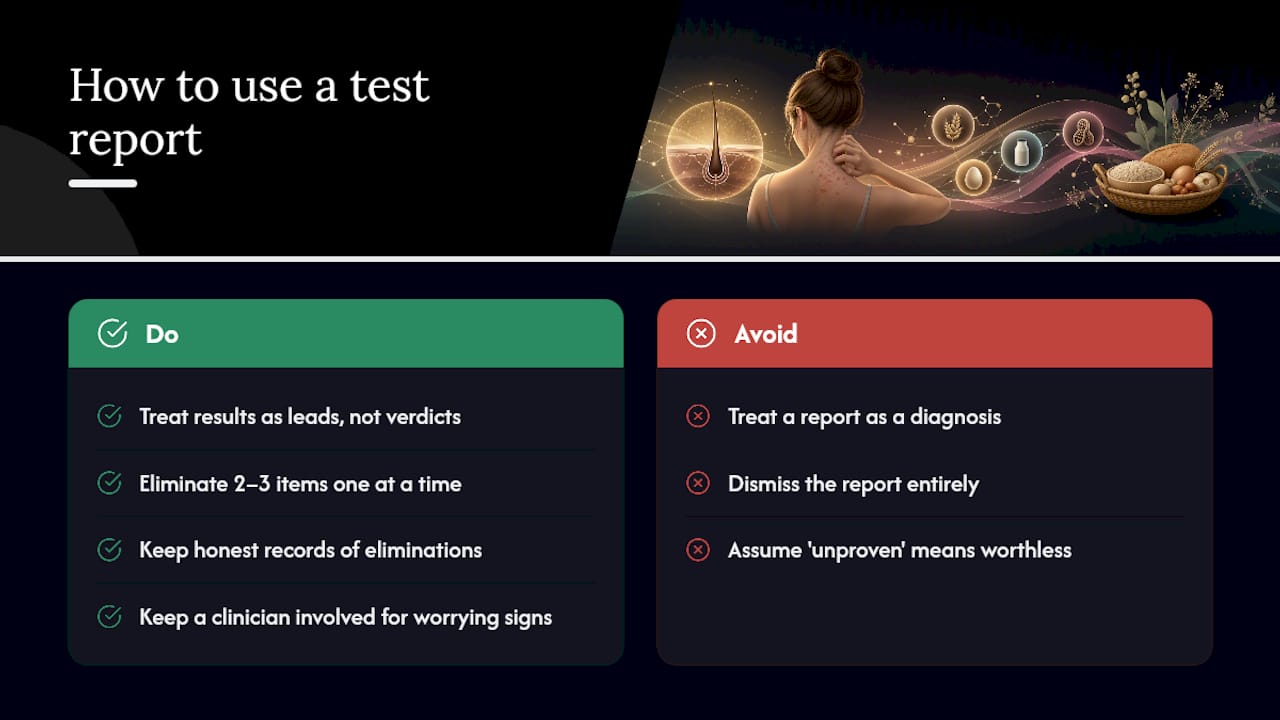
Skip the temptation to treat a test report as a diagnosis, and skip the opposite temptation to dismiss it entirely. Both extremes miss the point. The realistic value sits in the middle: a report gives you two or three things worth eliminating properly, one at a time, with records kept honestly. That is a modest promise compared with what some marketing implies, but it is an achievable one.
What I’d push back on is the idea that “unproven” means “worthless”. Weak evidence for a mechanism doesn’t mean the pattern-matching exercise has no value for the individual doing it. It means you should treat the result as a lead, not a verdict, and keep a clinician in the loop if anything about your skin or your child’s growth worries you.
— Rob
Ready to try an at-home test? Here’s what happens next
If your eczema has you suspecting something in your diet but you have no idea where to start, an at-home hair test gives you a structured shortlist instead of a guessing game. Browse Ukfoodintolerance’s test options to see the difference between the wider-coverage and core kits, order the one that fits your budget, and you will have a digital report back within 48 to 72 hours of the lab receiving your sample.

The checklist is simple: order your kit, collect your sample following the included guide, post it back, then read your report against the elimination and reintroduction steps covered above. If your suspect list touches more than a couple of food groups, or involves a child or pet, loop in a dietitian or vet before you start cutting anything out. Browse the full range of intolerance tests to get started today.
Sources
For the clinical evidence behind the cautions in this guide, read the British Dietetic Association’s position on intolerance testing, the randomised bioresonance trial in atopic dermatitis, and the case analysis of bioresonance misdiagnosis. For practical next steps, see Ukfoodintolerance’s guidance on skin issues linked to food sensitivity and eczema and food sensitivity testing.
This article is general information, not a substitute for advice from a qualified doctor. Consult a qualified healthcare professional about your own circumstances before acting on anything here.
- British Dietetic Association – food allergy and intolerance testing
- Efficacy trial of bioresonance (BIT) in children with atopic dermatitis
- Allergisches Kontaktekzem: Misdiagnosis after bioresonance diagnostics










Leave a Reply
Want to join the discussion?Feel free to contribute!