

Food sensitivities rarely cause true fat gain on their own. What they do cause, reliably, is bloating, fluid retention, and gut discomfort that can make the scale jump or your waistband feel tighter within hours. Real weight change tends to arrive indirectly, through the foods you swap in, stress, and disrupted sleep. If symptoms persist, track them and speak to your GP or a registered dietitian before cutting anything out long term.
TL;DR:
- Short-term weight fluctuations from food sensitivities are caused mainly by fluid retention and gas, not fat gain, and tend to reverse overnight.
- Persistent bloating and fluid shifts develop hours after consuming trigger foods, but actual fat gain takes weeks and shows no quick reversal.
- Structured elimination diets and professional testing are the safest ways to identify true sensitivities without risking nutrient deficiencies.
- Long-term avoidance often leads to higher-calorie processed replacements, emotional eating, and disrupted sleep, which can drive genuine weight gain.
- Gut microbiome changes are a plausible but unconfirmed factor linking food sensitivities and weight, emphasizing patience over quick fixes.
Table of Contents
- Food sensitivity weight gain: quick takeaways and red flags
- How sensitivities can change weight or the way your clothes fit
- What the evidence and clinical guidance say
- How behaviour after self-diagnosis can cause real weight change
- Safe investigation: GP, allergy testing, breath tests, and elimination
- Practical nutrition rules to protect yourself while testing triggers
- When to see a GP, allergy clinic or registered dietitian
- How structured at-home testing fits into a safe pathway
- Common foods most likely to cause sensitivities linked to weight-related symptoms
- Evidence-based management strategies to reduce sensitivity-related weight gain
- Role of gut microbiota in mediating food sensitivities and weight changes
- Balancing symptom relief with safe nutrition and weight goals
- Where at-home testing fits if you’re ready for a structured next step
- Sources
Food sensitivity weight gain: quick takeaways and red flags
Before you panic about a few pounds appearing overnight, work out what kind of change you’re actually looking at. A fluctuation of 1 to 2kg within a single day is almost never fat. It’s fluid, undigested food still moving through your gut, or both.
The clearest way to separate a genuine sensitivity from a passing stomach upset or something more serious is to watch the pattern, not the single reading.
- Transient versus sustained: bloating and water retention shift day to day and often ease overnight; true fat gain builds gradually over weeks and doesn’t reverse with a night’s sleep.
- Typical sensitivity signs: recurring bloating after specific foods, cramping, wind, fatigue, headaches, or skin flare-ups that follow a consistent pattern.
- Signs that need urgent attention: swelling of the lips or throat, difficulty breathing, or hives appearing rapidly after eating. These point to a possible allergy, not an intolerance, and need emergency care.
- Run a simple self-check: keep a food and symptom diary for two weeks, note the time of day you weigh yourself, and look for repeat offenders rather than one-off reactions.
Pro Tip: Weigh yourself at the same time of day, ideally before breakfast, and log it weekly rather than daily. Daily numbers are mostly noise; weekly trends tell you the truth.
How sensitivities can change weight or the way your clothes fit
The mechanisms behind perceived weight gain from food sensitivities are more mundane than most people expect, and more interesting once you understand them.
Start with the gut itself. When your body struggles to break down a component of food, such as lactose or certain fermentable carbohydrates, that undigested material sits in the intestine and ferments. Gas production increases, the colon distends, and abdominal girth can rise noticeably within a few hours. None of this is fat. It’s mechanical, and it settles once digestion finishes, though the timeline varies from person to person.
Inflammation plays a subtler role. When the gut lining reacts to a trigger food, local inflammation can prompt fluid shifts into surrounding tissue, adding to that heavier, puffier feeling. Registered dietitians interviewed by Today’s Dietitian note there is no strong evidence that food allergies or intolerances directly cause fat gain. What people usually notice is bloating or fluid retention, not new adipose tissue.
Chronic, low-grade inflammation does have a plausible link to longer-term weight regulation, though the pathway runs through stress biology rather than the food itself. Persistent gut irritation can activate the body’s stress response, raising cortisol output over time. Mechanistic reviews summarised on NCBI PMC describe how elevated glucocorticoids can alter appetite signalling and encourage fat to settle around the abdomen rather than elsewhere on the body. This is one plausible indirect route from a sensitivity to genuine weight change, not a guaranteed outcome, and it typically requires months of unmanaged symptoms before it becomes measurable.
Insulin sensitivity can be affected too. Chronic inflammation is associated with reduced insulin responsiveness in some people, which over time can influence how the body stores and uses energy. This isn’t unique to food sensitivities. It’s the same mechanism seen in other chronic inflammatory states, and it reinforces why persistent, unresolved symptoms are worth investigating rather than living with.
A useful point to remember is that separating fluid from fat requires looking at trends across several weeks rather than single daily readings, because short-term scale swings from bloating alone can easily mask or mimic some apparent weight change.
The gut microbiome deserves a mention, and a caveat. Associations between microbiome composition and body weight are well documented in the research on microbiome and obesity, but causality in individual cases of food intolerance remains unproven. A disrupted microbiome might influence appetite hormones or energy extraction from food, but no test currently proves that your specific gut bacteria are driving your specific weight change. Treat this as a plausible contributor, not a diagnosis.
What the evidence and clinical guidance say
UK clinical guidance draws a firm line that’s worth repeating because so much online confusion stems from blurring it. The NHS is clear that food intolerance is a digestive issue, not an immune response, which puts it in an entirely different category to a food allergy. Allergies involve the immune system and can be life-threatening; intolerances involve the digestive system and, while uncomfortable, are not typically dangerous in the same way.
That distinction shapes how testing works. The NHS points to supervised elimination and reintroduction as the standard diagnostic route, alongside breath tests for specific issues such as lactose or fructose malabsorption. Unnecessary long-term exclusion of entire food groups, done without guidance, carries a real risk of nutrient deficiency.
Clinical evidence on outcomes tells a consistent but limited story:
- A clinical service evaluation at the University of Surrey found symptom improvement in many patients with perceived food intolerance following structured, staged dietary programmes.
- Weight outcomes across these studies were not consistently reported as significant, meaning symptom relief and weight loss don’t automatically travel together.
- Some commercial sensitivity testing approaches are marketed directly to consumers, but independent nutrition commentary recommends clinical routes first, with testing used as an adjunct rather than a standalone diagnosis.
- Research in this area tends to use inconsistent definitions of “intolerance” and small sample sizes, which limits how confidently any single study’s findings generalise.
The honest summary: structured, supervised dietary change reliably helps people feel better. It doesn’t reliably make the scale move in a predictable direction, and anyone promising otherwise is overstating what the evidence supports.
How behaviour after self-diagnosis can cause real weight change
This is where genuine, sustained weight gain often creeps in, and it has almost nothing to do with the sensitivity itself.
- Poor substitutions: cutting dairy and reaching for sweetened plant-based alternatives, or dropping gluten and buying processed gluten-free bread, crackers, and biscuits, frequently increases sugar and calorie intake compared with the original food.
- Emotional eating: weeks or months of gut discomfort, fatigue, and disrupted routines wear people down. Stress-driven eating, often geared toward quick comfort foods, becomes a coping mechanism rather than a hunger response.
- Sleep disruption: bloating, reflux, and nighttime discomfort fragment sleep. Poor sleep is independently linked to increased appetite and cravings for energy-dense food the following day.
- Medication side effects: some medications prescribed for gut symptoms carry appetite or metabolic side effects worth discussing with a GP if weight change coincides with starting a new treatment.
A Today’s Dietitian interview makes the point plainly: restrictive self-diagnosis often results in higher-calorie replacement foods that quietly drive weight gain, while the original “trigger” food gets blamed.
Pro Tip: Before cutting anything out, check the nutrition label on your intended replacement side by side with the original. A “free-from” label doesn’t mean lower calorie, and it often means the opposite.
Safe investigation: GP, allergy testing, breath tests, and elimination
Working out what’s actually happening requires a sequence, not guesswork.
- Rule out allergy first: if reactions are immediate, severe, or involve swelling and breathing difficulty, see your GP or an allergy clinic before anything else. IgE-mediated allergy needs proper testing, not an elimination diet.
- Consider breath tests for specific culprits: lactose and fructose malabsorption can be confirmed with a hydrogen breath test, giving a clear yes or no rather than relying on trial and error.
- Run a supervised elimination and reintroduction: remove the suspected food for roughly two to six weeks, then reintroduce it deliberately while tracking symptoms. Each phase proves something specific: elimination shows whether symptoms improve, reintroduction confirms the food was actually responsible.
- Avoid unvalidated commercial tests as a sole basis for exclusion: some tests sold directly to consumers lack the same evidence base as clinical pathways. They can still play a role, but only when combined with professional interpretation and never as a substitute for medical advice.
The NHS elimination diet guidance exists precisely because unsupervised, prolonged exclusion increases the risk of missing calcium, fibre, and B vitamins, particularly when whole food groups disappear from the diet for months without a clear endpoint.
Practical nutrition rules to protect yourself while testing triggers
Whatever you’re eliminating, protect the nutrients that food group normally supplies.
- Dropping dairy? Replace calcium with fortified plant milks, tinned fish with bones, or leafy greens, and check the label for calcium content rather than assuming a substitute matches.
- Dropping wheat or gluten? Fibre intake often falls. Swap in oats, quinoa, or legumes rather than relying solely on processed gluten-free products.
- Dropping whole grains generally? Keep an eye on B vitamins, particularly B12 if animal products are also reduced.
- Monitor properly: a food and symptom diary, weekly (not daily) weigh-ins, and a simple 1 to 10 symptom score give you real data instead of guesswork.
- Keep restriction short: use exclusion only for diagnosis, then reintroduce promptly. Long-term avoidance without a clear reason is where deficiency risk climbs.
A structured, evidence-based approach such as a low FODMAP protocol illustrates the model well: short, defined exclusion phase, followed by systematic reintroduction, rather than indefinite avoidance.
Pro Tip: Photograph your meals for two weeks alongside your symptom diary. Patterns that aren’t obvious in writing often jump out visually, especially with hidden ingredients in sauces and dressings.
When to see a GP, allergy clinic or registered dietitian
Seek emergency care for swelling, breathing difficulty, or hives that appear rapidly after eating. These are allergy signs, not intolerance symptoms.
Book a routine GP appointment for unexplained weight change, persistent severe gut symptoms, or signs of nutrient deficiency such as fatigue or hair thinning. A GP can arrange appropriate testing or refer you to a dietitian, who can check nutritional adequacy and guide a structured rechallenge that self-directed elimination diets typically can’t manage safely on their own.
How structured at-home testing fits into a safe pathway
Ukfoodintolerance’s at-home tests work through a non-invasive hair sample, analysed at a UK laboratory with a digital report covering a wide range of items delivered within days. Used alongside GP or dietitian care, they can help identify candidates worth investigating through a supervised reintroduction rather than guessing at triggers alone. They’re designed to sit within that clinical pathway, not replace an urgent medical assessment. For a practical walkthrough of the process, the step-by-step testing guide and elimination diet checklist cover what to expect at each stage.
Common foods most likely to cause sensitivities linked to weight-related symptoms
Certain foods show up again and again in sensitivity cases, largely because of how widely they’re eaten and how commonly they’re poorly tolerated.
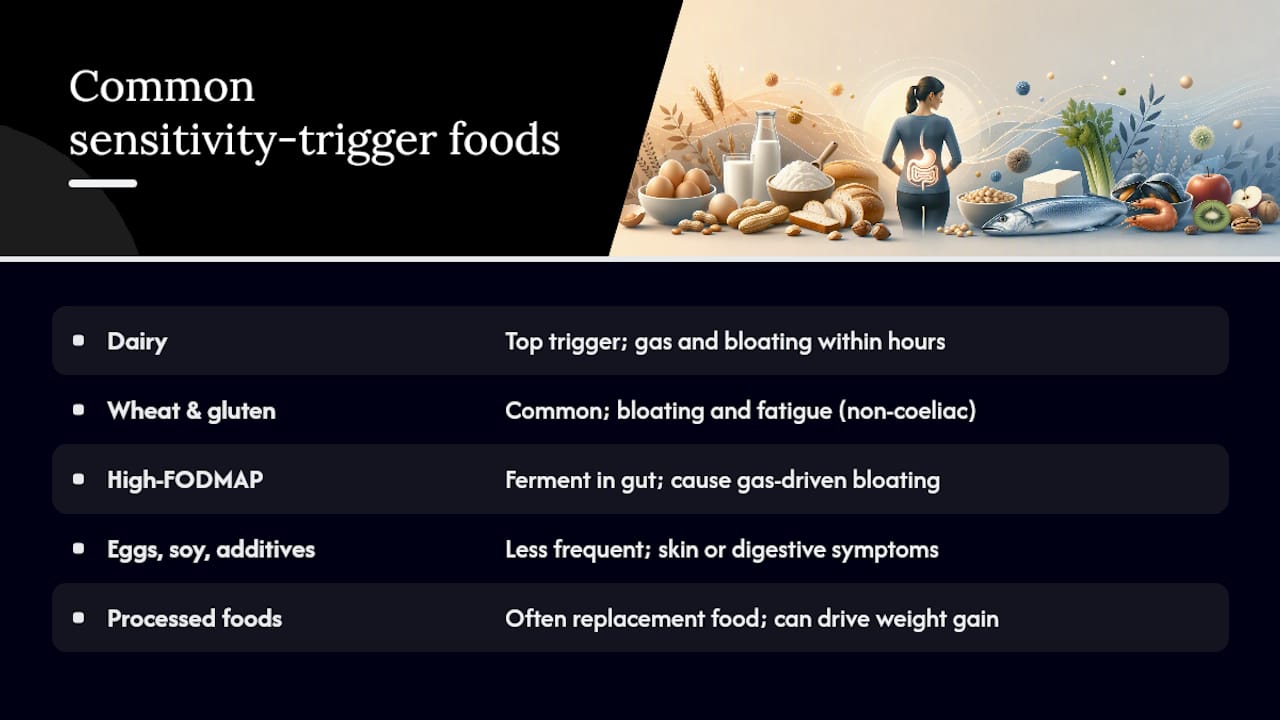
Dairy tops the list. Lactose malabsorption causes gas, bloating, and abdominal distension within hours for many people, and the scale reaction can be immediate even though no fat has been gained.
Wheat and gluten-containing grains follow closely, particularly for people with non-coeliac gluten sensitivity, where bloating and fatigue are common without the autoimmune response seen in coeliac disease.
High-FODMAP foods, a group that includes certain fruits, onions, garlic, and legumes, ferment readily in the gut for people with fructose or fermentable carbohydrate sensitivities, producing the same gas-driven bloating pattern.
Eggs, soy, and certain food additives appear less frequently but still show up in structured elimination programmes, often causing skin or digestive symptoms rather than dramatic scale changes.
Highly processed convenience foods deserve a mention for a different reason. They’re not always the direct trigger, but they’re frequently the replacement food people reach for once they’ve cut out a suspected culprit, and their higher sugar and calorie content is what actually drives weight change over subsequent weeks.
Recognising these patterns matters because it lets you target investigation rather than eliminating broadly and hoping for the best, which is exactly the approach that risks nutrient shortfalls.
Evidence-based management strategies to reduce sensitivity-related weight gain
Managing this well comes down to a handful of habits repeated consistently, rather than any single dramatic change.
Track before you eliminate. A two-week food and symptom diary, ideally with weekly weigh-ins rather than daily ones, gives you a baseline that turns guesswork into pattern recognition.

Replace like for like nutritionally, not just in food category. If a swap has more sugar or fewer calories than what it replaced, it’s likely to shift your weight in one direction or another regardless of the sensitivity itself.
Address stress and sleep directly. Since chronic gut discomfort feeds into cortisol output and disrupted rest, managing stress through regular activity or simply prioritising sleep hygiene can blunt one of the indirect pathways to weight gain described earlier.
Keep any elimination phase short and purposeful. Two to six weeks, followed by reintroduction, protects against the nutrient gaps that come with open-ended avoidance.
Get professional input for anything beyond a single food group. A registered dietitian can check whether your diet remains nutritionally complete while you investigate, something that’s genuinely hard to assess accurately on your own.
Role of gut microbiota in mediating food sensitivities and weight changes
The gut microbiome sits at an interesting, unresolved intersection between food sensitivity and weight regulation, and it’s worth understanding both what’s plausible and what’s still unproven.
Microbial communities in the gut help ferment fibre, produce short-chain fatty acids, and influence how efficiently the body extracts energy from food. Research on microbiome and obesity shows genuine associations between microbiome composition and body weight across populations, and disrupted microbial balance is one plausible mechanism behind both digestive symptoms and metabolic changes.
Where the evidence gets shakier is in drawing a direct line from an individual’s food sensitivity to their specific microbiome profile to their weight outcome. That three-step chain remains largely theoretical for now. A disrupted microbiome could plausibly affect appetite-regulating hormones or alter how fermentable carbohydrates behave in the gut, which loops back to the bloating and gas mechanisms already covered. But no current test can reliably tell you that your microbiome, rather than simple fluid retention or dietary substitution, explains your weight change.
The practical takeaway is patience rather than a quick fix. Supporting gut health through fibre diversity and, where appropriate, professional guidance remains sensible regardless of whether the microbiome turns out to be the missing piece of any individual’s weight puzzle.
Balancing symptom relief with safe nutrition and weight goals
The pattern worth sitting with is how often people expect a dramatic number on the scale and instead get something quieter: less bloating, better sleep, fewer headaches, more energy. That’s not a consolation prize. It’s usually the actual win, and weight change, when it happens at all, tends to follow slowly rather than arriving as the headline result.
Short, diagnostic eliminations followed by prompt reintroduction consistently outperform indefinite avoidance, both for symptom clarity and for protecting nutritional adequacy. Chasing weight loss through food restriction alone, without addressing the substitution and stress pathways covered earlier, tends to disappoint.
— Rob
Where at-home testing fits if you’re ready for a structured next step
Ukfoodintolerance gives you a starting point for that investigation without the wait for a GP referral: a non-invasive hair sample collected at home, analysed at a UK laboratory, with a digital report covering over 1,450 items delivered within 48 to 72 hours.

This isn’t a substitute for urgent medical assessment, and it works best alongside your GP or a registered dietitian, particularly if you’re planning a structured reintroduction afterwards. Where it adds real value is narrowing down which foods are worth investigating properly, rather than eliminating broadly and guessing. Browse the full range of intolerance tests to see what’s covered, or check our tests for a breakdown of the process from sample to report. If your symptoms have been ongoing, book that GP conversation first, then consider a test as the practical next step your clinician can help you interpret.
This article is general information, not a substitute for advice from a qualified doctor. Consult a qualified healthcare professional about your own circumstances before acting on anything here.
Sources
- Food intolerance – NHS
- Ask the expert: can food allergies cause weight gain? – Today’s Dietitian
- Food intolerance clinic evaluation – University of Surrey
- Review linking stress, glucocorticoids and obesity – NCBI PMC










Leave a Reply
Want to join the discussion?Feel free to contribute!