

Supporting your child’s wellbeing through intolerance testing means using validated, medically endorsed methods, not commercial shortcuts. The NHS, NICE, the British Dietetic Association (BDA), and the Food Standards Agency all point in the same direction: accurate symptom tracking, supervised elimination diets, and professional guidance are the foundation. At-home testing services can play a useful complementary role, but they work best alongside, not instead of, clinical advice.
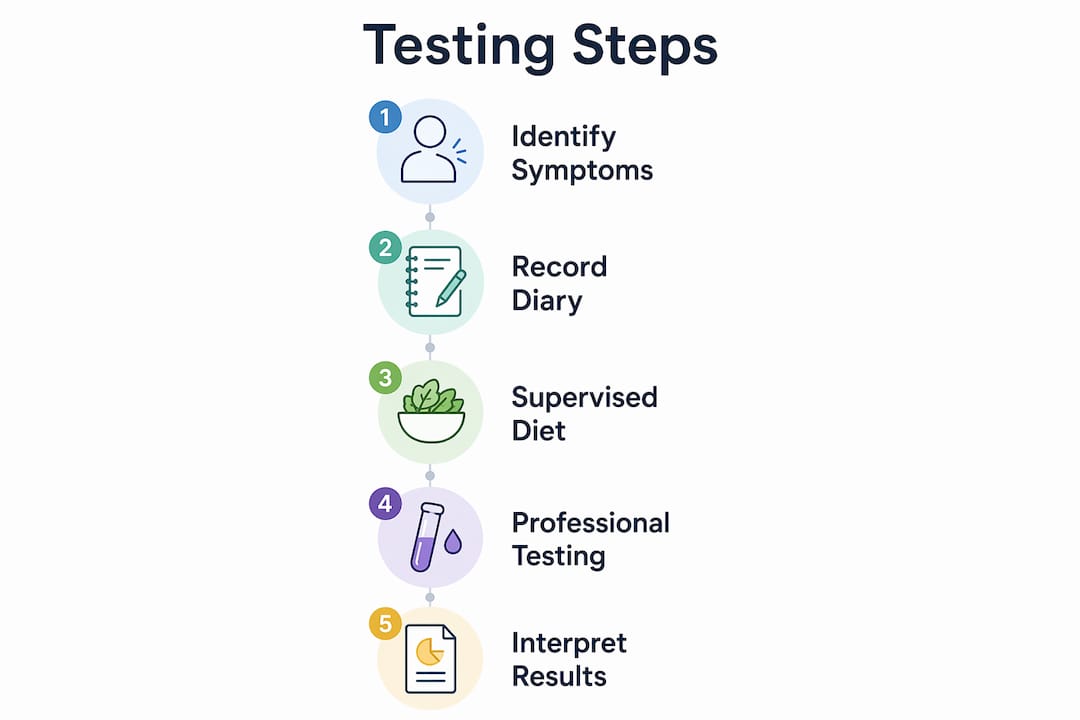
Here is what the evidence-based approach looks like in practice:
- Consult your GP first to rule out food allergy before investigating intolerance
- Keep a detailed food and symptoms diary to identify patterns
- Use supervised elimination diets as the primary diagnostic tool, guided by a registered dietitian
- Avoid unvalidated commercial tests such as hair analysis, bioresonance, or IgG antibody panels for diagnostic purposes
- Seek specialist referral when symptoms are complex, persistent, or affect your child’s growth
- Maintain nutritional balance throughout, especially for calcium, vitamin D, and iron
- Address the psychological and social impact of dietary restrictions alongside physical symptoms
- Use at-home sample collection services, such as those from Ukfoodintolerance, as supplementary tools to inform conversations with your healthcare team
1. What is the difference between food intolerance and allergy in children?
Getting this distinction right shapes everything that follows. A food allergy involves the immune system producing IgE antibodies, which can trigger rapid, potentially life-threatening reactions including anaphylaxis. Food intolerance, by contrast, does not involve the immune system at all. Reactions are delayed, usually appearing hours or even days after eating the trigger food, and symptoms tend to be digestive: bloating, stomach cramps, and diarrhoea.
The NHS is clear that intolerance symptoms are unpleasant but not dangerous in the way allergies can be. That said, the impact on a child’s daily life should not be underestimated. Food Standards Agency research found that children with food intolerance reported a mean quality of life score of 4.2 out of 7 on the Food Intolerance Quality of Life Questionnaire, indicating a moderate to quite significant impact, particularly around emotional wellbeing and the stress of checking food labels.
The practical difference for parents is this: a suspected allergy needs urgent medical assessment and may require an adrenaline auto-injector. A suspected intolerance calls for careful symptom tracking and dietary investigation under professional guidance. Confusing the two can lead to either under-treating a serious allergy or over-restricting a child’s diet unnecessarily.
- Allergy: immune-mediated, rapid onset, potentially severe, requires emergency planning
- Intolerance: non-immune, delayed onset, digestive symptoms, managed through diet
- Both can affect quality of life significantly, particularly emotional wellbeing in children
- Always see a GP first if you are unsure which you are dealing with
2. Which testing methods are actually recommended for children in the UK?
The short answer: supervised elimination diets and symptom diaries are the gold standard. NICE guidance is explicit that tests such as applied kinesiology, hair analysis, vega tests, and serum-specific IgG antibody panels should not be offered to children because there is no reliable evidence they can diagnose food intolerance or allergy accurately.
For suspected food allergy, skin prick tests and specific IgE blood tests are appropriate, but only when carried out by a trained healthcare professional with a clear clinical history to interpret the results. These tests confirm sensitisation, not necessarily active allergy, and the BDA stresses that specialist input is needed to make sense of them. For non-IgE-mediated reactions and intolerances, these tests offer no diagnostic value at all.
A breath test is a validated option specifically for suspected lactose intolerance. For most other intolerances, the process involves removing the suspected food for 2–6 weeks under dietitian supervision, then reintroducing it to confirm whether symptoms return. That reintroduction step is what actually confirms the diagnosis.
Pro Tip: Never start an elimination diet without dietitian support. Removing staple foods like dairy or wheat without guidance can quickly create gaps in calcium, vitamin D, and other nutrients that are critical for a growing child.
- Validated methods: supervised elimination diet, food and symptoms diary, breath test (lactose)
- Not recommended: hair analysis, bioresonance, IgG antibody tests, vega tests
- Skin prick and IgE blood tests diagnose allergy, not intolerance
- Reintroduction after elimination is what confirms the diagnosis
- Refer to a specialist if symptoms are complex, growth is affected, or a single-allergen elimination diet has not helped
Knowing when to seek specialist referral matters. NICE quality standards indicate that children who have had systemic reactions, have concurrent asthma, or whose symptoms remain unexplained after initial investigation should be referred to secondary or specialist allergy care.
3. How do you maintain your child’s nutrition and wellbeing during intolerance management?
Cutting foods out of a child’s diet without professional advice carries real risk. NHS guidance is direct on this point: removing food groups without dietitian input can cause children to miss out on vitamins and minerals that are critical for growth and development. The BDA reinforces that any replacement foods must provide equivalent nutrients, particularly when dairy or wheat is removed.

The psychological side of managing food intolerances is just as real as the physical. Food Standards Agency research shows that the psychological burden of food hypersensitivity, including the stress of label checking and social restrictions, can be as impactful as mild physical symptoms on a child’s quality of life. Younger children in particular reported that worries and concerns around their intolerance had the most impact on their emotional wellbeing.
A registered dietitian can build a nutritionally adequate, culturally appropriate elimination diet that does not leave your child feeling excluded or restricted beyond what is medically necessary. For children with multiple intolerances, or those already on restricted diets for other reasons, dietitian involvement is not optional. It is the difference between a safe, sustainable plan and one that quietly creates new health problems.
Pro Tip: Help your child feel included at social events by preparing safe alternatives in advance and speaking to school catering staff early. Small practical steps reduce anxiety significantly and keep mealtimes positive.
- Work with a registered dietitian before removing any major food group
- Monitor for nutrient deficiencies, especially calcium, vitamin D, and iron
- Use a nutrient checklist for children to track dietary adequacy during elimination
- Address emotional and social impacts proactively, not just physical symptoms
- Consider referral to a psychologist if anxiety around food is affecting your child’s daily life
- Reintroduce foods gradually and monitor responses, as tolerance can change over time
4. How Ukfoodintolerance’s at-home testing supports parents
Ukfoodintolerance offers a non-invasive, at-home hair sample testing service analysed by a UK-based laboratory, with digital reports delivered within 48–72 hours. Two tests are available: the Core Single Intolerance Test covering 500 items, and the Ultimate Single Intolerance Test covering over 1,100 items. Both are designed to give parents a clearer picture of potential sensitivities across food and environmental triggers.
These tests are complementary tools, not clinical diagnostics. Ukfoodintolerance is clear that results should be used alongside, not instead of, NHS-recommended assessment and professional advice. Where they add genuine value is in helping parents identify patterns and prepare more informed conversations with their GP or dietitian. A detailed sensitivity report can make an elimination diet more targeted rather than a broad, guesswork-driven process.
The service also provides educational resources, preparation guides, and result interpretation support, so parents are not left to make sense of the data alone. For families at the start of their investigation into childhood food intolerances, having structured information to bring to a clinical appointment can make the process feel far less daunting.
- Hair sample collection: simple, non-invasive, done at home
- Core test: 500 items; Ultimate test: over 1,100 items
- Results delivered digitally within 48–72 hours from a UK lab
- Includes educational guides and result interpretation support
- Designed to complement, not replace, NHS diagnostics and specialist advice
- Helps parents prepare for elimination diets with more specific, targeted information
Ukfoodintolerance: clear results, fast and from home
Getting clarity on your child’s potential food sensitivities does not have to mean a long wait or a complicated process. Ukfoodintolerance provides fast, non-invasive at-home testing that fits around family life. You collect a small hair sample at home, send it to a UK-based laboratory, and receive a detailed digital report within 48–72 hours covering hundreds of food and environmental items.

The reports are clear and parent-friendly, with guidance on how to interpret results and use them constructively alongside professional advice. Whether you are preparing for a dietitian appointment or trying to narrow down which foods to investigate first, Ukfoodintolerance gives you a practical starting point. Explore the full range of at-home intolerance tests and find the option that fits your family’s needs.
Key takeaways
Effective support for child wellbeing through intolerance testing requires validated diagnostic methods, professional guidance, and careful nutritional management throughout.
| Point | Details |
|---|---|
| Intolerance vs allergy | Intolerances are non-immune and cause delayed digestive symptoms; allergies can be life-threatening and need urgent medical assessment. |
| Validated testing only | NICE advises against hair analysis, bioresonance, and IgG tests; supervised elimination diets and symptom diaries are the recommended approach. |
| Nutritional balance | Removing food groups without dietitian support risks deficiencies in calcium, vitamin D, and iron, which are critical for child development. |
| Quality of life impact | Food Standards Agency research found children with food intolerance scored 4.2 out of 7 on quality of life impact, with emotional wellbeing most affected. |
| Ukfoodintolerance | At-home hair sample tests covering 500 or over 1,100 items provide complementary sensitivity data to support informed conversations with your healthcare team. |










Leave a Reply
Want to join the discussion?Feel free to contribute!