

TL;DR:
- Hidden sensitivities involve delayed bodily or emotional reactions that are hard to connect to specific causes. They include food sensitivities and neurological traits like Sensory Processing Sensitivity, which alter how people process stimuli. Proper identification requires structured elimination diets, gut health assessment, and professional guidance to prevent misdiagnosis and nutritional risks.
Hidden sensitivities are subtle, delayed bodily or emotional reactions that most people never connect to a specific cause. Unlike a true food allergy, which triggers an immediate and often dramatic immune response, hidden sensitivities produce symptoms that can appear hours or even days after exposure. That delay is what makes them so difficult to pin down. Conditions such as lactose intolerance, non-coeliac gluten sensitivity, and Sensory Processing Sensitivity (SPS) all fall under this umbrella. Understanding what are hidden sensitivities is the first step towards identifying the triggers that may be quietly affecting your health every single day.
What are hidden food sensitivities and how do they differ from allergies?
Hidden food sensitivities are delayed immune or non-immune reactions to specific foods, distinct from the fast-acting IgE-mediated responses seen in true food allergies. The distinction matters because it changes everything about how you investigate and manage your symptoms.
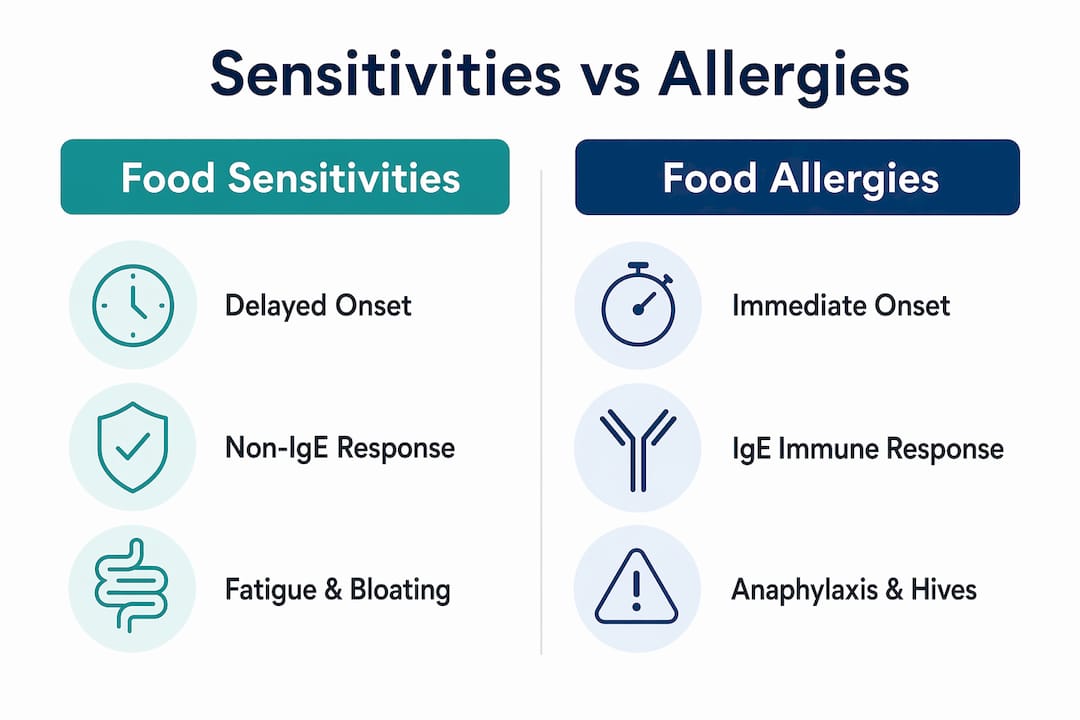
A true food allergy activates IgE antibodies within minutes, producing hives, swelling, or anaphylaxis. A food sensitivity, by contrast, often involves IgG antibodies or a non-immune mechanism, and symptoms can surface anywhere from two hours to two days after eating the offending food. That lag makes it almost impossible to identify the culprit without a structured approach.
Food intolerances sit in a third category. They are not immune-mediated at all. Lactose intolerance, for example, results from a deficiency of the enzyme lactase, which is needed to break down the sugar in dairy. The body cannot process the lactose, so it ferments in the colon, producing gas, bloating, and discomfort. No antibodies are involved.
| Type | Mechanism | Onset | Common symptoms |
|---|---|---|---|
| Food allergy | IgE immune response | Minutes | Hives, swelling, anaphylaxis |
| Food sensitivity | IgG or delayed immune | Hours to days | Fatigue, brain fog, joint pain |
| Food intolerance | Enzyme deficiency | 30 min to a few hours | Bloating, gas, diarrhoea |
Symptoms of hidden food sensitivities include bloating, joint pain, migraines, fatigue, brain fog, and skin reactions, often appearing so long after eating that people never make the connection. That delay is the defining feature of defining hidden food sensitivities correctly.

Pro Tip: Keep a detailed food and symptom diary for at least two weeks before seeking a clinical consultation. Patterns that seem random often become obvious when written down.
One major risk with food sensitivities is misdiagnosis. People frequently attribute their symptoms to stress, poor sleep, or ageing, when the real trigger is something they eat regularly. Self-diagnosis carries its own dangers: avoiding entire food groups without clinical guidance can lead to inadequate calorie and nutrient intake. Professional support is not optional. It is the safest path forward.
How does Sensory Processing Sensitivity differ from food-related reactions?
Sensory Processing Sensitivity (SPS) is a stable neurological trait, not a disorder, affecting how the nervous system processes information. It is one of the most commonly overlooked hidden sensitivities because it has nothing to do with food and everything to do with how the brain is wired.
Psychologist Elaine Aron, who first described SPS, identified four core characteristics summarised by the acronym DOES:
- D Depth of processing: people with SPS think deeply about experiences before acting.
- O Overstimulation: busy environments, loud noise, or social demands drain energy quickly.
- E Emotional reactivity and empathy: strong emotional responses to both positive and negative events.
- S Sensitivity to subtle stimuli: noticing details, textures, smells, and moods that others miss entirely.
SPS is constitutional and neurological, meaning it is present from birth and does not change with therapy. Acquired hypervigilance, by contrast, develops after trauma. It targets threat detection and can distort reality perception, causing a person to misread neutral situations as dangerous. Confusing the two leads to entirely different and often unhelpful responses.
Pro Tip: If you suspect SPS rather than trauma-driven hypervigilance, a consultation with a therapist who specialises in highly sensitive people will give you far more clarity than a general anxiety assessment.
The psychological impact of unrecognised SPS is significant. People often spend years believing something is wrong with them, when in fact their nervous system is simply processing the world more thoroughly than average. Recognising this as a trait rather than a flaw changes the approach from trying to fix yourself to learning to manage your environment.
What are the best methods to identify hidden sensitivities safely?
The gold standard for identifying hidden food sensitivities remains the elimination and reintroduction diet, conducted under clinical supervision. No blood test currently replaces it.
The process works in three stages:
- Elimination phase. Remove all suspected trigger foods from your diet. Clinicians recommend a period of 3–8 weeks to allow inflammation to settle fully before reintroduction begins.
- Reintroduction phase. Reintroduce one food at a time, every three to five days, and record any symptoms carefully. This systematic approach isolates individual triggers with far greater accuracy than guesswork.
- Maintenance phase. Once triggers are confirmed, work with a dietitian to build a nutritionally complete diet that avoids only what is genuinely problematic.
Gut health plays a critical role in test accuracy. Testing for food sensitivities while the gut is inflamed frequently produces false positives from leaky gut because increased intestinal permeability causes exaggerated immune reactions. Healing the gut first improves both test accuracy and symptom resolution.
| Method | Reliability | Notes |
|---|---|---|
| Elimination diet | High | Requires clinical supervision and patience |
| Breath test (lactose) | High | Measures hydrogen from undigested lactose fermentation |
| IgG blood test | Low | Elevated IgG indicates exposure, not pathology |
| Symptom diary | Moderate | Useful for spotting patterns; not diagnostic alone |
IgG food sensitivity tests are widely marketed but not recommended by major allergy societies. Elevated IgG simply shows that your immune system has encountered a food, which is entirely normal. It does not confirm a sensitivity. Spending money on these tests without understanding their limitations can lead to unnecessary dietary restrictions and nutritional harm.
Pro Tip: Before starting any elimination diet, ask your GP or a registered dietitian to check your baseline nutritional status. This protects you from deficiencies during the elimination phase.
For neurological sensitivities, the identification process is different. Structured self-assessment tools, consultation with a psychologist, and a review of your personal history are the most reliable routes. There is no blood test for SPS. The signs of hidden sensitivities in the neurological domain include chronic overwhelm, emotional exhaustion after social events, and a persistent sense of being “too much” for others.
Common hidden sensitivities: triggers, symptoms, and how widespread they are
Lactose intolerance is the most prevalent identifiable food sensitivity globally. Over 50% of the global adult population is affected, with rates significantly higher in East Asian, African, and South American populations due to genetic differences in lactase persistence. That figure puts the scale of hidden food sensitivities into sharp perspective.
FODMAP intolerance affects 10–15% of adults, particularly those with irritable bowel syndrome (IBS). FODMAPs are fermentable carbohydrates found in foods such as onions, garlic, wheat, and certain fruits. The symptoms overlap heavily with other conditions, which is why so many people go undiagnosed for years.
Common symptoms across the most frequent hidden sensitivities include:
- Bloating and abdominal discomfort
- Persistent fatigue not explained by sleep quality
- Headaches and migraines
- Brain fog and difficulty concentrating
- Skin reactions including eczema and rashes
- Joint pain and muscle aches
- Mood changes and irritability
Non-coeliac gluten sensitivity produces many of the same symptoms as coeliac disease but without the intestinal damage. Histamine intolerance, caused by an inability to break down histamine in foods such as aged cheese, wine, and fermented products, triggers flushing, headaches, and nasal congestion. Both conditions are frequently missed because their symptoms mimic so many other health issues.
Food sensitivities are often a symptom of an underlying problem rather than a permanent condition. Healing the gut can eliminate many sensitivities that otherwise appear permanent. That is a genuinely hopeful finding. It means that for many people, the goal is not lifelong avoidance but restoration of gut function. You can find practical guidance on managing food sensitivities naturally as part of a broader health plan.
Key takeaways
Hidden sensitivities are delayed, non-obvious reactions to food or environmental stimuli that require structured identification methods, gut health assessment, and professional guidance to manage safely and effectively.
| Point | Details |
|---|---|
| Delayed symptoms are the key feature | Reactions can appear hours to days after exposure, making self-identification unreliable without a diary or structured plan. |
| Elimination diets remain the gold standard | A 3–8 week elimination phase followed by systematic reintroduction is the most reliable way to confirm food triggers. |
| IgG tests have significant limits | Elevated IgG shows food exposure, not sensitivity; major allergy societies do not recommend these tests for diagnosis. |
| Gut health affects test accuracy | Testing during gut inflammation produces false positives; restoring gut health often resolves many sensitivities entirely. |
| SPS is neurological, not dietary | Sensory Processing Sensitivity is a stable nervous system trait requiring psychological support, not dietary restriction. |
Why I think most people are looking in the wrong place
The most common mistake I see is people chasing a long list of food triggers when the real problem is gut health. A gut that is inflamed or permeable will react to almost anything. Restricting twenty foods does not fix that. It just makes your diet smaller and your life harder.
The second mistake is conflating emotional sensitivity with weakness. Sensory Processing Sensitivity is a neurological trait that affects roughly one in five people. It is not a flaw to be corrected. Recognising it for what it is changes the entire conversation from “what is wrong with me” to “how do I work with my nervous system.”
Hidden sensitivities in relationships are also real and underappreciated. People with SPS often find that certain social environments, communication styles, or emotional dynamics trigger physical symptoms including fatigue, headaches, and digestive upset. The body and the nervous system are not separate systems. They respond to each other constantly.
My honest view is that the most useful thing you can do right now is slow down and observe. A symptom diary, a conversation with your GP, and a willingness to look at gut health before cutting out entire food groups will take you further than any unvalidated blood test. Understanding your sensitivities is not just reassuring. It is the foundation for every practical step that follows.
— Rob
How Ukfoodintolerance can help you find your triggers
If you have been experiencing unexplained symptoms and want a clearer starting point, Ukfoodintolerance offers at-home testing that screens over 900 food and non-food items using bio-resonance technology. The process is simple: collect a small hair sample at home, post it to a UK-based laboratory, and receive a detailed digital report within 48–72 hours.

The report gives you a clear list of potential sensitivities to discuss with your GP or dietitian, making your elimination diet more targeted from the outset. You can browse the full range of intolerance tests to find the option that fits your needs and budget. Testing does not replace clinical advice, but it gives you a concrete, personalised starting point rather than guesswork.
FAQ
What are hidden sensitivities in simple terms?
Hidden sensitivities are delayed or subtle reactions to food, environmental factors, or sensory stimuli that are difficult to identify because symptoms appear long after exposure and often mimic other conditions.
How do hidden food sensitivities differ from food allergies?
Food allergies trigger an immediate IgE immune response within minutes, while food sensitivities cause delayed symptoms such as fatigue, brain fog, and bloating that can appear hours or days after eating the trigger food.
Can hidden food sensitivities be reversed?
Many food sensitivities are linked to underlying gut dysfunction and can resolve once gut health is restored. They are often a symptom of a treatable condition rather than a permanent diagnosis.
Are IgG blood tests reliable for identifying food sensitivities?
No. Major allergy societies do not recommend IgG tests for diagnosing food sensitivities because elevated IgG simply indicates that your immune system has been exposed to a food, which is normal and not a sign of pathology.
What triggers hidden sensitivities in the nervous system?
Sensory Processing Sensitivity is a constitutional neurological trait present from birth, while trauma-induced hypervigilance is an acquired response. Both produce heightened sensitivity but require very different approaches to support and management.










Leave a Reply
Want to join the discussion?Feel free to contribute!