

TL;DR:
- Hidden food triggers often cause delayed and subtle symptoms, making them difficult to identify without structured tracking.
- Elimination diets with careful reintroduction are the most reliable method for diagnosing non-IgE food sensitivities, which can take four to six weeks.
Hidden food triggers are defined as foods or food components that cause delayed, non-obvious reactions, making them difficult to connect to symptoms without systematic investigation. Unlike a classic peanut allergy, which produces an immediate response, these reactions can appear hours or even days after eating, which is why identifying hidden food triggers is one of the most underestimated challenges in managing unexplained health symptoms. The clinical term for this broader category is food sensitivity or non-IgE-mediated food reaction, and understanding the distinction between this and a true food allergy changes everything about how you approach the problem. Symptoms range from bloating and skin flares to mood changes and fatigue, and the foods responsible are rarely the ones you suspect first.
How do hidden food triggers cause symptoms?
The immune system responds to food in two distinct ways, and the difference matters enormously for how you investigate your symptoms. A true IgE food allergy triggers an immediate immune response, sometimes severe enough to be life-threatening, and the oral food challenge remains the gold standard for diagnosis. The Basophil Activation Test shows 90 to 91% sensitivity and approximately 90% specificity for IgE allergies, making it a reliable clinical tool. That level of precision is not available in most at-home kits.

Non-IgE food sensitivities work differently. The immune system still reacts, but the response is slower, less dramatic, and often cumulative. Delayed food reactions can appear three to seven days after exposure and may cause eczema, systemic inflammation, or digestive disruption. This gap between eating and reacting is why most people never connect the two events without structured tracking.
Several factors make hidden food sensitivities particularly hard to spot:
- Symptom latency. Reactions can take up to seven days to appear, making the offending meal easy to forget.
- Cumulative load. Your body may tolerate a small amount of a trigger food, but cross a personal threshold when you eat it repeatedly or alongside other triggers.
- Symptom overlap. Bloating, fatigue, and skin issues are associated with dozens of conditions, not just food reactions.
- Variable presentation. The same food can cause digestive symptoms on one occasion and mood changes on another, depending on your overall inflammatory load.
“The challenge with non-IgE reactions is not identifying the immune response. It is connecting a symptom that appeared on Thursday to something you ate on Monday.” This is why guesswork rarely works, and why structured methods are the only reliable path forward.
What methods work best for finding food sensitivities?
The elimination diet is the gold standard for identifying non-IgE food triggers. It involves removing suspected foods completely for a minimum of four to six weeks, then reintroducing them one at a time to observe reactions. Pseudallergen-free and low-histamine diets typically require two to three weeks before effects become visible, so patience is not optional here. Cutting a food for ten days and seeing no change does not mean it is safe.
The most effective methods, ranked by evidence and practicality, are:
- Elimination diet with structured reintroduction. Remove one or more suspected triggers for four to six weeks. Reintroduce each food individually, waiting at least three days between additions. This is the method most supported by clinical evidence for non-IgE reactions.
- Ingredient-level food diary with a seven-day lookback. Record every ingredient, not just meals. Food diaries can capture over 900 ingredients automatically when using digital tools, and a seven-day lookback window is needed to catch delayed reactions. Meal-level diaries miss the detail required.
- Digital tracking tools. Apps that tag ingredients by chemical category, such as FODMAPs, histamine, or salicylates, help identify patterns that are invisible to the naked eye. This is where technology genuinely adds value.
- Clinical testing. Skin prick tests and blood tests are reliable for IgE allergies. For non-IgE sensitivities, blood tests for food sensitivities lack scientific consensus and are not replacements for elimination diets and clinical evaluation.
- Supervised oral food challenges. The most definitive test for any food reaction, conducted under clinical supervision. Reserved for cases where the diagnosis remains unclear after elimination and reintroduction.
Pro Tip: When keeping a food diary, record the time you ate, the exact ingredients, portion size, and any symptoms over the following seven days. A symptom that appears on day four is just as relevant as one that appears within the hour.
| Method | Best suited for | Limitation |
|---|---|---|
| Elimination diet | Non-IgE sensitivities | Requires four to six weeks minimum |
| Food diary | Identifying patterns and triggers | Only as accurate as the detail recorded |
| Skin prick / blood test | IgE allergies | Not reliable for non-IgE sensitivities |
| At-home sensitivity kits | Initial screening | Not endorsed by the FDA or major allergy organisations as diagnostic tools |
| Supervised oral challenge | Confirming specific triggers | Requires clinical setting |
For severe or persistent symptoms, working with a GP, dietitian, or allergy specialist is not optional. Self-diagnosis carries real risks, including unnecessary food restriction that harms nutritional balance.
Which foods are the most common hidden triggers?
Ninety per cent of food allergies are caused by nine foods: nuts, eggs, milk, soy, wheat, fish, shellfish, and sesame. That statistic covers IgE allergies specifically, but these same foods also appear frequently in non-IgE sensitivity cases. The difference is that with sensitivities, the reaction is subtler and the threshold varies from person to person.
Beyond the obvious nine, several categories of hidden triggers catch people off guard:
- Histamine-rich foods. Aged cheeses, fermented products, wine, and processed meats all contain histamine. People with low levels of the enzyme diamine oxidase struggle to break it down, leading to headaches, flushing, and digestive symptoms.
- Artificial additives. Additives like Red 40 and sodium benzoate have been linked to increased hyperactivity in controlled trials, particularly in children with nervous system sensitivity. This is a clear example of a food reaction that looks nothing like a typical allergy.
- FODMAPs. Fermentable carbohydrates found in onions, garlic, apples, and wheat can trigger bloating and pain in people with irritable bowel syndrome. Crucially, the reaction is dose-dependent.
- Preservatives and sulphites. Found in dried fruit, wine, and many packaged foods, sulphites can trigger asthma-like symptoms and skin reactions in sensitive individuals.
Pro Tip: Do not assume a food is safe just because you have eaten it for years without obvious problems. Sensitivities can develop over time, and cumulative load means a food you tolerate in small amounts may cause symptoms when eaten daily.
The concept of trigger stacking is particularly important here. Multiple FODMAP foods eaten together can trigger symptoms, whereas smaller amounts of each food eaten separately may not. This explains why you might feel fine eating onions in a salad but suffer after a meal containing onions, garlic, and apple juice together. Your personal threshold is the variable, not the food itself.
It is also worth noting that persistent symptoms worsening at home or work may point to environmental triggers such as fragrances rather than food alone. Scented products can cause reactions that closely mimic food sensitivity symptoms. Ruling out environmental factors is part of a thorough investigation.
How do you interpret symptoms and adjust your diet safely?
Once you have collected two to four weeks of detailed food diary data, patterns begin to emerge. The goal is not to eliminate every suspected food at once. That approach makes it impossible to identify which specific trigger is responsible, and it risks creating nutritional gaps.
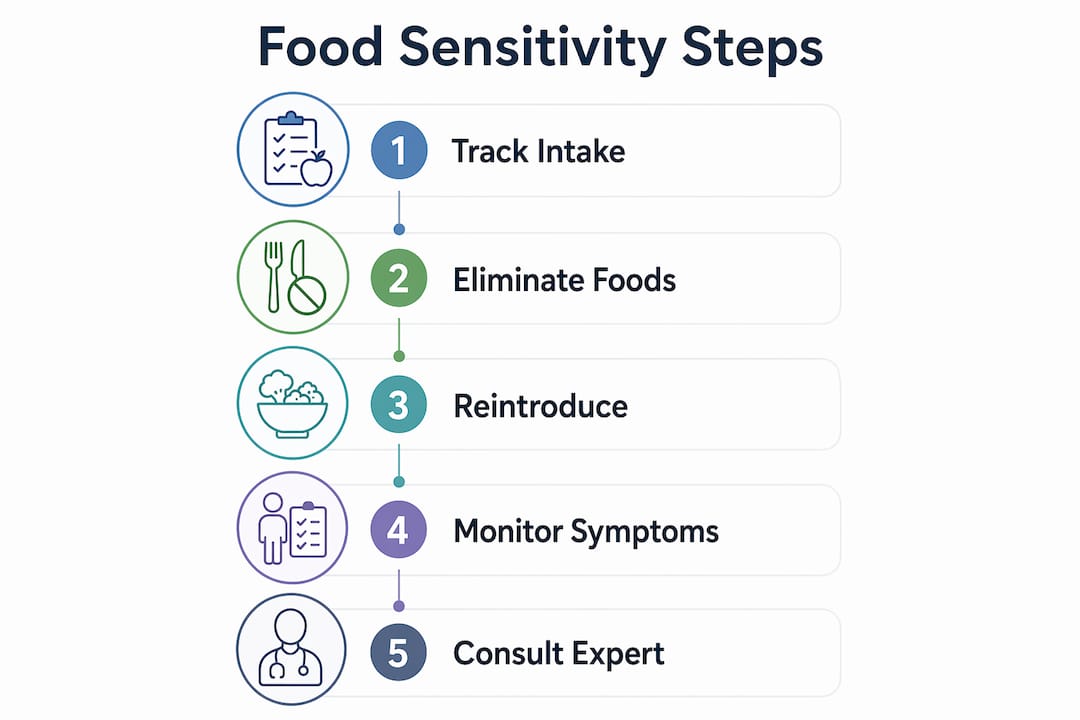
Follow this sequence for safe and accurate dietary adjustment:
- Review your diary for delayed correlations. Look back seven days from each symptom entry. Identify any ingredient that appears repeatedly in the days before symptoms.
- Remove one suspected trigger at a time. Keep everything else constant. Give the elimination at least four to six weeks before drawing conclusions.
- Monitor nutritional balance. Removing dairy, wheat, or eggs without substitution can create deficiencies in calcium, fibre, or protein. A registered dietitian can help you maintain balance during this phase.
- Reintroduce systematically. After the elimination period, reintroduce the removed food in a controlled portion. Wait three days and record any response before moving to the next food.
- Confirm before committing. A reaction during reintroduction confirms the trigger. No reaction means the food is likely safe to reintroduce fully.
Pro Tip: Avoid removing more than two or three foods simultaneously unless directed by a healthcare professional. Broad elimination diets are harder to maintain, harder to interpret, and carry a greater risk of nutritional deficiency.
Unnecessary food avoidance harms nutrition and quality of life. The goal of this process is not to end up with a restricted diet. It is to identify the specific triggers affecting you so that everything else can stay on the table. For complex cases involving multiple symptoms or suspected multiple triggers, a supervised approach with a GP or allergy specialist is the most reliable path to a clear answer. You can also explore practical dietary adjustment guidance to support this process.
Key takeaways
Identifying hidden food triggers requires systematic tracking, structured elimination, and professional support rather than guesswork or broad food avoidance.
| Point | Details |
|---|---|
| Delayed reactions are the core challenge | Symptoms can appear up to seven days after eating, making casual observation unreliable. |
| Elimination diets need time | A minimum of four to six weeks is required before drawing conclusions about any suspected trigger. |
| Ingredient-level diaries outperform meal logs | Recording exact ingredients with a seven-day lookback captures patterns that meal-level notes miss entirely. |
| Trigger stacking explains many puzzling reactions | Combinations of low-level triggers can cross your personal threshold even when each food seems safe alone. |
| At-home tests are screening tools, not diagnoses | Use them as a starting point, then follow up with elimination and clinical evaluation for reliable results. |
Why I think most people approach this the wrong way
Most people start by cutting out the food they ate most recently before feeling unwell. That is the wrong instinct, and it wastes weeks. The food that caused your symptoms on Tuesday was probably eaten on Friday or Saturday. Without a structured diary, that connection is invisible.
I have seen people remove gluten, dairy, and eggs simultaneously, feel better for a fortnight, and then have no idea which food was responsible. They end up avoiding all three indefinitely, which is both unnecessary and nutritionally risky. The data matters more than the hunch.
What actually works is treating this like a proper investigation. You collect evidence first, form a hypothesis second, and test it third. The elimination diet is not a lifestyle choice. It is a diagnostic tool, and it only works when used precisely.
The other thing worth saying plainly: at-home sensitivity tests have a role, but it is a limited one. At-home sensitivity tests are best used as initial screening tools, not as final answers. They can point you in a useful direction, but they cannot replace the controlled elimination and reintroduction process. Use the test to narrow the field, then use the elimination diet to confirm.
If your symptoms are severe, affecting your ability to work or sleep, or if you have any history of anaphylaxis, please see a GP before attempting any elimination protocol. This guide is for people with unexplained but manageable symptoms. It is not a substitute for clinical care.
— Rob
Start identifying your triggers with confidence
If you have been living with unexplained bloating, skin flares, fatigue, or digestive discomfort, a structured approach to finding the cause makes a real difference. Ukfoodintolerance offers non-invasive at-home testing covering over 900 food and non-food items, giving you a clear starting point for your elimination diet.

The process is straightforward. You collect a small hair sample at home, post it to the UK laboratory, and receive a detailed digital report within 48 to 72 hours. The report identifies potential sensitivities across food, environmental, and nutritional categories, so you know exactly where to focus your elimination efforts. Ukfoodintolerance also provides clear guidance on interpreting your results and using them to structure a safe, balanced elimination diet. Browse the full range of intolerance test options and take the first clear step towards understanding your symptoms.
FAQ
What is the difference between a food allergy and a food sensitivity?
A food allergy involves an IgE immune response and can cause immediate, severe reactions including anaphylaxis. A food sensitivity involves a slower, non-IgE response that typically causes delayed symptoms such as bloating, fatigue, or skin issues.
How long does an elimination diet take to show results?
A minimum of four to six weeks is required for most non-IgE food sensitivities. Pseudallergen-free and low-histamine diets may show effects within two to three weeks, but shorter periods are not sufficient to draw reliable conclusions.
Are at-home food sensitivity tests reliable?
At-home tests are useful as an initial screening tool but are not endorsed by major allergy organisations as diagnostic replacements for clinical evaluation. They work best when followed by a structured elimination diet to confirm any flagged sensitivities.
Why do my symptoms seem random even when I track what I eat?
Delayed reactions and trigger stacking are the most common explanations. Symptoms can appear up to seven days after exposure, and combinations of low-level triggers can cross your personal threshold even when each food seems tolerable on its own.
Can non-food factors cause symptoms that look like food reactions?
Yes. Fragrances, scented products, and other environmental triggers can cause reactions that closely mimic food sensitivity symptoms. If your symptoms worsen consistently at home or in a specific environment, environmental factors are worth investigating alongside your diet.










Leave a Reply
Want to join the discussion?Feel free to contribute!