

TL;DR:
- Many children with sensitivities experience overwhelming responses to loud noises, certain foods, or busy environments.
- Support strategies such as creating calm spaces, using transition cues, and implementing personalized sensory diets help children thrive.
If your child melts down at loud noises, refuses most foods, or gets overwhelmed in busy places, you are not alone. Finding practical ways to support children with sensitivities is one of the most common challenges parents bring to health professionals today. Sensory processing sensitivity affects 15 to 20% of children, which means millions of families are navigating the same daily struggles. The good news is that with the right strategies, consistent support, and a little patience, sensitive children genuinely thrive.
Table of Contents
- Key takeaways
- 1. Create a calm and predictable environment
- 2. Use transition cues to reduce anxiety
- 3. Implement a personalised sensory diet
- 4. Work with an occupational therapist
- 5. Support food sensitivities with gentle feeding strategies
- 6. Know when to seek specialist feeding support
- 7. Introduce allergens early where appropriate
- 8. Practise emotional co-regulation together
- 9. Validate and label emotions consistently
- 10. Compare and choose the right combination of strategies
- My honest take on raising a sensitive child
- Understanding food sensitivity triggers with at-home testing
- FAQ
Key takeaways
| Point | Details |
|---|---|
| Sensitivity is common and manageable | Around 15 to 20% of children are highly sensitive, but tailored support makes a significant difference. |
| Environment shapes behaviour | Calm, predictable surroundings reduce anxiety and sensory overload for sensitive children. |
| Non-coercive feeding works | Gentle, pressure-free feeding approaches lead to 30 to 50% higher food acceptance rates. |
| Co-regulation comes first | Parents must model calm before children can learn to self-regulate their emotions. |
| Testing can clarify food triggers | At-home food sensitivity testing helps identify dietary triggers, guiding practical elimination strategies. |
1. Create a calm and predictable environment
One of the most practical ways to support children with sensitivities is to look carefully at their physical surroundings. Sensitive children are not being dramatic. Their nervous systems genuinely process sensory input more deeply than those of their peers. What feels mildly bright or noisy to you can feel genuinely overwhelming to them.
Consistent routines and predictable environments lower anxiety and reduce behavioural challenges in highly sensitive children. Start by auditing your home for common sensory triggers:
- Harsh overhead lighting (swap for warm lamps where possible)
- Background noise from televisions or radios left on throughout the day
- Cluttered, visually busy spaces that provide too much stimulation
- Unexpected changes to daily schedules without advance warning
Setting up a dedicated quiet corner, with soft cushions, a weighted blanket, and low lighting, gives your child somewhere to decompress without shame or pressure. Think of it as a reset space, not a timeout.
Pro Tip: Keep a simple daily log for two weeks, noting the time, location, and activity before any meltdown or withdrawal. Patterns often reveal hidden triggers, such as pre-lunchtime hunger or transitions between activities, that are easy to adjust once you spot them.
2. Use transition cues to reduce anxiety
Transitions are particularly hard for sensitive children. Moving from one activity to another without warning is like having someone pull the rug from beneath them. The discomfort is real.
Give five-minute and two-minute verbal warnings before any change. Use visual timers, which are widely available and inexpensive, so children can see time passing rather than just being told about it. Pair a consistent phrase with each transition, such as “almost time to tidy up,” and say it the same way each time. The repetition itself becomes a comfort.
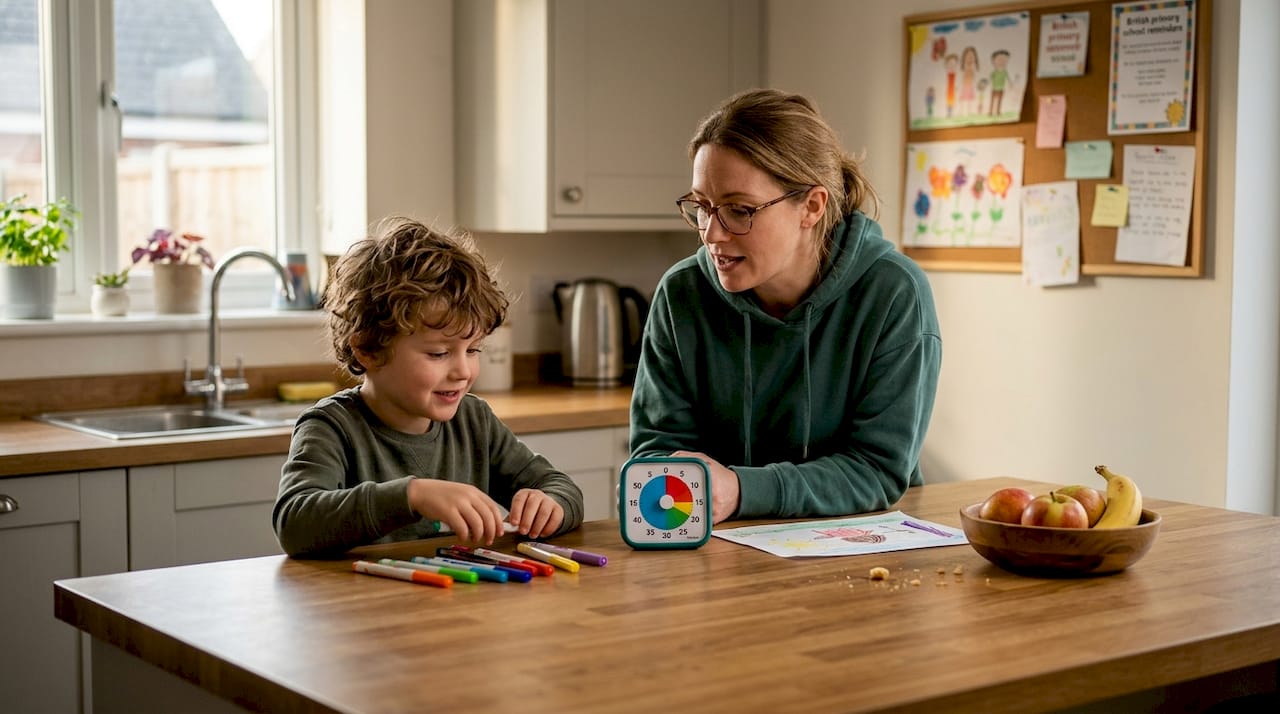
Over time, these cues become anchors your child can rely on, which makes the world feel a little more manageable and a lot less threatening.
3. Implement a personalised sensory diet
A sensory diet is not about food. It is a proactive programme of sensory activities scheduled throughout the day to help regulate the nervous system and reduce the frequency and intensity of meltdowns. Think of it as preventative support rather than a response to a crisis.
Effective sensory diet activities include:
- Movement breaks such as jumping on a trampoline, wall push-ups, or bear crawls
- Tactile play like sand, kinetic clay, or water play
- Deep pressure activities including heavy blankets, firm hugs, or carrying a loaded backpack
- Oral input such as chewy snacks, blowing bubbles, or drinking through a thick straw
The key word here is personalised. A sensory diet must be tailored to the individual child, ideally with input from a paediatric occupational therapist. Generic lists from the internet risk under-stimulating or over-stimulating your child, which can make things worse rather than better.
Pro Tip: Start with just one or two scheduled sensory breaks per day, at predictable times such as after school or before meals. Observe your child’s response over a week before adding more.
4. Work with an occupational therapist
A paediatric occupational therapist, often called an OT, is one of the most valuable allies you can have when supporting sensitive children. They assess how your child processes sensory information and design specific intervention plans around those findings.
OTs can identify whether your child seeks or avoids certain sensory inputs, which informs everything from classroom seating to clothing choices. Many NHS areas offer paediatric OT referrals through your GP, and private options are widely available. Even a single assessment can give you concrete, practical guidance that generic online advice simply cannot provide.
If your child’s school is struggling with their behaviour or concentration, sharing OT recommendations with teachers often transforms how staff respond and adapt the learning environment.
5. Support food sensitivities with gentle feeding strategies
Food is one of the most emotionally loaded areas for families of sensitive children. Selective eating, strong food refusals, and physical reactions to certain foods are all common. Understanding the difference between a food preference, a food sensitivity or intolerance, and a true allergy matters enormously for how you respond.
Here is a quick overview of the distinctions:
- Food preference – The child dislikes the taste, texture, or appearance of a food but shows no physical symptoms.
- Food sensitivity or intolerance – The child experiences digestive discomfort, bloating, skin reactions, or fatigue linked to specific foods. This is not immune-mediated.
- Food allergy – An immune response that can be immediate and serious. The gold standard for diagnosis is a supervised oral food challenge with a board-certified allergist, not a home test.
For everyday selective eating, non-coercive feeding strategies produce 30 to 50% higher food acceptance compared to pressure-based approaches. Practical steps include:
- Offering one familiar safe food alongside every new or learning food at each meal
- Modelling relaxed enjoyment of new foods without commenting on your child’s response
- Keeping mealtimes calm, structured, and free from screens or distractions
- Using positive, curious language: “I wonder what this tastes like” rather than “just try it”
You can read more about managing food sensitivity in children to understand the signs and practical next steps for your family.
Pro Tip: Food chaining works well for very selective eaters. Start with an accepted food and gradually introduce variations. If your child likes plain crackers, try crackers with a tiny smear of butter. Small steps lead to bigger changes over time.
6. Know when to seek specialist feeding support
Picky eating becomes a clinical concern when a child eats fewer than around 20 different foods, consistently gags or vomits at mealtimes, or shows nutritional deficiencies. This profile may indicate Avoidant Restrictive Food Intake Disorder (ARFID), a recognised eating disorder that requires specialist support from a paediatric feeding therapist or dietitian.
Do not wait and hope things improve on their own in these cases. Early support for ARFID significantly improves outcomes. Your GP can make a referral, and there are specialist feeding clinics across the UK that work with children as young as two.
For children with suspected food intolerances rather than allergies, an environmental sensitivity checklist can help you document patterns before speaking to a professional.
7. Introduce allergens early where appropriate
Current clinical guidance supports introducing peanut-containing foods at 4 to 6 months to reduce the risk of developing a peanut allergy. This applies to most infants, including those with mild eczema. Routine allergy testing is not recommended before this early introduction in low-risk children.
If your child has severe eczema or an existing egg allergy, speak to your GP or a paediatric allergist before introducing peanuts. The recommendation is not one-size-fits-all, but for the majority of families, early introduction is one of the most effective preventative steps available.
8. Practise emotional co-regulation together
Sensitive children feel emotions intensely. Telling a child who is overwhelmed to “calm down” rarely works. What actually helps is co-regulation, which means a calm adult regulates alongside the child before expecting independent emotion control.
Practical co-regulation looks like this:
- Sitting beside your child quietly during a meltdown rather than escalating with commands
- Narrating calmly: “I can see you are feeling really upset right now. I am right here.”
- Using gentle grounding techniques together: slow breathing, counting five things you can see, or a short quiet walk
- Playing soft music during predictably stressful times, such as homework or getting ready for school
Once calm is restored, you can talk. Not before.
9. Validate and label emotions consistently
Emotional validation and modelling calm behaviour reduce distress in sensitive children during stressful moments. Dismissing a child’s feelings, even gently, teaches them that their inner experience is wrong. That creates shame, not resilience.
Instead, label what you observe. “You look really frustrated that we had to leave the park.” This does two things. It shows the child they are understood, and it builds their emotional vocabulary so they can eventually name feelings themselves. Over time, children who are consistently validated develop stronger self-regulation skills than those who are told to toughen up.
Expressive activities like drawing, clay modelling, or imaginative play also give sensitive children non-verbal outlets for big emotions. These are not extras. For many sensitive children, they are where genuine processing happens.
10. Compare and choose the right combination of strategies
No single approach works for every child. The most effective support combines strategies across several areas. This table gives you a quick overview to help you evaluate where to start.
| Strategy | Best suited for | Professional needed? | Time to see results |
|---|---|---|---|
| Environmental adjustments | Sensory overload, anxiety | No | Days to weeks |
| Sensory diet | Regulation, meltdown reduction | OT recommended | 2 to 6 weeks |
| Gentle feeding approaches | Selective eating, food refusal | Not always | Weeks to months |
| Emotional co-regulation | Emotional overwhelm, meltdowns | No | Weeks onwards |
| Food sensitivity testing | Unexplained symptoms, GI issues | GP or specialist | Varies |
Celebrate every small gain. A child who tries one new food or manages a transition without a meltdown has achieved something real. Progress in supporting sensitive children is rarely linear, but it is always cumulative.
My honest take on raising a sensitive child
I have spoken with many parents who come to sensitivity support feeling like they have already failed. They have tried the sticker charts, the firm boundaries, the “just ignore the behaviour” advice. None of it worked. That is not because they are bad parents. It is because most mainstream parenting strategies were not designed for highly sensitive children.
What I have learned, both through reading the research and listening to families, is that the biggest shift is not about technique. It is about reframing. Sensitivity is not a flaw to fix. It is a trait. Sensitive children often become deeply empathetic, creative, and perceptive adults when their early environment supports rather than suppresses their nature.
The parents who see the most progress are not the ones who implement every strategy at once. They are the ones who pick one thing, stay consistent with it for three or four weeks, and adjust from there. Patience is not passive. It is one of the most active and demanding things you can do for your child.
— Rob
Understanding food sensitivity triggers with at-home testing
If your child experiences unexplained digestive discomfort, skin reactions, or fatigue that you suspect may be linked to food, identifying the specific triggers is the practical first step. Ukfoodintolerance offers non-invasive, at-home food intolerance tests that analyse over 1,100 food and environmental items using a simple hair sample collected at home.

The process is straightforward. You collect a small hair sample, post it to Ukfoodintolerance’s UK laboratory, and receive a detailed digital report within 48 to 72 hours. The results are clear and easy to read, making them a practical starting point for an elimination diet. You can browse the full range of sensitivity testing options to find the right fit for your child’s needs. Always use testing results alongside guidance from your GP or a registered dietitian, particularly when nutritional needs are involved.
FAQ
What are the most effective ways to support children with sensitivities?
The most effective approach combines environmental adjustments, a personalised sensory diet, gentle feeding strategies, and emotional co-regulation. Tailoring support to your child’s specific triggers, rather than using a generic approach, produces the best results.
How do I know if my child has a food sensitivity or a food allergy?
Food sensitivities typically cause digestive discomfort, skin issues, or fatigue without an immune response, while food allergies involve the immune system and can be serious. For suspected food allergies, proper diagnosis requires a supervised oral food challenge with a board-certified allergist.
At what age should I introduce peanuts to reduce allergy risk?
Current guidelines recommend introducing peanuts at 4 to 6 months for most infants. If your child has severe eczema or an existing egg allergy, consult your GP or paediatric allergist first before introduction.
When should I seek professional help for my child’s selective eating?
Seek specialist support if your child eats fewer than around 20 foods, gags or vomits consistently at mealtimes, or shows signs of nutritional deficiency. These patterns may indicate ARFID, which responds well to early specialist feeding support.
Can a sensory diet really reduce meltdowns?
Yes. A well-designed sensory diet reduces both the frequency and intensity of meltdowns by proactively regulating the nervous system throughout the day. It works best when personalised with input from a paediatric occupational therapist rather than based on generic activity lists.










Leave a Reply
Want to join the discussion?Feel free to contribute!