

TL;DR:
- Many people in the UK experience unexplained bloating, skin issues, fatigue, or headaches linked to food sensitivities. Accurate diagnosis relies on professional assessment, as commercial tests like IgG or hair analysis are unreliable and may cause nutritional harm. The safest approach involves an elimination diet guided by a dietitian, followed by careful reintroduction to restore a balanced, tolerable diet.
If you have been struggling with bloating, skin flares, fatigue, or headaches that no one seems to explain, you are not alone. Many people in the UK suspect food is the culprit, yet building a sensitivity-friendly diet can feel overwhelming, especially when conflicting advice and unreliable commercial tests muddy the waters. No reliable food intolerance test currently exists that can replace professional clinical assessment, yet the market is flooded with options that promise otherwise. This guide cuts through the noise and shows you how to approach food sensitivities safely, clearly, and with lasting results.
Table of Contents
- Understanding food sensitivities, intolerances, and allergies
- Why commercial food intolerance tests often mislead
- The elimination diet: safely identifying trigger foods
- Balancing nutrition while eating a sensitivity-friendly diet
- Practical tips for maintaining a sensitivity-friendly diet in daily life
- Rethinking sensitivity diets: beyond restriction to restoration
- Explore trusted food intolerance tests and expert dietary guidance
- Frequently asked questions
Understanding food sensitivities, intolerances, and allergies
Before building a sensitivity-friendly diet, you need to know exactly what you are dealing with. The terms “allergy,” “intolerance,” and “sensitivity” are often used interchangeably, but they describe very different things. Getting this distinction wrong can lead to unnecessary restrictions, missed diagnoses, and real harm.
Here is a clear breakdown:
- Food allergy: The immune system reacts to a specific food protein. Symptoms appear quickly, sometimes within minutes, and can include hives, swelling, or anaphylaxis. There are 14 major allergens recognised under UK law, including milk, eggs, nuts, and wheat.
- Food intolerance: This does not involve the immune system. Symptoms such as bloating, loose stools, or stomach cramps are usually delayed, appearing hours after eating. Lactose intolerance is the most well-known example.
- Food sensitivity: A broader, less defined term. It refers to reactions that are real and disruptive but do not fit neatly into allergy or intolerance categories. Symptoms can include brain fog, joint pain, and skin issues.
Understanding the difference between intolerance and allergy is not just academic. It shapes how you investigate, what you eliminate, and how long you restrict foods. Acting on the wrong assumption can do more harm than eating the food itself.
Accurate diagnosis requires a detailed symptom history, a food diary, and professional assessment. There is no shortcut that replaces this process.
Why commercial food intolerance tests often mislead
With a clear understanding of allergy versus intolerance, it is important to be wary of misleading commercial testing options. Many people turn to postal kits and online platforms when their GP offers little help. The appeal is understandable. You want answers fast. But most of these products cannot deliver what they promise.
“Commercial IgG and hair tests lack scientific reliability and are not recommended for diagnosing food intolerances. They can result in unnecessary, and sometimes harmful, dietary restriction.”
IgG tests measure your immune memory of foods you have eaten regularly, not reactions that are causing harm. Elevated IgG simply means your body has been exposed to that food. It says nothing about whether it is making you unwell. Hair sample analysis has no validated mechanism for detecting food reactions at all.
The real risks of relying on these tests include:
- False positives that lead to eliminating nutritious foods without cause
- Nutritional deficiencies from removing entire food groups unnecessarily
- Persistent symptoms because the actual trigger food is never identified
- Wasted money on retesting and supplements that are not needed
Pro Tip: If a test does not involve a dietitian or clinician reviewing your results in context with your full symptom history, treat its output with caution. A result on its own is not a diagnosis.
When choosing reliable intolerance tests, look for methods that are used as a starting point for professional assessment rather than a standalone answer. The goal of any test should be to narrow down suspects for a properly supervised elimination trial, not to hand you a list of banned foods.
For those curious about where newer approaches fit in, reading about reliable food sensitivity detection can help you ask better questions when speaking with a clinician.
The elimination diet: safely identifying trigger foods
Having understood why elimination diets are preferred, let us see how to carry one out safely and effectively. The elimination diet is the method clinicians and dietitians trust most. It works by removing suspect foods from your diet for a set period, then reintroducing them one at a time to observe your body’s response.
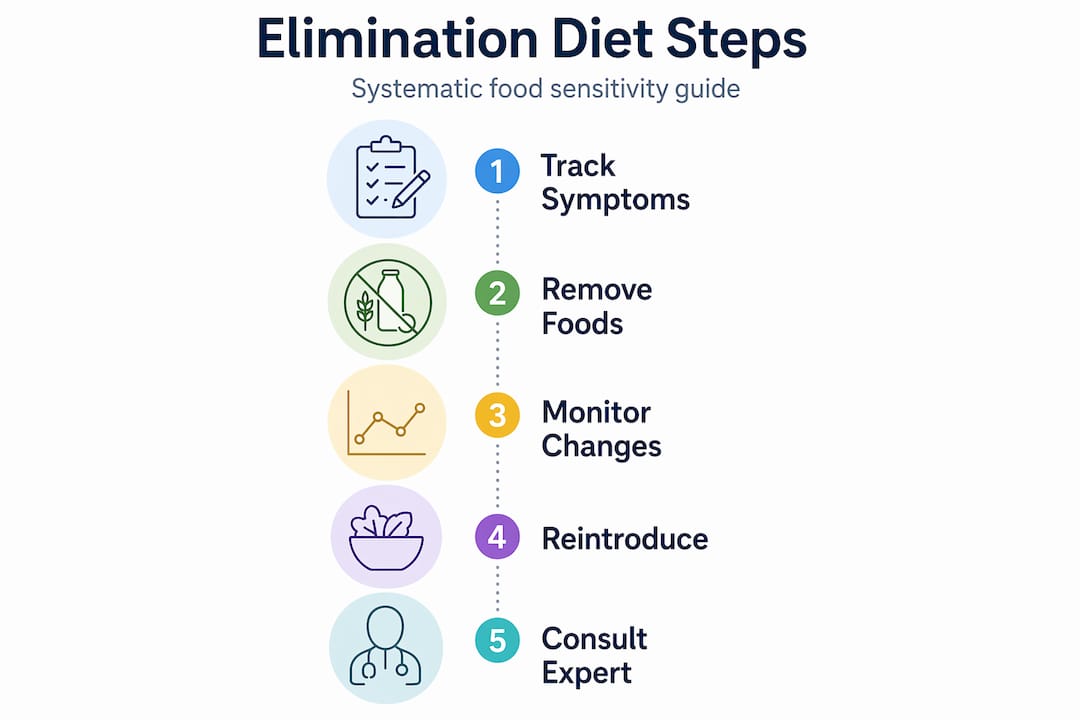
How to carry out an elimination diet step by step:
- Consult a registered dietitian. Dietitian-led elimination and reintroduction is the gold standard approach. Do not begin without professional guidance.
- Identify suspect foods. Based on your symptom diary and history, your dietitian will suggest which foods to remove first.
- Begin the elimination phase. Typically lasting two to four weeks, this phase removes all suspected trigger foods completely.
- Monitor your symptoms. Keep a detailed food and symptom diary every day. Note energy levels, digestion, skin, and mood.
- Start the reintroduction phase. Reintroduce one food at a time, every three to five days, while continuing your diary.
- Record your responses. If symptoms return after a specific food, that food is a likely trigger. If not, it can be safely added back.
The top eight allergens most commonly removed during the elimination phase are:
| Food group | Common sources |
|---|---|
| Milk and dairy | Cheese, butter, cream, yoghurt |
| Eggs | Baked goods, mayonnaise, pasta |
| Wheat | Bread, pasta, cereals, sauces |
| Soy | Tofu, edamame, soy sauce |
| Peanuts | Peanut butter, snack bars |
| Tree nuts | Almonds, cashews, walnuts |
| Fish | Salmon, cod, tuna |
| Shellfish | Prawns, crab, lobster |
These are the foods most associated with sensitivities across the population. Eliminating them systematically, rather than all at once permanently, gives you clear information about what is and is not a trigger for you specifically.
Pro Tip: Keep your diary digital if possible. It is easier to search by date or symptom, and sharing it with your dietitian during appointments saves a lot of time.
When it comes to dietary adjustments for sensitivities, having a clear process matters. The step-by-step workflow for managing sensitivities can help you stay organised throughout the process.
Balancing nutrition while eating a sensitivity-friendly diet
With the elimination framework in mind, let us explore how to keep your diet balanced and nourishing during this process. This is where many people run into real difficulty. Removing multiple food groups simultaneously can create nutritional gaps if you are not careful.

Dietitian support is vital when eliminating foods because key nutrients such as calcium, vitamin D, and protein can quickly fall short. This is especially true if you are removing dairy or wheat, which contribute significantly to daily intake for most people in the UK.
Here is what to focus on during any elimination phase:
- Calcium: If dairy is removed, increase intake of fortified oat milk, tinned sardines with bones, broccoli, and kale.
- Vitamin D: With less dairy in your diet, a daily supplement of 10 micrograms is often advised, particularly in UK winters.
- Protein: Replace eggs or fish with legumes, chicken, seeds, and quinoa to maintain muscle repair and energy.
- Fibre: Removing wheat can reduce fibre intake sharply. Brown rice, oats (if tolerated), sweet potato, and lentils help fill this gap.
- Iron: Wheat-based foods are often fortified with iron. Replace with green leafy vegetables, pumpkin seeds, and lean red meat.
Nutritional tips for sensitive diets go beyond simply swapping like for like. Some substitutes have lower bioavailability, meaning your body absorbs less of the nutrient compared to the original source. A registered dietitian can calculate your individual needs and recommend supplements where food alone is not enough.
Pro Tip: Before starting an elimination diet, ask your GP for a baseline blood test. It gives you and your dietitian a clear starting point and helps identify any deficiencies before they become problems.
You can also find specific guidance on practical diet adjustments for the UK to help navigate local food labelling and supermarket alternatives.
Practical tips for maintaining a sensitivity-friendly diet in daily life
With nutritional balance ensured, let us turn to making this diet work smoothly in everyday life. Allergy-friendly meal planning only succeeds long term if it fits into your actual routine. Theory is one thing. The reality of weekday lunches, dinner parties, and supermarket trips is another.
Planning meals and involving your wider support network significantly improves how well any special diet for sensitivities is maintained. Here are practical strategies that work:
- Batch cook on weekends. Sensitivity-free recipe ideas such as rice and vegetable bowls, lentil soups, and roasted chicken trays can be prepared ahead and refrigerated for the week.
- Read labels every time. Ingredients change without notice. Do not assume a product you have used before is still safe.
- Communicate at restaurants. Contact venues in advance and ask about allergen menus. Most UK restaurants are legally required to disclose the 14 major allergens.
- Plan for social events. Eat something safe before attending, or bring a dish you have prepared yourself. This removes the pressure of finding safe options on the day.
- Involve family or housemates. Educate those you live with on why your diet matters. Their understanding prevents accidental cross-contamination at home.
- Continue your diary. Even once you have completed the elimination phase, a food and symptom diary remains one of your most valuable tools.
Creating a mindful eating plan also means being kind to yourself about setbacks. If you eat something you were avoiding, note what happened, learn from it, and move on. Guilt and anxiety around food can make symptoms worse, not better.
Pro Tip: Use a free app such as a food diary tracker to log meals and symptoms consistently. Consistency over several weeks is what makes the data meaningful.
For families navigating these challenges together, food sensitivity support for families offers clear and practical guidance tailored to that situation.
Rethinking sensitivity diets: beyond restriction to restoration
Most articles on sensitivity-friendly eating stop at what to remove. We think that is only half the story, and honestly the less important half.
The goal is never permanent elimination. The goal is to identify what is causing harm, address the underlying reason it is causing harm, and then, wherever possible, restore your diet to the widest variety you can tolerate. Restriction is a tool, not a destination.
Restoring gut function and supporting microbiome balance often reduces sensitivity symptoms over time, meaning some foods that once caused reactions may become tolerable again. This is particularly well documented in children, but the same principle applies to adults. Your gut is not a fixed system. It responds to what you feed it, how you manage stress, and whether you give it time to recover.
What this means practically is that working with a dietitian on dietary adjustments beyond elimination should include a plan for gradual reintroduction, not just an ever-growing list of banned foods. Every food you can safely reintroduce is a win for your nutrition, your social life, and your relationship with eating.
We also believe that over-restriction, especially when driven by unvalidated commercial tests, is one of the most underreported harms in this space. People who receive a list of thirty “reactive” foods and eliminate all of them simultaneously are not getting healthier. They are getting malnourished and more anxious about food. That outcome is not neutral. It is harmful. A positive mindset, professional support, and a clear plan for expansion are just as important as knowing what to avoid.
Explore trusted food intolerance tests and expert dietary guidance
Now that you understand how to build and maintain a sensitivity-friendly diet, you can explore trusted tools and expert support to guide your journey.

At UK Food Intolerance, we offer at-home testing that covers a broad range of food and environmental items, giving you a useful starting point for conversations with your dietitian. Our range of intolerance tests includes two options designed to suit different needs and budgets, with results delivered digitally within 48 to 72 hours. Pair your results with our practical dietary adjustment guide and step-by-step sensitivity management resources to make your next steps clear and manageable. We are here to support you, not overwhelm you.
Frequently asked questions
Are IgG and hair sample tests reliable for identifying food sensitivities?
No, these tests are generally unreliable. IgG and hair tests lack scientific support and can lead to unnecessary dietary restrictions that may cause nutritional harm.
What is the best method to identify food sensitivities safely?
A dietitian-led elimination and reintroduction diet is considered the gold standard. This approach is recommended because it identifies true trigger foods without unnecessary permanent restriction.
Which foods are commonly removed during elimination diets?
The top eight allergens typically removed include dairy, eggs, wheat, soy, peanuts, tree nuts, fish, and shellfish during the elimination phase.
How can I maintain good nutrition while following an elimination diet?
Replace eliminated nutrients with suitable alternatives and use supplements where needed. Dietitian support is vital to prevent gaps in calcium, vitamin D, protein, and fibre.
Can sensitivity-friendly diets be maintained long-term without harm?
Yes, when managed with professional support and a focus on gradual reintroduction and gut health restoration, most people can expand their diet over time rather than restricting it permanently.










Leave a Reply
Want to join the discussion?Feel free to contribute!