

TL;DR:
- At-home food intolerance tests, such as IgG blood and hair analysis kits, lack scientific validation and may cause more harm than good.
- Experts and UK health authorities advise using supervised elimination diets rather than unreliable testing methods to accurately identify food sensitivities.
If you’ve been struggling with bloating, fatigue, skin flare-ups, or persistent digestive discomfort, you’ve probably been tempted by the growing number of at-home food intolerance test kits available online. They promise fast answers, no GP appointments, and a clear list of foods to avoid. It sounds ideal. But UK health authorities including the NHS, the British Dietetic Association, and Guts UK do not recommend these tests, and for good reason. This guide explains what the evidence actually says, where the risks lie, and what genuinely works.
Table of Contents
- What are at-home food intolerance tests and why are they popular?
- What does the science say? NHS and expert views on at-home food intolerance testing
- Common pitfalls and risks: when at-home testing does more harm than good
- What actually works? Safe and effective alternatives to at-home intolerance testing
- The reality: why convenience is not enough and expert support matters
- Get reliable support for food intolerance testing and dietary advice
- Frequently asked questions
Key Takeaways
| Point | Details |
|---|---|
| Convenience comes with risks | At-home kits are easy but can lead to dangerous, unnecessary diet changes. |
| NHS does not endorse most kits | UK health authorities only recommend elimination diets for food intolerance, not test kits. |
| Scientific backing matters | Many at-home tests lack evidence and trustworthy results, potentially causing harm. |
| Safe alternatives exist | A dietitian-guided elimination diet is the safest, most effective method for discovering food triggers. |
| Expert support is key | Lasting dietary changes and symptom improvement come with professional guidance, not guesswork. |
What are at-home food intolerance tests and why are they popular?
At-home food intolerance tests are kits you order online, use yourself at home, and send back for analysis. The two most common types are IgG blood tests and hair analysis kits. IgG tests involve a finger-prick blood sample that is analysed for antibody reactions to specific foods. Hair analysis kits ask you to send a small hair sample, which is then assessed using a technique called bioresonance. Both types claim to identify foods your body may be reacting to.
The appeal is easy to understand. You don’t need a GP referral. You don’t have to wait weeks for an appointment. Results often arrive within a few days, and the process feels straightforward and private. For people who have been dealing with vague, ongoing symptoms without a clear diagnosis, these kits feel like a lifeline.
The convenience of at-home testing is a genuine draw, and it’s no surprise that demand has risen sharply across the UK in recent years. Many people are frustrated by long NHS waiting times or feel their symptoms aren’t being taken seriously. A kit that arrives the next day and promises answers within 48 hours is a very attractive option.
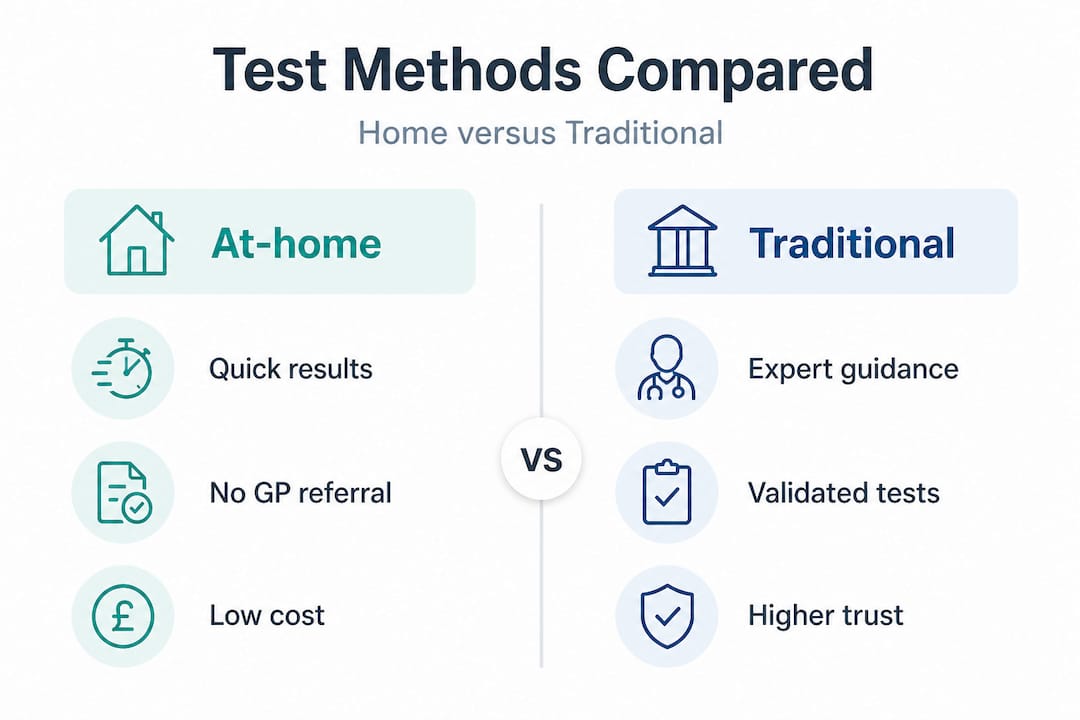
Here’s a quick comparison of at-home tests versus traditional methods:
| Feature | At-home tests | Traditional methods |
|---|---|---|
| Speed | 24 to 72 hours | Days to weeks |
| Cost | £30 to £200+ | Varies, often NHS-funded |
| Privacy | High | Lower |
| Scientific backing | Not validated | Evidence-based |
| Professional support | None | Dietitian or GP guided |
| Risk of false results | High | Low |
The practical benefits for UK health management are real in terms of accessibility and speed. But speed without accuracy is a problem. As experts emphasise, the risks of unvalidated tests can outweigh the convenience, and a supervised elimination diet remains a more reliable and non-invasive alternative.
Common reasons UK residents choose at-home tests include:
- Chronic symptoms with no clear diagnosis
- Long NHS waiting lists for specialist referrals
- Desire for privacy and control over their health
- Lower perceived cost compared to private clinics
- Marketing that promises fast, clear results
What does the science say? NHS and expert views on at-home food intolerance testing
Once you understand the appeal, it’s crucial to check what science and the NHS actually say. The picture is not encouraging for most at-home test formats.
The NHS, British Dietetic Association (BDA), Guts UK, the British Society for Allergy and Clinical Immunology (BSACI), and consumer group Which? have all reviewed the evidence. Their collective position is clear: at-home intolerance tests, particularly IgG blood tests and hair analysis, are not scientifically validated for diagnosing food intolerances.
The reason IgG tests fall short is important to understand. IgG antibodies are a normal part of your immune system’s response to foods you eat regularly. Having a high IgG response to a food simply means you eat it often. It does not mean you are intolerant to it. As Which? found, IgG tests measure normal immune responses to frequently consumed foods, indicating exposure or tolerance rather than intolerance, and this leads to frequent false positives for common foods like milk and wheat.
Hair analysis tests have even less scientific support. There is no established biological mechanism by which a strand of hair can reveal food sensitivities. Studies comparing results from the same hair sample sent to different labs have found wildly inconsistent outcomes.
“The best way to diagnose a food intolerance is to follow an elimination diet under the supervision of a registered dietitian. Tests that claim to diagnose food intolerances, such as IgG blood tests and hair analysis, are not recommended.” — Guts UK
Here is how UK health authorities rate the most common test types:
| Test type | Authority | Verdict |
|---|---|---|
| IgG blood test | BDA, BSACI, Guts UK | Not recommended, not validated |
| Hair analysis | NHS, Which? | No scientific basis |
| Skin prick test | NHS | Valid for allergies, not intolerances |
| Elimination diet | NHS, Guts UK, BDA | Gold standard approach |
| Coeliac blood test | NHS | Validated for coeliac disease |
It is worth noting that the NHS does support at-home testing in some specific contexts, such as HIV testing and coeliac screening via faecal calprotectin. But food intolerances are not included. The NHS recommends GP referral and dietitian-guided elimination for anyone experiencing persistent food-related symptoms.
Exploring non-invasive testing trends in the UK reveals growing consumer interest, but also a widening gap between what people expect from these kits and what they can actually deliver.
Common pitfalls and risks: when at-home testing does more harm than good
Scientific consensus is clear, which is why understanding the risks is just as important as knowing the appeal. At-home food intolerance tests don’t just fail to help. In some cases, they actively cause harm.
Here are the most significant risks to be aware of:
-
Unnecessary dietary restrictions. A false positive result may lead you to cut out foods you actually tolerate well. Removing nutrient-rich foods like dairy, wheat, or eggs without medical reason can quickly lead to nutritional gaps.
-
Malnutrition and deficiencies. Unreliable test results can prompt overly restrictive diets, putting you at risk of deficiencies in calcium, iron, B vitamins, and fibre, particularly if multiple food groups are eliminated at once.
-
Delayed proper diagnosis. If you believe you’ve found your answer through a home kit, you may stop seeking proper medical advice. This can delay the identification of genuine conditions such as coeliac disease, inflammatory bowel disease, or irritable bowel syndrome (IBS).
-
Increased stress and anxiety around food. Receiving a long list of “problem foods” can make mealtimes stressful and socially isolating, even when those foods pose no real risk to your health.
-
Financial cost with no benefit. Many kits cost between £50 and £200. That money could fund a private dietitian consultation or support a properly guided elimination process.
“Tests may flag tolerated foods, prompting overly restrictive diets risking deficiencies. For IBS patients, partial exclusions such as lactose-free milk may suffice over total avoidance.” — Which?
There is an important nuance here, particularly for people with IBS. Not every intolerance requires total food elimination. For example, someone with lactose intolerance may manage perfectly well with lactose-free dairy products rather than cutting out dairy entirely. A home kit is unlikely to offer this kind of nuanced guidance. That’s where professional support makes a real difference.
Pro Tip: Before making any significant changes to your diet based on test results, speak to a registered dietitian. They can help you identify food intolerances naturally and safely, without risking your nutritional health.
What actually works? Safe and effective alternatives to at-home intolerance testing
Instead of frustrating guesswork or unreliable kits, here’s what health experts actually recommend for safely identifying your food triggers.
The gold standard is the elimination diet, a structured process that removes suspected trigger foods and then reintroduces them one at a time to observe your body’s response. It requires patience, but it delivers real, personalised results.
Here is how the process works step by step:
-
Identify your suspects. Keep a food and symptom diary for one to two weeks before starting. Note what you eat, when symptoms appear, and how severe they are. This helps you and your dietitian identify patterns.
-
Eliminate suspected foods. Remove the suspected trigger foods from your diet completely for two to four weeks. Common starting points include gluten, dairy, eggs, soy, and certain additives.
-
Monitor your symptoms. During the elimination phase, track your symptoms carefully. Note any improvements in digestion, energy, skin, or mood. This data is essential for the next stage.
-
Reintroduce foods one at a time. After the elimination phase, reintroduce each food individually. Allow three to five days per food before adding the next. This gives your body enough time to react if a sensitivity exists.
-
Record your reactions. Keep detailed notes on any symptoms that return after reintroduction. This is how you pinpoint food triggers with confidence and clarity.
-
Work with a dietitian throughout. A registered dietitian ensures you maintain nutritional balance during elimination, interpret your results accurately, and avoid unnecessary long-term restrictions.
The elimination diet guide process is supported by Guts UK as the most reliable method for identifying food intolerances, with no lab test required. It is evidence-based, non-invasive, and can be done largely from home with the right professional support.
Pro Tip: Use a simple notebook or a free symptom tracking app to log your meals and reactions during the elimination process. Consistency in tracking is what makes the reintroduction phase genuinely informative.
The reality: why convenience is not enough and expert support matters
With all the facts laid out, here is something most articles won’t say plainly: the appeal of at-home food intolerance kits is largely about the promise of certainty. And certainty, when it’s built on shaky foundations, can be more harmful than not knowing at all.

We understand the frustration. When you’ve been dealing with unexplained bloating, fatigue, or skin problems for months or years, you want answers. You want them fast. A kit that arrives tomorrow and promises a result by Thursday feels like progress. But a list of 40 flagged foods generated by an unvalidated test is not a diagnosis. It’s noise dressed up as data.
What we’ve seen, time and again, is that people who follow unvalidated test results end up more confused, not less. They cut out foods unnecessarily, their diet becomes more restricted, and their symptoms often persist because the actual trigger was never properly identified. Some people spend years avoiding foods they could safely eat, while the real cause of their discomfort goes unaddressed.
The lasting changes happen when people are given reliable frameworks, not just lists. Understanding why a food affects you, how much of it triggers a reaction, and whether partial avoidance is sufficient, that’s the kind of nuanced insight that genuinely improves your quality of life. It comes from working with a professional who can interpret your sensitivity results in the context of your full health picture.
Convenience matters. We’re not dismissing that. But convenience should support accuracy, not replace it. The most empowering thing you can do is invest in a process that gives you reliable answers, even if it takes a little longer.
Get reliable support for food intolerance testing and dietary advice
If you’ve been searching for clarity on your food sensitivities, you don’t have to navigate it alone. At UK Food Intolerance, we provide clear, practical support to help you take informed next steps on your health journey.

Whether you’re looking to browse intolerance test options or simply want to understand what’s available, our resources are designed to be straightforward and accessible. You can view available tests to find the right fit for your needs, or explore our guide to adjusting your diet based on your sensitivities. We’re here to help you move forward with confidence, not confusion.
Frequently asked questions
Are at-home food intolerance tests approved by the NHS?
No. The NHS does not approve at-home food intolerance tests and instead recommends GP referral and dietitian-guided elimination diets for people experiencing persistent food-related symptoms.
What risks come with using at-home food intolerance kits?
These kits can lead to unnecessary dietary restrictions, nutritional deficiencies, and delayed diagnosis of genuine conditions. Unreliable results often cause people to avoid foods they safely tolerate, which can harm both physical and mental wellbeing.
What is the most reliable way to discover food intolerances from home?
A dietitian-guided elimination diet is the safest and most effective approach. Guts UK confirms this method involves excluding suspected foods for two to four weeks and reintroducing them one at a time while carefully tracking symptoms.
Do IgG blood or hair tests actually show food intolerance?
No. IgG tests measure normal immune exposure to foods rather than genuine intolerance, producing frequent false positives. Hair analysis has no established scientific basis for identifying food sensitivities.
Recommended
- Role of At-Home Intolerance Tests – Practical Benefits for UK Health
- Preventing food intolerance reactions: 48-hour tests help 20% UK adults
- Future of Food Intolerance Testing in the UK
- At Home Food Intolerance Testing | Order Today | UK Food
- Complete Guide to Allergy Testing: When and Why You Need Professional Testing | Rao Dermatology










Leave a Reply
Want to join the discussion?Feel free to contribute!