

TL;DR:
- Food intolerances are digestive issues caused by enzyme deficiencies, not immune reactions.
- Structured elimination diets and NHS-supported testing are effective for identifying triggers.
- Relying on commercial IgG or bioresonance tests without professional guidance is often unreliable.
Feeling bloated after every meal, battling fatigue that never quite lifts, or dealing with cramps that your GP can’t explain — it’s an exhausting cycle. Millions of UK residents live with these symptoms without ever getting a clear answer. Yet food intolerances involve non-immune digestive difficulties, such as enzyme deficiencies, meaning the answers are often rooted in what you eat rather than in anything more alarming. The good news is that targeted nutrition, combined with smart testing, can offer genuine relief and clear direction.
Table of Contents
- Understanding food intolerances: What’s really happening?
- The science: How does nutrition influence intolerances?
- Safe testing and diagnosis: Making sense of UK options
- Dietary interventions: Putting nutrition to work for relief
- Pitfalls and controversies: What the evidence really says
- A fresh take: Why nutrition is your underrated tool for managing intolerance
- Next steps: Reliable testing with expert nutrition guidance
- Frequently asked questions
Key Takeaways
| Point | Details |
|---|---|
| Nutrition drives symptoms | Intolerances often result from how your body digests certain foods, making nutrition the most effective way to manage symptoms. |
| Evidence-based diets work | Pre-planned changes like the low FODMAP diet or supervised elimination can greatly reduce discomfort and improve quality of life. |
| Start safe testing | See your GP and use a food diary before spending on commercial kits, as NHS-supported methods are most reliable. |
| Reintroduce food properly | Long-term, reintroducing foods under supervision prevents nutritional problems and keeps your diet balanced. |
| Professional support matters | Working with a dietitian or healthcare provider keeps your interventions safe, affordable, and personalised. |
Understanding food intolerances: What’s really happening?
With so many persistent symptoms that seem impossible to pin down, it’s vital to understand the basics before making any changes to your diet.
Food intolerance and food allergy are not the same thing, though people often use the terms interchangeably. A food allergy triggers your immune system. It can cause hives, swelling, and in severe cases anaphylaxis. A food intolerance, by contrast, is a digestive issue. It happens when your body struggles to break down or absorb a particular food, not because your immune system is fighting it, but because something in your digestive process isn’t working efficiently.
Common food intolerances include:
- Lactose intolerance: The body lacks sufficient lactase enzyme to digest the sugar found in dairy products.
- FODMAP intolerance: Fermentable carbohydrates cause excessive fermentation and gas in the gut.
- Histamine intolerance: The body cannot break down histamine found in aged cheeses, wine, and processed meats.
- Gluten sensitivity: Distinct from coeliac disease, which is an autoimmune condition requiring strict lifelong exclusion of gluten.
Symptoms of food intolerance typically include bloating, abdominal pain, excessive gas, loose stools, and persistent fatigue. They often appear hours after eating, which makes identifying the trigger particularly tricky. Our guide to food intolerance testing explains this process in greater detail.
“Food intolerances involve non-immune digestive difficulties, such as enzyme deficiencies (e.g., lactase for lactose intolerance).” — Guts UK
The important insight here is that nutrition is both a trigger and a solution. The right dietary adjustments can dramatically reduce symptom burden without any medical intervention. Understanding nutrition basics is the first practical step you can take.
The science: How does nutrition influence intolerances?
Once the basics are clear, we can look at the science of how nutrition tweaks digestive responses and shapes your experience of intolerances.
When your gut lacks a specific enzyme, undigested food passes into the large intestine, where bacteria ferment it. This fermentation produces gas, causes bloating, and draws water into the bowel — leading to the cramps and loose stools so many people describe. With lactose intolerance, for example, undigested lactose ferments rapidly, causing symptoms within one to two hours of eating dairy.

The impact of diet on intolerance extends beyond single enzymes. Research confirms that targeted diets like low FODMAP reduce fermentable carbohydrates, directly cutting the fuel available for bacterial fermentation and improving IBS symptoms significantly.
Here’s how the main dietary approaches compare:
| Dietary approach | Evidence level | Typical symptom improvement | Key consideration |
|---|---|---|---|
| Low FODMAP | High (multiple RCTs) | 52–86% of IBS patients | Requires structured reintroduction |
| Lactose reduction | High | Significant for lactose intolerant | Calcium intake needs monitoring |
| Gluten-free | High for coeliac disease | Variable for non-coeliac sensitivity | Nutritional gaps if not planned |
| Standard UK dietary advice | Moderate | Mild to moderate improvement | Good baseline, not always sufficient |
Your gut microbiome also plays a significant role. Gut microbiota dysbiosis, meaning a reduction in microbial diversity and beneficial bacteria like Bifidobacteria, is linked to poorer immune tolerance and increased sensitivity to certain foods. This is why fibre and prebiotics matter: they feed beneficial bacteria, which in turn support a more balanced immune and digestive response.
Practical steps to support gut health include:
- Eating a wide variety of plant foods each week to increase microbial diversity.
- Including prebiotic-rich foods such as oats, bananas, and leeks where tolerated.
- Reducing ultra-processed foods that deplete beneficial gut bacteria.
- Considering gut health basics when planning your dietary changes.
Pro Tip: Make one dietary change at a time and wait at least one week before assessing your symptoms. Changing multiple things at once makes it impossible to identify which adjustment is actually helping.
Safe testing and diagnosis: Making sense of UK options
Knowing what happens inside the body is powerful. But turning that knowledge into action requires the right kind of testing and diagnosis.
Here is a practical, stepwise path for UK residents:
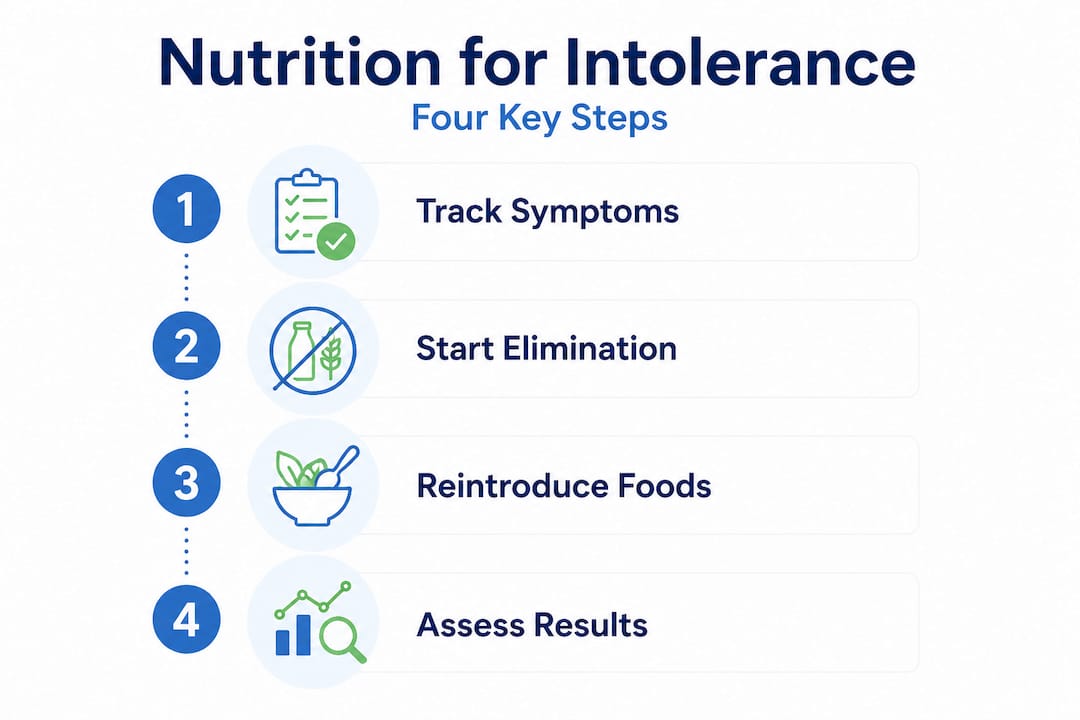
- Visit your GP first. Rule out conditions such as coeliac disease, inflammatory bowel disease (IBD), and food allergies before assuming intolerance. An NHS referral costs nothing and is the safest starting point.
- Keep a food and symptom diary. Record everything you eat, the time, and any symptoms that follow. Even two weeks of consistent records can reveal clear patterns.
- Try a supervised elimination diet. A dietitian guides you through removing suspected triggers for a set period, then systematically reintroducing them. This remains the gold standard diagnostic approach.
- Consider breath testing. Hydrogen and methane breath tests are available on the NHS for lactose and fructose intolerance and offer objective, evidence-based results.
- Explore non-invasive UK intolerance testing options that complement professional advice.
Here is how NHS-supported approaches compare to commercial test kits:
| Approach | Cost | Reliability | Accessibility | NHS/BDA endorsed? |
|---|---|---|---|---|
| GP consultation | Free | High | Good | Yes |
| Supervised elimination diet | Low (dietitian referral) | Very high | Moderate | Yes |
| Hydrogen breath test | Free on NHS | High | Moderate | Yes |
| Commercial IgG blood tests | £50–£300 | Low to moderate | High | No |
| Hair/bioresonance tests | £30–£200 | Debated | Very high | No |
Our step-by-step UK testing guide walks you through each stage in practical detail.
Pro Tip: Many commercial kits offering IgG, hair analysis, or bioresonance testing are not endorsed by the NHS or British Dietetic Association. Before spending money, research the specific method’s evidence base and consider speaking to your GP first.
Ruling out allergies is crucial. An unrecognised IgE-mediated food allergy can be dangerous if managed as an intolerance. Similarly, coeliac disease requires formal testing via blood markers and biopsy — not an elimination diet alone.
Dietary interventions: Putting nutrition to work for relief
Testing pinpoints your triggers. Next, it’s about adjusting your diet in practical ways that provide real-life relief, without putting your long-term health at risk.
The most effective dietary interventions for common food intolerances are:
- Low FODMAP diet: Reduces fermentable carbohydrates across multiple food groups including certain fruits, vegetables, legumes, and wheat. Best used as a short-term diagnostic tool before structured reintroduction.
- Lactose reduction: Switching to lactose-free dairy products or plant-based alternatives, often combined with lactase enzyme supplements taken before meals.
- Gluten exclusion: Essential for coeliac disease and often helpful for non-coeliac gluten sensitivity, though long-term restriction should be dietitian-supervised.
- Enzyme supplementation: Lactase tablets, digestive enzyme blends, and targeted supplements can reduce symptoms without full food elimination.
The evidence is striking. Low FODMAP diets have been shown to improve IBS symptoms in 52–86% of patients — a consistently superior result compared to standard dietary advice alone.
Key stat: Low FODMAP improves symptoms in up to 86% of IBS patients, making it one of the most effective dietary tools available for intolerance management.
Supervised reintroduction is essential and often overlooked. After an elimination phase, reintroducing foods one at a time allows you to identify your exact threshold and the specific items causing problems. Skipping this step and staying on a restricted diet long-term can cause nutritional deficiencies, particularly in calcium, fibre, and B vitamins.
Special caution is needed for certain groups. Pregnant women, children, and people with chronic illnesses should never undertake significant elimination diets without professional input. The risks of unsupervised elimination include malnutrition and unhelpful changes to gut microbiome diversity. Our guide on practical dietary adjustments can help you plan your approach safely. You can also review sample diet modifications to understand how structured dietary change is applied in practice.
Pro Tip: Reintroduce one food at a time over three days. Eat a regular portion on day one, then observe symptoms over the following 48 hours before trialling the next item. This structured approach gives you clear, reliable information.
Pitfalls and controversies: What the evidence really says
Understanding what works best — and what to avoid — rounds out the practical framework for managing food intolerances effectively.
Not all tests are created equal, and not all dietary approaches have the same level of evidence behind them. Here’s what the evidence currently supports, and where the debate continues:
- Well-supported by evidence: Low FODMAP diet for IBS, lactose elimination for confirmed lactose intolerance, gluten-free diet for coeliac disease, hydrogen breath testing.
- Some RCT support, but debated: IgG-guided elimination diets showed a 59.6% response rate versus 42.1% for a sham diet in one IBS trial, but mainstream bodies remain cautious.
- Not supported by mainstream medicine: Bioresonance testing, hair analysis kits, and IgG blood tests sold commercially as standalone diagnostic tools.
- Promising but early-stage: Microbiome analysis, personalised nutrition based on gut bacteria profiling.
“Mainstream bodies including the NHS, Guts UK, and Which? reject commercial food intolerance tests as unreliable for diagnosis. However, some IBS research does show benefit from IgG-guided diets in specific contexts.” — Which?
The real risk is not just wasting money on an unreliable test. It’s the downstream consequence: receiving misleading results that lead to unnecessary food restriction, which can damage your relationship with food and deplete your nutritional intake over time. Our overview of safe, evidence-based testing explains which methods have genuine merit.
Disordered eating is a genuine concern. When people receive long lists of “reactive” foods from commercial tests, the urge to eliminate everything simultaneously can be harmful. A dietitian’s involvement protects against this.
A fresh take: Why nutrition is your underrated tool for managing intolerance
Here’s a perspective that most advice columns miss entirely.
The majority of UK residents experiencing persistent digestive symptoms spend months — sometimes years — waiting for answers, bouncing between GP appointments and internet searches. Many eventually spend money on commercial testing kits hoping for a shortcut. The honest truth is that a well-kept food diary and three weeks of a supervised elimination diet often delivers more actionable clarity than any test kit.
We have seen this pattern repeatedly. Nutrition, applied systematically, is the most underused tool available. Not because people don’t care about their diet, but because the step-by-step process of elimination and reintroduction feels daunting without guidance. People overcomplicate it or try to eliminate too many things at once, then give up when the results feel unclear.
The role of intolerance testing within the broader healthcare picture is important to understand. Testing — whether via GP, dietitian, or a reputable at-home service — works best when it informs dietary action rather than replacing it. A positive result from any test is only the beginning. What you do with that information, the specific dietary adjustments you make and how carefully you monitor their effect, determines your actual outcomes.
There is also an often-ignored benefit beyond symptom relief. When people engage with their diet in a structured, curious, and non-fearful way, their overall relationship with food improves. They stop seeing food as the enemy and start seeing it as information. That shift in mindset is genuinely transformative for long-term wellbeing.
If you’re managing persistent symptoms, start simple. Keep a diary. Eat less of the most common culprits. Track the changes. Seek professional guidance before escalating to complex interventions. Most people find answers well before reaching the more expensive options — and that’s something worth knowing.
Next steps: Reliable testing with expert nutrition guidance
If you’re ready to move from confusion to clarity, you don’t have to do it alone.

At UK Food Intolerance, we offer simple, non-invasive at-home testing using a hair sample — no needles, no clinic visits, no long waits. Our food intolerance test packages cover over 1,100 items (Ultimate Test) or 500 items (Core Test), with detailed digital reports delivered within 48–72 hours. Results are designed to be used alongside dietary adjustment, and our resources help you understand exactly what to do next. Explore how testing can support matching your diet to your body’s specific needs. Browse our full range of home intolerance testing kits and take the first clear step forward today.
Frequently asked questions
What’s the difference between food intolerance and allergy?
Food intolerance involves digestive difficulties caused by enzyme or absorption problems, while an allergy is an immune reaction that can cause more immediate and severe symptoms such as hives or anaphylaxis.
Can changing my diet really improve intolerance symptoms?
Yes — evidence shows that low FODMAP diets improve symptoms in 52–86% of IBS patients, making dietary adjustment one of the most effective interventions available.
Are at-home food intolerance kits reliable?
Most commercial kits are not endorsed by the NHS or major dietetic bodies, so it is important to research the testing method carefully and use results alongside professional guidance.
What is the safest way to find out if I have a food intolerance?
Start with your GP, keep a detailed symptom diary, and consider a supervised elimination diet — the safest, most affordable, and most evidence-backed approach available in the UK.
Could an elimination diet make things worse?
Poorly planned elimination diets can cause nutritional deficiencies, so it is essential to reintroduce foods gradually and consult a registered dietitian to ensure your intake remains balanced throughout.










Leave a Reply
Want to join the discussion?Feel free to contribute!