

TL;DR:
- Validated tests like hydrogen breath tests and supervised elimination diets are recommended for diagnosing food intolerances.
- Many commercial IgG home tests lack scientific support and can lead to unnecessary dietary restrictions.
- A thorough symptom diary and medical consultation are essential initial steps before testing or dietary changes.
Millions of people across the UK live with persistent, unexplained symptoms, from bloating and fatigue to recurring headaches, and many turn to food intolerance tests hoping for clear answers. The market for these tests has grown rapidly, yet so has the confusion around which ones actually work. Some tests are backed by solid evidence. Others are not. Understanding the difference is not just useful; it is essential for protecting your health and making choices that genuinely support your wellbeing. This guide separates fact from fiction, so you can move forward with confidence.
Table of Contents
- Understanding food intolerance and its impact on wellbeing
- Validated tests versus unvalidated methods: What actually works?
- Practical steps for safe, effective intolerance testing in the UK
- Risks and rewards of intolerance testing: The wellbeing equation
- An expert’s take: Why a patient-centred approach outperforms quick fixes
- How UK Food Intolerance can support your wellbeing journey
- Frequently asked questions
Key Takeaways
| Point | Details |
|---|---|
| Validated tests are rare | Only a few tests, such as hydrogen breath tests and supervised elimination diets, are supported by UK experts. |
| Unvalidated tests can carry risks | Tests without scientific backing can lead to unnecessary dietary cuts, health risks, and wasted money. |
| Start with a GP | Begin your wellbeing journey by tracking symptoms and consulting a GP for targeted, safe testing. |
| Personalisation matters most | The most lasting wellbeing improvements come from carefully tailored, supervised approaches—not quick-fix kits. |
Understanding food intolerance and its impact on wellbeing
Food intolerance is a broad term that describes difficulty digesting certain foods, leading to a range of uncomfortable symptoms. Unlike a food allergy, which triggers an immune response and can be life-threatening, food intolerance typically causes delayed reactions that are harder to pin down. Symptoms may appear hours or even days after eating the offending food, which makes identifying the cause genuinely tricky.
Common food intolerance symptoms include:
- Bloating and abdominal pain
- Diarrhoea or constipation
- Fatigue and low energy
- Skin complaints such as eczema or rashes
- Headaches and brain fog
- Nausea after eating
These symptoms can significantly affect your daily life, your ability to work, socialise, and simply feel well. It is no surprise that people want answers quickly.
The challenge is that many of these symptoms overlap with other conditions, including irritable bowel syndrome (IBS), coeliac disease, and inflammatory bowel disease. Jumping straight to a commercial test without ruling out these conditions first can delay proper treatment.
“For UK individuals with unexplained symptoms, start with your GP to rule out conditions like coeliac disease through blood test or biopsy, use a symptom diary, then consider supervised elimination if intolerance is suspected.”
This is an important starting point. Accurate identification of the root cause, rather than a rushed self-diagnosis, is what leads to lasting improvement in your wellbeing.
Validated tests versus unvalidated methods: What actually works?
Now that we know why testing matters, let us look closely at which methods genuinely help and which may mislead.
The range of available intolerance tests on the market is wide, and not all of them are created equal. The NHS advice on intolerance testing is clear: only specific validated tests are recommended, namely hydrogen breath tests for conditions like lactose intolerance and fructose malabsorption, and professionally supervised elimination diets for broader food intolerances. Commercial IgG blood tests and home testing kits are not endorsed due to a lack of supporting evidence.
The BDA stance on popular tests is equally firm. The British Dietetic Association states that IgG testing lacks evidence for diagnosing food intolerance. A raised IgG level simply means your body has been regularly exposed to a food, not that you are intolerant to it. Acting on these results can lead to unnecessary and potentially harmful dietary restrictions.
Here is a quick comparison of the most common methods:
| Test type | Validated? | Recommended by NHS/BDA? | Notes |
|---|---|---|---|
| Hydrogen breath test | Yes | Yes | Reliable for lactose and fructose |
| Supervised elimination diet | Yes | Yes | Gold standard for broader intolerances |
| IgG blood test | No | No | Measures exposure, not intolerance |
| Hair analysis/bioresonance | No | No | No robust clinical evidence |
| Home finger-prick kits | No | No | Not endorsed for diagnosis |
Unvalidated tests are widely marketed and can feel reassuring, but acting on their results without clinical guidance can do more harm than good. You can explore the available intolerance tests and learn more about when intolerance tests are recommended to make a more informed choice.

Pro Tip: If a test promises to identify dozens of intolerances from a single sample without any clinical follow-up, treat that promise with caution. Reliable testing always involves some form of professional interpretation.
Practical steps for safe, effective intolerance testing in the UK
Having separated reliable tests from questionable ones, here is how you can approach intolerance investigation with confidence.
Taking a structured, step-by-step approach reduces the risk of misdiagnosis and helps you get genuinely useful results. Rapid test methods can play a supporting role, but they work best when used as part of a wider, considered process.
- Keep a detailed symptom diary. Record everything you eat and drink, alongside any symptoms, their timing, and severity. Do this for at least two to four weeks before drawing any conclusions.
- Visit your GP. Share your diary and discuss your symptoms. Your GP can rule out coeliac disease, inflammatory conditions, and allergies through blood tests or referrals.
- Consider a hydrogen breath test. If lactose or fructose intolerance is suspected, your GP or a gastroenterologist can arrange this non-invasive validated test. You simply breathe into a device after consuming a test solution.
- Begin a supervised elimination diet. Under the guidance of a registered dietitian, remove suspected foods for four to eight weeks, then reintroduce them one at a time to observe reactions. This remains the gold standard for identifying broader food intolerances.
- Review and adjust. Once you have clear results, work with your dietitian to build a balanced, nutritious eating plan that avoids your triggers without creating new nutritional gaps.
There are good reasons to consider a test at various stages of this process, and understanding the options for testing for children is equally important if your child is experiencing unexplained symptoms.
Pro Tip: Do not eliminate multiple food groups at once without professional support. Removing too many foods simultaneously makes it almost impossible to identify which one is actually causing your symptoms.
Risks and rewards of intolerance testing: The wellbeing equation
Following best practices is essential, but it is also crucial to understand what is at stake, both good and bad, when choosing an intolerance test.
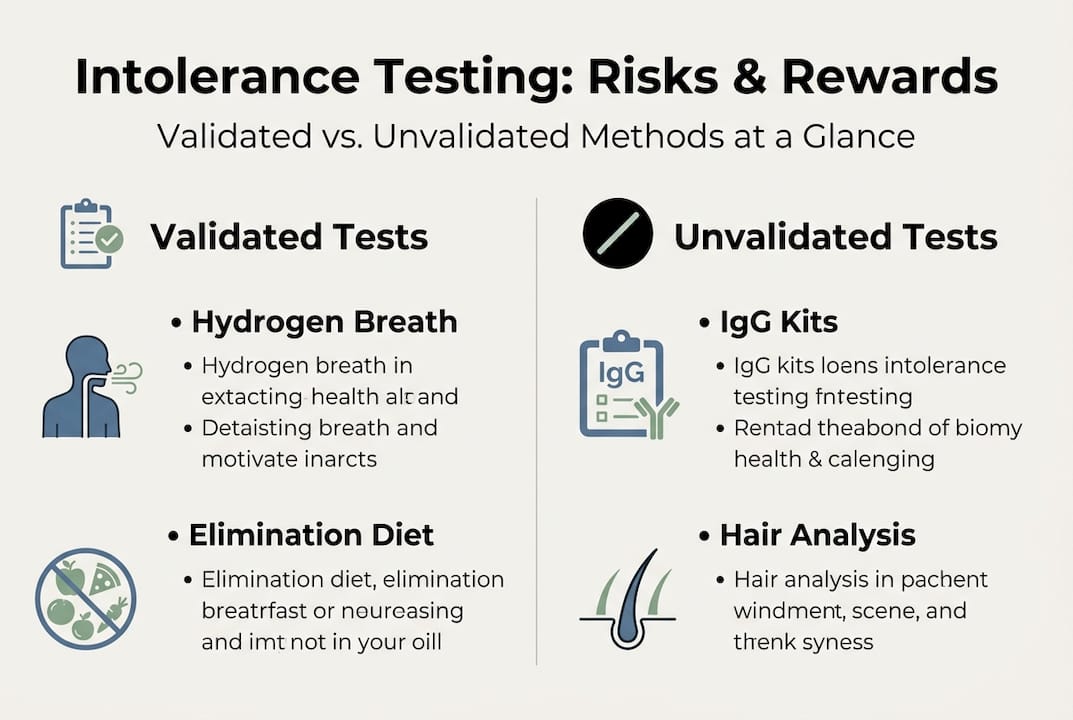
When testing is done correctly, the rewards can be significant. Identifying and managing a genuine food intolerance can reduce chronic symptoms, improve energy levels, support better digestion, and restore your quality of life. Many people report feeling noticeably better within weeks of removing a problematic food from their diet.
However, the risks of taking the wrong path are real. Unvalidated tests carry risks including unnecessary dietary restrictions, nutritional deficiencies, increased anxiety around food, and higher financial costs. Worse still, they may cause you to miss an underlying condition such as IBS or coeliac disease that requires proper medical treatment.
| Test approach | Potential reward | Key risk |
|---|---|---|
| GP-led validated testing | Accurate diagnosis, safe treatment | Waiting times on NHS |
| Supervised elimination diet | Clear identification of triggers | Requires time and commitment |
| Unvalidated home kits | Convenience, fast results | Misleading results, nutritional risk |
| IgG blood tests | Wide range of foods screened | No clinical validity, false positives |
The screening advantages and limits of each approach are worth understanding before you spend money or make significant dietary changes.
Home intolerance kits typically cost between £70 and £200. That is a meaningful sum, particularly if the results do not lead to genuine improvement.
“Unnecessary restrictions based on unvalidated tests can lead to nutritional deficiencies, increased anxiety around eating, and may cause you to overlook conditions that genuinely need medical attention.”
The wellbeing equation is straightforward: accurate information leads to better decisions, and better decisions lead to real improvement.
An expert’s take: Why a patient-centred approach outperforms quick fixes
After weighing up the pros and cons, it is worth considering why the expert consensus often diverges so sharply from commercial promises.
At-home intolerance kits are cleverly marketed. They promise clarity, speed, and control over your health, all from the comfort of your own home. That appeal is completely understandable, especially when you have been living with unexplained symptoms for months or years.
But here is the uncomfortable truth: testing companies claim IgG aids wellbeing through targeted elimination, while the NHS and BDA consistently point to an absence of randomised controlled trials supporting this approach. The gap between marketing and evidence is significant.
Experienced clinicians prioritise a careful clinical history, a thorough review of your symptoms over time, and a structured elimination process guided by a dietitian. This takes longer. It requires patience. But it is far more likely to result in lasting improvement to your impact on overall wellbeing than a single test result ever could.
The real value of any intolerance investigation lies not in the test itself, but in what you do with the information afterwards. A tailored, professionally supported process gives you the tools to make meaningful, sustainable changes to your diet and your health.
How UK Food Intolerance can support your wellbeing journey
If you are motivated to take the next steps, the right support can make all the difference.
At UK Food Intolerance, we understand how frustrating it is to live with unexplained symptoms and not know where to turn. Our range of intolerance tests is designed to give you a clear, accessible starting point on your wellbeing journey, using a simple hair sample collected at home and analysed at a UK-based laboratory.

We also provide detailed guidance on the practical benefits of at-home tests and how to use your results effectively, including how testing can help matchmake your diet with foods that genuinely support your body. We are here to support you every step of the way.
Frequently asked questions
Are home food intolerance tests reliable?
Most commercially available home food intolerance tests, such as IgG kits, are not supported by evidence and are not recommended by the NHS or British Dietetic Association. They can produce misleading results that lead to unnecessary dietary changes.
What tests are validated for diagnosing food intolerances?
Only hydrogen breath tests and professionally supervised elimination diets are validated for diagnosing food intolerances by UK health experts. These are the methods endorsed by the NHS and the British Dietetic Association.
What are the risks of unvalidated intolerance testing?
Unvalidated testing may result in unnecessary dietary restrictions, nutritional deficiencies, increased anxiety around food, and missed diagnoses of underlying conditions such as coeliac disease or IBS.
What should I do first if I suspect a food intolerance?
Start by keeping a detailed symptoms diary and speak to your GP to rule out other conditions before considering further testing. This is the safest and most effective first step.










Leave a Reply
Want to join the discussion?Feel free to contribute!