

You’re experiencing bloating, fatigue, or skin issues, and you suspect certain foods might be the culprit. You’ve seen countless home test kits promising quick answers, but conflicting information leaves you uncertain about their reliability. Many UK adults face this confusion when seeking to identify food and environmental sensitivities. Home food allergy and intolerance testing kits lack scientific evidence and often provide misleading results. This article clarifies what comprehensive intolerance screening truly involves, which methods deliver accurate insights, and how to approach testing for genuine improvements in your wellbeing.
Table of Contents
- Understanding Types Of Intolerance And Allergy Testing
- Scientific Validity And Limitations Of Common Intolerance Tests
- Implications Of Inaccurate Testing And Importance Of Professional Diagnosis
- How To Approach Comprehensive Intolerance Screening In 2026
- Discover Reliable Intolerance Testing Options With UK Food Intolerance
- Frequently Asked Questions
Key takeaways
| Point | Details |
|---|---|
| Bioresonance and hair tests lack validation | These methods have no scientific support for detecting food or environmental sensitivities |
| IgG antibody tests are unreliable | Medical organisations worldwide advise against using IgG tests for intolerance diagnosis |
| False positives cause harm | Unnecessary dietary restrictions can lead to malnutrition and delayed proper diagnosis |
| True sensitivities affect 1-4% of UK population | Genuine food-related sensitivities are less common than marketing suggests |
| Professional consultation is essential | Healthcare practitioners provide accurate diagnosis and prevent nutritional deficiencies |
Understanding types of intolerance and allergy testing
Navigating the world of food sensitivity testing requires understanding the fundamental differences between allergies, intolerances, and sensitivities. A food allergy involves your immune system producing IgE antibodies that trigger immediate, potentially severe reactions like anaphylaxis. Food intolerance, by contrast, typically involves digestive difficulties processing certain foods without immune system involvement. Food sensitivity sits somewhere between, potentially involving delayed immune responses that make identification more challenging.
The NHS uses validated IgE-based allergy tests that measure specific antibodies in your blood. These tests accurately identify true allergic responses to substances like peanuts, shellfish, or pollen. When you undergo how intolerance tests work through medical channels, you’re receiving testing backed by decades of clinical research. The biological mechanism is clear: your body produces measurable IgE antibodies when exposed to genuine allergens.
Many at home food intolerance testing kits take a different approach, measuring IgG antibodies instead. Home tests often look for IgG antibodies, which is not the standard for allergy testing. Your body naturally produces IgG antibodies to foods you eat regularly, making elevated levels a sign of exposure rather than intolerance. This fundamental misunderstanding of immunology undermines the entire testing premise.
Other unproven methods proliferate in the home testing market:
- Bioresonance testing claims to detect food sensitivities by measuring electromagnetic frequencies
- Hair analysis purports to identify intolerances through mineral content or follicle structure
- Kinesiology uses muscle testing to supposedly reveal problematic foods
- Vega testing measures electrical resistance at acupuncture points
These approaches lack biological plausibility. Your hair doesn’t contain antibodies or immune markers related to food reactions. Electromagnetic frequencies don’t correlate with digestive responses. The Which? testing kits review found no scientific basis for such methods, yet they remain widely marketed to vulnerable individuals seeking answers.
Scientific validity and limitations of common intolerance tests
The scientific community has repeatedly examined IgG antibody testing for food intolerance screening, and the verdict is unequivocal. IgG food intolerance testing validity has been repeatedly questioned by major medical organisations worldwide. The European Academy of Allergy and Clinical Immunology states clearly that IgG testing has no diagnostic value for food intolerance or allergy.
Why do medical experts reject IgG testing so firmly? Your immune system produces IgG antibodies as a normal, healthy response to foods you consume regularly. Higher IgG levels to milk, eggs, or wheat simply indicate you’ve eaten these foods recently, not that they’re causing your symptoms. Eliminating foods based on elevated IgG results often means restricting the very foods your body tolerates well.
Bioresonance testing fares even worse under scientific scrutiny. Bioresonance is not effective for detecting allergies, with multiple controlled studies showing results no better than random chance. The proposed mechanism, that your body emits measurable electromagnetic frequencies altered by food sensitivities, contradicts established physics and biology. No peer-reviewed research supports claims that devices can detect such signals or correlate them with genuine intolerances.
The risks of false positive results extend beyond wasted money:
- Unnecessary elimination diets can lead to nutritional deficiencies in calcium, iron, or B vitamins
- Restrictive eating patterns may develop into disordered eating behaviours
- Genuine medical conditions causing symptoms remain undiagnosed and untreated
- Children face particular risks from restricted diets during critical growth periods
- Social isolation increases when dietary restrictions limit participation in normal activities
Consider this expert perspective on unproven testing methods:
Medical consensus holds that bioresonance and similar alternative diagnostic techniques lack scientific validation. These methods can cause significant harm by promoting unnecessary dietary restrictions and delaying appropriate medical care for underlying conditions requiring treatment.
Major medical bodies including the British Society for Allergy and Clinical Immunology advise against unproven home tests. Their position stems not from resistance to innovation but from protecting patients from harm. When you’re struggling with unexplained symptoms, the last thing you need is a reliable home testing guide that leads you down false pathways. Understanding the role of at-home intolerance tests requires distinguishing marketing claims from scientific evidence.
The IgG testing scientific review published by immunology researchers demonstrates that positive IgG results correlate with food consumption, not symptoms. The bioresonance effectiveness study found no measurable difference between active devices and sham controls, confirming these methods detect nothing meaningful about your health.
Implications of inaccurate testing and importance of professional diagnosis
The consequences of relying on unvalidated intolerance tests extend far beyond temporary inconvenience. Misleading diagnoses lead to unnecessary dietary restrictions that can limit quality of life and potentially cause malnutrition, particularly dangerous in children. When you eliminate multiple food groups based on false positive results, you risk deficiencies in essential nutrients your body needs for optimal function.

Consider Sarah, a composite example reflecting common experiences. After receiving results suggesting intolerances to 47 different foods, she eliminated dairy, gluten, eggs, and numerous fruits and vegetables. Within months, she developed iron deficiency anaemia and calcium depletion, requiring medical intervention. Her original symptoms, caused by undiagnosed coeliac disease, worsened during this period because she delayed seeking proper medical assessment.
The opportunity cost of false testing pathways is substantial. Whilst you’re restricting foods unnecessarily, the actual cause of your symptoms continues unchecked. Inflammatory bowel disease, coeliac disease, irritable bowel syndrome, and other treatable conditions require specific interventions that home test kits cannot provide. Time spent following unreliable test results is time your condition progresses without appropriate care.
It’s always best to see a GP first about the symptoms you’re experiencing. Your GP can assess whether your symptoms warrant investigation for genuine food allergies, coeliac disease, lactose intolerance, or other diagnosable conditions. They can refer you to specialists like gastroenterologists or dietitians who provide evidence-based guidance.
Validated diagnostic approaches offer clear advantages:
- Proper medical history taking identifies patterns that point toward specific conditions
- Physical examinations can reveal signs of nutritional deficiencies or other health issues
- Targeted laboratory tests measure specific markers relevant to your symptoms
- Elimination diets conducted under professional supervision prevent nutritional harm
- Reintroduction protocols help identify genuine trigger foods systematically
Understanding food intolerance symptoms helps you communicate effectively with healthcare providers. Rather than presenting test results from unvalidated kits, describe your symptoms, their timing, severity, and any patterns you’ve noticed. This information guides appropriate investigation far more effectively than questionable test results.
Pro Tip: Before consulting healthcare practitioners about intolerance testing, ask them three key questions. What testing methods do they use and what’s the scientific evidence supporting them? How will results change your treatment plan? What alternatives exist if testing proves inconclusive? These questions help you identify practitioners committed to evidence-based care rather than those promoting unproven methods.
The path to improved wellbeing requires accurate diagnosis, not just any diagnosis. When you invest time and resources in investigating your symptoms, ensure you’re using methods that actually work. The difference between validated testing and unproven alternatives isn’t just academic, it’s the difference between genuine health improvements and potentially harmful detours.
How to approach comprehensive intolerance screening in 2026
Understanding the prevalence of genuine food sensitivities helps set realistic expectations. Approximately 1-2% of the UK population experiences measurable food-related sensitivities, whilst an estimated 4% of preschool populations experience identifiable food sensitivities. These figures contrast sharply with the much higher rates suggested by unvalidated home test kits, which often report that 60-80% of tested individuals show multiple intolerances.
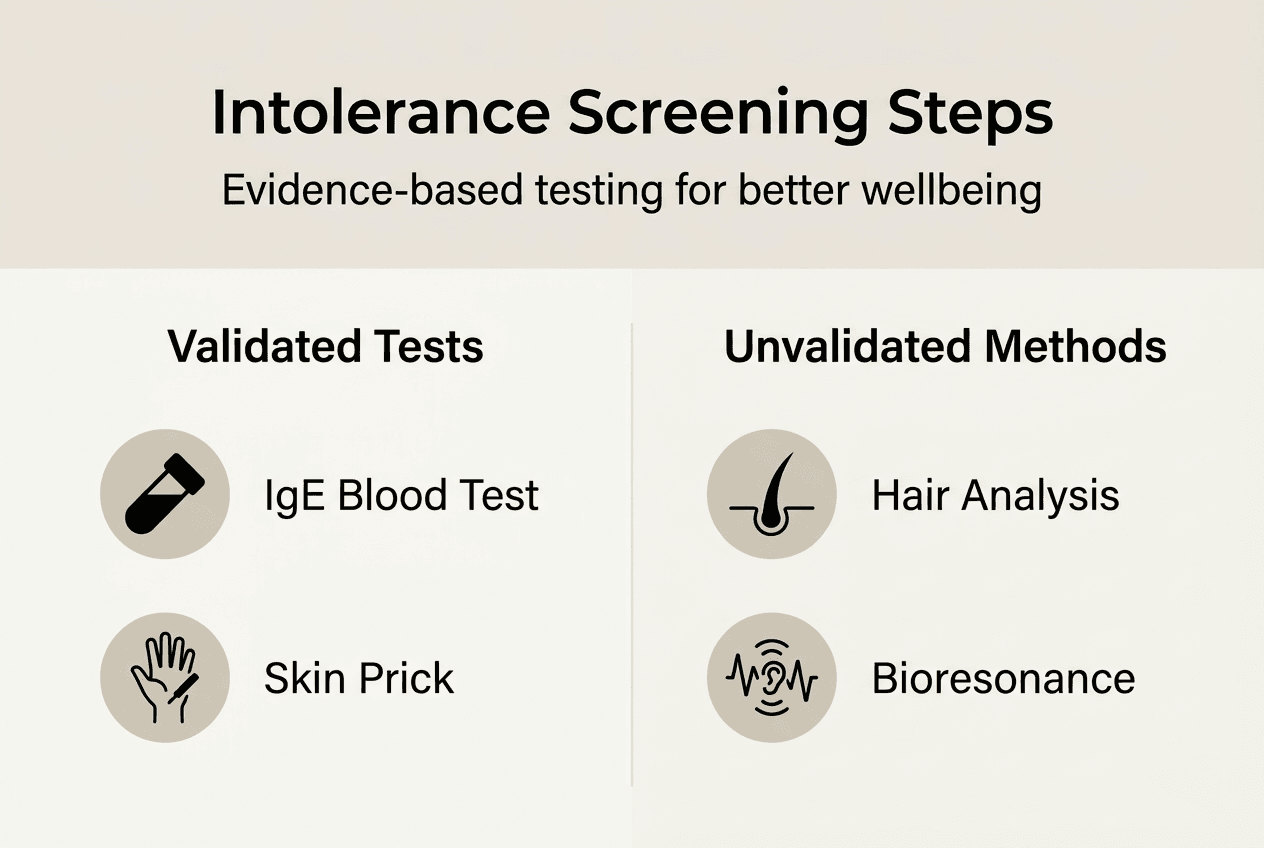
When evaluating testing options, compare features systematically:
| Feature | Validated Methods | Unproven Alternatives |
|---|---|---|
| Scientific basis | Peer-reviewed research, established biological mechanisms | No validated mechanism, contradicts known biology |
| Medical endorsement | Recommended by NHS, allergy societies, gastroenterology associations | Advised against by medical organisations |
| Reproducibility | Consistent results across multiple tests | Results vary widely between tests |
| Clinical correlation | Test results match symptom patterns | Poor correlation with actual symptoms |
| Regulatory oversight | Subject to medical device regulations | Often unregulated or minimally regulated |
A systematic approach to investigating potential food sensitivities maximises your chances of identifying genuine triggers whilst avoiding unnecessary restrictions. Follow these steps for comprehensive screening:
- Document your symptoms thoroughly for at least two weeks before testing, noting foods consumed, symptom timing, severity, and any other relevant factors like stress or sleep quality.
- Consult your GP to rule out conditions requiring specific medical diagnosis, such as coeliac disease, which needs testing before dietary changes.
- If pursuing testing, select methods with scientific validation and consider working with a registered dietitian who can interpret results appropriately.
- Implement dietary changes systematically rather than eliminating multiple foods simultaneously, making it easier to identify true triggers.
- Monitor your response to changes objectively, using the same symptom tracking methods you established initially.
- Reintroduce foods methodically under professional guidance to confirm which items genuinely affect you.
Understanding common food intolerances UK populations experience helps focus your investigation. Lactose intolerance affects approximately 5% of Northern European descendants, whilst coeliac disease impacts about 1% of the UK population. These represent the most prevalent genuine intolerances, far more common than the exotic sensitivities sometimes suggested by unvalidated tests.
Pro Tip: Maintain a detailed symptom diary for at least four weeks, recording not just foods but also stress levels, sleep quality, exercise, and menstrual cycle if applicable. Many symptoms attributed to food intolerances actually correlate more strongly with these other factors. Your diary might reveal that your digestive symptoms worsen during stressful work periods regardless of diet, or that fatigue correlates with poor sleep rather than specific foods.
The process of matching diet with intolerance test results requires careful interpretation. Even with validated testing, results represent one piece of a larger puzzle. Your symptom patterns, medical history, nutritional needs, and lifestyle factors all inform appropriate dietary modifications. Rushing to eliminate foods based solely on test results, without considering this broader context, often leads to unnecessary restrictions and potential nutritional harm.
Comprehensive screening in 2026 means taking a holistic, evidence-based approach. You’re not just looking for foods to eliminate but seeking to understand your body’s responses and optimise your wellbeing through informed choices. This requires patience, professional guidance, and commitment to methods that actually work rather than those that simply promise quick answers.
Discover reliable intolerance testing options with UK Food Intolerance
Navigating the complex landscape of intolerance testing becomes simpler when you work with providers committed to transparency and support. UK Food Intolerance offers comprehensive screening options designed to help you identify potential triggers affecting your wellbeing. Their approach combines thorough testing with practical guidance for interpreting results and implementing dietary changes safely.

Whether you’re dealing with persistent digestive issues, unexplained fatigue, or skin concerns, understanding your body’s responses to foods and environmental factors provides a foundation for improvement. UK Food Intolerance provides detailed analysis covering hundreds of potential triggers, giving you a comprehensive picture rather than focusing on just a few common items. Their testing process is straightforward, with clear instructions and support throughout.
Explore their range of intolerance tests to find options matching your specific needs and concerns. From focused testing on common triggers to comprehensive intolerance tests covering extensive food and environmental factors, you’ll find approaches suited to different situations. The detailed reports you receive include guidance on how to match your diet with test results, helping you implement changes that support your wellbeing goals.
Frequently asked questions
What does comprehensive intolerance screening include?
Comprehensive intolerance screening evaluates your responses to a wide range of foods and environmental factors, typically examining hundreds of potential triggers. It should include detailed analysis of common allergens, food additives, environmental substances, and less obvious items that might affect your wellbeing. The most useful screening provides actionable results with guidance on interpreting findings and implementing dietary changes safely.
Are home test kits reliable for diagnosing food intolerances?
Most home test kits lack scientific validation, particularly those using IgG antibody testing, bioresonance, or hair analysis. Medical organisations worldwide advise against these methods because they produce unreliable results that can lead to unnecessary dietary restrictions. Consult healthcare professionals for validated testing methods if you suspect genuine food intolerances or allergies.
How should I interpret test results for intolerances?
Interpret intolerance test results as one piece of information rather than definitive diagnosis. Compare results with your symptom diary to see if suggested triggers correlate with when you feel unwell. Work with a registered dietitian or healthcare provider to implement any dietary changes systematically, ensuring you maintain nutritional adequacy whilst investigating potential triggers.
Can intolerance tests diagnose allergies?
True food allergies require specific IgE antibody testing conducted through medical channels, not standard intolerance tests. Allergies involve immediate, potentially severe immune responses that need proper medical diagnosis and management. If you experience symptoms like swelling, breathing difficulties, or rapid onset reactions after eating, seek medical assessment rather than relying on intolerance screening.
When should I consult a healthcare professional for intolerance symptoms?
Consult your GP before pursuing intolerance testing, especially if symptoms are severe, persistent, or affecting your quality of life significantly. Seek immediate medical attention for symptoms suggesting serious conditions like severe abdominal pain, blood in stools, unexplained weight loss, or signs of allergic reactions. Professional assessment ensures you receive appropriate diagnosis and treatment rather than potentially masking underlying conditions with dietary changes.










Leave a Reply
Want to join the discussion?Feel free to contribute!