

Digestive discomfort can sneak into daily life, leaving you uncomfortable yet unsure which foods are to blame. Many in the UK confuse food intolerance with allergy, leading to missed triggers and ongoing symptoms. By understanding the difference between these conditions and recognising how an enzyme deficiency fuels food intolerance, you gain the clarity needed to make targeted, non-invasive changes for lasting wellbeing.
Table of Contents
- What Food Intolerance Really Means
- Common Myths Versus Scientific Facts
- Recognising Symptoms and Their Triggers
- How Testing Works and Its Limitations
- Avoiding Mistakes in Dietary Changes
Key Takeaways
| Point | Details |
|---|---|
| Understanding Food Intolerance | Food intolerance differs from allergies; it involves digestive difficulties related to enzyme deficiencies rather than immune responses. |
| Identifying Symptoms | Closely track food intake and symptoms over time to identify triggers; symptoms can appear hours or even the next day after consumption. |
| Testing Caveats | Be cautious with unproven testing methods; elimination diets under professional guidance are the most reliable way to identify intolerances. |
| Avoiding Nutritional Pitfalls | When eliminating foods, plan replacements carefully to prevent nutritional deficiencies; avoid removing multiple foods at once to accurately identify triggers. |
What Food Intolerance Really Means
Food intolerance is not the same as a food allergy, though many people mix the two up. Your body struggles to digest certain foods, often because it lacks specific enzymes needed to break them down properly. This difficulty in digestion triggers symptoms that can appear anywhere from minutes to hours after eating the problematic food.
The most common cause is an enzyme deficiency. Lactose intolerance is the classic example—your body doesn’t produce enough lactase enzyme to digest milk sugar, so consuming dairy causes bloating, cramping, and digestive discomfort. Your gut works harder to process what it can’t properly break down.
Understanding the distinction matters for your health decisions. Here’s what separates food intolerance from related conditions:
Here is a structured comparison of food intolerance, sensitivity, and allergy for clearer understanding:
| Condition | Biological Mechanism | Typical Symptoms | Health Impact |
|---|---|---|---|
| Food Intolerance | Enzyme shortage, poor digestion | Bloating, abdominal pain | Quality of life affected |
| Food Sensitivity | IgG antibody reaction | Fatigue, mild symptoms | Subtle, non-urgent impact |
| Food Allergy | IgE antibody immune response | Hives, rapid severe reaction | Immediate medical risk |
- Food intolerance involves digestive difficulty, not immune system activation
- Food sensitivity triggers IgG antibodies, a different immune response
- Food allergy involves IgE antibodies and can cause severe, rapid, potentially life-threatening reactions
Food intolerance symptoms vary widely between people. Some experience mild bloating; others face severe abdominal pain, diarrhoea, or skin reactions. The symptoms themselves aren’t the danger—they’re your body’s signal that digestion isn’t working smoothly.
Food intolerance is your digestive system’s way of flagging foods it cannot process efficiently, not an immune attack.
When you identify if you have symptoms of a food intolerance, you’re looking for patterns. Did the bloating start after switching to a new milk brand? Did brain fog appear when you increased bread consumption? These connections point toward specific foods your body struggles with.
The timeline is crucial. Intolerance symptoms emerge gradually and predictably. You ate the food, waited a few hours, and felt uncomfortable. This differs sharply from allergic reactions, which strike fast and hard within minutes.
Many untested assumptions circulate about what causes intolerances. Some people blame poor quality food, others stress, and some point to modern farming methods. The reality is simpler: your individual digestive system has individual limits. Two people eating identical meals experience completely different outcomes.
Your intolerance is real, even without drama. You don’t need anaphylaxis or hospital visits to have a legitimate problem. Chronic bloating that affects your quality of life matters just as much as visible symptoms.
Pro tip: Track what you eat and how you feel for one week—note the food, time of meal, and symptoms that appeared—to spot genuine patterns before testing or making dietary changes.
Common Myths Versus Scientific Facts
Myth and reality collide constantly when discussing food intolerances. The biggest confusion stems from treating intolerances and allergies as the same condition. They’re fundamentally different, yet people use the terms interchangeably, which leads to misunderstanding symptoms and choosing wrong treatment approaches.
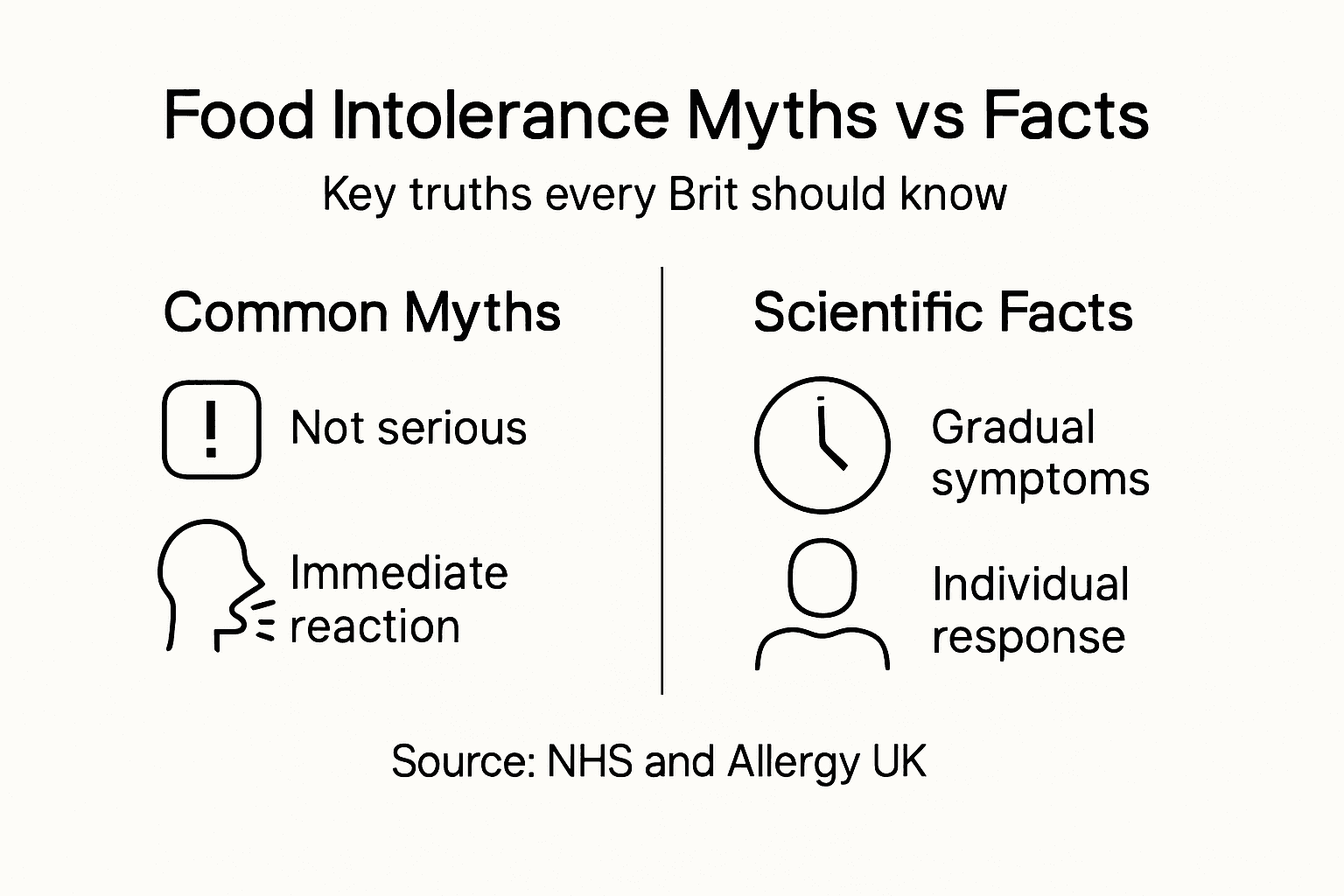
Myth: “If it’s not an allergy, it’s not serious.”
This couldn’t be further from the truth. Allergies are immune-mediated and can be life-threatening; intolerances involve digestive issues without that immune response. However, intolerances severely impact your quality of life. Chronic bloating, persistent fatigue, and constant digestive discomfort aren’t minor problems—they’re genuine health concerns that deserve attention.

Myth: “Everyone reacts to the same foods the same way.”
Your body is unique. Two people eating identical meals experience completely different outcomes based on their individual digestive systems. Histamine intolerance involves complex digestive irregularities rather than a straightforward reaction. Some people tolerate aged cheese; others find it triggers severe symptoms. This variation is normal, not a sign you’re imagining problems.
Myth: “Intolerance symptoms appear immediately after eating.”
This is where many people miss their triggers. Food allergies strike fast—within minutes—with obvious symptoms. Food intolerances work differently. Symptoms can emerge hours after eating, sometimes even the next day. This delayed onset makes spotting the culprit far harder without proper tracking.
Here’s what actually happens with intolerances versus allergies:
- Allergies develop rapidly, often require medical intervention, and can affect breathing or circulation
- Intolerances develop slowly with delayed symptoms like bloating and diarrhoea
- Allergies are less common but potentially severe
- Intolerances are more common but often dismissed as minor
The UK has strict allergen labelling laws to protect consumers, yet myths about food reactions persist because people conflate different conditions.
Myth: “You’ll grow out of it.”
Some intolerances improve; others are lifelong. Your digestive capacity isn’t fixed—it changes with age, stress levels, and gut health. You might tolerate wheat at thirty but develop sensitivity at forty. This isn’t weakness; it’s biology adapting.
Myth: “Food quality determines whether you’ll react.”
Organic, locally-sourced food doesn’t change your digestive enzyme levels. Your body either produces enough lactase to break down dairy, or it doesn’t. Food quality matters for overall nutrition, but it won’t cure an intolerance. Acceptance and avoidance work better than hoping premium products will change your body’s chemistry.
The reality is simpler than myths suggest: your individual digestive system has individual limits. Recognising this early saves months of confusion and unnecessary dietary experimentation.
Pro tip: When researching symptoms, focus on what your body actually does, not what general advice claims should happen—your digestive response is your truth, regardless of what others experience.
Recognising Symptoms and Their Triggers
Identifying your food intolerance starts with pattern recognition. Your body sends signals when it encounters food it cannot digest efficiently—you just need to learn what those signals look like. The challenge is that symptoms vary wildly between people and foods, making diagnosis personal rather than universal.
Symptom onset timing matters greatly. Food allergies cause immediate multi-organ symptoms such as hives, swelling, or breathing difficulties that develop within minutes to hours. Food intolerances work differently. Symptoms emerge slowly, sometimes hours or even the next day after eating. This delayed response makes connecting the food to your discomfort far harder.
Common intolerance symptoms include:
- Bloating and abdominal distension (often noticeable after meals)
- Diarrhoea or constipation (digestive changes)
- Skin reactions like itching or rashes (non-allergic)
- Brain fog and fatigue (systemic effects)
- Headaches or migraines (neurological impact)
- Joint aches (inflammatory response)
Trigger identification requires detective work. Pay attention to what you eat, when you eat it, and how you feel afterwards. Did bloating appear two hours after lunch? Did your energy crash the next morning? These patterns reveal your personal triggers.
Your symptom timeline is unique—a food causing immediate reactions in someone else might trigger delayed symptoms in you, or cause nothing at all.
Some people tolerate lactose but struggle with gluten. Others handle dairy fine but react to histamine-rich foods. Your body’s enzyme production determines your triggers, and enzyme levels are individual. Stress and gut health also influence whether symptoms appear on any given day.
Tracking helps enormously. Write down meals, portions, and symptoms for two weeks. Note timing, severity, and whether symptoms repeat when you eat the same food again. This creates a map showing which foods correlate with your discomfort.
Don’t ignore subtle symptoms. Many people dismiss mild bloating or slight fatigue as normal, then suffer for years unnecessarily. Your body is communicating—even gentle signals matter. Chronic discomfort that affects your daily life deserves investigation and action.
Some triggers are obvious (eat dairy, bloat immediately). Others are hidden, appearing only after repeated consumption or in combination with other foods. Complex triggers require systematic elimination to identify.
Pro tip: Record your meals and symptoms in a simple note or spreadsheet for 7-14 days, focusing on timing and severity—you’ll spot patterns that point directly to your personal trigger foods without guessing.
How Testing Works and Its Limitations
Testing for food intolerances sounds straightforward until you realise how many unreliable options exist. Not all tests are created equal, and some popular methods actively mislead you into avoiding foods you can actually tolerate. Understanding what works and what doesn’t protects you from unnecessary dietary restriction.
Many commercial tests lack scientific validation. Popular options like IgG blood tests, applied kinesiology, hair analysis, leukocytoxic testing, and Vega tests sound impressive but produce unreliable results. They frequently show false positives, recommending food avoidance when no actual intolerance exists. This can lead to malnutrition and unnecessary lifestyle disruption.
Why do these tests fail? They often reflect commonly consumed foods rather than actual intolerances. If you eat bread daily, the test detects a response to wheat—but that response might indicate tolerance, not intolerance. The test cannot distinguish between normal digestion and problematic digestion.
Here’s what you should know about different testing approaches:
- IgG blood tests measure antibodies but don’t diagnose intolerance reliably
- Hair analysis lacks scientific basis for food intolerance detection
- Applied kinesiology uses muscle testing with no validated evidence
- Vega and leukocytoxic tests are not recommended by medical guidelines
- Elimination diets remain the gold standard with professional guidance
Many diagnostic tools lack scientific validation for diagnosing food intolerances, making elimination diets under professional supervision the most reliable approach.
The elimination diet works differently. You remove suspect foods for 2-4 weeks, then reintroduce them one at a time whilst monitoring symptoms. When a food triggers clear symptoms upon reintroduction, you’ve identified your intolerance. This method identifies actual triggers, not false positives.
However, elimination diets require patience and documentation. You cannot rush the process or you’ll miss real connections. Many people abandon diets too early, concluding they have no intolerances when symptoms simply hadn’t developed yet.
Why do unreliable tests persist? They’re profitable and accessible. People want quick answers, and commercial tests promise them—even when evidence doesn’t support their accuracy. Cost and convenience drive popularity more than scientific reliability.
Be skeptical of any test claiming to identify dozens of intolerances with a single sample. Real intolerances appear as clear patterns in your symptom tracking, not as mysterious test results requiring interpretation.
Pro tip: Before investing in any intolerance test, ask whether it’s been validated against elimination diet results—if the provider cannot cite peer-reviewed evidence, the test likely lacks scientific support.
Avoiding Mistakes in Dietary Changes
Eliminating foods sounds simple until you realise how many dietary pitfalls exist. People rush into changes, accidentally create nutritional gaps, or restrict too many foods simultaneously. These mistakes often leave you feeling worse, not better. Planning properly prevents these common errors.
The biggest mistake is eliminating foods without replacement. You cut out dairy to stop bloating, but then you lose calcium and vitamin D intake. Months later, you feel fatigued and your bones weaken. Avoidance without nutritional planning creates deficiencies that feel worse than your original symptoms.
Poorly planned avoidance diets result in nutritional imbalances that undermine your health. Before removing any food group, identify which nutrients that food provides and what you’ll eat instead. This prevents accidental malnutrition.
To help avoid nutritional pitfalls, here is a summary of common nutrients lost and practical replacements when eliminating major food groups:
| Eliminated Food Group | Likely Lost Nutrients | Suitable Replacements |
|---|---|---|
| Dairy | Calcium, vitamin D | Fortified plant milk, leafy greens |
| Wheat/Gluten | Fibre, B vitamins | Gluten-free whole grains, quinoa |
| Eggs | Protein, vitamin B12 | Tofu, legumes, fortified alternatives |
| Fish | Omega-3, iodine | Flaxseed, chia, seaweed, supplements |
Common dietary mistakes include:
- Eliminating multiple foods at once, making it impossible to identify which caused problems
- Cutting out entire food groups without nutritional replacement
- Reintroducing foods too quickly, before you’ve truly identified your triggers
- Following someone else’s elimination diet instead of identifying your personal triggers
- Assuming all packaged “free from” foods are safe alternatives
Working with healthcare professionals helps you distinguish real intolerances from false triggers whilst maintaining nutritional adequacy.
Reading labels becomes essential. Many processed foods hide trigger ingredients under unfamiliar names. Prepare food from scratch when possible—you control every ingredient. When buying ready-made alternatives, scrutinise labels carefully. Hidden wheat, dairy, or other triggers lurk in unexpected places.
Timing matters critically. Remove only one suspected food at a time and wait 2-3 weeks before eliminating another. This creates a clear cause-and-effect relationship. If you remove five foods simultaneously, you cannot identify which one actually caused your symptoms.
Reintroduction requires patience too. After eliminating a food for several weeks, reintroduce it deliberately and monitor what happens. If symptoms reappear, you’ve confirmed your intolerance. If nothing changes, you can safely resume eating it. Rush this process and you’ll draw wrong conclusions.
Social situations complicate dietary changes. Restaurant meals, family gatherings, and work events present challenges. Plan ahead. Contact restaurants beforehand. Bring safe food options. Communicate clearly with friends and family about your needs. Isolation isn’t the answer; preparation is.
Pro tip: Before making any food elimination, photograph or note what you currently eat for three days—this baseline shows you what nutrients you’re consuming and what gaps you’ll need to fill when removing trigger foods.
Understand Your Food Intolerance and Take Control of Your Wellbeing
Many people struggle with unexplained bloating, fatigue, and digestive discomfort but are unsure if food intolerance could be the cause or if myths have clouded their judgement. This article clearly explains the difference between food intolerance and allergies and highlights how symptoms develop slowly and vary greatly between individuals. If you find yourself confused by conflicting information and eager to identify your personal triggers without invasive testing, there is a solution designed with you in mind.

Discover how UK Food Intolerance’s non-invasive at-home testing can help you identify specific food and environmental sensitivities affecting your health. With tests like the Ultimate Single Intolerance Test, analysing over 1,100 items, or the more affordable Core Single Intolerance Test screening 500 substances, you can gain fast and reliable insights. The simple hair sample collection, analysed in a UK-based laboratory, delivers detailed digital reports within 48 to 72 hours. Start your journey today by visiting UK Food Intolerance and explore how our trusted testing and expert guidance can help you confidently manage your diet and improve your quality of life. For more tips on recognising symptoms and testing, check out how to tell if you have symptoms of a food intolerance and learn about the difference between food intolerances and allergies.
Take control now by uncovering your hidden intolerances and stop guessing what your body really needs.
Frequently Asked Questions
What are the main differences between food intolerance, sensitivity, and allergy?
Food intolerance involves digestive difficulties due to an enzyme deficiency, leading to symptoms like bloating and abdominal pain. Sensitivity relates to a mild immune response indicated by IgG antibodies, while allergies trigger an immediate immune response with IgE antibodies that can be life-threatening.
How can I identify my food intolerances?
To identify food intolerances, track what you eat and monitor your symptoms over time. Look for patterns, noting any discomfort that occurs after eating specific foods. This method can help pinpoint specific trigger foods accurately.
Can I outgrow a food intolerance?
Some food intolerances may improve over time, but many can be lifelong. Your body’s digestive capacity can change due to various factors such as age and gut health, so it’s essential to remain aware of your body’s responses as they may evolve.
Are elimination diets the best way to test for food intolerances?
Yes, elimination diets are considered the gold standard for testing food intolerances. They involve removing suspected foods for a period and then gradually reintroducing them while monitoring symptoms to accurately identify triggers.










Leave a Reply
Want to join the discussion?Feel free to contribute!