
Most at-home hair-sample bioresonance kits screening for cat-related sensitivities vary in cost in the UK, depending on panel size. That price typically covers the kit, postage, lab analysis, and a digital report. For a straightforward screening tool to guide diet and lifestyle changes rather than a medical diagnosis, this is a sensible, affordable starting point.
TL;DR:
- The cost of cat sensitivity tests in the UK varies mainly based on panel size, with more extensive panels covering hundreds or over a thousand items at higher prices.
- These tests screen for pet dander, dust, and environmental triggers but do not provide a clinical allergy diagnosis, as they are sensitivity tests rather than IgE antibody measures.
- Sample collection is simple, but errors such as sending damp or too-small samples can delay results, which typically take 48 to 72 hours after the lab receives the hair sample.
- Results should be interpreted alongside symptom tracking, focusing on high-flagged items that match recent exposures for effective lifestyle adjustments.
- Always verify if pet dander is explicitly included in the panel, and consider your specific goals—broad screening or targeted testing—before choosing between entry-level and comprehensive options.
Table of Contents
- What determines the cost of a cat sensitivity test?
- What does a cat sensitivity panel actually screen for?
- How does at-home hair sample testing actually work?
- How do you read the digital report and what happens next?
- How long does it take to get results in the UK?
- How do you choose between an entry-level and a comprehensive test?
- Why the cost conversation misses the point
- Get your cat sensitivity screen from a UK lab
- Useful sources for further reading
- FAQ
What determines the cost of a cat sensitivity test?
Price scales with how much the test actually looks at. A basic screen checking a narrow list of environmental and pet-related items sits at the lower end, while a broader panel covering hundreds or over a thousand items pushes the price up. UK sellers of at-home bioresonance kits typically structure pricing in tiers, with entry-level options and more extensive panels priced further apart.
What’s included usually looks like this:
- Entry-level tests: a smaller panel, basic digital report, standard postage.
- Mid-range tests: a broader panel including more environmental and pet items and clearer report breakdowns.
- Comprehensive tests: the widest panel, often covering food, non-food, and nutritional items alongside pet dander and environmental triggers, plus more detailed guidance for interpreting results.
Pro Tip: Before you buy, check whether the panel size quoted actually includes pet dander as a named category. Some budget kits bundle “environmental items” so loosely that cats aren’t specifically covered.
Postage, lab analysis, and the report itself are usually bundled into the headline price. Extra costs tend to come from expedited processing, repeat testing after a result seems unclear, or pet-specific add-ons sold separately from the human panels. Always check whether VAT is included in the advertised figure and whether return postage is covered, since these small print details change the real cost more than people expect.
What does a cat sensitivity panel actually screen for?
A cat-focused environmental panel typically reports on items such as pet dander, dust-related particles, and other airborne or contact triggers commonly found in homes with animals. The items tested resource on the UK Food Intolerance site sets out the scope of items covered across its panels, giving a sense of how broad these lists can get.
It’s worth being clear about what this kind of test is, and isn’t. A hair-sample bioresonance screen is a sensitivity screen, not a clinical allergy test. It does not measure IgE antibody response the way a clinical blood or skin test would, and it won’t give you a formal allergy diagnosis. The distinction matters when you’re deciding what to do with the results, which the guide to UK allergy standards and diagnosis covers in more depth.
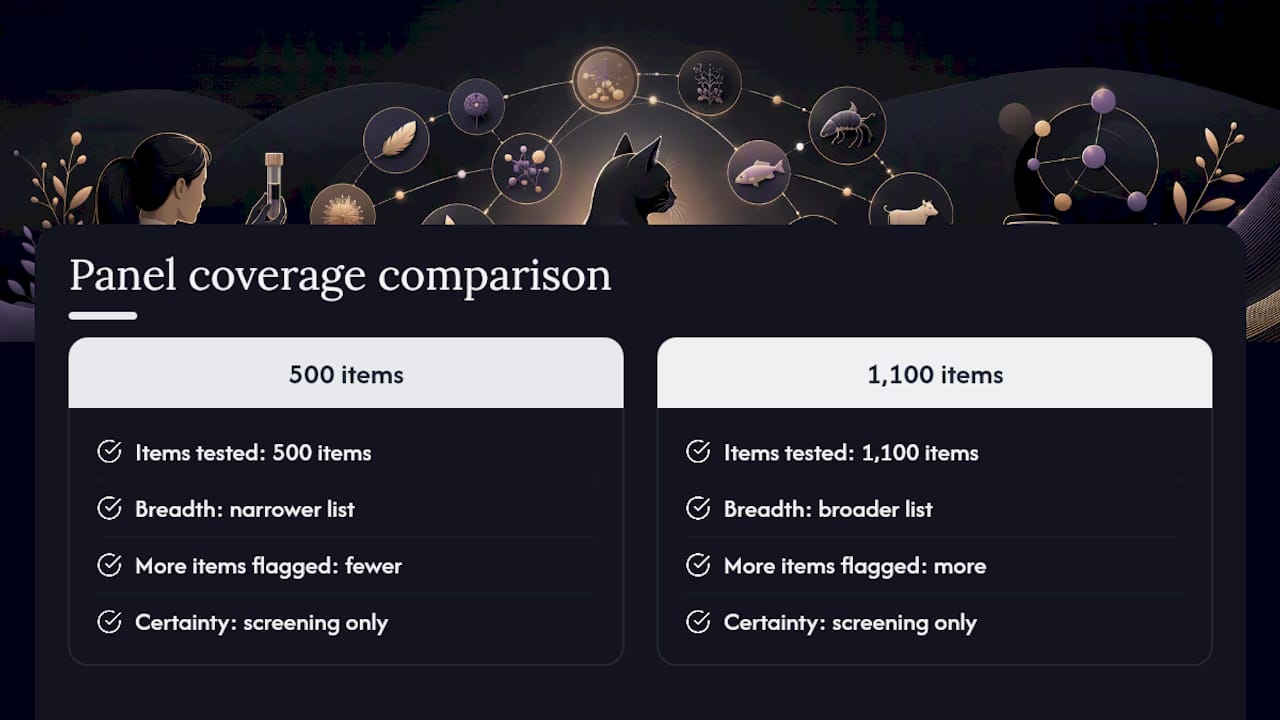
A bigger panel gives you more items to review, not more certainty about any single one. Coverage of 500 items versus 1,100 items changes the breadth of what gets flagged, but both remain screening tools designed to point you towards patterns worth investigating, not conclusions.
How does at-home hair sample testing actually work?
Ordering one of these kits is straightforward, and the process is designed so you never need to visit a clinic. Here’s what typically happens:
- Order online and the kit arrives by post within a few days.
- Collect a hair sample following the instructions, usually a small clipping from close to the scalp or root.
- Package the sample in the provided envelope or tube, sealed as instructed.
- Post it back using the pre-paid or standard postage method specified in your kit.
- The lab processes the sample and compiles a digital report, sent to your email once ready.
Pro Tip: Take slightly more hair than you think you need. A sample that’s too small or too short is the most common reason a lab has to ask for a second one, which adds days to your wait.
Common mistakes include cutting hair from the very tip rather than nearer the root, sending damp or product-covered hair, or under-filling the sample envelope. The workflow for at-home health tests explains each of these steps in more detail if you want a fuller walkthrough before you start.
How do you read the digital report and what happens next?
Your report typically breaks results into sensitivity levels for each item tested, alongside nutritional notes and suggested items to consider excluding. Reports are built to be read without a medical background, but that doesn’t mean you should act on every line at once.
Prioritise findings that match symptoms you’re already experiencing, particularly anything you’ve noticed since introducing a cat into the home or after periods of close contact. Recent exposures matter too. Something flagged that lines up with a change in your routine is worth more attention than a low-level result buried on page four.
- Start with the highest-flagged items connected to your actual symptoms.
- Track symptoms daily for at least two weeks before changing anything.
- Remove one variable at a time rather than everything at once.
- Reintroduce gradually to see what triggers a reaction returning.
The educational guide to bioresonance technology is a useful companion here, since it explains what the underlying method can and can’t tell you. One thing worth remembering: these screens are designed as aids to guide lifestyle changes, not as a replacement for clinical assessment if symptoms are severe or persistent.
How long does it take to get results in the UK?
Postage to the lab usually takes one to three working days depending on where you post from. Once the sample arrives, UK Food Intolerance and similar publishers commonly cite a 48 to 72 hour turnaround for lab analysis once the sample is logged.
Things that can extend this window:
- Postal delays, particularly around bank holidays or bad weather.
- An insufficient sample requiring a second one to be sent.
- High order volumes during busier periods of the year.
If your report hasn’t arrived within the stated window, check your spam folder first, then contact the lab directly. Most delays are postal, not laboratory, and a quick email usually resolves it within a day.
How do you choose between an entry-level and a comprehensive test?
Matching your budget to your actual need starts with being honest about what you’re trying to find out. If you strongly suspect one or two specific triggers, a smaller panel may tell you what you need. If your symptoms are vague or widespread, a broader panel gives you more places to look.
- Decide your goal first. Are you screening broadly or checking a specific suspicion?
- Check the panel size against what matters to you, pet dander included.
- Confirm the lab is UK-based, which affects both turnaround and postage cost.
- Ask about refund and privacy policies before you commit to a purchase.
- Look for interpretive support, since a report with no guidance is far less useful.
Pro Tip: Read the panel item list before you buy, not after. A test that sounds comprehensive can still miss the exact category you care about.
Be wary of any seller who won’t say where their lab is, offers no way to interpret your results, or makes vague claims about accuracy without explaining what the test measures. The comparison of UK allergy testing kits is a helpful reference point if you want to weigh panel size against price before deciding.
Why the cost conversation misses the point
Most people researching cat allergy test cost in the UK are really asking a different question: is this worth doing before I spend money on vet trips, air purifiers, or rehoming decisions I might regret? That’s the question worth answering, and it rarely gets asked directly.
Here’s my honest view. A £30 to £150 screening test is cheap insurance against making an expensive decision on a hunch. It won’t give you a clinical diagnosis, and it shouldn’t be sold to you as one. But if it flags pet dander sensitivity alongside symptoms you’re already tracking, that’s a genuinely useful data point before you consider anything drastic.
The mistake I see most often isn’t choosing the wrong tier. It’s skipping the symptom tracking that makes a report meaningful in the first place. A result without context is just a list. A result matched against two weeks of symptom notes is a decision-making tool.
— Rob
Get your cat sensitivity screen from a UK lab
If you’ve read this far, you already know what to look for: UK lab processing, a clear panel, fast turnaround, and support for interpreting what comes back. UK Food Intolerance’s pet testing range covers exactly this, with Intro 300, Peak 700, and Essential 500 options depending on how broad you want the screen to be.
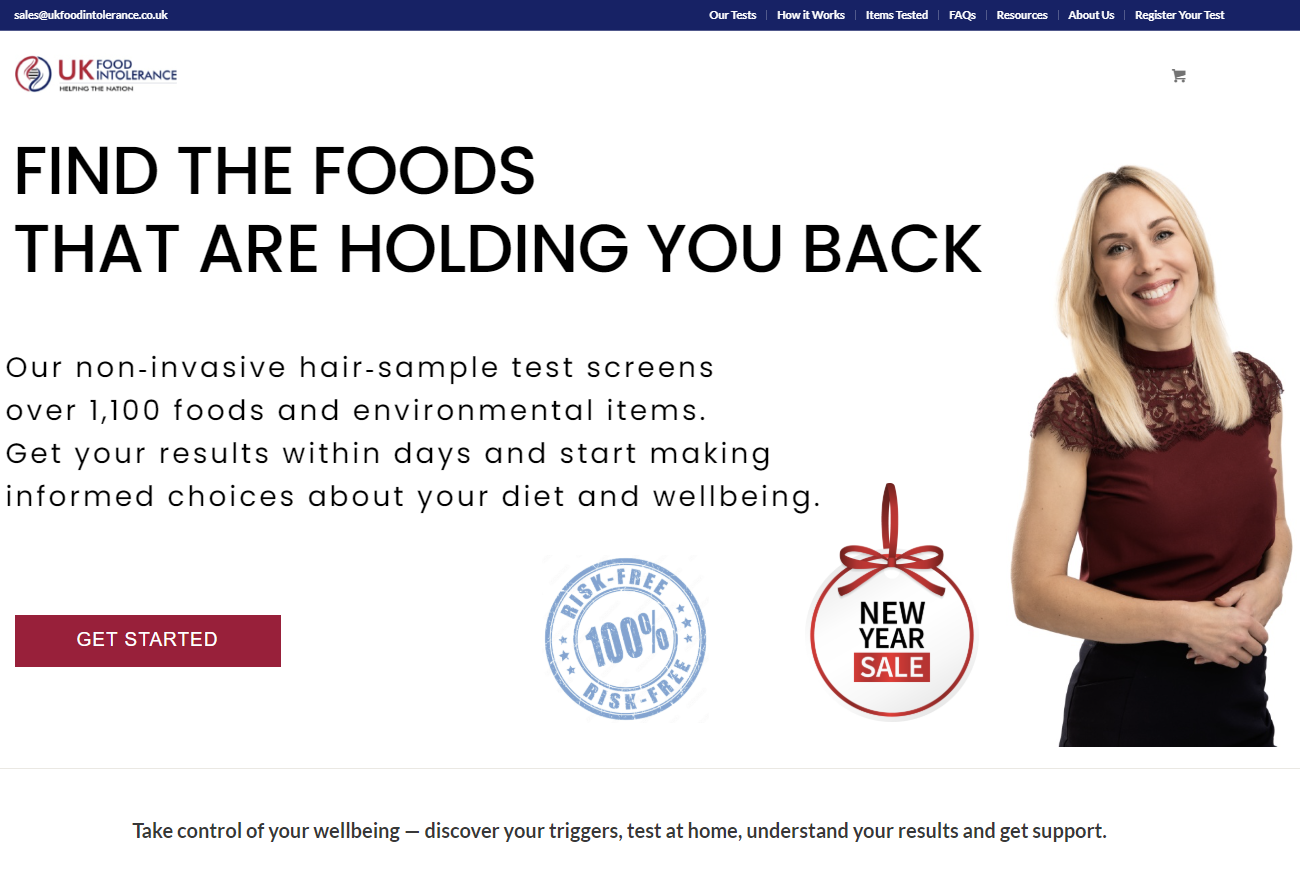
For your own sensitivity screen alongside a pet’s, the full range of human tests runs from the Core Test through to the Ultimate Test, all processed at a UK-based laboratory with digital reports typically delivered within 48 to 72 hours of the sample arriving. Every kit comes with guidance for reading your results and working through an elimination approach safely, rather than leaving you with a report and no next step. Order your kit online, post your hair sample back using the instructions provided, and check your inbox in a few days for a report you can actually act on.
Useful sources for further reading
- British Association of Dermatologists for accredited dermatology education.
FAQ
How much is a cat allergy test in the UK?
At-home hair-sample sensitivity kits screening for cat-related triggers typically vary in cost, depending on panel size. UK Food Intolerance’s Ultimate Plus Intolerance Test is priced at £140.99 one-off per person for its most comprehensive panel.
Is an at-home cat sensitivity test the same as a clinical allergy test?
No. An at-home hair-sample test is a sensitivity screen, not a clinical IgE allergy test performed by a healthcare professional, and it works on a different method entirely. Read more on the difference between intolerance and allergy testing.
How long does it take to get results after posting a hair sample?
Postage typically takes one to three working days, and lab processing is commonly cited as 48 to 72 hours once the sample arrives. Delays are usually postal rather than laboratory related.
What does the price of an at-home test usually include?
The price typically covers the kit itself, postage to the lab, laboratory analysis, and a digital report. Some sellers charge extra for expedited processing or repeat sampling if the first attempt is insufficient.
Can I use the results to start an elimination diet?
Yes, many people use their report to guide a structured elimination approach, removing flagged items gradually and tracking symptoms. The elimination diet checklist sets out a safe, step-by-step way to do this.









Leave a Reply
Want to join the discussion?Feel free to contribute!