

Struggling with unexplained digestive issues can feel frustrating, especially when every meal leads to discomfort rather than satisfaction. In the United Kingdom, finding safe and non-invasive answers has become a priority for those wanting to improve their health through dietary changes. With advanced intolerance testing techniques grounded in rigorous British standards and research, you now have the opportunity to uncover what might be holding back your wellbeing and make confident, informed diet choices.
Table of Contents
- Defining UK-Based Intolerance Testing Methods
- Bio-Resonance Technology: How It Works
- Types of Tests and Common Applications
- Benefits for British Health and Wellbeing
- Comparing Alternatives: Blood, IgG, and Elimination Diets
- Addressing Misconceptions and Safety Considerations
Key Takeaways
| Point | Details |
|---|---|
| UK-Based Intolerance Testing | Utilises advanced methods such as bioresonance and blood tests to identify dietary sensitivities and improve health. |
| Method Selection | Different tests offer unique advantages; consulting a healthcare professional is crucial to choosing the right method. |
| Impact on Wellbeing | Identifying food intolerances can enhance nutrition and overall health, aiding in the management of chronic health issues. |
| Misconceptions | It is important to differentiate between food intolerances and allergies; professional assessment is key for accurate interpretation. |
Defining UK-Based Intolerance Testing Methods
Food intolerance testing in the United Kingdom represents a sophisticated approach to understanding individual dietary sensitivities. Unlike traditional diagnostic methods, these testing techniques provide comprehensive insights into how specific foods might impact personal health. The food hypersensitivity research conducted by the Food Standards Agency highlights the complexity of identifying potential dietary triggers that could cause discomfort or chronic health issues.
UK-based intolerance testing methods typically involve several advanced techniques designed to analyse an individual’s biological response to various food substances. These methods often include bioresonance technology, hair analysis, and specialised blood tests that screen for potential inflammatory responses. By examining biomarkers and immune system reactions, these tests can identify specific food groups that might be causing digestive disruption, skin problems, or energy fluctuations.
The most sophisticated UK intolerance testing approaches use multi-parameter screening techniques. These comprehensive assessments examine not just immediate reactions, but also delayed sensitivity responses that traditional medical testing might miss. Practitioners utilise advanced laboratory protocols to analyse hair samples or blood markers, providing detailed reports that map potential food interactions unique to each individual’s physiological profile.
Pro tip: When considering intolerance testing, always consult with a healthcare professional to interpret results and develop a personalised dietary management strategy.
Bio-Resonance Technology: How It Works
Bio-resonance technology represents an innovative approach to understanding how the human body responds to specific substances, particularly in the realm of food intolerances. This advanced diagnostic method operates on the principle that every substance emits a unique electromagnetic frequency, and by analysing these frequencies, practitioners can identify potential physiological interactions. The bio-resonance research reveals a sophisticated mechanism for detecting subtle energy patterns within biological systems.
At its core, bio-resonance testing involves capturing the electromagnetic waves emitted by hair samples or biological specimens. Specialised equipment measures these subtle energy frequencies, comparing them against a comprehensive database of known food and environmental substance signatures. When an individual’s sample demonstrates an unusual resonance pattern with specific substances, it potentially indicates an intolerance or sensitivity that might not be detectable through traditional medical testing methods.

The technology works by detecting minute electromagnetic variations that occur when different substances interact with an individual’s unique biological signature. Unlike invasive blood tests, bio-resonance provides a non-intrusive method of screening potential dietary triggers. By analysing these electromagnetic frequencies, the technology can help identify inflammatory responses, potential immune system reactions, and subtle physiological stressors that might be contributing to ongoing health challenges.
Pro tip: Consider maintaining a detailed health journal alongside bio-resonance testing to track potential correlations between identified sensitivities and your actual symptom patterns.
Types of Tests and Common Applications
Food intolerance testing in the United Kingdom encompasses a range of sophisticated diagnostic approaches designed to identify individual sensitivities. The food hypersensitivity research conducted by the Food Standards Agency highlights multiple testing methodologies used to detect potential dietary triggers and allergenic responses across clinical and consumer health settings.
These testing methods typically fall into several key categories. Hair Analysis Tests provide a non-invasive screening method that examines electromagnetic frequencies from hair samples, identifying potential inflammatory responses to specific food groups. Blood Serum Tests analyse immunological markers, tracking specific antibody reactions that might indicate intolerance. Bioresonance Screenings utilise advanced electromagnetic frequency comparison techniques to map potential physiological interactions with various substances.
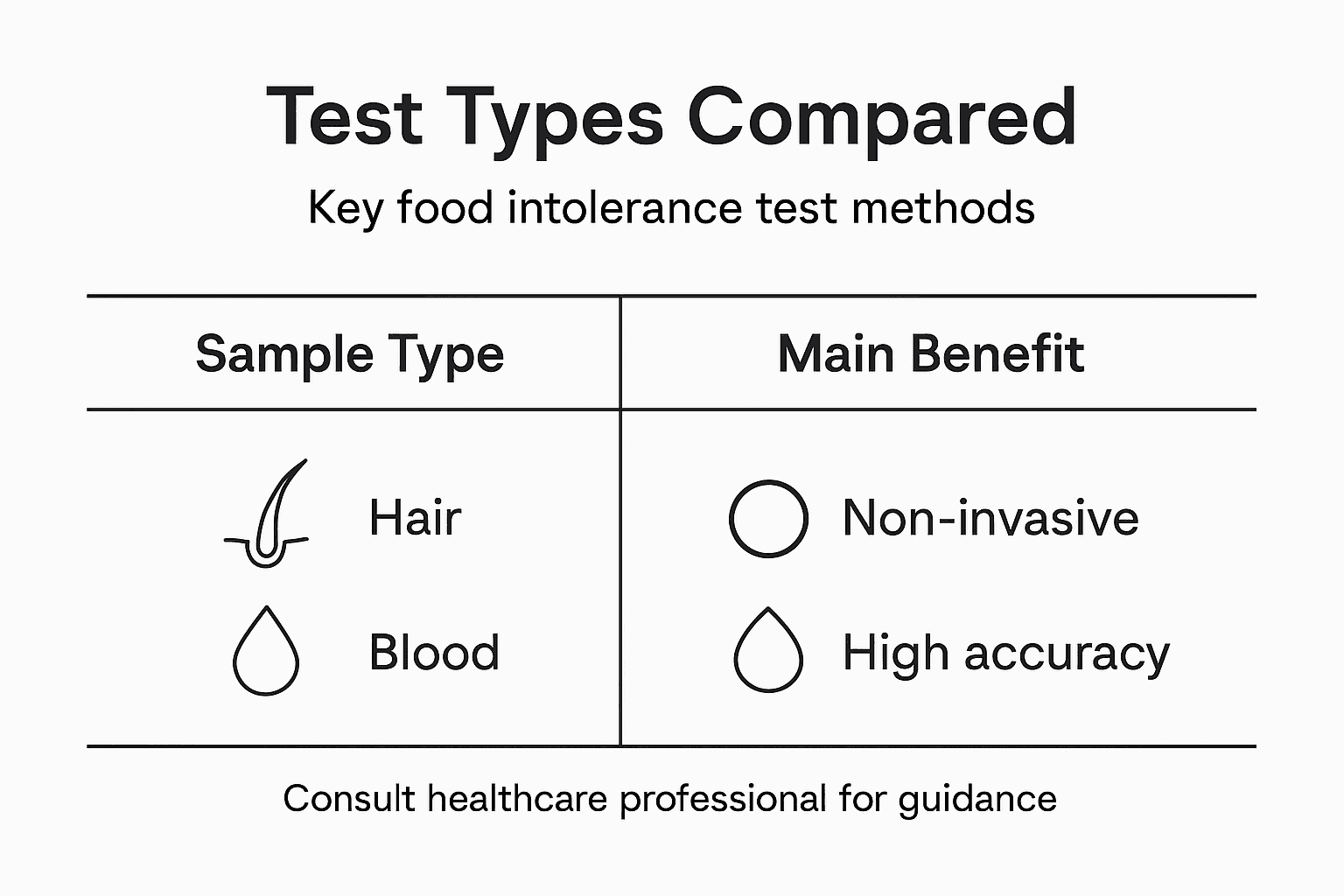
Each testing approach offers unique advantages for different health scenarios. Hair analysis tests are particularly useful for individuals seeking a comprehensive overview of potential sensitivities without invasive procedures. Blood tests provide more targeted insights into immediate immunological responses, while bioresonance techniques offer a holistic view of subtle energy interactions within the body. These methods can help identify potential triggers for conditions ranging from digestive discomfort and skin irritations to chronic fatigue and unexplained health challenges.
Pro tip: Consult with a healthcare professional to determine which intolerance testing method best suits your specific health concerns and medical history.
Here is a comparison of key UK food intolerance testing methods and their distinctive features:
| Method | Sample Type | Best For | Limitation |
|---|---|---|---|
| Hair Analysis | Hair strands | Non-invasive overall sensitivity scan | May lack immediate precision |
| Blood Serum Test | Blood sample | Detecting immune-mediated responses | Requires specialised lab |
| Bio-Resonance | Hair or tissue | Mapping subtle energetic interactions | Controversial interpretation |
| Elimination Diet | Dietary changes | Personal observation of trigger foods | Time-consuming process |
Benefits for British Health and Wellbeing
Food intolerance testing offers profound implications for overall health management, particularly within the context of British wellness. Identifying potential dietary sensitivities can transform an individual’s approach to nutrition, energy levels, and long-term physiological functioning. The health benefits of dietary adjustments demonstrate how precise nutritional understanding can dramatically improve quality of life.
For British adults experiencing chronic health challenges, intolerance testing provides a targeted pathway to understanding individual metabolic responses. Many individuals suffer from unexplained symptoms such as persistent fatigue, digestive discomfort, skin irritations, and mood fluctuations, which can often be traced back to undiagnosed food sensitivities. By pinpointing specific dietary triggers, individuals can make informed nutritional choices that support their unique physiological requirements, potentially reducing inflammation, improving digestive function, and enhancing overall energy levels.
Moreover, intolerance testing contributes to a proactive approach to preventative healthcare. Rather than waiting for significant health issues to emerge, British adults can take preemptive steps to understand their body’s specific reactions to different food substances. This approach aligns with the growing trend of personalised healthcare, where medical interventions and nutritional strategies are tailored to individual genetic and metabolic profiles, ultimately supporting more precise and effective wellness management.
Pro tip: Consider maintaining a detailed food and symptom diary alongside your intolerance test results to track your body’s specific responses and optimise your personalised nutrition strategy.
Comparing Alternatives: Blood, IgG, and Elimination Diets
Food intolerance detection involves multiple testing methodologies, each offering distinct approaches to understanding individual dietary sensitivities. The comprehensive guide to food intolerance testing reveals the nuanced differences between various diagnostic techniques, highlighting the importance of selecting an appropriate method for individual health needs.
Blood Tests represent a traditional diagnostic approach, measuring specific immunoglobulin responses to potential dietary triggers. These tests analyse blood serum for antibody reactions, providing insights into immediate and delayed immune system responses. IgG Testing focuses on detecting immunoglobulin G antibodies, which can indicate potential inflammatory reactions to specific food substances. However, medical professionals often debate the comprehensive reliability of IgG testing, recommending it as a supplementary rather than definitive diagnostic tool.
Elimination Diets offer an alternative, hands-on approach to identifying food intolerances. This method involves systematically removing suspected trigger foods from one’s diet and carefully monitoring physiological responses. While more time-consuming and subjective, elimination diets provide direct, personal insights into individual dietary sensitivities. Practitioners typically recommend a structured elimination approach, where foods are removed for a specific period and then methodically reintroduced to observe potential reactive symptoms.
Pro tip: Consult with a registered nutritionist or healthcare professional to develop a personalised strategy that combines multiple testing approaches for the most comprehensive understanding of your dietary sensitivities.
Addressing Misconceptions and Safety Considerations
Food intolerance testing involves complex scientific methodologies that are frequently misunderstood by the general public. The food hypersensitivity research conducted by the Food Standards Agency highlights critical distinctions between genuine medical diagnostics and potentially misleading testing approaches, emphasising the importance of evidence-based interpretation.
One prevalent misconception is conflating food intolerances with food allergies. Food Allergies involve immediate, potentially life-threatening immune responses, whereas Food Intolerances typically manifest as subtle, delayed physiological reactions. Many individuals mistakenly believe that all adverse food reactions are allergic in nature, which can lead to unnecessary dietary restrictions or overlooking genuine health concerns. Professional guidance is crucial in distinguishing between these complex physiological responses and developing appropriate management strategies.
For clarity, here is a summary of how food intolerance differs from food allergy:
| Aspect | Food Intolerance | Food Allergy |
|---|---|---|
| Onset of Symptoms | Often delayed, hours after consumption | Rapid onset, minutes after exposure |
| Severity | Usually mild or moderate discomfort | Can be life-threatening (anaphylaxis risk) |
| Immune System Type | Non-IgE mediated, less severe | IgE mediated, severe immune reaction |
| Typical Symptoms | Bloating, headaches, skin irritation | Hives, swelling, breathing difficulty |
Safety considerations in intolerance testing centre on ensuring accurate, scientifically validated methodologies. Home testing kits, while convenient, should not replace professional medical assessment. Practitioners recommend comprehensive approaches that combine multiple diagnostic techniques, including detailed medical history, elimination diets, and professional laboratory testing. Individuals should be cautious of tests making absolute claims and always consult healthcare professionals who can provide nuanced, personalised interpretations of testing results.
Pro tip: Always discuss your intolerance testing results with a registered healthcare professional to ensure accurate interpretation and develop a safe, personalised dietary management plan.
Discover Your Personal Path to Better Digestive Health Today
Struggling with unexplained digestive discomfort or other persistent symptoms discussed in this article can feel overwhelming. You deserve a clear understanding of your body’s unique reactions. UK-based intolerance testing uses advanced bio-resonance technology to identify hidden sensitivities that might be affecting your wellbeing. Say goodbye to uncertainty and take control with non-invasive, at-home testing that is both fast and reliable.

Start your journey now with UK Food Intolerance and uncover the triggers behind your symptoms. Explore our comprehensive options including the Ultimate Single Intolerance Test and the Core Single Intolerance Test that examine over 500 food and environmental items. Visit our Digestive Health Archives for helpful insights and guidance. Take the first step today to improved health and vitality by understanding your body better with expert support every step of the way.
Frequently Asked Questions
What are the different types of food intolerance testing methods available?
UK-based intolerance testing methods include hair analysis tests, blood serum tests, and bioresonance screenings. Each method has its unique advantages in identifying dietary sensitivities.
How does bio-resonance technology work in intolerance testing?
Bio-resonance technology captures the electromagnetic frequencies emitted by biological samples to detect potential food intolerances by comparing them against known frequency patterns of various substances.
What are the benefits of undergoing food intolerance testing?
Food intolerance testing can help identify specific dietary triggers, improve overall health by tailoring nutritional choices, and support proactive management of chronic health issues.
Why is it important to consult with a healthcare professional before testing?
Consulting a healthcare professional is essential to interpret test results accurately and to develop a personalised dietary management strategy based on individual health needs.









Leave a Reply
Want to join the discussion?Feel free to contribute!