

Most British adults struggling with persistent bloating or unexplained inflammation often face uncertainty about the real causes behind their symptoms. Understanding food sensitivity is more than just avoiding common allergens. It involves recognising subtle reactions that can quietly undermine health and daily comfort. This article reveals key facts, including that around 1 to 2% of people in the United Kingdom are affected by food sensitivities, while offering practical guidance on non-invasive testing methods for those seeking clarity and relief.
Table of Contents
- Defining Food Sensitivity And Misconceptions
- Common Types And Triggers In The UK
- Recognising Symptoms And Health Impact
- Bio-Resonance Testing: Process And Benefits
- Practical Implications Of Unmanaged Sensitivities
- Alternatives And Limitations Of Testing Methods
Key Takeaways
| Point | Details |
|---|---|
| Understanding Food Sensitivity | Food sensitivity includes allergies, intolerances, and autoimmune reactions, each with distinct mechanisms and symptom profiles. Accurate identification is crucial for effective management. |
| Legislation and Consumer Protection | UK law mandates clear allergen labelling on prepacked foods, reflecting the need for increased consumer awareness regarding food sensitivities. |
| Impact of Unmanaged Sensitivities | Unaddressed food sensitivities can cause significant economic and social burdens, affecting quality of life and potentially leading to chronic health issues. |
| Appropriate Testing Methods | Clinically validated testing methods, such as skin prick tests and oral food challenges, remain the gold standard for diagnosing food sensitivities. |
Defining Food Sensitivity and Misconceptions
Food sensitivity represents a complex spectrum of bodily responses to specific food components, extending far beyond traditional understanding of dietary reactions. Affecting an estimated 1 to 2% of adults in the United Kingdom, these reactions encompass multiple physiological mechanisms that can significantly impact an individual’s health and quality of life.
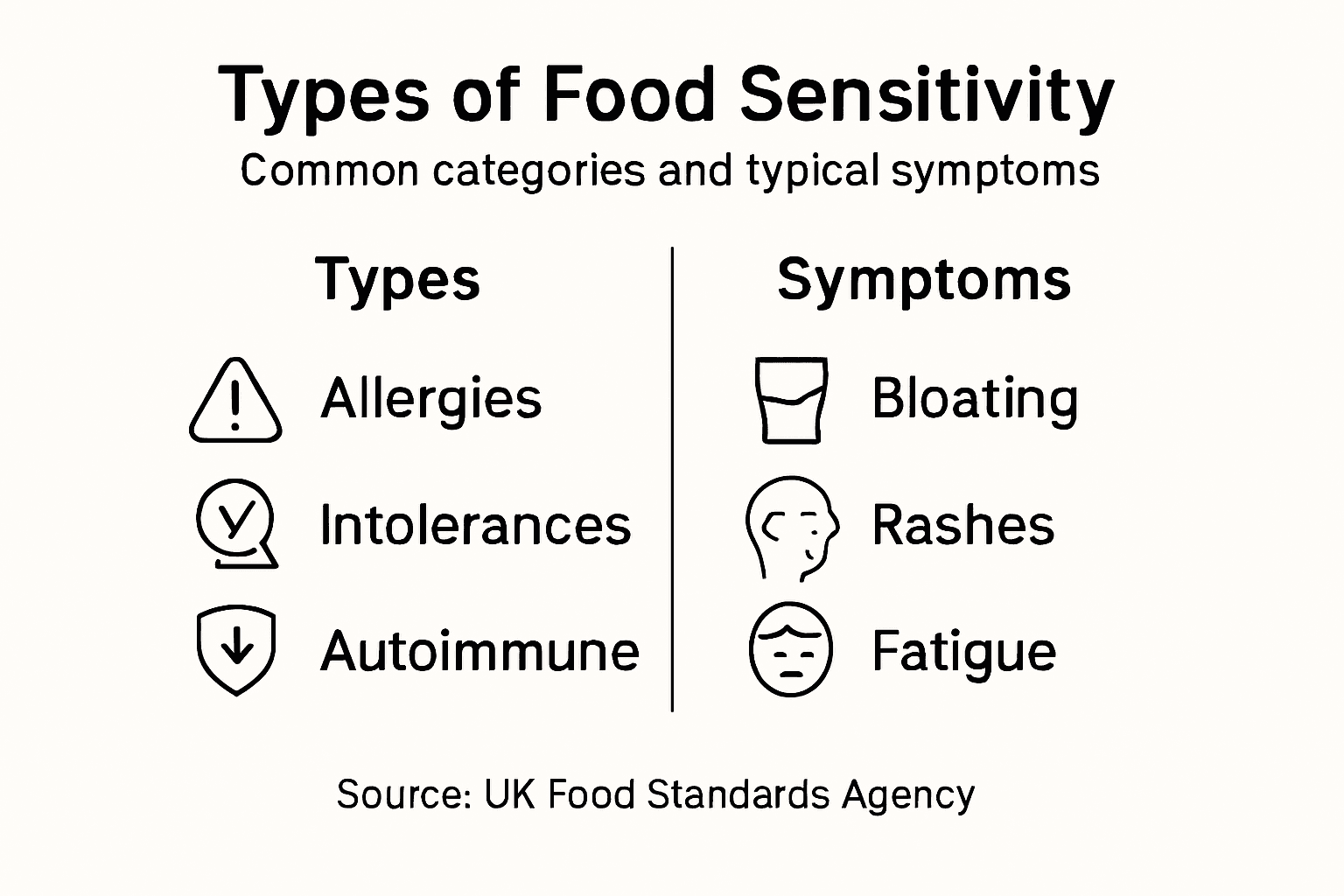
At its core, food sensitivity includes three primary categories: food allergies, food intolerances, and autoimmune reactions. Food allergies involve an immediate immune system response triggered by specific food proteins, potentially causing rapid and severe symptoms. Food intolerances, in contrast, represent the body’s difficulty digesting certain food components without presenting life-threatening risks. Autoimmune reactions occur when food components trigger an immune attack on the body’s own tissues, creating a more complex and potentially chronic health challenge.
Common misconceptions frequently arise from insufficient understanding of these distinct conditions. Many individuals mistakenly conflate allergic reactions with intolerances, leading to inappropriate management strategies. Accurate recognition of food sensitivity mechanisms is critical for developing effective dietary approaches and preventing potential health complications. UK legislation now mandates clear allergen labelling on prepacked foods, reflecting the growing recognition of these complex dietary interactions and the need for consumer protection.
Pro tip: Keep a detailed food and symptom diary to help identify potential sensitivity triggers and patterns in your individual dietary responses.
The following table summarises how the three main types of food sensitivity differ by mechanism, symptoms, and health risks:
| Type of Sensitivity | Bodily Mechanism | Typical Symptoms | Associated Risks |
|---|---|---|---|
| Allergy | Immune overreaction to proteins | Rapid swelling, hives, breathing issues | Anaphylaxis, severe reactions |
| Intolerance | Digestive inability to process component | Bloating, diarrhoea, discomfort | Milder, non-life-threatening |
| Autoimmune | Immune attack triggered by food | Fatigue, joint pain, inflammation | Chronic conditions, tissue damage |
Common Types and Triggers in the UK
Food sensitivities in the United Kingdom encompass a diverse range of physiological responses that can significantly impact individual health. Common allergens and food triggers include a specific set of ingredients that frequently cause adverse reactions among British adults. These primary triggers are categorised into distinct groups: immediate allergic responses, digestive intolerances, and autoimmune conditions.
Allergic reactions typically involve eight primary food groups: cow’s milk, eggs, peanuts, tree nuts, wheat, soy, fish, and shellfish. These substances can provoke rapid and potentially severe immune system responses, ranging from mild skin irritations to life-threatening anaphylactic reactions. Lactose intolerance stands out as the most prevalent digestive sensitivity, affecting approximately 65% of the global population, with significant prevalence among British adults who struggle to digest milk-based products.
Moreover, certain food intolerances extend beyond immediate allergic responses. Gluten sensitivity, including coeliac disease, represents a complex autoimmune condition triggered by consuming wheat, barley, and rye proteins. Histamine, caffeine, sulphites, and salicylates constitute additional problematic dietary components that can trigger subtle yet persistent physiological reactions. The Food Standards Agency continues to monitor and provide guidance on managing these intricate dietary challenges, emphasising the importance of personalised nutritional approaches.
Pro tip: Consider consulting a registered nutritionist to conduct comprehensive food sensitivity testing and develop a tailored dietary management strategy.
Recognising Symptoms and Health Impact
Food hypersensitivity symptoms represent a complex spectrum of physiological responses that can significantly disrupt an individual’s daily life. These manifestations range from mild discomfort to potentially severe health complications, affecting approximately 1-2% of the United Kingdom’s population. Understanding these symptoms is crucial for effective management and improved quality of life.

The clinical presentation of food sensitivities encompasses multiple bodily systems, with symptoms typically emerging hours after consuming trigger foods. Common indicators include gastrointestinal distress such as bloating, diarrhoea, and stomach pain, alongside extra-intestinal manifestations like persistent headaches, skin rashes, respiratory issues, and chronic fatigue. Digestive symptoms often serve as the primary warning signs, with individuals experiencing varying degrees of discomfort that can significantly impact their daily functioning and overall wellbeing.
Moreover, the health implications extend beyond immediate physical symptoms. Chronic food sensitivities can contribute to long-term inflammatory responses, potentially compromising immune system function and nutritional absorption. Persistent symptoms of food intolerance frequently result in decreased energy levels, mood fluctuations, and reduced cognitive performance. While these reactions do not typically trigger life-threatening immune responses like allergic anaphylaxis, they can substantially diminish an individual’s quality of life and overall health status.
Pro tip: Maintain a detailed food and symptom diary to help healthcare professionals accurately identify potential food sensitivity triggers and develop personalised management strategies.
Bio-Resonance Testing: Process and Benefits
Bio-resonance testing technology offers a non-invasive approach to understanding an individual’s unique physiological responses to potential dietary and environmental triggers. This innovative method provides a comprehensive analysis of the body’s energetic interactions, allowing for personalised health insights without the need for invasive procedures or extensive blood testing.
The process involves a sophisticated scanning mechanism that measures subtle electromagnetic frequencies emitted by the body. Energetic screening captures intricate information about organ function, food sensitivities, and potential nutritional imbalances. Unlike traditional diagnostic methods, bio-resonance testing can detect underlying stress patterns and potential health challenges before they manifest as clinical symptoms, offering a proactive approach to personal health management.
Key benefits of this advanced testing methodology include rapid results, holistic assessment, and personalised health recommendations. The technology provides a detailed overview of potential sensitivity triggers, enabling individuals to make informed dietary and lifestyle choices. By identifying subtle energetic imbalances, practitioners can develop targeted interventions that address the root causes of potential health issues, rather than simply treating surface-level symptoms.
Pro tip: Consult with a qualified healthcare professional to interpret bio-resonance test results and develop a comprehensive, personalised health strategy tailored to your specific needs.
Practical Implications of Unmanaged Sensitivities
Food hypersensitivity impacts extend far beyond immediate physical discomfort, creating complex challenges for individuals across multiple life domains. Unaddressed food sensitivities can generate significant economic, social, and psychological burdens that progressively erode an individual’s overall quality of life and personal wellbeing.
The economic consequences are particularly notable, with affected households experiencing substantially increased grocery expenses and medical costs. Workplace productivity becomes compromised as individuals navigate recurring health challenges, potentially leading to increased sick leave and reduced professional performance. Social interactions are equally impacted, with meal preparation, dining out, and participating in communal eating becoming sources of significant stress and anxiety.
Moreover, poorly managed food sensitivities can trigger deeper physiological and psychological complications. Nutritional deficiencies may develop from restricted dietary choices, while chronic stress and social isolation can contribute to mental health challenges such as anxiety and depression. The cumulative effect creates a complex cycle of physical and emotional strain that extends well beyond the initial dietary restrictions.
Pro tip: Develop a comprehensive support network that includes healthcare professionals, nutritional experts, and understanding family members to effectively manage food sensitivity challenges.
Alternatives and Limitations of Testing Methods
Alternative food sensitivity testing methods encompass a range of techniques that frequently promise comprehensive insights but often lack scientific validation. Electrodermal testing, applied kinesiology, hair analysis, and IgG antibody testing represent common yet controversial approaches that professional allergy organizations strongly caution against due to their potential for misdiagnosis and inappropriate dietary interventions.
The current landscape of food allergen detection involves complex methodological challenges. Diagnostic accuracy remains a critical concern, with existing techniques struggling to detect low-level cross-contamination and address the inherent heterogeneity of food allergens. Immunoassays like ELISA represent the standard approach, though emerging multiplex and DNA-based methods show promising potential for more nuanced and precise identification of sensitivity triggers.
Food allergen testing methodologies continue to evolve, with the Food Standards Agency emphasising the critical need for harmonised, rapid, and scientifically robust testing protocols. The primary limitations include variability in test sensitivity, potential for false positives, and the complexity of standardising detection across different food matrices. Clinically validated approaches such as skin prick tests, specific IgE measurements, and professionally supervised oral food challenges remain the gold standard for accurate diagnosis.
Pro tip: Always consult a registered allergist or healthcare professional who can interpret test results within a comprehensive clinical context and provide personalised guidance.
Below is a comparison of the most recognised food sensitivity testing methods and their reliability:
| Testing Method | Principle Used | Professional Acceptance | Common Limitations |
|---|---|---|---|
| Skin Prick/IgE Blood | Measures immune reactions | High | May miss some triggers |
| Bio-Resonance | Reads body frequencies | Low | Lacks scientific backing |
| IgG Antibody Testing | Detects delayed antibody | Low | Questionable accuracy |
| Oral Food Challenge | Eating suspected food | Highest | Time-consuming, costly |
Take Control of Your Digestive Health and Wellbeing Today
Living with unexplained symptoms such as bloating, fatigue or skin discomfort can be frustrating and overwhelming. The article highlights how complex food sensitivities often go undiagnosed and impact daily life. If you are seeking clarity on what might be triggering your body’s reactions or inflammation, understanding your unique food sensitivity profile is a crucial step. Using terms like bio-resonance and elimination diets shows there are effective, non-invasive options to help you regain control.

Discover the benefits of fast and reliable testing through our at-home service at UK Food Intolerance. Whether you want a detailed analysis with the Ultimate Single Intolerance Test or prefer an affordable Core Single Intolerance Test, you can easily collect your sample and get results within 48-72 hours. Start by exploring insights on gut wellness in our Digestive Health Archives and learn how to differentiate sensitivities with resources like Egg Intolerance – Symptoms, Allergy Difference & How to Test. Take the first step toward a personalised plan that supports your health and lifts the burden of uncertainty now.
Frequently Asked Questions
What are the main types of food sensitivity?
Food sensitivity can be categorised into three primary types: food allergies, food intolerances, and autoimmune reactions. Allergies involve immediate immune responses, intolerances relate to digestive difficulties, and autoimmune reactions occur when the body mistakenly attacks its own tissues due to certain food components.
How can I identify if I have a food sensitivity?
Maintaining a detailed food and symptom diary can help individuals recognise potential food sensitivity triggers. Tracking food intake and any corresponding symptoms can provide valuable insights for healthcare professionals when determining the underlying causes.
What symptoms are commonly associated with food sensitivities?
Symptoms of food sensitivities can vary widely and may include gastrointestinal distress such as bloating and diarrhoea, along with extra-intestinal manifestations like headaches, skin rashes, and chronic fatigue. Understanding these symptoms is vital for effective management and improved quality of life.
What is bio-resonance testing and how does it help with food sensitivities?
Bio-resonance testing is a non-invasive method that assesses how an individual’s body interacts with potential dietary and environmental triggers. It offers insights into organ function and food sensitivities through the detection of subtle electromagnetic frequencies, providing personalised health recommendations.
Recommended
- UK Food Intolerance Trends – How Modern Testing Empowers Wellbeing
- Top Allergy Testing Services UK – Expert Comparison 2026
- Complete Guide to At-Home Sensitivity Tests for Wellbeing
- Guide To Food Intolerance Testing | UK Food Intolerance | Blog
- Hair Nutrition Food: Boosting Growth and Vitality | MyHair










Leave a Reply
Want to join the discussion?Feel free to contribute!