

Common vitamin deficiency symptoms cluster into a few recognisable groups: fatigue and breathlessness, neurological changes like numbness or balance problems, bone and muscle pain, and skin, hair or mouth changes. See a GP urgently if you notice numbness, weakness, balance loss or severe breathlessness. For milder or persistent symptoms, book a routine GP appointment rather than waiting it out.
TL;DR:
- Neurological symptoms like numbness and poor balance can occur with B12 deficiency even without signs of anemia, making specific testing essential.
- Iron deficiency often presents as fatigue and pale skin, and if left unchecked, it can develop into iron-deficiency anemia confirmed by blood tests.
- People with restricted diets, malabsorption conditions, or limited sun exposure face higher risks of multiple deficiencies, especially older adults, pregnant women, and vegetarians.
- Routine supplementation with 10 micrograms of vitamin D daily during autumn and winter is recommended for many adults, with higher doses for at-risk groups.
Table of Contents
- Key symptoms at a glance
- Symptoms by vitamin or mineral
- When to see a GP and what tests to expect
- Common causes and who is at risk
- Treatment and prevention: diet, supplementation and safety advice
- Red flags and common diagnostic pitfalls
- How at-home screening fits with clinical care
- Author perspective: evidence-led vigilance
- A practical next step if you’re piecing together your symptoms
- Sources
- FAQ
Key symptoms at a glance
Vitamin deficiency rarely announces itself with one clear sign. Most people notice a combination of symptoms that build gradually, which is part of why deficiencies often go unrecognised for months.
- Fatigue, low energy, breathlessness on exertion and palpitations, often linked to anaemia.
- Numbness, tingling, poor balance or memory and concentration changes, which point to a possible B12 problem.
- Bone pain, muscle weakness and aching, commonly tied to low vitamin D.
- Brittle nails, hair thinning, mouth ulcers and cracked lips at the corners of the mouth.
- Easy bruising, slow-healing cuts or gum bleeding (linked to vitamin C or K), and difficulty seeing in dim light (linked to vitamin A).
A single symptom on its own rarely confirms anything. It is the pattern, and how long it has lasted, that matters most.
Symptoms by vitamin or mineral
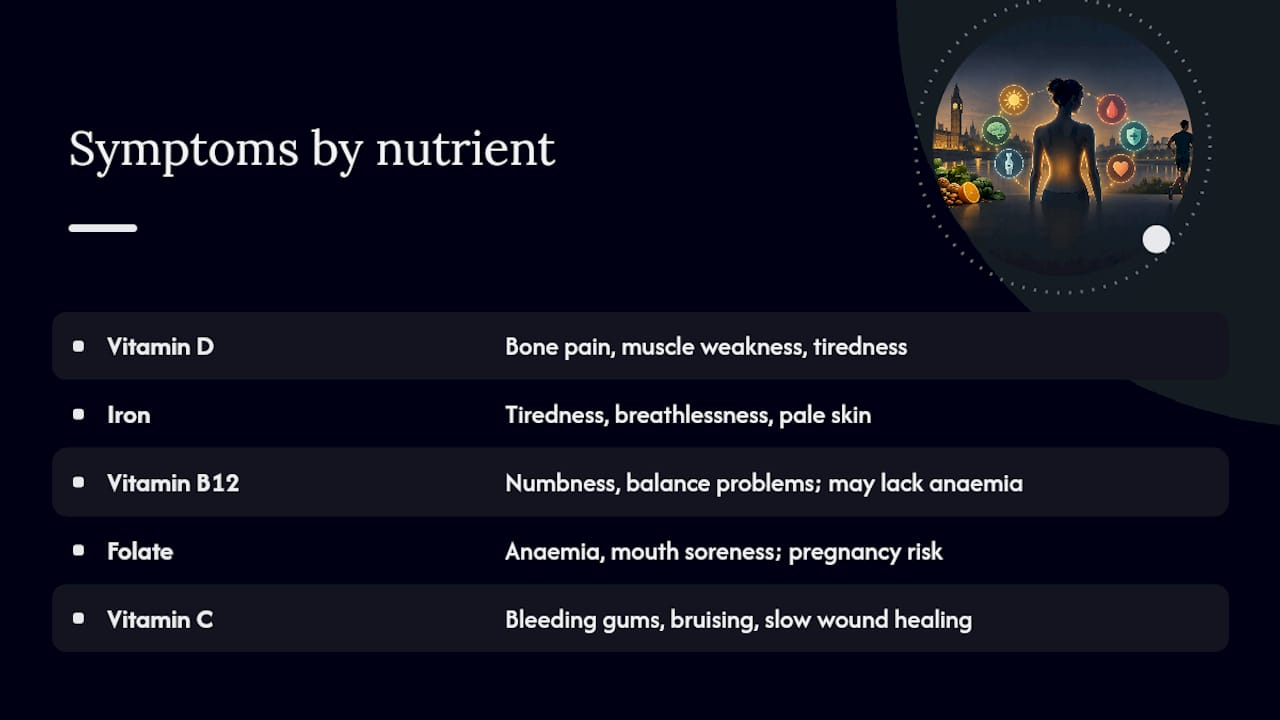
Vitamin D shortfall shows up as bone pain, muscle weakness and general tiredness. Left untreated for long periods, it can progress to osteomalacia, a softening of the bones that causes persistent aching. Low vitamin D status is far from rare: national survey data found 18% of adults aged 19 to 64 and 12% of adults aged 65 and over had blood levels below the threshold used to define low vitamin D status.
Iron deficiency tends to bring tiredness, breathlessness, palpitations and unusually pale skin. Left unchecked, it progresses to iron-deficiency anaemia, which is when a blood test typically confirms the cause.
Vitamin B12 deficiency can cause numbness, tingling, poor balance and cognitive changes such as memory lapses. What catches many people out is that these neurological signs can appear without anaemia at all. NICE guidance is explicit on this point: clinicians should not rule out B12 deficiency just because a full blood count looks normal, because significant nerve damage can exist before any change in red blood cells shows up.
Folate deficiency causes a similar type of anaemia to B12 deficiency, alongside mouth soreness and, in pregnancy, added risks that make folic acid supplementation routine advice for anyone planning a pregnancy.
Vitamin A deficiency affects night vision first, and in severe, prolonged cases can cause more serious eye damage. This level of deficiency is now rare in countries with varied diets, but it remains a consideration for anyone with very restricted eating patterns.
Vitamin C shortfall causes bleeding gums, easy bruising and slow wound healing. Full-blown scurvy is unusual today but not impossible in people with extremely limited diets.
Vitamin K and vitamin E deficiencies are less common but clinically important when they occur: vitamin K shortage shows up as a bleeding tendency, while vitamin E deficiency can cause neuromuscular problems such as muscle weakness or coordination difficulty.
Several of these deficiencies can occur together, particularly in people with malabsorption conditions, which is one reason symptom overlap makes self-diagnosis unreliable.
When to see a GP and what tests to expect
Some symptoms need prompt attention rather than a wait-and-see approach.
- New numbness, weakness, balance problems or fainting need urgent review.
- Severe or worsening breathlessness, especially with palpitations, should not be ignored.
- Unusual bleeding, extensive bruising or gum symptoms suggesting scurvy warrant a GP visit.
- Persistent fatigue, bone pain or mouth changes lasting several weeks are worth raising even without a red flag.
In primary care, a GP will typically order a full blood count, serum ferritin, serum B12 or holotranscobalamin, folate and 25-hydroxyvitamin D, adding methylmalonic acid and homocysteine when B12 status is unclear. Mention your diet, any medication such as metformin or proton pump inhibitors, nitrous oxide exposure, pregnancy or previous surgery, since each can affect absorption. NHS guidance lists breathlessness, palpitations, headaches and neurological symptoms among the common signs of B12 or folate deficiency anaemia, and NICE is clear that anaemia alone should never be the only test relied on to exclude B12 deficiency.
Common causes and who is at risk
Deficiencies usually come down to one of a few mechanisms: not eating enough of a nutrient, not absorbing it properly, or losing more than usual. Restrictive diets, limited sun exposure, coeliac disease, inflammatory bowel disease, pancreatic insufficiency and bariatric surgery all reduce intake or absorption. Certain medications interfere too, and heavy periods or ageing-related changes in gut absorption add further risk.
Some groups face a higher baseline risk: older adults, infants and young children, pregnant and breastfeeding women, people with darker skin, those who are housebound, vegans, and anyone with a malabsorption condition. Vitamin D status makes the scale of this clear: the same national survey found low status in nearly a fifth of working-age adults, with older adults at a somewhat lower but still notable rate. Our nutrient deficiency overview covers these risk factors in more depth.
Treatment and prevention: diet, supplementation and safety advice
Food remains the first line of defence. Oily fish, eggs and fortified spreads support vitamin D; red meat, eggs and dairy support B12; leafy greens and fortified cereals help with folate; citrus fruit and peppers cover vitamin C.
10 micrograms daily is the vitamin D dose recommended for many adults during autumn and winter, according to nidirect guidance, which also notes that older adults, people with little sun exposure and those with darker skin may need to take it year-round. The Food Standards Agency makes similar points about folic acid for anyone planning a pregnancy.
- Choose whole foods first, and use supplements to fill specific gaps rather than as a blanket approach.
- Stick to standard doses unless a GP has prescribed a higher, monitored dose for confirmed deficiency.
- Avoid combining multiple high-dose supplements without professional advice, since some vitamins accumulate and can cause harm at excess levels.
Confirmed deficiency sometimes needs a higher therapeutic dose, prescribed and monitored by a clinician rather than self-selected from a shop shelf. Speak to a GP or pharmacist before starting anything beyond standard preventative doses. For more detail on vitamin D specifically, see our guide to its health benefits.
Red flags and common diagnostic pitfalls
Neurological symptoms deserve urgent assessment even when blood counts come back normal, because B12-related nerve damage can precede any visible change in red blood cells. When B12 status is borderline and symptoms are present, functional markers such as methylmalonic acid and homocysteine can clarify the picture. Rare but serious presentations, including scurvy and osteomalacia, still occur in people with very restricted diets and should never be dismissed just because they are uncommon.
Pro Tip: Write down your recent medications, any nitrous oxide exposure and roughly how long your symptoms have lasted before your GP appointment, it speeds up the right tests being ordered.
How at-home screening fits with clinical care
At-home nutritional screening can highlight patterns worth investigating, but it does not replace a clinical blood test or a GP assessment. The at-home screening process involves collecting a hair sample, sending it to a laboratory, and receiving a digital report within a few days covering potential nutritional imbalances. If a screen flags something concerning, the sensible next step is a GP visit for confirmatory blood tests and a proper treatment plan, a point our guide to laboratory testing covers in more detail.

Author perspective: evidence-led vigilance
Symptom awareness matters, but it works best paired with proper testing and professional follow-up rather than guesswork. If something feels persistent or worrying, speak to a clinician before reaching for high-dose supplements on your own.
— Rob
A practical next step if you’re piecing together your symptoms
If you’re trying to work out whether diet is contributing to how you feel, food intolerance tests can help build a wider picture alongside your GP’s bloodwork. These tests are designed as screening tools that flag possible food and nutritional patterns worth discussing with a doctor, not a diagnosis in themselves.

- A core test can be a starting point for spotting patterns linked to diet and wellbeing.
- A more comprehensive intolerance test offers a wider panel, useful when symptoms are broad or hard to pin down.
| Test | Best suited for |
|---|---|
| Core Test | A first look at possible dietary patterns |
| Ultimate Single Intolerance Test | Wider screening across a large panel of items |
Results are most useful when you bring them to a GP alongside your symptoms for proper diagnosis and treatment. Explore the full range on our tests page to find the right starting point.
This article is general information, not a substitute for advice from a qualified doctor. Consult a qualified healthcare professional about your own circumstances before acting on anything here.
Sources
- Gov
- Vitamin D | nidirect
- NICE guidance: Anaemia B12 and folate deficiency – recommendations
- Vitamin B12 or folate deficiency anaemia – Symptoms | NHS
FAQ
What are symptoms of low vitamin levels?
Low vitamin levels commonly cause fatigue, breathlessness, numbness or tingling, bone and muscle pain, and changes to skin, hair or the mouth. The exact pattern depends on which vitamin is low, and symptoms often overlap, which is why a GP typically confirms the cause with a blood test rather than symptoms alone.
What are the 10 signs of low vitamin D?
There is no single official list of exactly ten signs, but the most widely reported symptoms include bone pain, muscle weakness, fatigue, mood changes and, in children, slowed growth. UK guidance recommends a 10 microgram daily supplement for many adults in autumn and winter to help prevent low levels developing in the first place.
Which vitamin deficiency can contribute to dry eyes?
Vitamin A deficiency is most associated with eye-related symptoms, typically affecting night vision before progressing to more serious effects in severe, prolonged cases. This level of deficiency is uncommon in people eating a varied diet but remains a consideration for those with very restricted intake.
Can you name four examples of nutritional deficiency diseases?
Well-recognised examples include scurvy from vitamin C deficiency, osteomalacia from vitamin D deficiency, megaloblastic anaemia from folate or B12 deficiency, and iron-deficiency anaemia from low iron. Each has a distinct symptom pattern, though mild deficiency often causes vaguer symptoms long before these fuller conditions develop.










Leave a Reply
Want to join the discussion?Feel free to contribute!