

If foods you have eaten for years now leave you bloated, flushed or with a headache, you are not imagining it. Perimenopause brings big swings in oestrogen and progesterone, and these can change how your gut, immune system and histamine handling behave. The good news is that you can work out your own triggers with a careful, structured approach, and you do not have to cut out half your diet to do it.
TL;DR
- Fluctuating hormones in perimenopause may affect how your body handles histamine and how your gut and immune system respond to food, so new or worse reactions are plausible.
- Common signs include bloating, flushing, headaches, itching, a blocked nose and palpitations. Several of these overlap with other conditions, so persistent symptoms deserve a proper assessment.
- UK dietetic and allergy bodies describe a food and symptom diary plus a short, structured elimination and reintroduction as the way to confirm a trigger.
- Avoid long, broad food bans. Restricting many foods without guidance can leave your diet short of nutrients.
- An at-home hair test from us can give you a starting list of items to explore, which you can then check with a diary and, ideally, a dietitian.
Table of Contents
- Why foods can feel different in perimenopause
- Symptoms people notice
- Sensitivity, intolerance or allergy: knowing the difference
- How to work out your triggers, step by step
- Our perspective
- Eating well while you cut back
- When to speak to a doctor
- A simple starting point from us
- FAQ
- Sources
Why foods can feel different in perimenopause
Perimenopause is the run-up to your last period. Hormone levels do not simply fall. They rise and dip unpredictably, sometimes within the same month. That unpredictability is a large part of why symptoms seem to come and go.
The research on food reactions in this life stage is still developing, and it helps to be clear about what is known and what is not. The British Dietetic Association (BDA) says that many dietitians who specialise in histamine intolerance are seeing women present during the menopause with new onset or a worsening of histamine intolerance, although studies looking at this directly are lacking. In its 2025 update, the BDA adds that fluctuating hormones through the menstrual cycle, pregnancy and perimenopause may affect histamine sensitivity, and that gut bacteria may play a part too.
Here is what researchers think may be going on:
- Oestrogen and histamine. The BDA notes that in the premenstrual phase there seems to be increased sensitivity to histamine, with oestrogen appearing to increase the amount produced. One UK clinician writes that oestrogen can encourage mast cells to release histamine, while progesterone seems to have a calming effect, and that around and after menopause lower activity of DAO, the enzyme that clears histamine, may mean histamine is cleared less efficiently.
- The gut barrier and microbiome. A 2026 peer-reviewed review states that oestrogen deficiency affects epithelial barriers, mucosal immunity and gut microbiota, while reduced stomach acid and slower gut movement may make it easier for the body to become sensitised to foods.
- Immune regulation. The same review describes menopause as a transition that influences immune regulation and the way allergic conditions show up, including how severe they are.
None of this means every symptom in your 40s is a food problem. It does mean that a change in how you react to food during perimenopause is a recognised pattern worth taking seriously.
Symptoms people notice
Food-related reactions in perimenopause rarely look like a single, obvious symptom. They are often a mix, and they may not appear straight after eating.
A UK evidence guide lists a broad range of symptoms attributed to histamine intolerance, including flushing, headache, nasal symptoms, itching, digestive symptoms, palpitations and breathlessness. A 2025 review of dietary management reports that among gut symptoms, bloating is the most frequent, followed by feeling full after meals, diarrhoea, abdominal pain and constipation. Outside the gut, the most common are dizziness and headache, a runny or blocked nose and sneezing, and itching or flushing of the skin.
In practice, women often describe patterns such as:
- Bloating after dairy, wheat or a larger evening meal that never used to cause trouble.
- Flushing, a racing heart or a headache after red wine, aged cheese or leftovers.
- A stuffy nose or itchy skin that seems linked to certain meals.
- Reactions that are worse in the days before a period, or on days when sleep and stress are poor.
The overlap with other perimenopause symptoms is the tricky part. Hot flushes, palpitations and poor sleep can all happen without any food link. That is why recording what you eat alongside how you feel is so useful. You can read more about how hormones and gut reactions connect in our guide on hormones and food intolerance, and our UK piece on when menopause raises histamine goes deeper on that angle.
Sensitivity, intolerance or allergy: knowing the difference
These words are often used interchangeably, but they describe different things, and the difference decides what you should do next.
| Food allergy (IgE-mediated) | Food intolerance or sensitivity | |
|---|---|---|
| What drives it | The immune system | Usually digestion, enzymes or other non-allergic mechanisms |
| Typical timing | Often quick, within minutes to a couple of hours | Can be delayed and dose-related |
| Typical signs | Hives, swelling, wheeze, collapse | Bloating, wind, loose stools, headache, flushing |
| Seriousness | Can be life-threatening | Uncomfortable, not usually dangerous |
| What to do | Seek medical assessment | Diary, structured elimination and reintroduction |
A 2026 review notes that food allergy can persist or newly develop after menopause, so a sudden reaction with hives, swelling or breathing difficulty should never be put down to a simple sensitivity. We cover the practical side of telling these apart in our guide to evaluating a suspected food sensitivity safely.
A word on histamine. Histamine is a natural chemical in many foods, and some people seem to react to it more than others. UK guidance is open that this area is still unsettled. The BDA says there is no conclusive biomarker that can diagnose histamine intolerance, and BSACI, the UK allergy society, says no tests are recommended for histamine sensitivity and that a 4-week exclusion of high-histamine foods followed by step-by-step reintroduction is a better approach. Allergy UK likewise says there are no tests, such as a blood test, used to diagnose a food intolerance. In other words, the dependable route is what you observe in your own body, done methodically.
How to work out your triggers, step by step
You can follow this approach at home. It borrows from the way UK dietitians and allergy bodies describe it.
- Rule out the urgent first. If you have ever had hives, swelling, wheeze or collapse after eating, speak to your GP before changing anything. Call 999 for signs of a severe allergic reaction.
- Keep a food and symptom diary. The BDA advises keeping one during the elimination phase to monitor progress and spot problems with foods not on the list. Write down what and when you ate, your symptoms, where you are in your cycle if you still have one, your sleep and stress. Two to three weeks of notes often shows patterns you would otherwise miss.
- Pick a small, sensible list of suspects. Choose foods that show up often before your worst days. Do not remove everything at once.
- Try a short, structured elimination. The BDA suggests two to four weeks of eliminating high-histamine foods, and Allergy UK says that for a suspected intolerance around four weeks is usually long enough to know whether removing a food has helped.
- Reintroduce one food at a time. This step is essential. Reintroduction is how you confirm a trigger and find your own level of tolerance, rather than avoiding foods for no reason.
- Review with a professional. A dietitian can keep the plan balanced. To reach one through the NHS, speak to your GP.
Which foods count as high in histamine? The BDA’s 2025 update lists oily fish, shellfish, aged dairy, some meats, and fermented foods and drinks. It also stresses that very few fruits and vegetables are high in histamine, so you should keep plenty of them in your diet. Be aware that online lists vary a lot. The BDA says there is no gold standard list and that it is impossible to remove histamine completely. Our article on high-histamine foods and what lists get wrong helps you read them sensibly, and our guide to whether a histamine diet is right for you explains the trial in more detail.
Our perspective
Many women tell us the same thing: “I have eaten these foods all my life, so why now?” The honest answer is that your body is changing, and your diet sometimes has to keep up.
What we see is that the hardest part is not the elimination diet itself. It is knowing where to start. Without a starting point, people either cut out far too much or keep eating the foods that are quietly causing trouble. That is the gap we built our tests to fill.
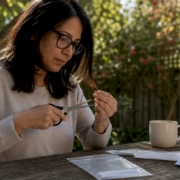
Our at-home test uses a small hair sample, which makes it simple and non-invasive. It is processed at a UK laboratory using bioresonance technology, and you receive a clear digital report within 48 to 72 hours. Our largest panel looks at up to 1,450 items, which we believe is the largest in the UK, so you get a wide picture rather than guessing at a handful of foods.
We are open about what our tests are: an intolerance screening tool, not a medical diagnosis. Used that way, the report gives you a shortlist to work through with your food diary, one food at a time, ideally with a dietitian beside you. It turns a vague “something is wrong” into a plan you can act on, and that sense of control matters a great deal during perimenopause.
Rob
Eating well while you cut back
A trial elimination should make you feel better, not leave you short of nutrients. Allergy UK warns that unnecessarily excluding several foods can leave a diet restricted and lacking important nutrients, and the BDA says dietitians should support anyone following a low-histamine diet because it can be socially and nutritionally restrictive. A UK clinician also notes that long-term, very restrictive diets are not recommended, and suggests asking a pharmacist whether any regular medicines affect DAO.
Some practical ways to protect your nutrition:
- Swap, do not just subtract. If you step back from dairy, make sure calcium comes from elsewhere, such as fortified alternatives, and ask a dietitian about the rest of your plate.
- Keep fruit, vegetables, nuts and pulses in. Most are not high in histamine, and they carry fibre your gut needs.
- Cook fresh. Freshly cooked food is a common suggestion in histamine guidance, because leftovers and aged foods tend to carry more histamine.
- Think about bone health. Midlife is when bone density becomes a bigger concern, so it is worth keeping an eye on foods that support it. This clinician-reviewed piece on prunes and bone density after menopause is one place to start for ideas.
- Do not stay on a strict plan indefinitely. The aim is to find what you tolerate and widen your diet again.
One more point of balance. A UK evidence guide notes that the current NICE menopause guideline does not recommend antihistamines, DAO supplements or a low-histamine diet as standard treatments for menopause symptoms. So treat a dietary trial as a personal experiment to discuss with your clinician, not a replacement for menopause care such as the options your GP can talk through with you.
When to speak to a doctor
Food patterns are worth exploring at home, but some symptoms need a professional first. Please see your GP if you have:
- Persistent flushing, hives, digestive symptoms, wheeze or palpitations. A UK evidence guide says these should be assessed.
- Hives, swelling, wheeze or collapse after eating. These call for an allergy-aware assessment, and signs of a severe allergic reaction mean calling 999.
- Unexplained weight loss, blood in your stools, or ongoing changes in bowel habit. These need investigating whatever the cause.
A 2025 review explains that, depending on the picture, you may need an allergist for IgE-mediated allergy or mast cell disease, a gastroenterologist for inflammatory bowel disease, irritable bowel syndrome or dyspepsia, or a dermatologist for urticaria and persistent itching. Your GP can help you decide which route fits.
A simple starting point from us
If you want a clearer shortlist before you start your diary and elimination, our at-home test is designed to help. You collect a hair sample at home, send it to our UK laboratory and receive a digital report within 48 to 72 hours, with guidance on using it for an elimination diet. Our Ultimate Plus Intolerance Test is £140.99 one-off per person.

Prefer to compare options? Browse our full range of tests or read our guide to choosing between the Core and Ultimate tests. If you are weighing up what a test can and cannot tell you, our page on histamine intolerance tests sets it out plainly. Our tests are an intolerance screening tool and are not a replacement for medical advice.
FAQ
Can perimenopause really cause new food sensitivities?
It can plausibly change how you react. UK dietitians report seeing women with new or worsening histamine-related symptoms around menopause, and reviews describe hormonal effects on the gut barrier and immune system. Direct studies are still limited, so the best step is to track your own pattern and check it with a professional.
How long should I try an elimination diet?
UK guidance points to a short trial. The BDA suggests two to four weeks for histamine-related symptoms, and Allergy UK says about four weeks is usually enough to see whether removing a food helps. Reintroduce foods afterwards, one at a time, to confirm which ones really cause symptoms.
Is a food sensitivity the same as a food allergy?
No. An allergy involves the immune system and can cause hives, swelling, wheeze or collapse, which need urgent medical help. A sensitivity or intolerance usually causes uncomfortable but non-dangerous symptoms such as bloating, headaches or flushing, and is explored through a diary and structured elimination.
Can a home test help me during perimenopause?
Our at-home hair test is designed as an intolerance screening tool. It gives you a digital report of items to look at, which you can then work through with a food and symptom diary. It does not diagnose allergies, so any severe or persistent symptoms still need a GP.
Sources
- BDA: Histamine intolerance and the low histamine diet
- BDA 2025 update: Sensitivity to Histamine and other Vasoactive Amines
- TMC Health: Histamine intolerance in menopause and perimenopause
- PMC: Women, hormones and hypersensitivity
- PMC: Evidence for Dietary Management of Histamine Intolerance
- The Menopause Directory: Perimenopause and histamine intolerance
- BSACI: Non-immune mediated food hypersensitivity
- Allergy UK: Allergy vs intolerance
- Prunes and bone density after menopause








Leave a Reply
Want to join the discussion?Feel free to contribute!