

At-home bioresonance kits in the UK generally have a wide price range depending on panel size, while in-clinic scans start at a low introductory price and can increase for more extensive consultations or treatment packages. For most people screening for food intolerance, a mid-to-large at-home panel offers better value than paying for several clinic sessions. The simplest next step is to compare a kit’s item count and turnaround time against a local clinic’s current price before you book.
TL;DR:
- Panel size remains the primary cost driver, with tests testing over a thousand items costing significantly more than smaller panels.
- UK-based laboratories tend to offer faster results, roughly 48 to 72 hours, but may charge slightly higher fees than overseas processing.
- In-clinic scans generally include practitioner interpretation and are more expensive than at-home kits, which primarily cover sample analysis and report delivery.
- Responsible marketing of bioresonance tests must avoid claims of medical diagnosis or treatment, emphasizing their role as initial screening tools.
- Always verify what is included, such as follow-up consultation support or refund policies, before purchasing or booking a test.
Table of Contents
- What UK providers charge and what those prices cover
- Key factors that make one test cheaper or more expensive in the UK
- Representative UK price examples so you can compare quickly
- Exactly what a test delivers: sample method, report detail and turnaround
- How regulators and medical charities view bioresonance in the UK
- Choosing the right test for your budget and health goals
- Booking a bioresonance test in the UK
- Refund, cancellation and rescheduling policies
- Publisher note: how we position at-home tests
- How UK Food Intolerance fits this pricing landscape
- Sources
- FAQ
What UK providers charge and what those prices cover
Bioresonance pricing in the UK splits into two broad categories: at-home kits you order online and in-clinic sessions with a practitioner. Within each category, price tends to track panel size and the amount of support included.
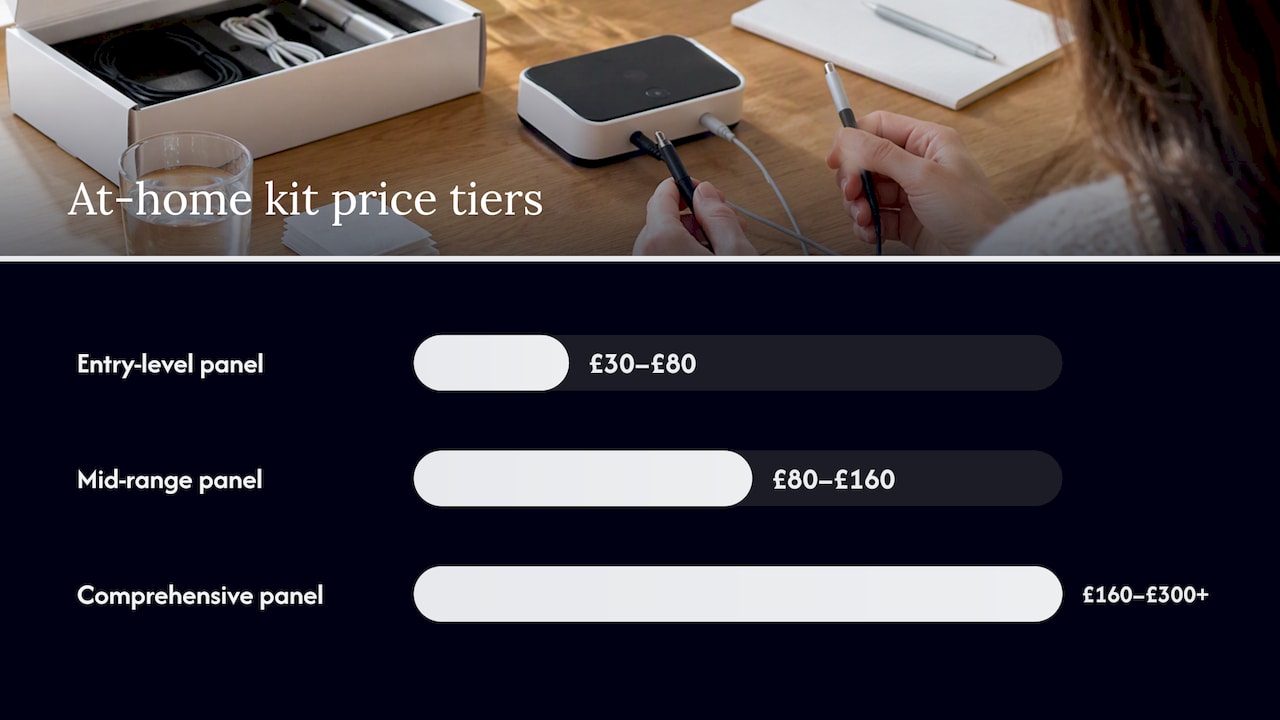
At-home kits generally fall into three brackets. Entry-level panels testing a few hundred items sit around £30 to £80. Mid-range kits covering several hundred items typically cost £80 to £160. Comprehensive panels testing 1,000 or more items usually run from £160 up to £300 or beyond.
In-clinic pricing follows a similar pattern but adds a practitioner’s time to the bill:
- Promotional or first-time scans often start at a lower introductory price.
- Standard scans or single sessions with interpretation typically cost more.
- Multi-session treatment packages, including additional items or repeat visits, generally cost significantly more.
Most prices include the sample kit or scan itself, postage where relevant, laboratory processing, and a digital report. Some providers bundle a follow-up consultation into the headline price; others charge for it separately. Turnaround for at-home kits is typically a few working days after the lab receives your sample, though this varies by provider. Watch for extras that aren’t obvious at checkout, including practitioner consultation fees, additional treatment sessions, or the cost of repeating a test if your first sample is rejected.
Key factors that make one test cheaper or more expensive in the UK
Panel size is the biggest driver of price: a test covering a few hundred items will always cost less than one covering well over a thousand, simply because more items mean more laboratory analysis.
The testing model matters too. A lab-processed hair sample you collect at home differs from an in-clinic device scan interpreted live by a practitioner, and the latter usually costs more because you’re paying for their time as well as the test itself.
- Lab location affects both cost and speed: UK-based laboratories tend to offer faster turnaround and may charge slightly more than overseas processing.
- Bundled extras, such as a written report, dietitian support or follow-up consultations, add value but also add cost.
- Practitioner qualifications, money-back guarantees and clear refund policies are worth checking before you commit.
Pro Tip: Before paying for a large panel, check whether the provider’s report explains how to act on the results. A long list of flagged items is only useful if it comes with clear next steps.
Representative UK price examples so you can compare quickly
Seeing a few real-world price points side by side makes it easier to judge what you’re actually being offered.
- A promotional in-clinic scan, often offered as a first-time deal at a relatively low price, typically covers the scan itself but may exclude a detailed written report or follow-up advice.
- A mid-range at-home kit covering several hundred items generally costs a moderate amount and includes a digital lab report with relatively fast turnaround.
- A large-panel at-home test covering many items usually costs more and provides more detailed dietary guidance for elimination planning.
Discount codes, multi-buy offers and occasional voucher-site promotions can lower the headline price on any of these, but check exactly what’s included before assuming a cheap deal matches a full-price test. A £35 voucher scan and a £35 introductory kit are rarely the same service underneath.
Exactly what a test delivers: sample method, report detail and turnaround
Sample collection is where at-home kits and clinic visits differ most. A kit asks you to send a small hair sample by post, which you can do without taking time off work. A clinic scan happens in person, with a practitioner operating the device and talking you through results on the spot.
- Reports commonly include flagged items, suggested foods or substances to eliminate, nutritional notes and a summary with next steps.
- UK Food Intolerance’s own stated turnaround is 48 to 72 hours after the UK laboratory processes the sample.
- Neither at-home kits nor in-clinic scans provide a medical diagnosis or proof of an IgE-mediated allergy.
- Results are a starting point for further investigation, not a replacement for professional medical advice.
If you’re testing because of unexplained symptoms rather than general curiosity, treat the report as one piece of evidence to discuss with a GP, not a final answer.
How regulators and medical charities view bioresonance in the UK
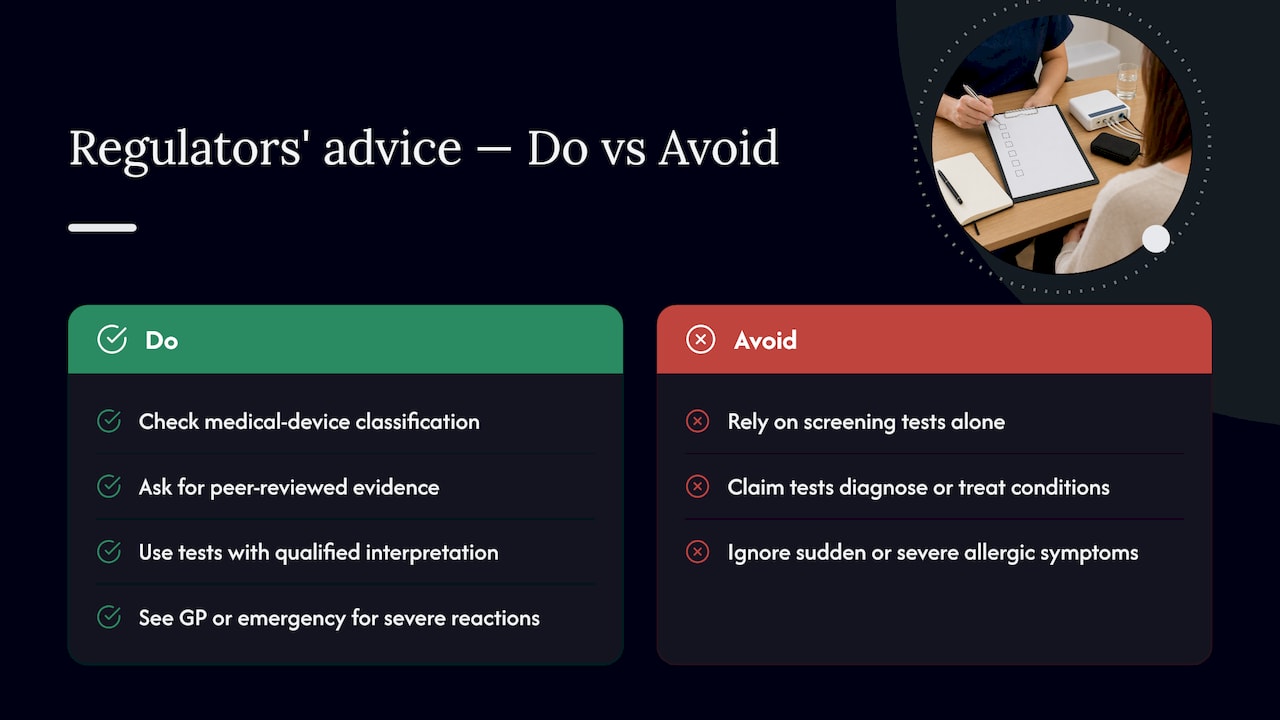
Two UK bodies shape how these tests should be marketed and understood. The Advertising Standards Authority advises that marketers must not claim bioresonance devices can diagnose or treat medical conditions without robust clinical evidence to back that claim up. This doesn’t make the tests illegal to sell, but it does mean responsible providers should avoid diagnostic language and point customers toward medical advice rather than away from it.
Diagnosis of food intolerance should rest on a detailed clinical history together with supervised elimination and reintroduction of foods, not on commercial screening tests alone.
That’s the position taken by Allergy UK, the UK charity that supports people with allergies and intolerances, and it’s worth keeping in mind whatever test you choose.
When reading marketing claims, look for whether a provider mentions medical-device classification, cites peer-reviewed evidence, or involves a qualified practitioner in interpreting results. If your symptoms are severe, sudden, or suggestive of a true allergic reaction such as swelling or difficulty breathing, contact your GP or emergency services rather than waiting on a screening test. For a fuller look at how commercial screening compares with clinical pathways, see our guide to diagnostic limitations.
Choosing the right test for your budget and health goals
A short checklist helps narrow the decision before you spend anything.
- Decide your purpose: broad screening for general wellbeing, or investigating specific, persistent symptoms.
- Set a budget and match it to panel size, since a small panel rarely justifies a premium price.
- Check the lab location and stated turnaround time against your own timeline.
- Confirm whether interpretation support, such as a written guide or consultation, is included or charged separately.
- Ask who reads your report, what the refund policy covers, and whether return postage for a kit is prepaid.
Pro Tip: Keep a symptom diary alongside any test. It gives you and a GP or dietitian something concrete to compare against the report’s flagged items.
After results arrive, speak to a GP or registered dietitian before cutting out a long list of foods, especially for children or anyone with existing health conditions. A supervised elimination and reintroduction approach remains the most reliable way to confirm a genuine intolerance, as our diet planning guide sets out. Seek urgent clinical assessment for any red-flag symptoms, including severe abdominal pain, unexplained weight loss, or signs of a true allergic reaction.
Booking a bioresonance test in the UK
Booking is straightforward for both delivery routes, though the steps differ slightly.
For an at-home kit, you order through the provider’s website, choosing the panel size that matches your budget and goals. The kit arrives by post with instructions for collecting a small hair sample, which you then return using the prepaid envelope provided. Once the laboratory receives your sample, processing begins and your digital report follows within the provider’s stated turnaround window.
For a clinic visit, you’ll usually book an appointment online or by phone, sometimes through a voucher site offering an introductory price. Arrive with a list of your main symptoms or concerns, as practitioners typically ask about these before the scan. The session itself usually takes under an hour, and some clinics discuss results immediately while others send a written report afterwards.
Whichever route you choose, confirm the price, what it includes, and the expected turnaround before you pay. If a clinic’s website doesn’t list clear pricing, ask directly rather than assuming the promotional rate covers everything you need.
Refund, cancellation and rescheduling policies
Policies vary by provider, so check the specific terms before you buy rather than assuming they match a typical retail purchase.
At-home kit providers commonly offer a refund if a kit is unused and returned within a set window, though once a sample has been processed by the laboratory, refunds usually aren’t available because the service has already been delivered. If a sample is rejected due to insufficient hair or a collection error, many providers offer a replacement kit rather than a cash refund.
Clinic appointments typically follow standard cancellation terms, often requiring 24 to 48 hours’ notice to avoid a cancellation fee. Rescheduling is usually free within a reasonable window, but last-minute changes may incur a charge depending on the clinic.
Always read the specific refund and cancellation policy on the provider’s own website before ordering, since these details change and aren’t standardised across the industry.
Publisher note: how we position at-home tests
Screening tests like these can be a sensible, cost-effective first step, but they work best alongside proper clinical follow-up when symptoms persist, as explained in this guide to preventative health checks. UK Food Intolerance’s at-home panels test up to 1,450 items, use UK laboratory processing, and state a 48 to 72 hour turnaround for digital reports, which is why we view them as a practical starting point for broad screening. We encourage readers to speak with their GP or a registered dietitian for clinical interpretation of any result that concerns them.
— Rob
How UK Food Intolerance fits this pricing landscape
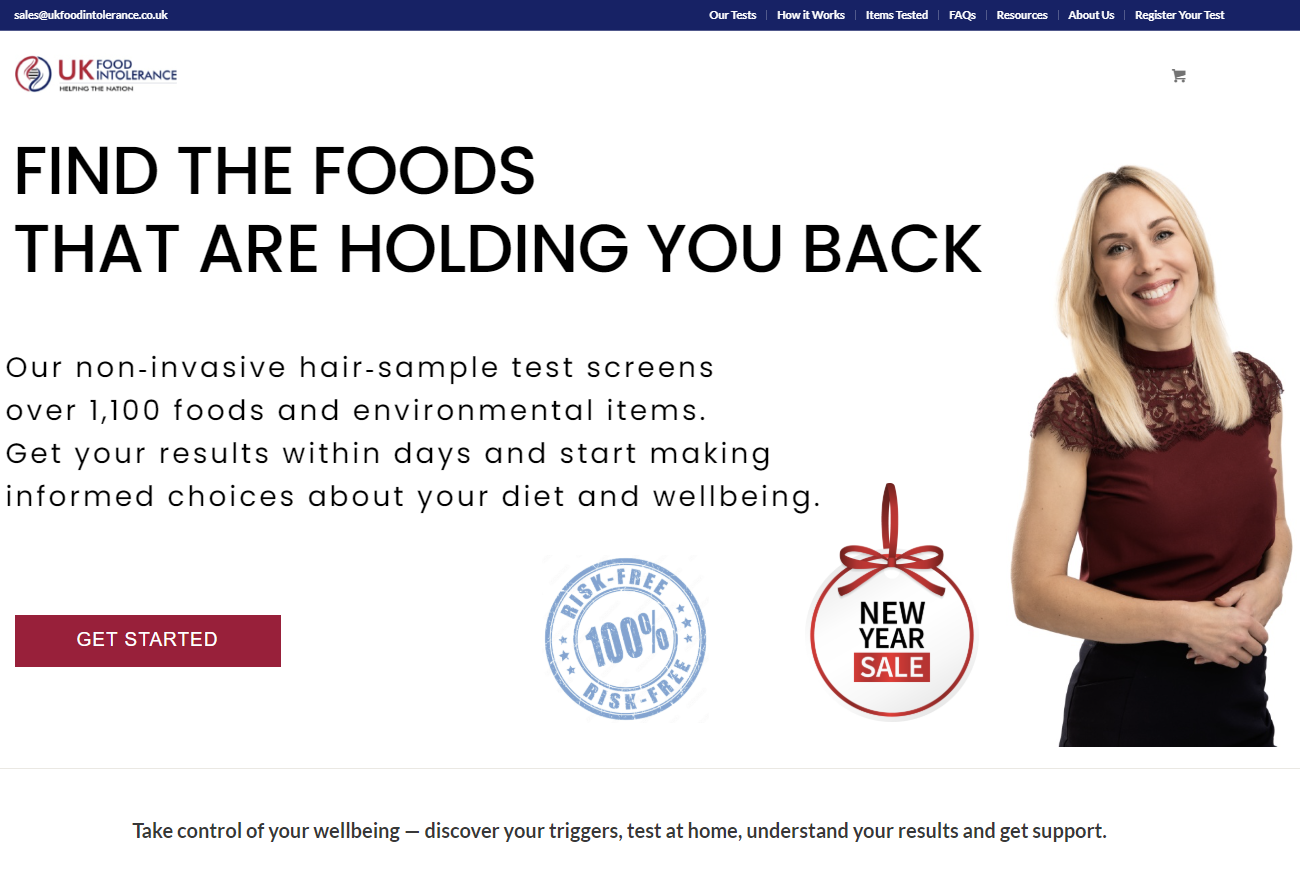
If you’ve weighed up the clinic-scan route against an at-home kit, a broad panel is usually the more practical choice when you want wide coverage without booking several appointments. The provider offers several tiers built around this idea, from entry-level through to comprehensive tests, alongside targeted options focusing on specific food sensitivities.
- Reports typically arrive as a digital document within a few days of the laboratory receiving your sample.
- One test option is priced as a one-off cost per person, covering a large panel in a single purchase rather than multiple paid visits.
- Testing many items in one kit avoids the stacked cost of repeated clinic sessions for separate concerns.
You can compare the full range, including Core, Essential, Premium and other tiers, or start with the main test overview if you’d like to see how the service works before choosing a panel size.
This article is general information, not a substitute for advice from a qualified doctor. Consult a qualified healthcare professional about your own circumstances before acting on anything here.
Sources
- ASA advice: bioresonance therapy
- Food intolerance | Allergy UK
- EBOO therapy cost (Harley Street Medical Wellness)
FAQ
How much does bioresonance therapy cost?
In-clinic bioresonance sessions often start at a lower introductory price for a first scan and can cost significantly more for fuller consultations or treatment packages. At-home kits, by comparison, generally cost between £30 and £300 depending on panel size, with UK Food Intolerance’s Ultimate Plus Intolerance Test priced at £140.99 as a one-off fee.
How much does EBO2 treatment cost in the UK?
EBOO, also written as EBO2, is extracorporeal blood oxygenation and ozonation, a distinct clinical treatment separate from bioresonance testing. Its pricing varies by clinic and has no connection to bioresonance test costs, so the two shouldn’t be compared directly.
Are bioresonance tests recognised as medical diagnosis?
No. The Advertising Standards Authority advises that bioresonance providers must not claim to diagnose or treat medical conditions without robust clinical evidence, and Allergy UK states that diagnosis should rest on clinical history and supervised elimination and reintroduction rather than commercial screening alone.
Is an at-home kit as reliable as an in-clinic scan?
Both approaches have the same fundamental limitation: neither provides a medical diagnosis or proof of a true allergy. An at-home kit offers the convenience of postal sample collection and, with UK Food Intolerance, a UK laboratory-processed report within 48 to 72 hours, while a clinic scan adds a practitioner’s in-person interpretation at a typically higher price.
What should I do if my results suggest multiple food intolerances?
Speak to a GP or registered dietitian before removing several foods from your diet, particularly for children or anyone with existing health conditions. A supervised elimination and reintroduction approach remains the more thorough way to confirm which foods are genuinely responsible for your symptoms.










Leave a Reply
Want to join the discussion?Feel free to contribute!