

TL;DR:
- Food intolerance involves the digestive system’s inability to properly process certain foods, causing symptoms like bloating and diarrhea. The gut microbiome influences the severity and management of intolerance symptoms, and accurate testing helps distinguish intolerance from allergies. Tailored dietary adjustments and structured reintroduction support gut health and reduce discomfort effectively.
Food intolerance is defined as the digestive system’s inability to properly break down certain foods, triggering symptoms like bloating, gas, diarrhoea, and abdominal pain within hours of eating. The impact of intolerances on gut health extends beyond temporary discomfort. Undigested food components alter fermentation patterns in the gut, disrupt the gut microbiome, and can contribute to low-grade inflammation over time. Common food intolerances such as lactose intolerance and non-coeliac gluten sensitivity affect millions of people in the UK, yet many go undiagnosed for years. Understanding how these conditions work gives you the clarity to act, not just to cope.
How do common food intolerances affect gut function?
Food intolerance causes digestive symptoms typically within hours of eating, because the gut cannot fully process specific food components. This is not an immune reaction. It is a mechanical and enzymatic failure that sends undigested material further down the digestive tract than it should travel.
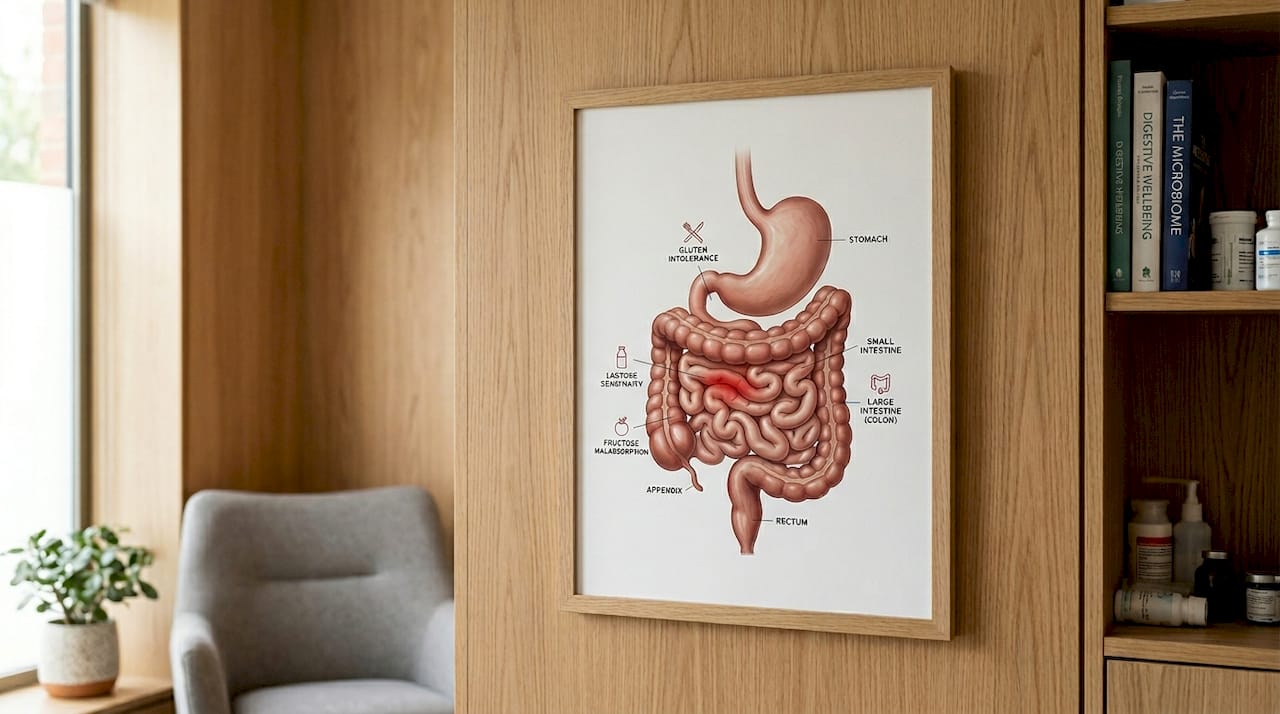
Lactose intolerance is the most widely recognised example. It results from insufficient production of lactase, the enzyme that breaks down lactose (milk sugar). Without enough lactase, lactose passes undigested into the large intestine, where gut bacteria ferment it and produce gas. Lactose intolerance requires reduced lactose intake while maintaining adequate calcium and vitamin D, since dairy is a primary source of both nutrients. Many people do not realise that hidden lactose appears in processed foods, sauces, and even some medications.
Non-coeliac gluten sensitivity (NCGS) works differently. There is no measurable gut damage on standard tests, yet symptoms are real and often severe. The gut microbiome plays a direct role in modulating the immune response to gluten in NCGS, which explains why two people eating identical amounts of gluten can have completely different reactions.
The shared mechanism across most intolerances is malabsorption. Unabsorbed carbohydrates reach the distal gut, where microbial fermentation produces hydrogen and methane gases. This process drives bloating, cramping, and altered bowel habits. It also changes the local environment in ways that affect nutrient absorption and gut wall integrity.
Key effects on gut function include:
- Gas and bloating from fermentation of undigested sugars and starches
- Altered bowel habits including loose stools or constipation depending on the intolerance type
- Nutrient deficiencies when malabsorption is prolonged and dietary compensation is inadequate
- Gut wall stress from repeated exposure to fermentation by-products and inflammatory signals
Pro Tip: Keep a food and symptom diary for two weeks before any medical appointment. Patterns across meals, not individual foods, often reveal the clearest picture of your intolerance triggers.
What is the role of the gut microbiome in food intolerances?
The gut microbiome, the community of trillions of bacteria, fungi, and other microorganisms living in your digestive tract, does not just respond to intolerances. It actively shapes how severe they become. This is one of the most significant recent shifts in how clinicians understand the relationship between diet and gut health.
Gut microbiota influence immune sensitivity to gluten in non-coeliac gluten sensitivity, affecting symptom severity even when standard diagnostic tests show no structural damage. This finding matters because it suggests that gut health modulation, not just dietary avoidance, could be part of managing gluten-related symptoms.
Research using animal models found that antibiotic-induced changes to the microbiome increased gluten-associated inflammation. This is a striking result. It means that disrupting your gut bacteria, through antibiotics, poor diet, or illness, can make you more reactive to foods you previously tolerated. The microbiome is not a fixed backdrop. It shifts, and those shifts have real consequences for your symptoms.
Microbial imbalance, often called dysbiosis, can also compromise the gut barrier. A weakened gut barrier allows bacterial by-products to pass into the bloodstream, triggering systemic inflammation that goes well beyond digestive discomfort. This is why some people with food intolerances report fatigue, brain fog, and skin issues alongside their gut symptoms.
“Microbiome composition shapes immune responses in gluten sensitivity, suggesting gut health modulation could alleviate symptoms in non-coeliac sensitivities.” APS, 2026
Different intolerances associate with distinct microbial patterns. Lactose malabsorption, for instance, is linked to lower populations of lactase-producing bacteria in some individuals. Fructose malabsorption correlates with different fermentation profiles. Understanding your specific microbial environment is why a one-size-fits-all elimination diet rarely delivers the best results. You can read more about the mechanisms linking intolerance and wellbeing to understand this connection in greater depth.
How to distinguish food intolerances from allergies and overlapping gut disorders
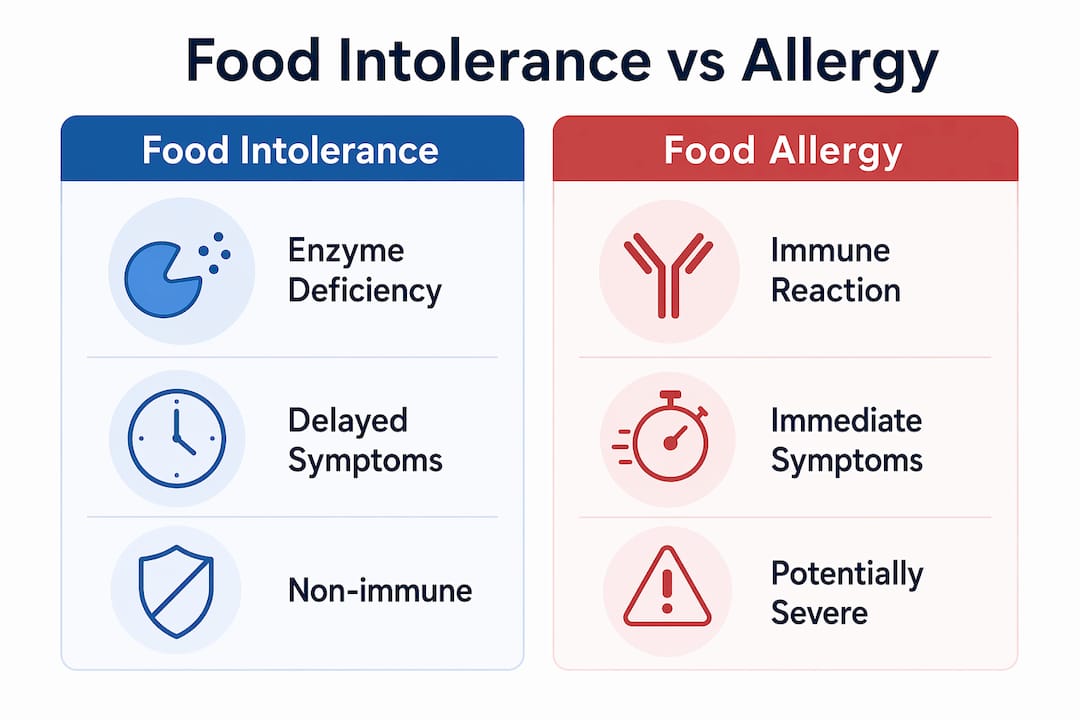
Food intolerances and food allergies are frequently confused, but they operate through entirely different mechanisms. Getting this distinction right is not just academic. It determines the treatment approach and, in the case of allergies, can be a matter of safety.
Food intolerances and allergies overlap in symptoms but differ fundamentally in mechanism. Intolerances involve malabsorption and enzyme insufficiency. Allergies involve an immune system response, typically IgE-mediated, that can cause anaphylaxis. This distinction guides everything from testing to treatment. You can explore the clinical differences between the two in more detail.
The picture is further complicated by conditions like irritable bowel syndrome (IBS) and eosinophilic oesophagitis, which share symptoms with intolerances but require different management. Persistent symptoms despite dietary avoidance often signal an overlapping condition that needs expanded clinical evaluation.
| Feature | Food intolerance | Food allergy |
|---|---|---|
| Mechanism | Enzyme deficiency or malabsorption | Immune (IgE) reaction |
| Onset | Usually within hours | Minutes to two hours |
| Severity | Rarely life-threatening | Can cause anaphylaxis |
| Dose dependence | Often dose-dependent | Even tiny amounts can trigger |
| Diagnosis | Breath tests, elimination diet | Skin prick test, blood IgE test |
Red-flag symptoms that require urgent evaluation include chronic diarrhoea, unexplained weight loss, and rectal bleeding. These go beyond typical intolerance presentations and need specialist assessment.
Pro Tip: If you have already removed a suspected trigger food for four or more weeks and symptoms persist, do not assume you have identified the wrong food. Ask your GP for a referral to a gastroenterologist to rule out IBS, inflammatory bowel disease, or other overlapping conditions.
What diagnostic tools and tests assess gut health affected by intolerances?
Accurate diagnosis is the foundation of effective management. Without it, you risk unnecessary dietary restriction, nutritional gaps, and months of continued discomfort.
The main diagnostic tools used clinically are:
- Hydrogen and methane breath tests. These detect carbohydrate malabsorption by measuring gases produced during fermentation. Breath tests use criteria including a hydrogen rise of 20 ppm or more within 90 minutes, or methane at 10 ppm or more at any point, to confirm lactose or fructose malabsorption. They are non-invasive and widely available.
- Blood tests. These rule out coeliac disease (via tissue transglutaminase antibodies) and food allergies (via IgE panels). They cannot diagnose intolerance directly but eliminate serious conditions from the differential.
- Endoscopy and biopsy. Used when coeliac disease or eosinophilic oesophagitis is suspected. These provide structural information that breath tests and blood panels cannot.
- Elimination and reintroduction diets. The gold standard for identifying specific food triggers. A structured elimination phase removes suspected foods for four to six weeks, followed by systematic reintroduction to identify thresholds. This approach works best with clinical supervision.
- At-home sensitivity testing. Services like those offered by Ukfoodintolerance use bio-resonance technology to screen hair samples against hundreds of food and environmental items. These tests are not diagnostic in the clinical sense but provide a practical starting point for building an elimination plan.
Choosing the right test depends on your symptoms and history. A non-invasive intolerance test can be a useful first step before pursuing clinical referrals, particularly if your symptoms are mild to moderate and you want a clearer picture of potential triggers.
How can dietary adjustments improve gut health affected by intolerances?
Managing the effects of dietary intolerances on gut health does not mean eliminating entire food groups indefinitely. The goal is to identify your personal threshold, maintain nutritional adequacy, and support the gut microbiome through the process.
Dose-dependent reactions are common in intolerance, meaning many people tolerate small amounts of a trigger food without symptoms. This is fundamentally different from allergies, where even trace exposure can cause a reaction. Structured reintroduction protocols use this dose-dependence to identify safe individual thresholds, which prevents unnecessary restriction and supports better long-term nutrition.
Practical dietary adjustments that support gut health include:
- Replacing high-lactose dairy with lactose-free alternatives or hard cheeses, which are naturally lower in lactose, while monitoring calcium and vitamin D intake
- Choosing gluten-free whole grains such as quinoa, buckwheat, and brown rice rather than refined gluten-free products, which often lack fibre and micronutrients
- Increasing prebiotic foods like garlic, leeks, and oats (where tolerated) to support beneficial gut bacteria and counteract dysbiosis
- Keeping a symptom log during reintroduction to track responses at different portion sizes, giving you data rather than guesswork
Nutrition shapes food intolerance management in ways that go beyond simple avoidance. Ensuring adequate fibre, fermented foods, and micronutrients supports the gut barrier and microbial diversity, both of which reduce symptom severity over time.
Working with a registered dietitian during the elimination and reintroduction process significantly improves outcomes. Self-managed elimination diets frequently result in nutritional deficiencies, particularly in calcium, iron, and B vitamins, when undertaken without professional guidance.
Key takeaways
Food intolerances disrupt gut function through malabsorption and microbial fermentation, and accurate diagnosis is the only reliable route to effective, nutritionally sound management.
| Point | Details |
|---|---|
| Intolerances affect gut function | Undigested food ferments in the colon, producing gas, inflammation, and altered bowel habits. |
| The microbiome shapes symptom severity | Dysbiosis can worsen intolerance reactions and compromise the gut barrier beyond the digestive tract. |
| Intolerances differ from allergies | Mechanism, severity, and treatment differ significantly; correct diagnosis prevents inappropriate management. |
| Breath tests are the clinical standard | Hydrogen and methane breath tests confirm carbohydrate malabsorption non-invasively and guide treatment. |
| Dose-dependence allows flexibility | Most intolerances permit small amounts of trigger foods, enabling personalised rather than blanket avoidance. |
Rob’s perspective on managing gut intolerances
The most common mistake I see is people self-diagnosing based on a single symptom and cutting out entire food groups without any testing. Gluten and dairy are the most frequent casualties. Someone feels bloated after a meal containing both, removes gluten, feels slightly better for a week, and concludes they have a gluten sensitivity. What they may actually have is fructose malabsorption, IBS, or a combination of both.
The overlap between conditions is genuinely difficult to untangle without structured testing. I have spoken to people who spent two years on unnecessarily restrictive diets because no one had run a simple breath test. That is two years of potential nutritional deficiency and reduced quality of life, all because the first step was skipped.
What I find most compelling about recent research is the microbiome angle. The idea that a course of antibiotics could increase your reactivity to a food you previously tolerated is not widely known, but it has real implications for how we think about gut health holistically. Managing intolerances is not just about what you remove from your plate. It is about supporting the gut environment that determines how your body responds in the first place.
If your symptoms are persistent or confusing, get a proper evaluation. Use at-home testing as a starting point, not a conclusion. And treat the elimination diet as a structured clinical tool, not a lifestyle trend.
— Rob
Find clarity with personalised intolerance testing
If you are experiencing persistent digestive symptoms and want to understand what might be driving them, Ukfoodintolerance offers a clear, practical starting point.

Ukfoodintolerance’s intolerance testing range screens over 900 food and non-food items using bio-resonance technology. You collect a small hair sample at home, post it to the UK-based laboratory, and receive a detailed digital report within 48 to 72 hours. The results highlight potential sensitivities and give you a structured foundation for an elimination and reintroduction plan. Whether you choose the Core Single Intolerance Test or the comprehensive Ultimate Single Intolerance Test, you get clear, personalised data to work with. Take a look at the full range of intolerance tests and find the option that fits your needs.
FAQ
What are the most common symptoms of food intolerance?
Food intolerance symptoms include gas, bloating, diarrhoea, and abdominal pain, typically appearing within a few hours of eating the trigger food. Symptoms are rarely life-threatening and can often be managed through dietary changes.
Can food intolerances damage the gut long-term?
Repeated exposure to trigger foods can contribute to gut barrier stress and microbial imbalance, but intolerances do not cause the structural gut damage associated with coeliac disease. Addressing intolerances early reduces the risk of prolonged inflammation and nutritional deficiencies.
How does the gut microbiome affect food intolerance symptoms?
Gut microbiota shape immune responses to foods like gluten, meaning microbial imbalance can worsen symptoms even when no structural gut damage is present. Supporting microbial diversity through diet is a legitimate part of managing intolerance symptoms.
What is the difference between a food intolerance and a food allergy?
Food intolerances involve enzyme deficiency or malabsorption and are rarely dangerous. Food allergies involve an immune response that can cause anaphylaxis, even from trace exposure. The two conditions require different diagnostic tests and management strategies.
Can I eat trigger foods in small amounts if I have an intolerance?
Dose-dependent reactions mean most people with intolerances can tolerate small amounts of their trigger food without symptoms. Structured reintroduction testing helps identify your personal threshold so you can avoid unnecessary restriction.










Leave a Reply
Want to join the discussion?Feel free to contribute!