
SIBO commonly causes symptoms that look just like food intolerance, including bloating, wind and diarrhoea. A short low-FODMAP trial can ease them, but diet alone rarely clears the overgrowth. Your first step is to talk to your GP about breath testing and a supervised diet plan with a registered dietitian, rather than cutting foods out on your own.
TL;DR:
- Keep a food and symptom diary, stool chart, medication list, weight changes, and surgery history so your clinician can assess patterns beyond symptoms alone.
- Breath tests measure hydrogen and methane after lactulose or glucose, but rapid transit can cause false positives and borderline results need clinical interpretation.
- Use a low FODMAP trial for about four to six weeks only with dietitian support, then reintroduce foods in stages to avoid lasting restrictions.
- Because dietary changes can ease symptoms without reliably eliminating SIBO, ask your clinician about motility, medicines, and other factors that may need treatment.
- Ask whether SIBO should be assessed before lactose or fructose breath testing, because overlapping conditions can make a positive result harder to interpret.
Table of Contents
- What are SIBO and food intolerance, and why do they overlap?
- How can you tell SIBO from a primary food intolerance?
- How can SIBO create or mimic lactose, fructose and histamine intolerance?
- How do breath tests for SIBO work, and where do they fall short?
- Which dietary strategies reduce symptoms while you wait for answers?
- What other treatments tackle the cause of SIBO?
- How do you plan the next steps with your clinician and dietitian?
- Why we see screening and clinical care working together
- How can an at-home intolerance test support a supervised plan?
- FAQ
- Sources
What are SIBO and food intolerance, and why do they overlap?
Small intestinal bacterial overgrowth (SIBO) means there is an abnormal increase, or a change in the type, of bacteria in the small intestine. The body has several mechanisms that help regulate bacteria in the small intestine, including gastric acid, gut motility and the ileocaecal valve.
Food intolerance is a different problem. Your body struggles to digest or absorb something you have eaten, so lactose, fructose or histamine can trigger bloating, tummy pain and diarrhoea. The NHS describes food intolerances as producing exactly these symptoms, and notes that exclusions should be done with professional guidance to avoid nutrient gaps.
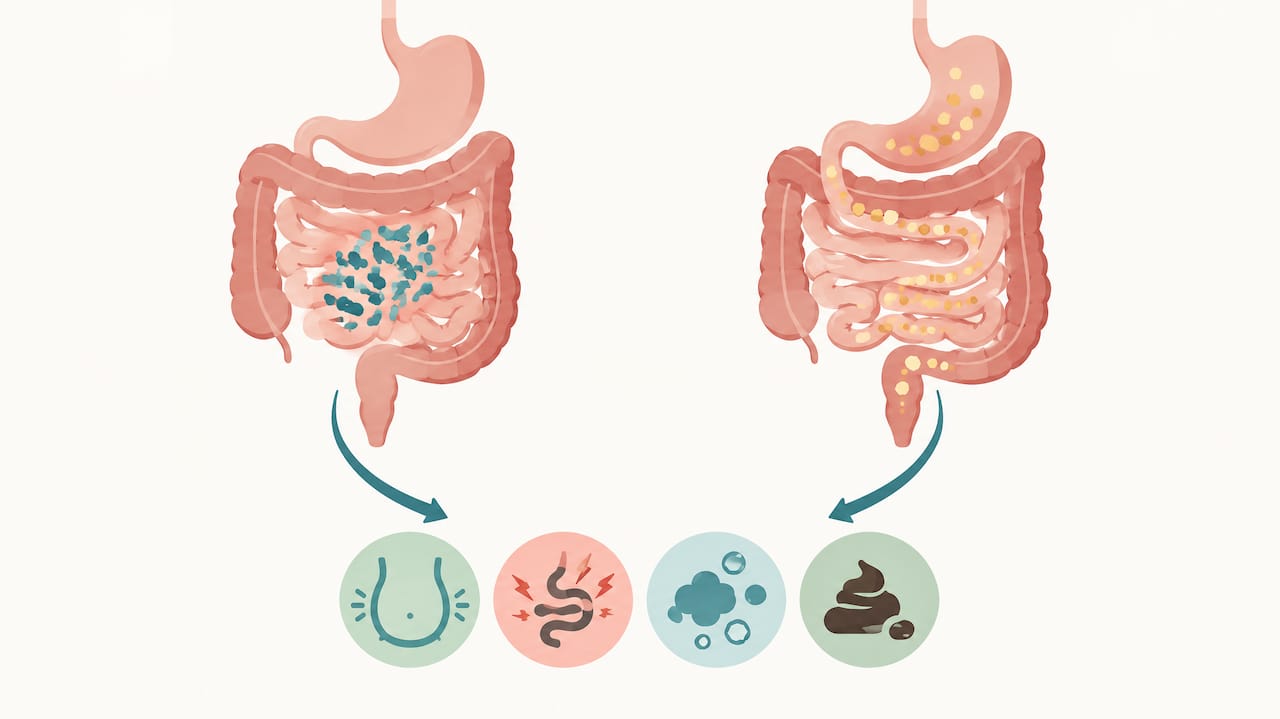
SIBO and food intolerance can cause overlapping symptoms, so symptoms alone may not reveal the underlying cause.
How can you tell SIBO from a primary food intolerance?
The symptom lists are almost the same: bloating, abdominal pain, wind and a change in bowel habit. Clinicians note that the symptom profiles of SIBO, IBS and carbohydrate malabsorption are non-specific and hard to separate by history alone. Long-standing malabsorption can also leave signs such as low vitamin B12.
Some medical history and medicines may be relevant when a clinician assesses possible SIBO. Discuss your symptoms, past abdominal surgery and medicines with your clinician.
Before your appointment, gather this information:
- Write down what you eat and when symptoms start, noting how many minutes or hours later they appear.
- Keep a stool chart, recording frequency and consistency.
- List every medicine and supplement, including antibiotics, acid reducers and probiotics.
- Note any weight change, previous test results and past abdominal surgery.
- Record which foods you have already cut out, and whether that made any difference.
Our guide to recognising food intolerance symptoms at home shows how to set up a diary your clinician can actually use.
How can SIBO create or mimic lactose, fructose and histamine intolerance?
Lactose and fructose intolerance can cause symptoms that overlap with SIBO. Symptoms alone may not distinguish these conditions, so discuss testing and food exclusions with a clinician.
Because symptoms can overlap, ask your clinician which conditions to investigate. Testing for SIBO and other common underlying conditions may be considered alongside one another.
Long unsupervised eliminations also carry a cost. They narrow your diet and can leave nutrient gaps, which is the reason the NHS advises professional input. Our guide to food intolerance types and testing explains how these conditions differ.
Pro Tip: Ask your clinician whether SIBO should be assessed before any lactose or fructose breath test, so a positive result is easier to interpret.
How do breath tests for SIBO work, and where do they fall short?
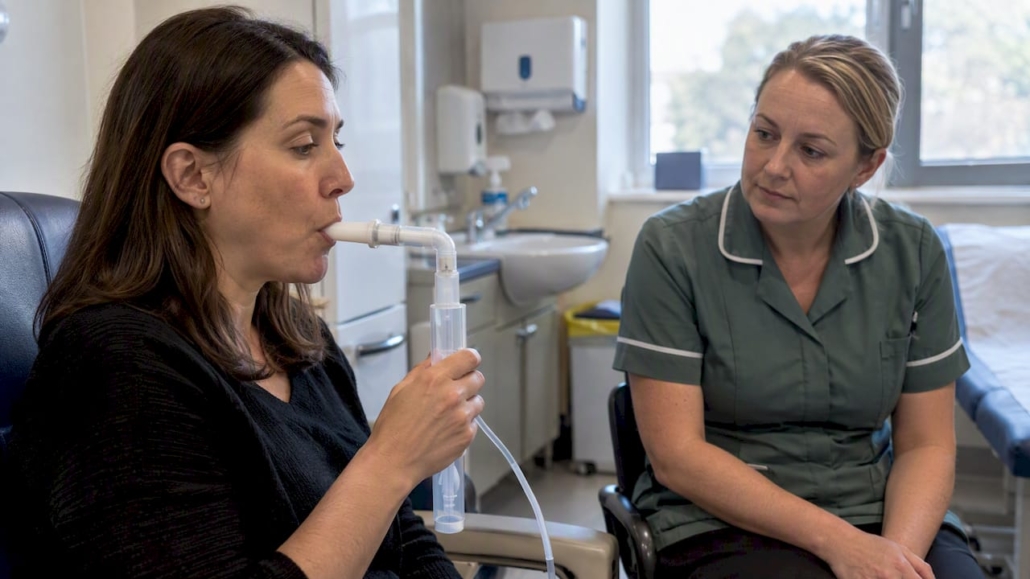
Breath testing measures the hydrogen and methane that bacteria release when they ferment a sugar. You drink a substrate, usually lactulose or glucose, then breathe into collection tubes at set intervals. The North American consensus on breath testing notes that lactulose breath tests are used for SIBO, but results require clinical interpretation.
Preparation matters, because small deviations can skew the result. NHS patient guidance on performing a SIBO breath test at home covers the usual steps:
- Follow a preparatory diet before the test day.
- Fast for the period your instructions specify.
- Pause certain medicines and probiotics for the stated time.
- Collect samples exactly on the schedule provided.
Even a perfectly performed test has limits. The same consensus warns that sensitivity and specificity vary, and that rapid transit can cause false positives. Methane can also complicate how a result is read, and borderline readings call for clinical judgement rather than a simple yes or no.
The key point: the North American consensus says breath tests have variable sensitivity and specificity, so interpretation needs clinical judgement.
That is why we suggest treating a breath test as one piece of evidence, read alongside your symptoms and history.
Which dietary strategies reduce symptoms while you wait for answers?
Diet can lower your symptom burden, which matters when you are uncomfortable every day. It works best as a short, supported step, not a permanent state.
- Try a low-FODMAP diet for a limited period. NHS dietetic guidance describes an initial restriction, commonly four to six weeks, followed by staged reintroduction. It targets fructose, fructans, GOS and polyols.
- Reintroduce foods in stages with a dietitian. The British Society of Gastroenterology guidance supports the low-FODMAP diet as short-term symptom relief and stresses trained supervision. Skipping reintroduction can leave you on an unnecessarily narrow diet.
- Consider an elemental diet only under clinical supervision. It is sometimes used briefly for severe symptoms or as a bridge in complex cases.
- Read labels for hidden fermentable ingredients. Polyols and inulin turn up in sugar-free sweets, protein bars and some medicines, where sorbitol is a common culprit.
- Leave probiotic timing to your dietitian. They are often considered after reintroduction, and the evidence is mixed.
It is worth being clear about what diet cannot do. A published review of diet and bacterial overgrowth found no evidence that dietary changes or low-FODMAP diets reliably eliminate SIBO or fix underlying motility problems. They can reduce symptoms while other treatments address the bacteria or the motility.
Pro Tip: Book dietetic support before you start restricting, not after, so the reintroduction plan is agreed from day one.
Our step-by-step diet optimisation guide walks through reintroduction and keeping your nutrition adequate.
What other treatments tackle the cause of SIBO?
Diet manages symptoms, but durable improvement usually needs medical care too. The BSG-aligned guidance emphasises a multidisciplinary approach that combines dietary therapy with strategies to improve gut motility and general gut health.
Ask your clinician which medical treatments, if any, are appropriate for your situation.
- Predisposing factors deserve attention. Your clinician may review opioids or acid suppressants and investigate any anatomical issue.
- Motility agents may be considered where slow transit is part of the picture.
- Diet stays in a supporting role alongside these steps.
How do you plan the next steps with your clinician and dietitian?
A little preparation makes appointments far more productive. Use this checklist:
- Ask how breath testing will be done and which substrate will be used.
- Ask whether SIBO should be tested before any carbohydrate malabsorption test.
- Ask for a referral to a registered dietitian.
- Bring your symptom diary, medication list, weight changes and earlier results.
- Agree who leads the plan: your GP, a gastroenterologist or a dietitian, ideally working together.
- Book the reintroduction phase at the start, so a short trial does not become a permanent restriction.
Why we see screening and clinical care working together
Our view is simple: home screening should not replace clinical care. We offer a hair-sample test that you complete at home and send to a UK laboratory. Discuss any report with your clinician before making lasting diet changes, so restrictions stay evidence-led and short.
— Rob
How can an at-home intolerance test support a supervised plan?

If you want data to guide a supervised elimination and reintroduction plan, we can help. Our tests use a hair sample collected at home. Here is what that means in practice:
- You collect the sample at home, using our step-by-step collection guide.
- You choose from several panels, and the Ultimate Plus Intolerance Test costs £140.99 one-off per person.
- You receive a digital report you can take to your dietitian.
- Discuss any food trials with your dietitian, and avoid open-ended eliminations without professional guidance.
You can compare every panel on our tests page, then choose the one that fits your next appointment.
This article is general information, not a substitute for advice from a qualified doctor. Consult a qualified healthcare professional about your own circumstances before acting on anything here.
FAQ
What are the symptoms of SIBO?
SIBO typically causes bloating, abdominal pain, wind and changes in bowel habit such as diarrhoea. These symptoms are non-specific and hard to separate from IBS or carbohydrate malabsorption by history alone. A clinician can help work out which is responsible.
Can food intolerance trigger IBS?
Food intolerances can bring on symptoms that look the same as IBS, such as bloating and tummy pain. The NHS notes that intolerances like lactose or fructose cause overlapping symptoms. A supervised low-FODMAP trial is a common way to explore how food relates to your symptoms.
What is the connection between SIBO and histamine intolerance?
If you suspect a food is contributing to your symptoms, discuss it with a clinician before restricting it.
How do I tell if I have gut dysbiosis?
Symptoms alone cannot confirm it, because bloating and wind have many causes. A clinician may use your history and, where appropriate, breath testing. A North American consensus notes these tests need careful interpretation.










Leave a Reply
Want to join the discussion?Feel free to contribute!